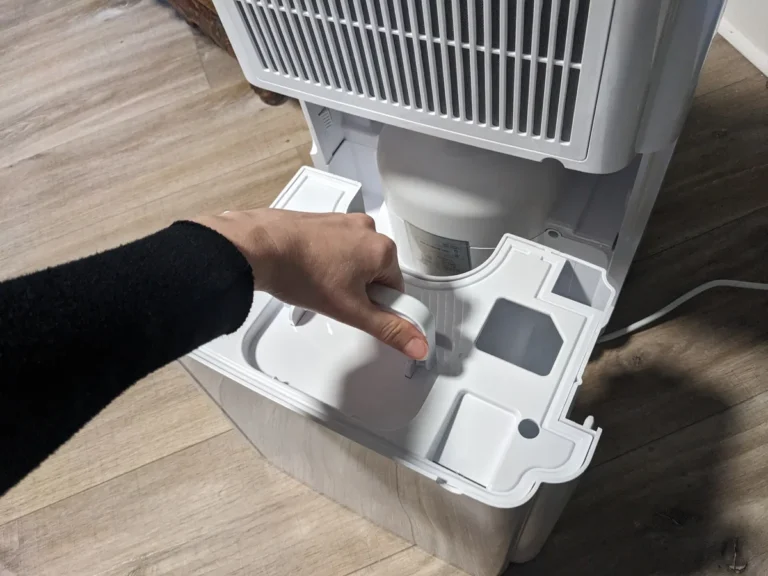
How Long Does It Take for a Dehumidifier to Fill
How long does it take for a dehumidifier to fill? If you're asking that, you're probably tired of checking the bucket every few hours or wondering if your unit is working correctly. The answer isn't a single number, but it's easy to predict once you understand the simple math behind it.
Manufacturer specifications indicate that a standard 50-pint dehumidifier extracts about 2 pints of water per hour under normal conditions. That means a 12-pint tank could fill in roughly six hours, though real-world conditions like humidity and temperature change everything. Let's walk through what actually determines that timing.
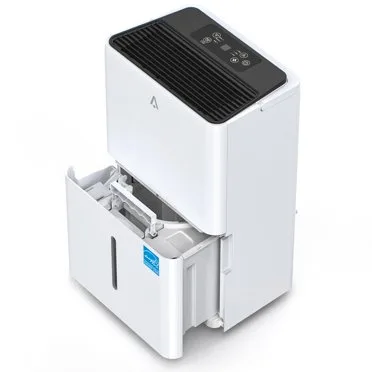
Image source: Bing (Web (fair-use with source credit))
Quick Answer
A dehumidifier's fill time equals its tank capacity divided by its hourly extraction rate. A 50-pint unit with a 12-pint tank fills in about 6 hours at 60% humidity. Higher humidity speeds it up.
Lower humidity slows it down. Room temperature also matters. Colder rooms extract less water per hour.
Why "It Depends" Is the Only Honest Answer
You won't find a one-size-fits-all answer online, and that's actually a good thing. Your dehumidifier fills at a different rate than your neighbor's because the conditions are different. The same unit can fill in four hours one day and take twelve the next.
Three main variables control the speed: the humidity level in the room, the air temperature, and the size of the space. A damp basement in August will fill a bucket fast. A dry living room in winter might take all day.
Even the unit's placement matters. A machine tucked into a corner pulls less moisture than one placed in the center of the room.
If you're shopping for a new unit, the best dehumidifier for your situation depends on where you plan to use it. The fill time is just one piece of the puzzle.
The Simple Math: Tank Capacity ÷ Extraction Rate
Here's the formula that matters: fill time (hours) = tank capacity (pints) ÷ extraction rate (pints per hour). Every dehumidifier has two numbers printed on the box. The tank capacity tells you how much water it holds.
The pints-per-day rating tells you how much it can pull in 24 hours.
Divide the daily rating by 24 to get the hourly rate. Then divide the tank size by that number. That gives you a rough estimate.
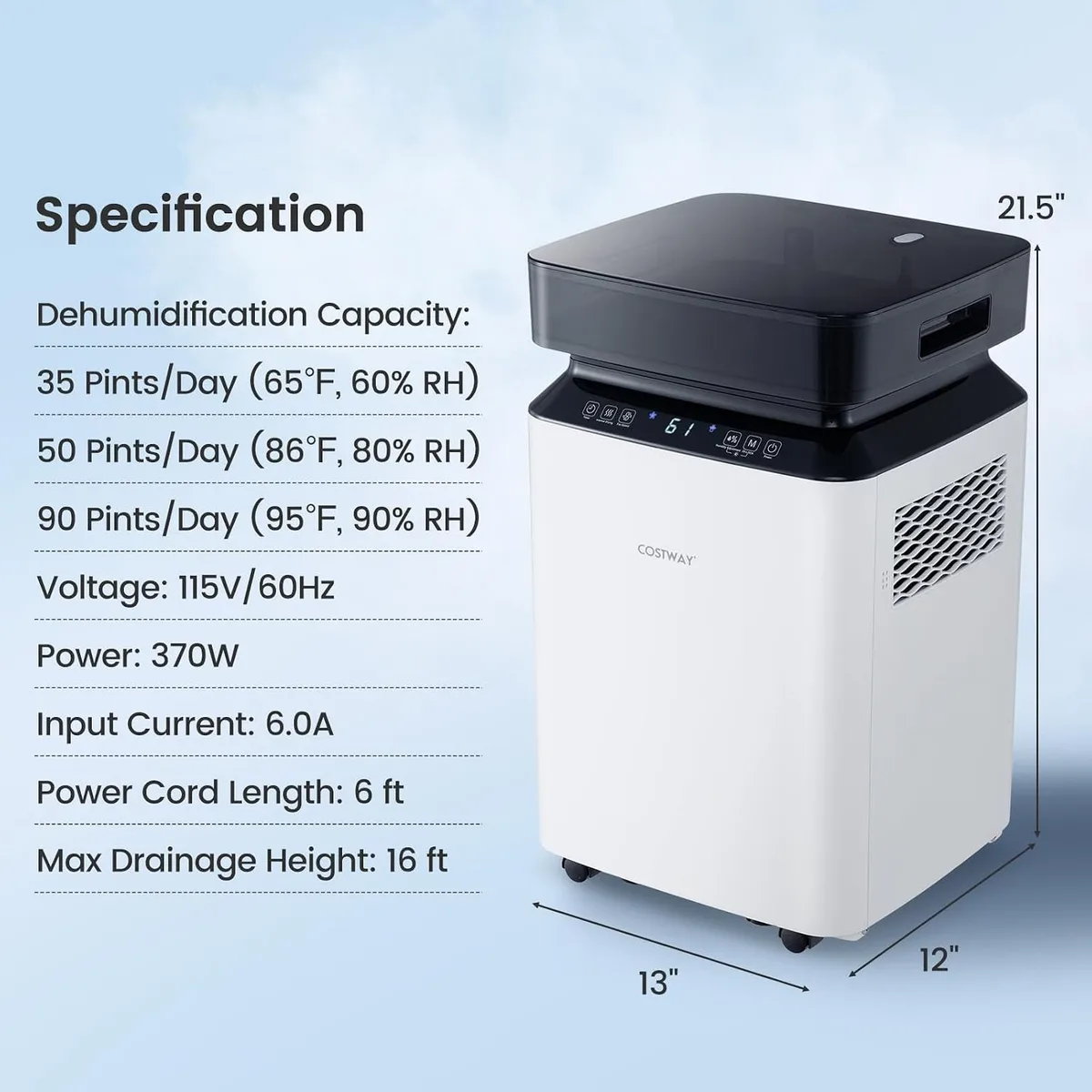
Image source: Bing (Web (fair-use with source credit))
Here's what that looks like for common sizes:
| Tank Capacity | Daily Extraction | Hourly Rate | Approximate Fill Time |
|---|---|---|---|
| 12 pints | 30 pints/day | 1.25 pints/hr | 9.6 hours |
| 12 pints | 50 pints/day | 2.1 pints/hr | 5.7 hours |
| 16 pints | 50 pints/day | 2.1 pints/hr | 7.6 hours |
| 20 pints | 70 pints/day | 2.9 pints/hr | 6.9 hours |
These numbers assume standard lab conditions. Your actual fill time will vary, but the math gives you a solid starting point.
How to Calculate Your Actual Fill Time
Grab your owner's manual or look at the specs on the unit itself. You need two numbers. The tank capacity is usually printed on the bucket or listed in the manual.
The daily extraction rating is on the Energy Guide label or the box.
Here's the step-by-step:
- Find the tank capacity. Look for a number like "12 pints" or "16 pints" on the bucket.
- Find the daily extraction rating. This is usually listed as "pints per day" at a specific temperature and humidity.
- Divide the daily rating by 24 to get the hourly extraction rate.
- Divide the tank capacity by the hourly rate.
- The result is your estimated fill time in hours.
For example, a 50-pint unit with a 12-pint tank: 50 ÷ 24 = 2.08 pints per hour. Then 12 ÷ 2.08 = 5.77 hours. That's about five hours and forty-five minutes.
Keep in mind that this is an estimate. The real number depends on how humid your room actually is. If the room is more humid than the test conditions, the unit works harder and fills faster.
If it's less humid, the fill time stretches out.
What Changes the Timing: Humidity, Temperature, and Room Size
Humidity is the biggest factor. A room at 70% relative humidity forces the dehumidifier to work harder than one at 50%. The difference can cut your fill time in half or double it.
As of 2026, most modern units have a built-in humidistat that lets you set a target level. The lower you set it, the longer the unit runs to reach that level.
Temperature matters almost as much. Compressor-style dehumidifiers lose efficiency below 65°F. In a cold basement, the extraction rate can drop by 30% or more.
Desiccant models handle cold better, but they consume more energy. If you're using a dehumidifier in a chilly basement, you might want to check out the best dehumidifier for basement options that perform well in lower temperatures.
Room size also plays a role. A unit rated for 1,500 square feet will fill a bucket much faster in a 500-square-foot room than in a 2,000-square-foot space. The larger the area, the more moisture the unit has to pull out before the bucket fills.
Drain Hose vs. Manual Emptying: Which One Saves You More Time
If you're tired of carrying a bucket to the sink, you have two options. You can keep emptying the tank manually, or you can connect a drain hose and let gravity do the work. The choice changes how often you interact with the unit, but it doesn't change the fill rate.
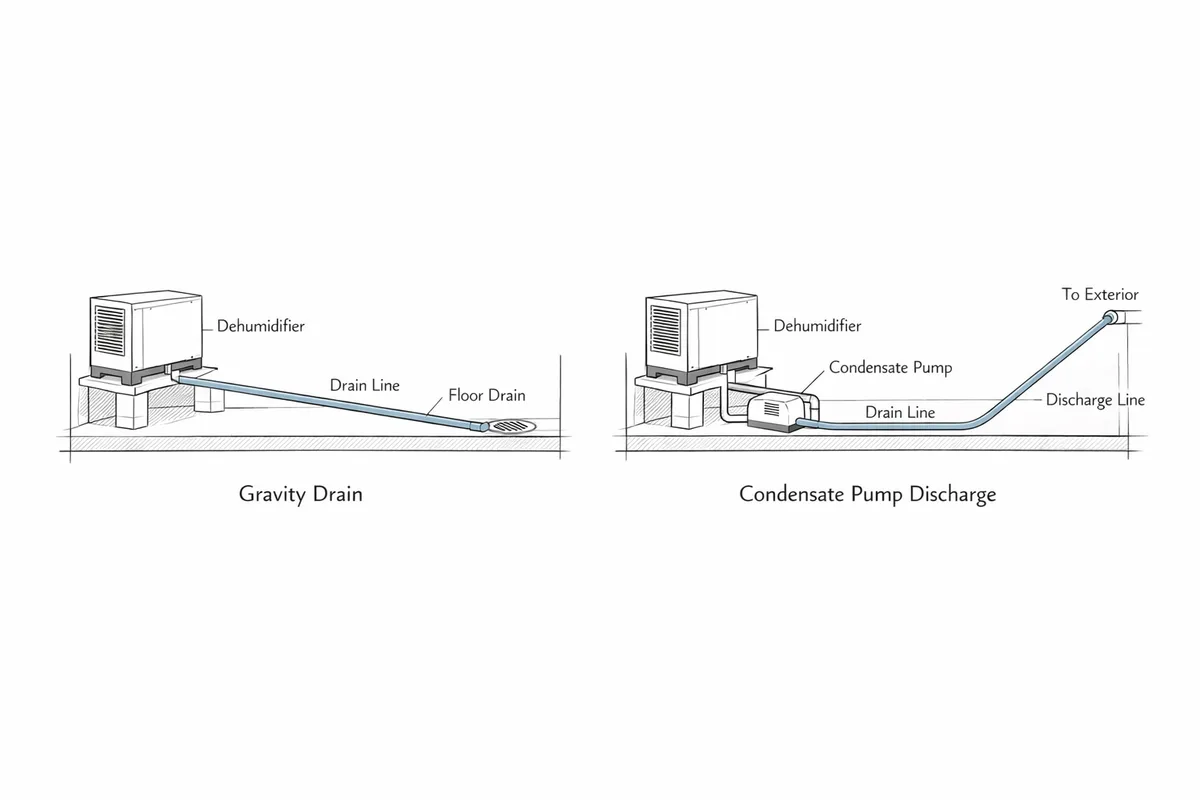
Image source: Bing (Web (fair-use with source credit))
Manual emptying works fine for small spaces. If your unit fills every 8 to 12 hours, you can empty it once in the morning and once at night. The downside is forgetting.
A full tank triggers the auto-shutoff, and the unit stops pulling moisture until you empty it.
A continuous drain hose eliminates that problem. You run a standard garden hose from the drain port to a floor drain, sump pit, or sink. The unit never shuts off due to a full tank.
It runs continuously until the room reaches the target humidity.
The trade-off is installation. You need a drain below the unit or a condensate pump to push water uphill. Gravity drains require the hose to slope downward.
Pump models cost more but let you drain into a sink or laundry tub above the unit.
For most people, the drain hose is the better choice if you run the dehumidifier regularly. It saves you the hassle of checking the bucket and keeps the unit running longer each day.
Common Mistakes That Mess Up Your Estimate
People get the math right and still misjudge fill time. The problem is usually a measurement error, not the formula. Here are the mistakes we see most often.
Using the wrong extraction rating. That 50-pint number on the box is measured at 80°F and 60% humidity. Your basement isn't those conditions. At 65°F and 50% humidity, the same unit might only pull 30 pints per day.
Always use the rating for your actual conditions, not the marketing number.
Forgetting the auto-defrost cycle. Compressor dehumidifiers run a defrost cycle when the coils get cold. During that cycle, the compressor stops and the fan keeps running. Water production drops to zero for 10 to 20 minutes at a time.
If you're estimating on a cold day, add 10% to your fill time.
Letting the filter clog. A dusty filter restricts airflow across the coils. Less airflow means less moisture extraction. It's the most common reason a dehumidifier suddenly takes twice as long to fill.
Clean the filter every two weeks during heavy use.
Checking the bucket at the wrong time. The float switch doesn't stop water production instantly. The unit shuts off, but a small amount of condensation still drips into the bucket afterward. If you check right after it shuts off, you'll see a little extra water that wasn't in your estimate.
Placing the unit against a wall. Dehumidifiers need airflow on all sides. If the unit is pressed against a wall, the intake pulls from a restricted area and extraction drops noticeably. Give it at least six inches of clearance.
How to Keep Your Fill Time Consistent
Once you understand your baseline, you can smooth out the variables. The goal is a predictable schedule, not constant surprises.
Clean the filter monthly. A clean filter keeps airflow steady. Mark a date on your calendar. This is the single biggest factor in maintaining consistent extraction rates.
Empty the bucket on a schedule. If your math says 12 hours, empty it every 10 hours instead. That gives you a buffer on humid days and keeps the auto-shutoff from cutting your run time short.
Close the room off. Dehumidifiers work best in a sealed space. Open doors and windows let fresh humidity in, which makes the unit run longer and fill faster. Keep the door closed for the most consistent results.
Keep the humidistat at one setting. If you keep adjusting it, the fill time changes constantly. Pick a target between 40% and 50% RH and leave it there. The unit will cycle on and off predictably once the room stabilizes.
Consider a condensate pump. If you can't use a gravity drain, a pump model pushes water to a sink or drain automatically. You never touch the bucket, and the fill time stops mattering. You only have to worry about the extraction rate.
For more detailed guidance on energy efficiency and humidistat settings, the U.S. Department of Energy offers practical recommendations for indoor humidity control.
Frequently Asked Questions
Why is my dehumidifier filling up so fast?
A fast-filling tank means the room is more humid than average. Check the relative humidity with a separate hygrometer. If it's above 60%, the unit is working exactly as it should.
Look for new moisture sources like damp clothes, open windows, or a basement leak.
How long does a 50-pint dehumidifier take to fill?
A 50-pint unit has a tank between 12 and 20 pints. At 2 pints per hour, that's 6 to 10 hours of continuous operation. That's only the run time, not counting the off cycles between when the unit hits the humidity target and kicks back on.
How often should I empty my dehumidifier?
If you can't use a drain hose and the unit runs most of the day, plan on emptying once or twice daily. At 70% humidity in a damp basement, expect closer to twice a day. Never let the tank sit full for more than 24 hours, since standing water can develop odors.
Can I let my dehumidifier run constantly?
Yes, as long as the tank doesn't overflow. Most units have an auto-shutoff that stops the machine when the bucket is full. To run it safely around the clock, connect a continuous drain hose or a condensate pump.
Battery backup for the pump is a good idea in flood-prone areas.
Do dehumidifiers use a lot of electricity?
A typical 50-pint unit draws 500 to 700 watts. Running it for 10 hours a day adds roughly $15 to $25 to your monthly bill, depending on your local electricity rates. Energy Star-certified units run 15% more efficiently.