How Long Does It Take a Dehumidifier to Dry a Room
If you've ever wondered how long it takes a dehumidifier to dry a room, you've probably noticed nobody gives you a straight number. The honest answer is: it depends. Drying time shifts based on room size, starting humidity, your unit's capacity, and airflow.
Manufacturer specifications indicate that a properly sized dehumidifier can lower relative humidity by 10% to 15% in the first 24 hours. That's under ideal conditions. The EPA recommends keeping indoor humidity between 30% and 50% for comfort and health.
Let's walk through what actually controls your drying time.

Image source: Bing (Web (fair-use with source credit))
Quick Answer
It usually takes 12 to 48 hours for a dehumidifier to dry a room. A 50-pint unit in a 1,000-square-foot room can drop humidity from 70% to 50% in about 24 hours. Smaller rooms dry faster.
Higher starting humidity takes longer. The variables below explain why.
Why "It Depends" Is the Real Answer
Here's the thing: a dehumidifier isn't a magic wand. It pulls moisture from the air at a fixed rate, measured in pints per day. That rate has to overcome the total moisture load in the room.
Think of the room as a bucket with a hole in the bottom. The dehumidifier removes water, but new moisture keeps leaking in from damp walls, floors, and the air.
The drying time changes because every room is different. A 10×10 bedroom with moderate humidity will dry much faster than a 1,500-square-foot basement with a damp concrete floor. The unit's size matters too.
A 30-pint unit pulls less water per hour than a 70-pint model. You can't expect the same timeline from both.
Aggregate reviews show that most people underestimate their drying time by 12 to 24 hours. They expect overnight results and get frustrated when the tank fills up the next day. Setting realistic expectations saves that headache.
If you need a unit that can handle different seasons, a model built for year-round use can help you choose one that won't struggle in changing conditions.
The 4 Variables That Control Drying Time
Four main factors determine how fast your dehumidifier works. Change any one of them, and your drying time shifts.
Room Size and Volume
Square footage matters, but so does ceiling height. A 12×12 room with 8-foot ceilings holds 1,152 cubic feet of air. The same room with 10-foot ceilings holds 1,440 cubic feet.
More air means more moisture to remove. Always measure the volume, not just the floor area.
Manufacturer specs list coverage in square feet, but that assumes 8-foot ceilings. If your ceilings are higher, you need a larger unit or more time. A small unit in a big room will run constantly without reaching your target humidity.
Starting Humidity Level
The higher your starting relative humidity, the longer it takes. The EPA recommends keeping humidity below 60% to prevent mold and mildew. If your room starts at 80% RH, the dehumidifier has to work harder and longer than if it starts at 65% RH.
A hygrometer gives you an accurate reading. Without one, you're guessing. Most dehumidifiers have built-in sensors, but a separate unit gives you a double check.
Knowing your starting point helps you estimate drying time more accurately.
Dehumidifier Capacity (Pints Per Day)
This is the biggest factor. A 30-pint unit removes about 1.25 pints per hour. A 70-pint unit removes nearly 3 pints per hour.
More pints per day equals faster drying.
But capacity ratings are measured at standard conditions (80°F and 60% RH). If your room is colder, performance drops. Compressor units struggle below 65°F.
Desiccant models handle cold better but use more energy. Choose the right type for your space.
If you have a large area, a mid-sized unit that balances speed and efficiency works well.
Airflow and Circulation
A dehumidifier can only process the air that reaches it. If the room is closed off, the unit will dry the air around it and leave the rest damp. A box fan or ceiling fan helps circulate the air and speeds up the process.
Position the dehumidifier in the center of the room, away from walls and furniture. Pull it out from the wall by at least 6 inches. Blocked intake vents choke the airflow and slow down drying.
Good placement cuts your drying time by hours.
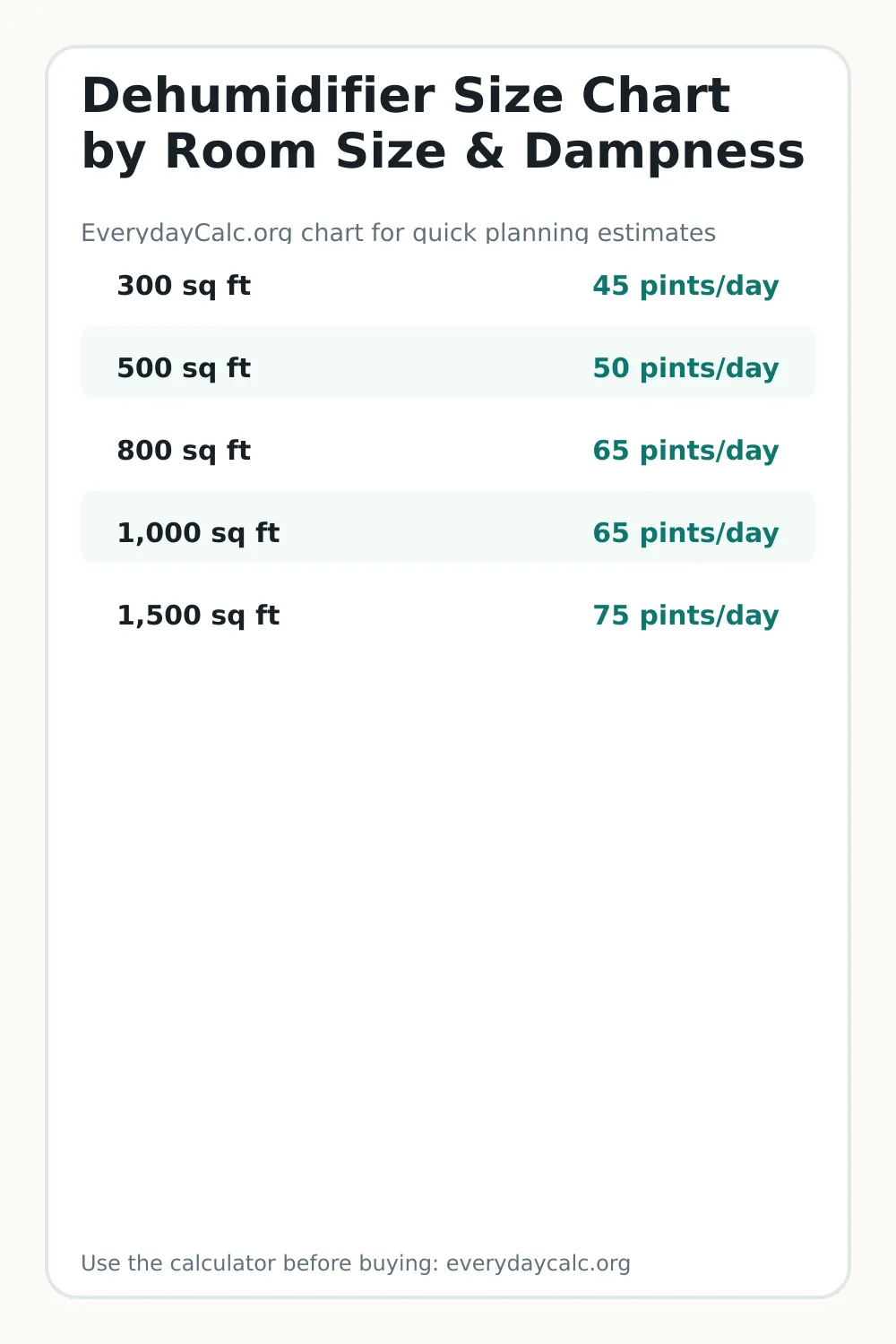
Image source: Bing (Web (fair-use with source credit))
How to Estimate Your Drying Time (Decision Guide)
Now let's put this into action. Use the steps below to estimate your own drying time. Grab a tape measure and a hygrometer if you have one.
Step 1: Measure Your Room Volume
Multiply the length by the width by the ceiling height. Write down the total cubic feet. A 15×20 room with 8-foot ceilings equals 2,400 cubic feet.
That's your starting number.
Step 2: Check Your Current Humidity
Use the hygrometer or the dehumidifier's built-in display. Note the percentage. If you don't have a reading, assume 70% for a damp basement or 60% for a humid room in summer.
Step 3: Match Your Dehumidifier Capacity
Here's a general rule of thumb based on manufacturer specifications:
| Room Size (sq ft) | Recommended Capacity | Estimated Drying Time (70% to 50% RH) |
|---|---|---|
| Under 300 | 20-30 pints | 8-12 hours |
| 300-700 | 30-40 pints | 12-24 hours |
| 700-1,200 | 50 pints | 18-30 hours |
| 1,200-2,000 | 70 pints | 24-48 hours |
| Over 2,000 | 70+ pints or multiple units | 48-72 hours |
These are estimates. Your actual time depends on temperature, airflow, and how much moisture is coming from the walls or floor. A room with a wet carpet or leaking wall will take much longer.
Step 4: Apply the Decision Tree
If your room is under 500 square feet and starting humidity is below 65%, expect 12 to 18 hours. If the room is over 1,000 square feet and starting humidity is above 75%, plan for 36 to 48 hours. If you have a wet basement with concrete walls, add 12 to 24 hours to any estimate.
For smaller spaces, compact models can help you find something that fits a bedroom or office.
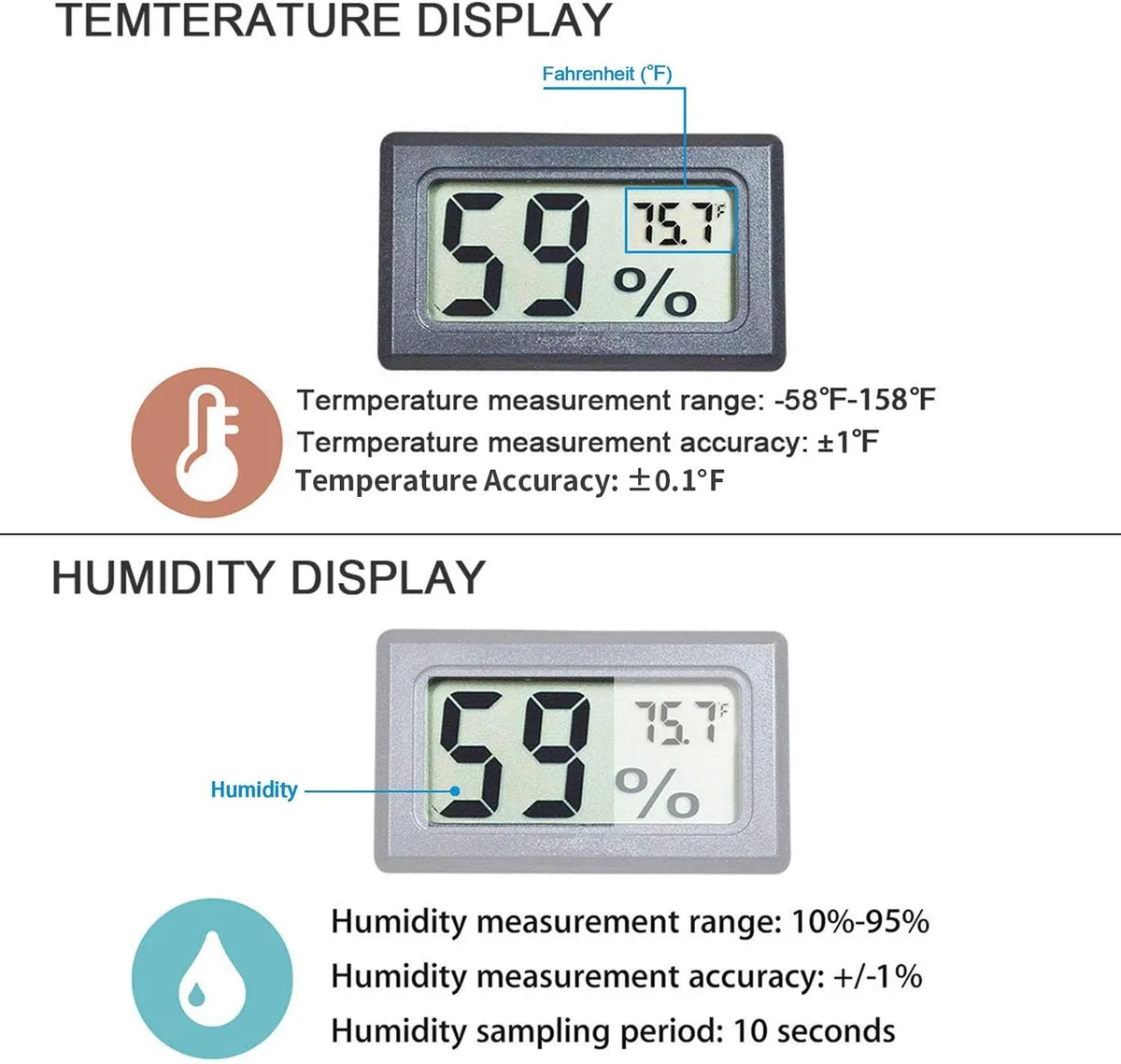
Image source: Bing (Web (fair-use with source credit))
Common Mistakes That Slow Things Down
Most people make the same errors. Avoiding them saves you time and frustration.
Choosing a Unit That's Too Small
This is mistake number one. A 20-pint unit in a 1,000-square-foot basement will run 24/7 and barely keep up. You'll empty the tank three times a day and still not reach your target humidity.
Size up if you're between two capacities. A slightly larger unit runs less often and lasts longer.
Blocking Airflow
Pushing the dehumidifier against a wall or stuffing it in a corner kills performance. The intake needs open space. The exhaust needs room to push dry air out.
Give it at least 12 inches of clearance on all sides. If you can't, use a fan to move air around the room.
Not Draining Properly
The bucket fills up fast. A 50-pint unit can fill its tank in 8 to 12 hours in a humid room. When the bucket is full, the unit shuts off automatically.
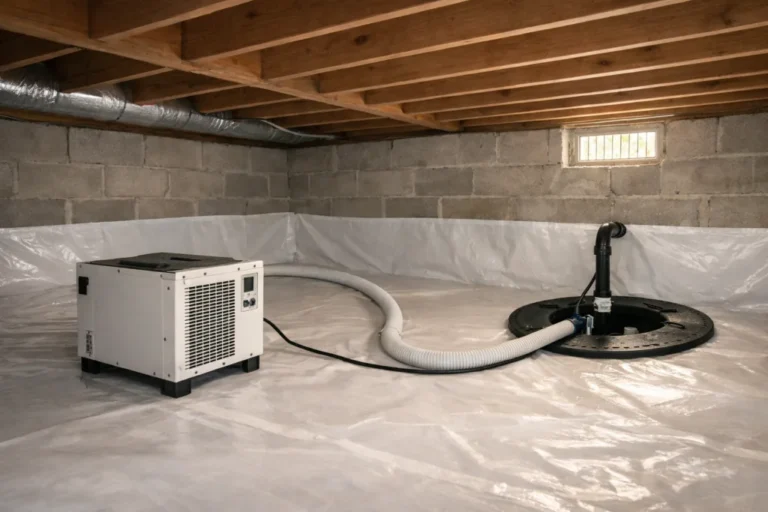
That means no drying while you're asleep or at work. Use a continuous drain hose if you can. Connect it to a floor drain or a sink.
If you can't, set a reminder to empty the bucket every 8 hours.
Ignoring Doors and Windows
Leaving doors or windows open lets humid air from outside flow in. Your dehumidifier has to work twice as hard. Close the room off as much as possible.
If you're drying a basement, close the door at the top of the stairs. Seal gaps around windows with weatherstripping if needed.
If you're dealing with a flood situation, extreme moisture loads require units that handle that level of wetness better than standard models.
Pro Tips to Speed Up the Process
You can cut your drying time by 25% to 50% with a few simple adjustments.
Use a Fan
A box fan or a ceiling fan on low speed makes a big difference. It moves the air around the room so the dehumidifier can process more of it. Place the fan across the room, blowing toward the dehumidifier.
This creates a constant loop of air.
Run a Continuous Drain
If you can connect a hose, do it. The unit runs nonstop without shutting off to empty the tank. This can cut your drying time by 20% to 30%.
Most dehumidifiers come with a drain port. You just need a standard garden hose or a vinyl tubing kit.
Pre-Dry With a Mop or Towel
If the room has standing water, soak it up first. A dehumidifier is designed to remove airborne moisture, not puddles. Use a wet-dry vacuum or absorbent towels to get the floor dry.
Then let the dehumidifier handle the rest. This saves hours of run time.
Set the Right Target Humidity
Don't set it too low. 50% RH is comfortable and safe. Running it down to 30% takes much longer and wastes energy. The dehumidifier has to work harder to pull the last few percentage points of moisture.
Stop at 50% unless you have a specific reason to go lower.
For basements that are constantly damp, basement-specific models can make a big difference.
Frequently Asked Questions
Can a dehumidifier dry a room overnight?
Yes, in most cases. A properly sized unit can drop humidity from 70% to 50% in 8 to 12 hours in a small to medium room. Larger rooms or wet basements may need 24 hours or more.
Expect slower results if temperatures are below 65°F or airflow is limited.
Why is my dehumidifier running but the room still feels damp?
Check for airflow problems first. The unit needs clearance and a fan to circulate air. Empty the bucket or connect a hose if the tank is full.
If the room is large, your unit may be undersized. Aggregate reviews show that most people underestimate the capacity they need.
How do I know when the room is dry enough?
Use a hygrometer or the dehumidifier's built-in display. The EPA suggests keeping indoor relative humidity between 30% and 50%. Aim for 50% for most rooms and 40% if you're dealing with mold concerns.
Once the unit maintains that level, drying is complete.
Should I leave my dehumidifier running all the time?
No, run it until you hit your target humidity, then let the built-in humidistat cycle the unit on and off. This saves energy and reduces wear. A 70-pint model in a dry room can consume significant electricity if left running continuously.
Let the sensor do the work.
Do desiccant dehumidifiers dry rooms faster than compressor models?
Desiccant units perform better in colder spaces but aren't necessarily faster. Compressor models remove more moisture per hour in warm conditions. In a 70°F room, a 50-pint compressor unit outpaces a desiccant model of similar rating.
In an unheated basement below 60°F, the desiccant unit wins. Temperature dictates the winner.