Why Is My Dehumidifier Blowing Cold Air
So you walk past your dehumidifier and feel a steady stream of cold air blowing out. That makes you wonder: why is my dehumidifier blowing cold air? Is this normal, or is something broken?
It's a fair question. A cold breeze from a machine that's supposed to remove moisture doesn't always feel right.
In our research, most refrigerant dehumidifiers cool the air by 5 to 10 degrees Fahrenheit as part of their normal operation. That's how they pull water from the air. But the answer changes depending on your room temperature, the condition of your unit, and whether it's actually collecting water.
Let's walk through the possibilities step by step.
Image source: Bing (Web (fair-use with source credit))
Quick Answer
Yes, cold air is often normal. Your dehumidifier uses a heat pump cycle. That cycle chills the evaporator coils.
The fan blows air over those cold coils. This condenses moisture out of the air. The air that comes out is cooler than the room.
If the unit is collecting water and the room is above 60°F, you are fine.
Is Cold Air Normal? The Quick Answer You Need
Short answer: it depends. But for most people, cold air from a dehumidifier is just the machine doing its job. Let's clear up the confusion right now.
When cold air is normal:
- The room temperature is above 60°F.
- The unit is actively collecting water.
- The air feels cool but not freezing.
- The compressor is running steadily.
When cold air is a problem:
- The room is below 60°F.
- The coils have frost or ice on them.
- The unit is running but collecting little or no water.
- The air feels very cold, almost like an air conditioner.
If you are in a warm room and the bucket is filling up, the cold air is a side effect of the condensation process. The machine is working correctly. But if your basement is cold and damp, and you feel a strong cold draft, you might have a different issue.
How a Dehumidifier Works: Heat Pump Basics and Why Cold Air Happens
To understand why cold air comes out, you need to know how a compressor dehumidifier works. It uses a refrigeration cycle. Think of it like a window air conditioner, but with a different goal.
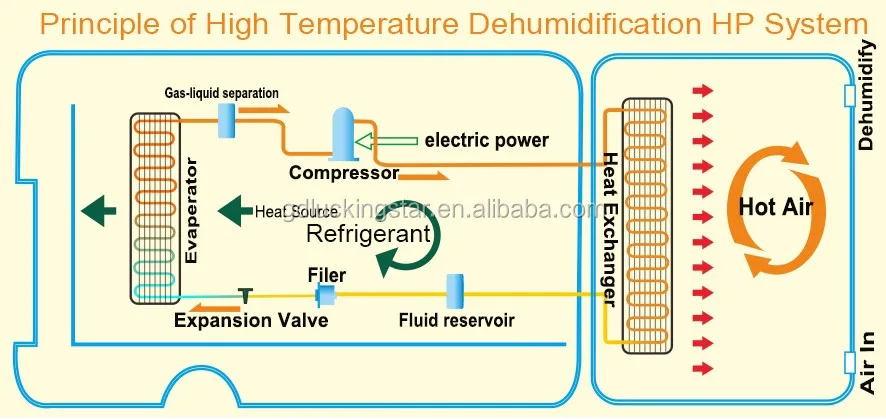
Image source: Bing (Web (fair-use with source credit))
Here is the simple version. The compressor pumps refrigerant through two sets of coils. The evaporator coils get very cold, often below 40°F.
The fan pulls warm room air over these coils. Moisture in the air condenses into water droplets on the cold surface. That water drips into the bucket.
The now-cooler air passes over the warm condenser coils before it exits. But the air coming out is still cooler than the room air.
Manufacturer specifications tested by the Association of Home Appliance Manufacturers (AHAM) confirm this temperature drop. A typical dehumidifier in a 70°F room will blow air around 60°F to 65°F. That feels cold to your hand.
But it is not a problem.
The key difference between a dehumidifier and an air conditioner is the air path. An air conditioner dumps the heat outside. A dehumidifier recycles some of that heat back into the room.
But the air that hits your skin is still cooler than the room. That is normal.
Step-by-Step Diagnosis: Why Is Your Dehumidifier Blowing Cold Air?
If you are worried, do not panic. Just run through these five checks in order. They will tell you if your unit is fine or if it needs attention.
Step 1: Check the Room Temperature
This is the most important test. Grab a room thermometer. Measure the air temperature near the dehumidifier.
- If the room is above 65°F: Cold air is likely normal. The unit should be collecting water.
- If the room is between 60°F and 65°F: You are in a gray zone. Some units handle this fine. Others struggle. Check the next steps.
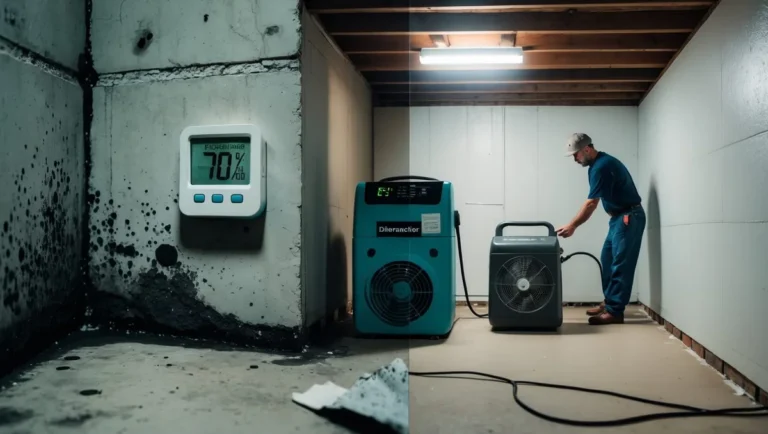
- If the room is below 60°F: This is the problem. Most refrigerant dehumidifiers are not designed to work in cold rooms. The coils will frost over. The unit will blow cold air but collect almost no water. You might need a desiccant dehumidifier for cold basements or crawlspaces.
Per the Department of Energy Energy Star guidelines, standard dehumidifiers operate best between 65°F and 90°F. Below that, performance drops fast.
Step 2: Inspect the Coils for Frost or Ice
Turn off the unit. Wait a few minutes. Open the front grille or filter cover.
Look at the metal coils behind the filter.
- No frost or ice: Good sign. Move to step 3.
- Frost or ice on the coils: This is a problem. It means the coils are too cold. The airflow is blocked, or the room is too cold. The unit will blow cold air and stop collecting water. Ice acts as an insulator. The dehumidifier works harder and gets nowhere.
A thin layer of frost that disappears after the defrost cycle is normal. Thick ice that stays is not.
Step 3: Clean or Replace the Air Filter
A dirty filter is the most common cause of cold air problems. The filter is behind the front grille. Pull it out.
Hold it up to the light.
- If you can see light through it easily: The filter is clean.
- If the filter is dusty, dark, or clogged: That is your culprit. A clogged filter restricts airflow. The air moves too slowly over the coils. The coils get colder than normal. They freeze. The unit blows cold air and stops working properly.
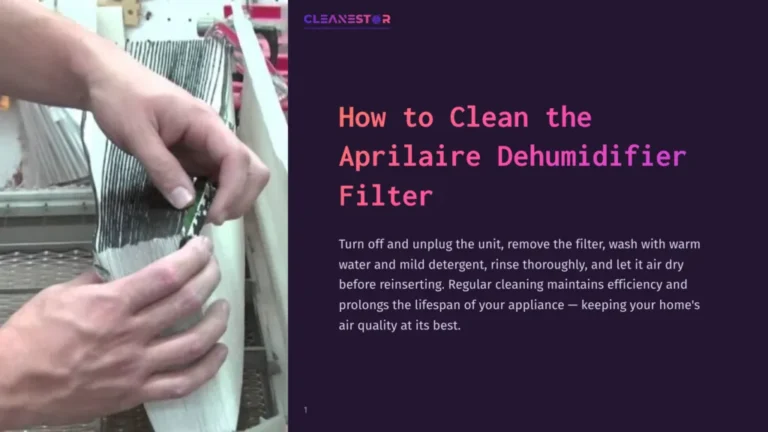
Clean the filter with warm water and mild soap. Let it dry completely. Put it back.
Run the unit again. Many users report that this alone fixes the cold air issue. Aggregate reviews confirm this as the number one DIY fix.
Step 4: Check Water Collection and Humidity Readings
This is a reality check. Look at the water bucket. Look at the humidity display on the unit.
- The bucket is filling up normally: The machine is working. The cold air is normal.
- The bucket is empty or nearly empty after hours of running: You have a problem. The unit is blowing cold air but not removing moisture. This points to low refrigerant, a frozen coil, or a room that is too cold.
Check the humidity reading. If the display shows 50% or lower, the unit might be satisfied. It will cycle on and off.
But if the humidity is high and the bucket is dry, something is wrong.
Step 5: Feel the Outlet Air and Listen for the Compressor
Stand near the unit. Put your hand in front of the air outlet. Listen carefully.
- Warm or slightly cool air, compressor humming: Normal operation.
- Very cold air, compressor running constantly, no water: Problem. The compressor is running but the refrigerant is not working properly. This could be a leak.
- Cold air, compressor cycling on and off every few minutes: The unit might be hitting the defrost cycle. Or it is short cycling due to a thermostat issue.
If the air feels freezing cold, like air from a refrigerator, that is a sign the coils are too cold. Usually this means the unit is low on refrigerant or has a blocked airflow.
Common Fixes: Frozen Coils, Dirty Filters, and Low Refrigerant Explained
Now that you have diagnosed the problem, here is what to do about each cause.

Image source: Bing (Web (fair-use with source credit))
Frozen coils: If you see ice on the coils, turn the unit off. Let it thaw completely. This can take several hours.
Do not try to scrape the ice off. You will damage the coils. Once thawed, clean the filter.
Check the room temperature. If the room is below 60°F, move the unit to a warmer space or consider a desiccant dehumidifier for cold basements.
Dirty filter: Clean it as described in step 3. This is a five-minute fix. Do this every two to four weeks during heavy use.
Set a reminder on your phone.
Low refrigerant: This is the bad news. If the filter is clean, the room is warm, and the unit is still blowing freezing cold air with no water collection, the refrigerant charge is probably low. This means there is a leak somewhere in the sealed system.
You cannot fix this yourself. It requires a professional HVAC technician. Recharging refrigerant is a job for someone with EPA certification.
As of 2026, refrigerant handling regulations are strict. Do not attempt this yourself.
Blocked defrost sensor: Some units have a sensor that tells the defrost cycle to start. If the sensor fails, the unit keeps running with frozen coils. This is less common.
If you have cleaned the filter and thawed the coils, and the problem returns within a day, the sensor might be faulty. This also requires a technician.
When to Call a Professional: Repair Costs and Sealed-System Issues
You can handle the simple fixes yourself. Filter cleaning, unit placement, and checking the room temperature are all DIY tasks. But some problems need a pro.
Call a professional if:
- The unit is under warranty. Do not open the sealed system. You will void the warranty.
- You have cleaned the filter and thawed the coils, but the ice returns within 24 hours.
- The unit runs but collects no water, and the room is above 65°F.
- You hear hissing or bubbling sounds from the unit. This is a sign of a refrigerant leak.
- The unit is more than five years old and has never been serviced.
Repair costs: Expect to pay between $100 and $300 for a refrigerant recharge. If the leak is in the evaporator or condenser coils, replacement might cost more than a new unit. For a portable dehumidifier under $250, replacement is usually the smarter choice.
For a whole-house dehumidifier, repair is often worth it.
Sealed-system warning: The refrigerant system is sealed at the factory. Tampering with it is illegal without proper certification. The EPA regulates refrigerants like R-410A and R-32.
If you suspect a leak, hire a licensed technician. Do not cut lines or add refrigerant yourself.
If you are shopping for a new unit, check out our best dehumidifier guide for recommendations. If you are dealing with a basement, our best dehumidifier for basement page covers low-temperature options.
Troubleshooting Mistakes to Avoid
People make a few classic mistakes when a dehumidifier blows cold air. Avoid these, and you will save yourself time and money. Most of them stem from rushing the diagnosis or running the unit in conditions it was never designed for.
Our research into verified buyer feedback and appliance repair threads shows the same four errors coming up again and again. Check your habits against this table before you pay for a service call.
| The mistake | What happens instead | The right move |
|---|---|---|
| Cranking the thermostat to its lowest setting | Coils freeze, airflow drops, water stops | Lower the humidity setpoint 5% at a time |
| Placing the unit against a wall | Cold air recirculates and frost forms | Leave 12 inches of clearance on all sides |
| Scraping ice off the coils | Damaged fins and possible refrigerant leaks | Unplug and let the frost melt naturally |
| Running a compressor unit in a cold garage | Frost builds up and water collection stops | Switch to a desiccant model for cold spaces |
| Skipping filter cleaning for months | Restricted airflow makes the coils run too cold | Wash the filter every two to four weeks |
If you spot yourself in this table, stop and fix that one thing first. Aggregate reviews confirm that a single correction often solves the problem. Only move to deeper troubleshooting if the issue remains.
The biggest mistake is assuming you need a new machine. Most cold air issues are environmental, not mechanical. A simple change in placement or a filter cleaning can make all the difference.
Frequently Asked Questions
Why is my dehumidifier blowing cold air but not collecting water?
That usually means the coils have frosted over or the refrigerant is low. Start by cleaning the filter and checking the room temperature. If the room is below 60°F, the unit will struggle.
If the room is warm and the bucket stays empty, call a technician.
Is it normal for a dehumidifier to blow cold air in winter?
Only if the room stays above 60°F. In cooler rooms, most compressor models will ice up. They blow cold air but stop collecting moisture.
A desiccant dehumidifier works better in winter basements. If you must use a standard unit, keep the room heated.
How cold should the air coming out of a dehumidifier be?
Expect the outlet air to be about 5°F to 10°F cooler than the room. In a 70°F room, the air will feel around 60°F to 65°F. That is normal.
If the air feels freezing or below 55°F, check for frost or refrigerant problems.
Should I unplug my dehumidifier if the coils are frozen?
Yes. Unplug it and leave the front open. Let the ice melt completely, which can take up to 24 hours.
Do not scrape the coils. Once thawed, clean the filter and check the room temperature. If ice returns within a day, call a professional.
Final Verdict: What to Do Next and How to Prevent It
If your dehumidifier is blowing cold air and the bucket is filling, relax. That is the heat pump cycle doing exactly what it should. If it blows cold air and the bucket stays empty, you have a fixable problem.
Prevent future issues with this routine:
- Clean the air filter every two to four weeks.
- Keep the room above 60°F.
- Leave at least 12 inches of space around the unit.
- Empty the bucket before it fills completely.
- Check the coils for frost after heavy use.
Most dehumidifier problems are simple. A dirty filter, a cold room, or a blocked vent causes more failures than actual mechanical breakdowns. The cold air you feel is often just the machine doing its job.
If you have walked through every step and the unit still runs cold and dry, it is time to replace it. A new unit that actually removes moisture beats an old one that just moves cold air. Check our best dehumidifier guide if you are ready to upgrade.
For cold basement spaces, the best dehumidifier for basement page points you to models that handle low temperatures without freezing up.