What Is a Dehumidifier Used For

Image source: Bing (Web (fair-use with source credit))
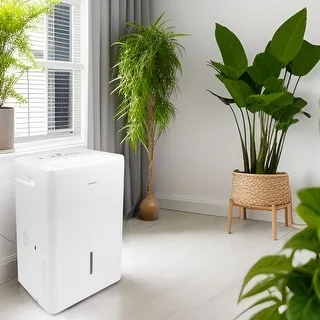
You walk into your basement and that musty smell hits you. Or you notice condensation streaming down your windows every morning. If you are wondering what is a dehumidifier used for, the straightforward answer is it pulls excess moisture from the air to keep your home healthy and comfortable.
Per EPA guidance, indoor relative humidity should stay between 30 and 50 percent. Above 60 percent, mold and dust mites thrive. Once you understand how moisture moves through your home, you will see exactly where a dehumidifier fits in.
Quick Answer
A dehumidifier is used to remove excess moisture from indoor air. It keeps relative humidity between 30 and 50 percent. This prevents mold growth and dust mites.
It also stops musty odors and window condensation. The result is a healthier, more comfortable home.
Why Getting It Wrong Could Cost You Your Home or Your Health
Too much humidity is not just uncomfortable. It is a slow threat to your home. Mold spores are everywhere.
They only need moisture above 60 percent to start growing. Once mold takes hold, it can spread inside walls, under flooring, and into your HVAC system.
Structural damage is another real risk. Wood beams and joists absorb moisture and warp. Over time, this can lead to sagging floors, cracked drywall, and even foundation issues.
If you have ever seen a basement wall with bubbling paint or peeling wallpaper, that is trapped moisture pushing through.
Health problems follow the same pattern. The EPA links indoor humidity above 60 percent to increased asthma symptoms and allergic reactions. Dust mites, which are a common allergen, cannot survive below 50 percent relative humidity.
Our research shows that keeping humidity in the 40 to 50 percent range is the single most effective step you can take for indoor air quality.
If you ignore the signs, you end up with expensive remediation. Professional mold removal can cost thousands of dollars. Replacing warped drywall and framing runs even higher.
A dehumidifier is much cheaper than restoration work.
How a Dehumidifier Actually Removes Moisture from the Air
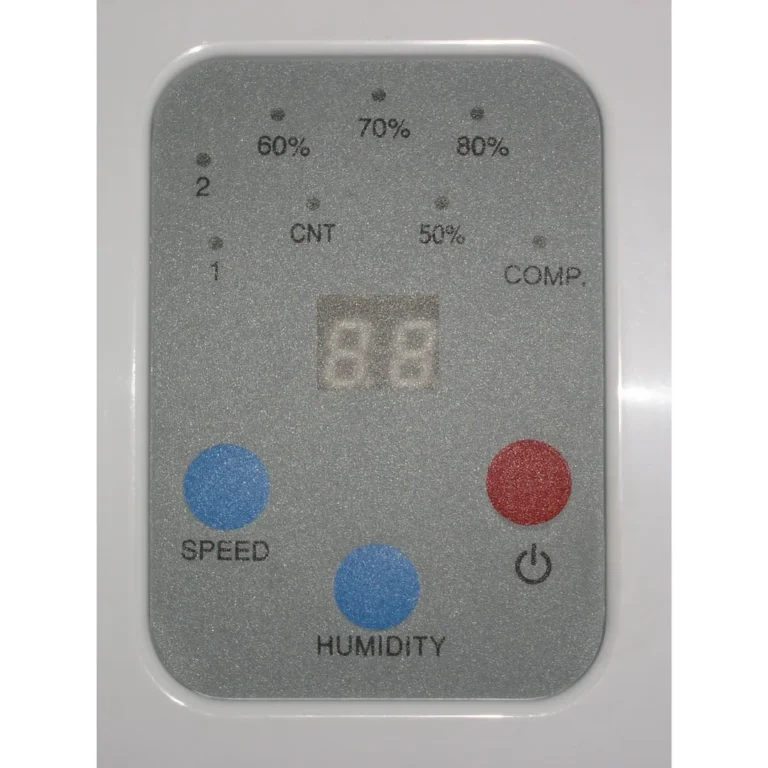
Most home dehumidifiers use a refrigeration cycle. Warm, humid air gets pulled into the unit by a fan. That air passes over cold metal coils, just like the inside of your refrigerator.
The moisture in the air condenses into water droplets on those coils.
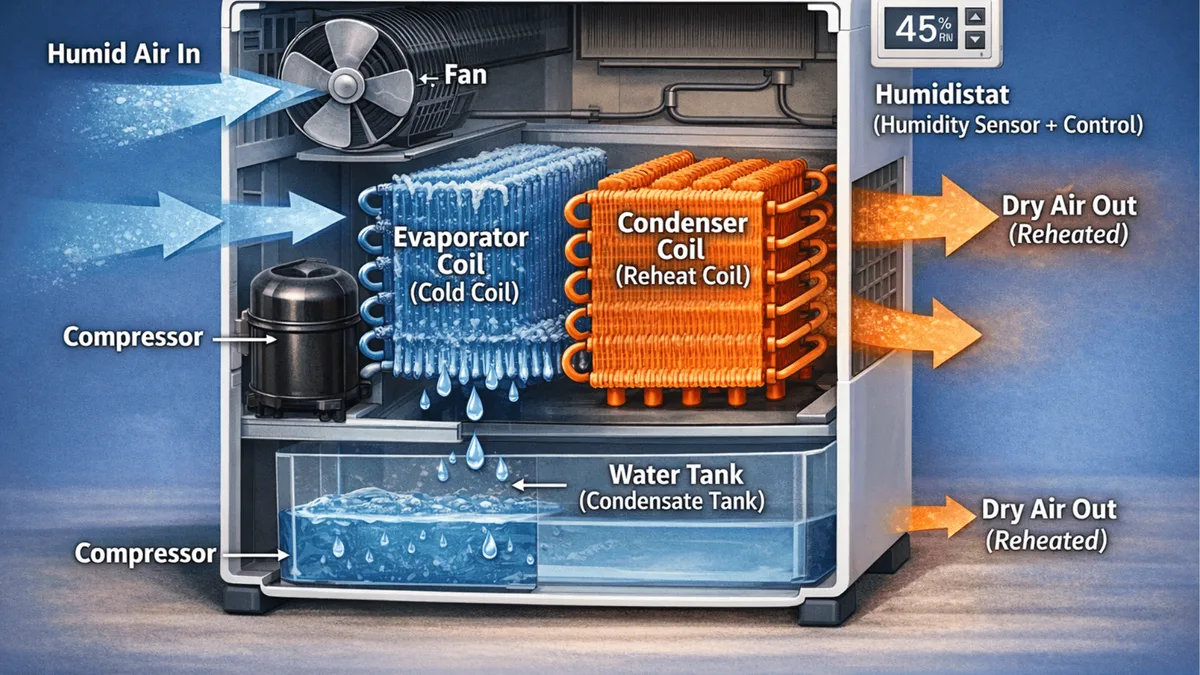
Image source: Bing (Web (fair-use with source credit))
The water drips down into a collection bucket or flows out through a continuous drain hose. The now drier air passes over warm coils and gets blown back into the room. This cycle repeats until the humidity hits your target level.
Refrigerant dehumidifiers work best when the room temperature is above 65 degrees Fahrenheit. Below that, the coils can ice over. Desiccant dehumidifiers handle colder spaces better.
They use a moisture-absorbing material instead of cold coils. You will find desiccant models in crawl spaces, garages, and cold basements.
The capacity of a unit is measured in pints per day. A 30-pint model removes about 30 pints of water in 24 hours under standard testing conditions. Larger units handle 50, 70, or even 100 pints per day.
The right size depends on your space and moisture level. Units designed for year-round use handle seasonal changes better than basic models.
Six Signs You Are Living with Too Much Humidity
1. Musty Odors That Will Not Go Away
That damp basement smell is not normal. It is the odor of microbial growth. If you smell it, mold or mildew is already active somewhere.
2. Condensation on Windows
Water droplets on the inside of your windows mean indoor humidity is too high. This is especially common in winter when warm indoor air hits cold glass.
3. Sticky Air in Summer
High humidity makes your skin feel clammy. You run the AC but still feel uncomfortable. Lowering the humidity makes the same temperature feel cooler.
4. Allergies or Asthma Worsen Indoors
If your symptoms get better when you go outside, humidity may be the trigger. Dust mites and mold spores thrive in damp air.
5. Peeling Wallpaper or Paint
Moisture behind walls pushes paint and wallpaper off the surface. You may see bubbles, cracks, or peeling around windows and bathrooms.
6. Visible Mold Growth
Black spots on grout, around windows, or on basement walls mean you have a humidity problem. Mold needs moisture, food, and warmth. Remove the moisture and you remove the conditions for mold.
If you spot three or more of these signs, measure your humidity. A simple hygrometer costs under ten dollars and gives you a reading in seconds.
The Mistakes That Waste Money or Cause Mold
Buying a Unit That Is Too Small
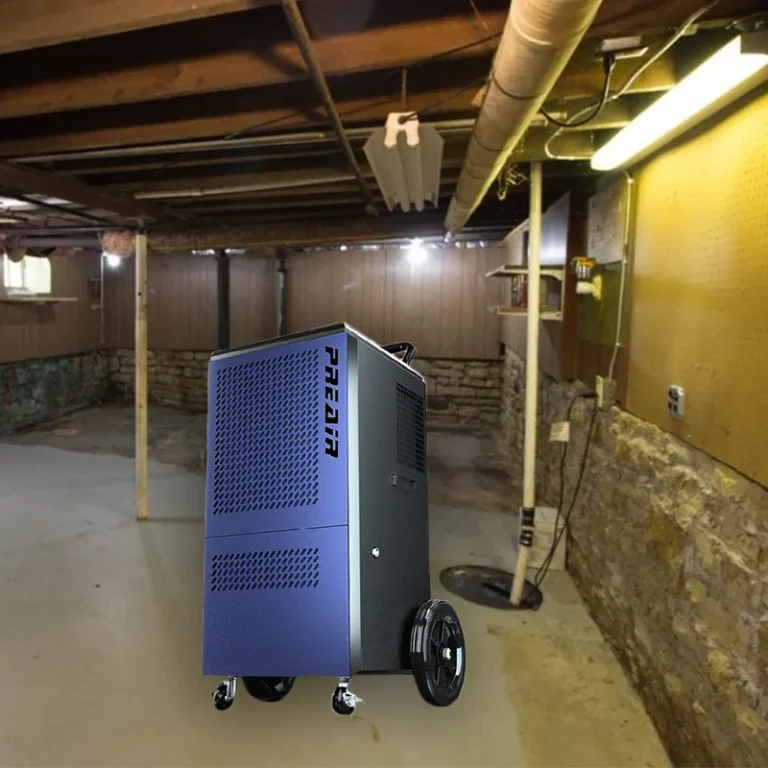
An undersized dehumidifier runs constantly and never catches up. It uses more electricity and wears out faster. Our research shows that a 30-pint unit in a 1,500-square-foot damp basement will struggle to keep humidity below 60 percent.
You need a 50-pint or 70-pint model for that space. A 70-pint unit rated for wet basements handles the job without running nonstop.
Placing It Against a Wall
Dehumidifiers pull air in from the sides and back. If you push it right against a wall, the intake is blocked. Airflow drops and the unit cannot work efficiently.
Keep it at least 12 inches from any wall or furniture.
Setting the Humidity Too Low
Below 30 percent, dry air causes static shocks, dry skin, and cracked wood furniture. Aggregated user feedback confirms that many people set their dehumidifier to 30 percent and wonder why their throat feels scratchy. Aim for 45 to 50 percent in most homes.
Ignoring the Filter
A dirty filter blocks airflow. The unit runs longer and uses more energy. Moisture can even get trapped inside and grow mold.
Clean the filter every two to four weeks.
Relying Only on the Tank
If you keep the tank and forget to empty it, the unit shuts off. That means humidity climbs back up. In a basement where you check it once a week, you may lose three days of drying.
Use a continuous drain hose if you have a floor drain or nearby sink.
Failing to Address the Source
A dehumidifier treats the air, not the leak. If you have a cracked foundation or a dripping pipe, the moisture will keep coming. Fix the source first, then use the dehumidifier to maintain the level.
How to Choose the Right Capacity and Where to Place It
Capacity is the most important factor. Here is a practical guide based on manufacturer specifications and aggregate user reviews.
| Condition | 30-pint unit | 50-pint unit | 70-pint unit |
|---|---|---|---|
| Moderately damp, 500 sq ft | Good | Overkill | Overkill |
| Moderately damp, 1,000 sq ft | Marginal | Good | Better |
| Very damp, 1,000 sq ft | Too small | Good | Better |
| Very damp, 2,000 sq ft | Too small | Marginal | Good |
| Wet basement, 2,500 sq ft | Too small | Too small | Best choice |
For a typical basement that feels damp but has no standing water, a 50-pint model is the sweet spot. If you have ongoing moisture issues, go up to 70 pints. Smaller bedrooms or storage spaces work well with a 20-pint or 30-pint unit.
A compact 20-pint model fits closets and corners without taking up too much floor space.
Placement matters just as much as size. Put the dehumidifier in the center of the room or at least a foot from any wall. Keep it away from corners and furniture.
Close windows and doors to the room you are drying. The unit needs to work on a contained space, not the whole house.
If you are drying a basement, place it near the source of moisture if you can identify it. A leaky wall or a damp corner should get the closest access to the machine. Avoid placing it near a furnace or water heater that generates heat, as the warm air can confuse the humidistat.
For whole-house setups, you can integrate a dehumidifier into your HVAC system. These units are larger and more expensive but they handle the entire home at once. They require professional installation and a drain connection.
Per the Department of Energy, whole-house units with Energy Star certification use about 20 percent less energy than standard models.
Filter Cleaning, Drain Setup, and Other Maintenance You Cannot Skip
Dehumidifiers need regular care to keep working. Skip the maintenance and you will see mold grow inside the unit. That defeats the whole purpose.
Clean the Filter Every Two to Four Weeks
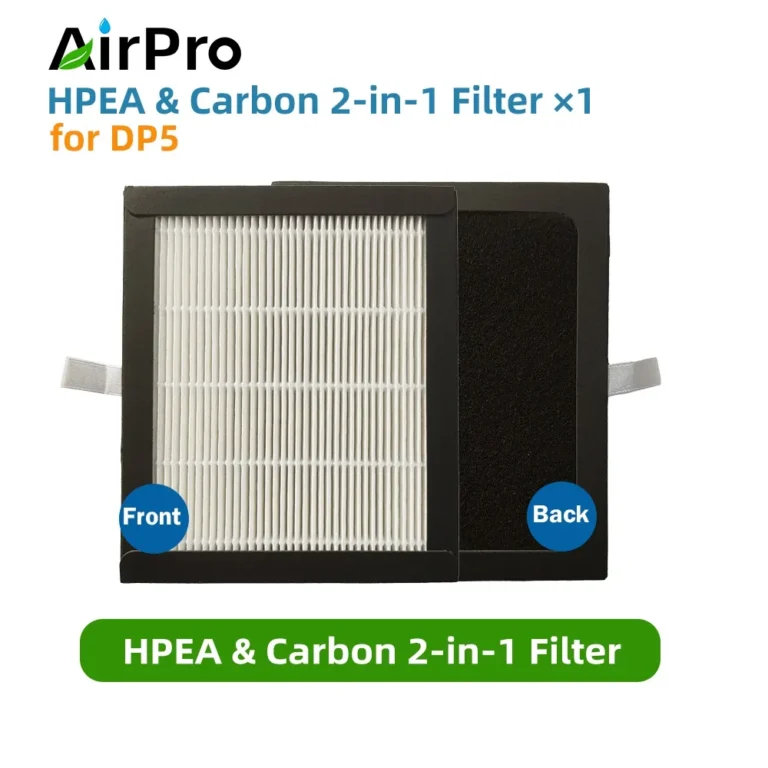
The filter catches dust and pet hair. When it clogs, airflow drops. The unit runs longer and uses more electricity.
A dirty filter also lets moisture linger inside the machine.
Pull the filter out. Rinse it under warm running water. Let it dry completely before sliding it back in.
Some filters are washable and reusable. Others need replacement every few months. Check your manual.
Set Up a Continuous Drain If Possible
Emptying a bucket every day gets old fast. If you have a floor drain or a nearby sink, use the continuous drain hose. Most dehumidifiers come with a threaded hose connector.
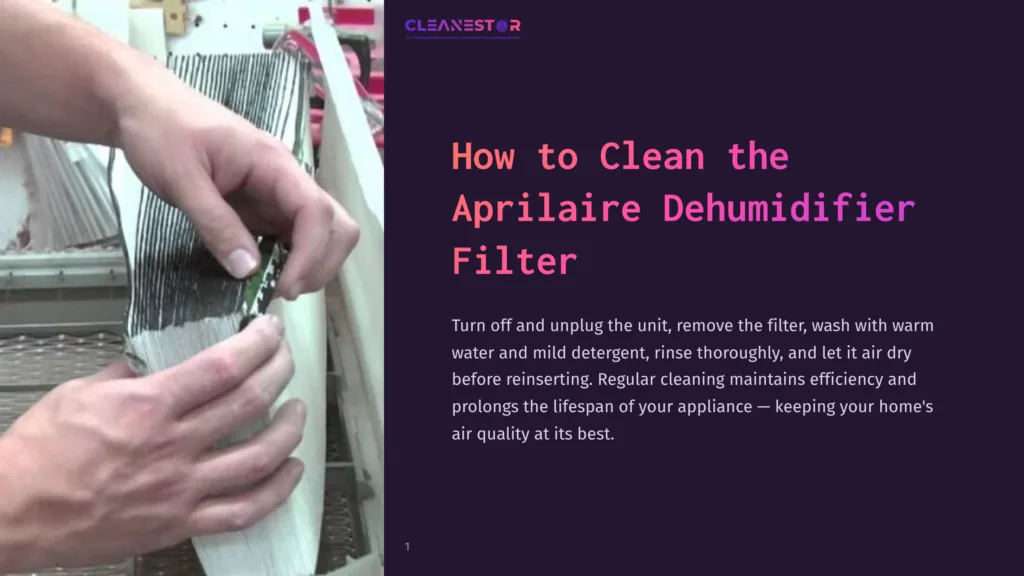
Image source: Bing (Web (fair-use with source credit))
Attach a standard garden hose or the included drain tube. Route it to the drain. Make sure the hose runs downhill with no kinks.
If the drain is above the unit, you need a condensate pump. Per manufacturer specifications, a pump can push water up to 15 feet vertically.
Clean the Coils Every Six Months
Dust builds up on the evaporator and condenser coils. This reduces efficiency. Use a soft brush or a can of compressed air.
You can also use a coil cleaning spray designed for HVAC equipment.
Check the Drain Pan and Bucket
Mold can grow in the standing water inside the bucket. Wash the bucket with mild soap and water every few weeks. Dry it thoroughly before reinstalling.
If the drain pan is removable, clean it the same way.
Store the Unit Properly in Winter
If you only use the dehumidifier in summer, dry it out before storing. Empty the bucket and clean the filter. Run the fan only mode for a few hours to dry the inside coils.
Store it in a dry location.
Frequently Asked Questions About Dehumidifiers
What is the ideal humidity level for a home?
The ideal range is 30 to 50 percent relative humidity. The EPA recommends staying at 45 to 50 percent for most homes. Below 30 percent, dry air causes static and cracked wood.
Above 60 percent, mold and dust mites thrive.
How long should I run a dehumidifier each day?
Run it until the humidity reaches your target level. This could be 8 to 12 hours on the first day in a damp basement. After that, the unit cycles on and off.
A continuous drain lets you run it 24/7 without worrying about the bucket.
Can a dehumidifier cool a room?
No. A dehumidifier removes moisture but adds heat. It blows warm air back into the room.
It makes the air feel cooler because lower humidity lets your sweat evaporate. The actual temperature stays the same or rises slightly.
Where should I place a dehumidifier in a basement?
Place it in the center of the room, at least 12 inches from any wall. Keep it away from corners and furniture. Close windows and doors to the basement.
If you have a known moisture source, put the unit near that spot.
How do I know if my dehumidifier is working?
Check the water in the bucket after 24 hours. A 50-pint unit in a damp basement should collect several pints daily. You can also use a hygrometer to measure humidity.
If the reading drops below 50 percent, the unit is working.
Do I need a dehumidifier if I have central air conditioning?
Central AC removes some moisture but not enough in humid climates. In basements, crawl spaces, and coastal regions, AC alone often leaves humidity above 60 percent. A dedicated dehumidifier handles the extra moisture that the AC leaves behind.
A budget-friendly model that still performs well is often enough to complement an existing HVAC system.