Do Crawl Spaces Need Dehumidifiers
Do crawl spaces need dehumidifiers? That's probably the reason you're here, and the honest answer is: it depends. A dehumidifier is one tool in a bigger moisture-control system.
In some homes, it's the missing piece. In others, it's wasted electricity and another thing to maintain.
As of 2026, the EPA still uses 60% relative humidity as the threshold where mold problems take off. If your crawl space lives above that line, you have a moisture problem. But whether a dehumidifier fixes it depends on the crawl space type, the drainage, and the actual humidity readings.
Let's walk through the diagnosis together.
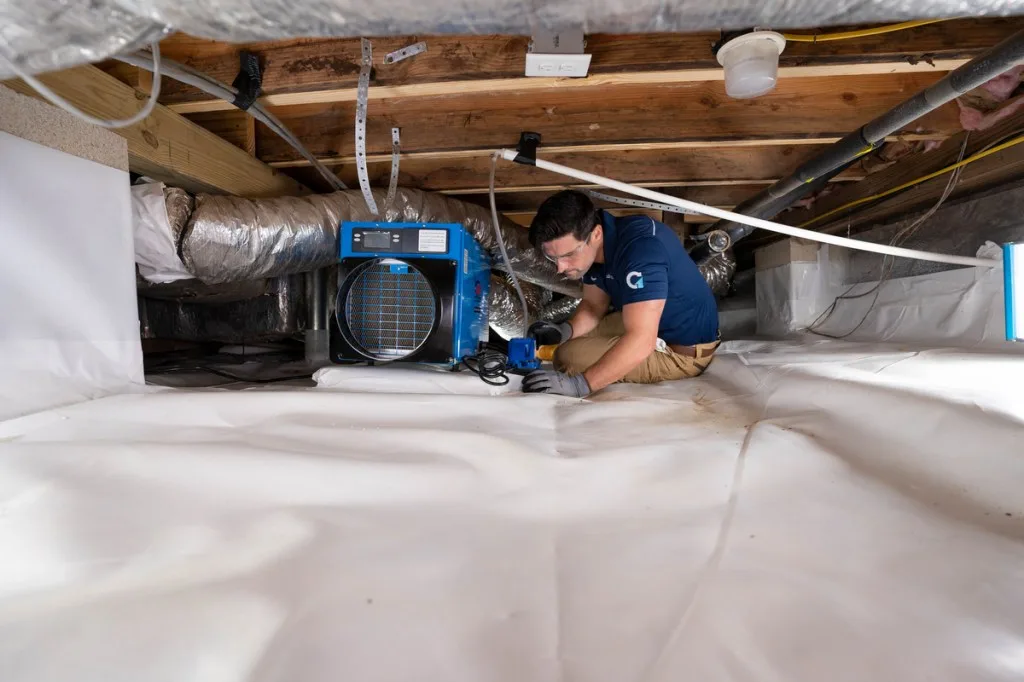
Image source: Bing (Web (fair-use with source credit))
Quick Answer
Some crawl spaces need one. Others don't. The answer depends on your crawl space type, drainage, and humidity levels.
If your relative humidity stays above 60%, you likely need a dehumidifier. If it stays below 50%, you probably don't.
The Real Problem: What Happens When a Crawl Space Stays Damp
Think of your crawl space as the lungs of your home. Air from that low, dusty void rises through floor gaps, pipe chases, and around ductwork. When that air is damp, the whole house feels it.
The damage doesn't happen overnight. It creeps in slowly. Wood joists absorb moisture and start to cup.
Subfloor softens. Sill plates get dark spots. You might notice a musty smell every time you open the access hatch.
Over time, dampness feeds mold and wood rot. Structural repairs get expensive.
Pests love the same conditions. Termites need moisture to survive. Carpenter ants nest in decaying wood.
Rodents move in for shelter and chew wires. If your HVAC equipment sits down there, it works harder. It pulls humid air in and pushes it through the house.
Your energy bills climb.
Here are the warning signs to look for:
- Musty odor when you open the crawl space door
- Visible mold or mildew on joists, ductwork, or the vapor barrier
- Condensation on pipes and ducts
- Soft, bouncy, or sagging floor patches upstairs
- Allergy symptoms that seem worse when you're at home
- Rust forming on HVAC components or junction boxes
Wet insulation sags and loses its R-value. Ductwork corrodes. In severe cases, floor joists lose enough strength that the floor feels springy.
The EPA's mold guidance points to uncontrolled moisture as the main driver of indoor mold. A dehumidifier is one way to control that moisture, but it's not always the first tool you need.
The Short Answer: It Depends on Two Things
Two things matter above all: the crawl space type and the relative humidity inside it.
A sealed or encapsulated crawl space has no natural airflow. Thick vapor barrier traps ground moisture, so humidity builds up fast. In this setup, a dehumidifier is almost always required.
A vented crawl space relies on outside air. That works in dry climates, but it backfires in humid summers when the vents pull moisture in.
The important number is 60%. The EPA treats relative humidity above 60% as the danger zone for mold. A healthy crawl space sits between 40% and 50%.
If your readings stay above 60% on warm days, you've found the problem.
| Relative humidity | What it means | Do you need a dehumidifier? |
|---|---|---|
| Under 50% | Dry and healthy | Usually not |
| 50% to 60% | Borderline | Watch it, fix small leaks, re-test |
| Above 60% | Damp, mold risk | Yes, after fixing drainage |
Don't guess at this. Use a hygrometer and check the space over several days. Take a reading in the morning and another on a hot, humid afternoon.
One number can mislead you. In our research, most crawl spaces hit their peak humidity in late summer, when rain and warm air line up. If that reading pushes past 60%, the answer is probably yes.
If it stays in the 40s, you're fine without one.
Winter changes the equation too. In cold climates, crawl space humidity can drop naturally. A dehumidifier may shut off.
But if the space is sealed and ground moisture keeps rising, it can still stay damp. Watch the numbers across seasons. The decision should follow the readings, not the calendar.
Step 1: Check Your Crawl Space Type (Vented vs. Sealed)
Before you shop, figure out what kind of crawl space you actually have. This one detail changes the entire plan. Grab a flashlight and get down there.
Take a photo with your phone if you can't fit through.
Look for three things. Foundation vents, a dirt floor or plastic sheeting, and insulation between the joists.

Image source: Bing (Web (fair-use with source credit))
Vented crawl spaces
These have open foundation vents around the perimeter. You'll likely see louvered metal or screened openings. Outside air flows through freely.
The floor underneath is usually bare dirt. This is the classic older-home setup. It works well in dry climates, but in humid areas it lets moisture in all summer.
Sealed or encapsulated crawl spaces
These have all vents closed and sealed. The floor is covered with a thick polyethylene vapor barrier, often 6-mil or heavier. The barrier may run up the walls too.
This is a conditioned crawl space. Without a dehumidifier, it can trap moisture and create its own damp environment.
Fiberglass batts hanging between floor joists suggest a vented space. Rigid foam on the walls is more common with sealed spaces. If you see torn or missing vapor barrier, that needs fixing before anything else.
No dehumidifier can compensate for a barrier with huge gaps.
One more thing to check. Press your hand on the vapor barrier. If water pools on top or beads up underneath, you have active ground moisture.
Puddles mean the soil below is releasing water vapor. That's a drainage issue. A dehumidifier alone won't fix it.
You need grading improvements, gutter work, or a perimeter drain.
Step 2: The Decision Tree: Do You Actually Need a Dehumidifier?
Work through this in order. It takes about ten minutes. You'll have a confident answer by the end.
Step 1: Measure the humidity
Use a hygrometer. Set it in the crawl space and check it morning and afternoon. Repeat over a week if you can.
Record the highest number you see.
No hygrometer? Tape a small mirror inside the crawl space overnight. If it fogs up in the morning, humidity is likely high.
That's not a precise test, but it gives you a reason to measure properly.
Step 2: Fix moisture sources first
A dehumidifier can't keep up with a constant water source. Make sure downspouts extend away from the foundation. Check that gutters aren't overflowing.
Grade the soil so water runs away from the house. If there's a leaking pipe, fix it before you worry about humidity control.
Step 3: Run the decision branches
- If you have a sealed crawl space and readings above 60% RH, yes, you need a dehumidifier. Run it year-round. Ground moisture keeps coming in every season.
- If you have a vented crawl space and readings above 60% RH, fix drainage and re-test. If humidity still climbs during summer, you have two options. Run a dehumidifier to manage the symptoms, or seal the crawl space and solve the root cause.
- If readings stay under 50% RH, skip the dehumidifier. You don't need one.
- If you see active mold, rotten wood, or condensation, treat the problem first. Then run a dehumidifier to keep conditions stable afterward.
A musty smell upstairs is another clue. If it gets worse on humid days and lingers when you're home, your crawl space is contributing to the air quality problem. You don't need a mold test kit to make this call.
If you can see or smell mold, you have mold. The fix is moisture control.
Step 3: Choosing the Right Dehumidifier (If You Need One)
Once you've decided you need one, match the machine to the space. A small household unit won't get the job done. Crawl spaces are damp, dusty, and often cold.
You need something designed for those conditions.
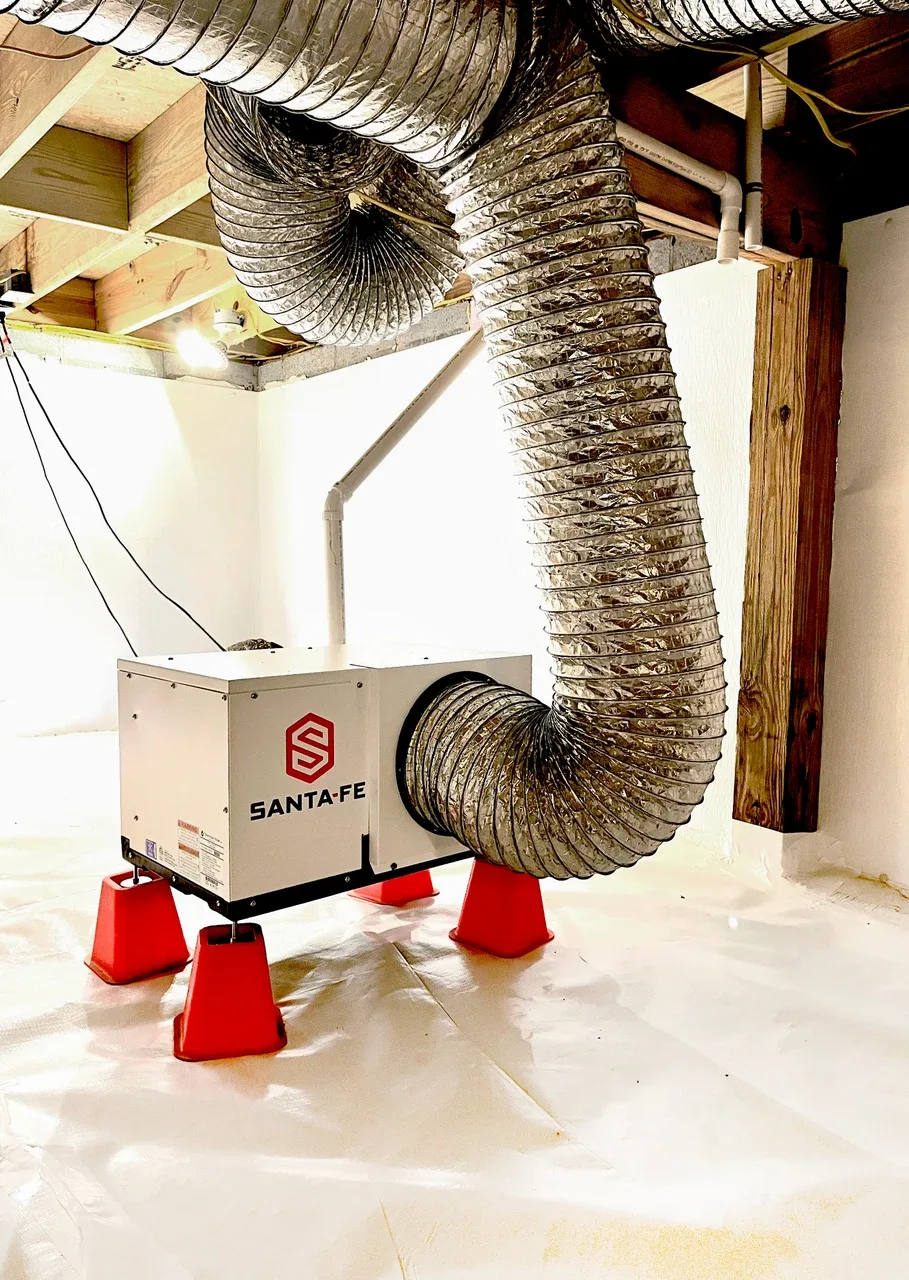
Image source: Bing (Web (fair-use with source credit))
Here's a simple sizing guide for a sealed or encapsulated crawl space with a vapor barrier and dry soil.
| Crawl space floor area | Recommended capacity |
|---|---|
| Under 1,000 sq ft | 50-pint unit |
| 1,000 to 1,500 sq ft | 70-pint unit |
| Over 1,500 sq ft | Two 70-pint units or a heavy-duty unit |
Pint ratings tell you how much water a unit can remove in a day. The larger the number, the more moisture it can handle. For most average homes, a 70-pint crawl space dehumidifier is the sweet spot.
If your space is smaller or on the dry side, a 50-pint basement model can work. A larger-capacity model gives you more margin for a larger or wetter crawl space.
Don't trust a compact bedroom dehumidifier down there. They don't have the capacity or the cold-weather performance. You'll run it nonstop and still see high humidity.
Look for three features. A built-in condensate pump, so water can travel up and out through a drain line. A continuous drain connection, so you're not emptying buckets.
And an auto-defrost function, so the unit keeps running even when the crawl space temperature drops.
Run the drain line outside or send the water through a wall with a condensate pump. If you let it drip onto the ground, you're just recycling moisture back into the air. A crawl space dehumidifier pulls around 500 to 700 watts.
Expect roughly 10 to 15 dollars a month in electricity. That's a small price compared to the cost of wood repairs or mold remediation.
For dependable options, our year-round dehumidifier picks are a solid starting point. If you're trying to keep costs down, our value picks focus on features that actually matter.
One last reminder. No dehumidifier replaces drainage. Fix the water source first.
Then let the machine maintain a dry, stable crawl space. That's how you protect the joists, the HVAC equipment, and the air your family breathes.
What Most People Get Wrong (Expensive Mistakes to Skip)
The biggest mistake is buying a dehumidifier before fixing the drainage. You can't dry out a space that's actively getting wet. Water from poor grading or a leaky gutter will overwhelm any machine.
Another common error is running a dehumidifier in an open vented crawl space. You're essentially trying to dehumidify the outdoors. The unit runs constantly, energy bills spike, and humidity barely drops.
The solution is to seal the vents first, then run the dehumidifier.
Some people set the humidity target too low. Below 35% RH can cause wood to shrink and crack. It can also make the space feel much colder.
Stick to the 40% to 50% range.
Using a portable household dehumidifier is another mistake. These units aren't built for the cold, dusty conditions in a crawl space. They freeze up, clog, and fail early.
A crawl space dehumidifier is built for this environment.
Skipping the condensate pump is a common regret. Gravity drains work if your crawl space is higher than the discharge point. Most are not.
Without a pump, you'll empty buckets by hand. That gets old fast.
Keeping It Running Right: Maintenance That Actually Matters
A crawl space dehumidifier needs attention. Filter cleaning is the most important task. Check the filter every month.
Wash it with water if it's reusable. Replace it if it's disposable. A clogged filter reduces airflow and makes the unit work harder.
The drain line needs checking too. Algae or debris can block it. If the water stops flowing, the unit will shut off or overflow.
Pour a cup of vinegar through the line every few months to prevent buildup.
Clean the coils once a year. Dust and dirt coat the evaporator and condenser coils. That reduces efficiency.
Use a soft brush and a vacuum with a brush attachment. Be gentle. Bent fins are hard to fix.
Inspect the condensate pump. Listen for strange noises. Make sure it's pumping water out properly.
If it fails, the dehumidifier will stop working and water may pool.
Check the vapor barrier annually. Look for tears, holes, or areas where the barrier has pulled away from the walls. Duct tape won't hold.
Use a proper crawl space tape for repairs.
Frequently Asked Questions
Can I use a regular dehumidifier in my crawl space?
You can, but it's not recommended. Regular household units aren't designed for cold, dusty environments. They freeze up more easily and their filters clog faster.
A crawl space dehumidifier is built to handle these conditions.
How do I measure humidity in my crawl space?
Use a digital hygrometer. Place it in the crawl space, away from vents and direct ground contact. Check the reading at different times of day.
The highest reading is the one that matters. Humidity often peaks in the afternoon.
Should I close my crawl space vents in summer?
If your crawl space is sealed, the vents are already closed. If it's vented, closing vents in summer can trap moisture. The better approach is to seal the crawl space properly and run a dehumidifier.
That gives you control over the humidity.
How often should I run a crawl space dehumidifier?
Run it continuously in humid seasons. Many units have a built-in humidistat. They turn on when humidity rises above your set point.
In dry winter months, the unit may not need to run at all. Let the humidistat decide.
What humidity level should I aim for in a crawl space?
Aim for 40% to 50% relative humidity. Above 60% encourages mold growth. Below 35% can damage wood.
The sweet spot keeps the space dry without over-drying the structure.
Do I need a dehumidifier if I have a vapor barrier?
A vapor barrier is essential, but it's not enough on its own. It stops ground moisture from rising into the air. In a sealed crawl space, that moisture stays trapped.
A dehumidifier removes it. The two work together.