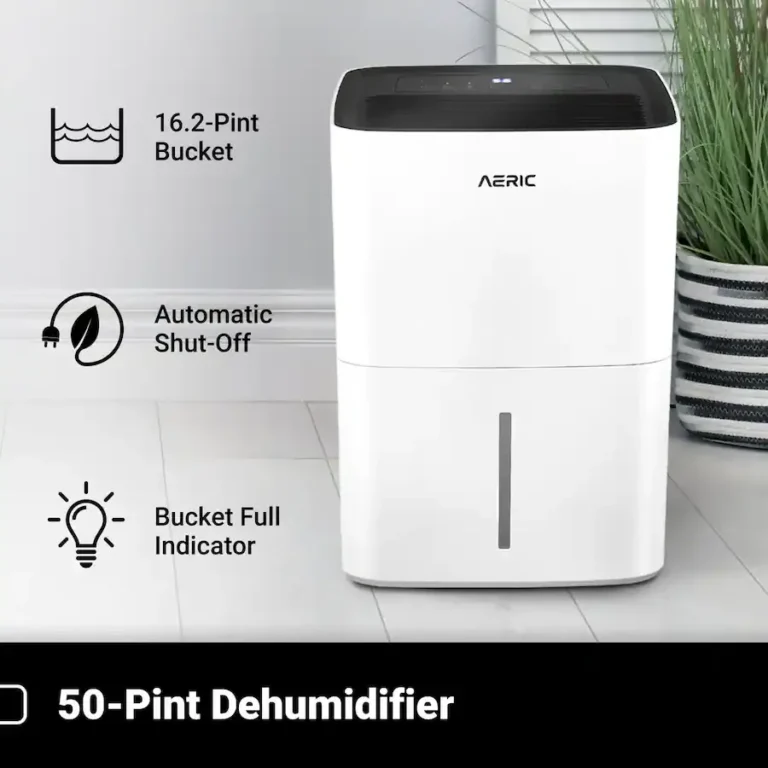
How to Drain a Dehumidifier Continuously
You’re staring at a dehumidifier that keeps shutting off because the bucket is full. Again. You want to know how to drain a dehumidifier continuously so you can set it and forget it.
The good news is that almost every portable dehumidifier supports continuous drainage. The right setup just depends on where you place the unit and what kind of drain access you have.
Per ASHRAE guidelines, indoor humidity should stay between 30 and 50 percent relative humidity to prevent mold growth and structural damage. A continuously draining dehumidifier is the only real way to hold that range without emptying a bucket every few hours. Let’s walk through exactly what you need to make your unit run nonstop.
Quick Answer
Connect a 3/8-inch vinyl hose to the drain port on the back of your dehumidifier. Route the hose downhill to a floor drain, sink, or sump pit. Gravity pulls the water out automatically.
If your drain is uphill or more than 10 feet away, you need a dehumidifier with a built-in pump or an external condensate pump. That’s the formula.
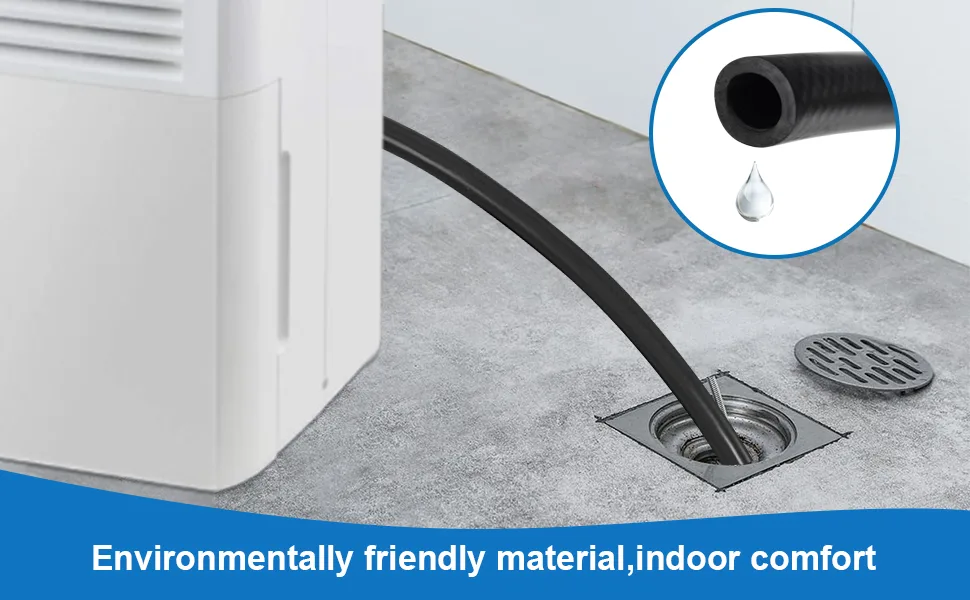
Image source: Bing (Web (fair-use with source credit))
Continuous Drainage 101: How Pump and Gravity Setups Actually Work
Every portable dehumidifier collects water the same way. Air passes over cold coils, moisture condenses, and the water drips into a collection tray. In bucket mode, that tray fills and the unit shuts off.
In continuous mode, the water exits through a drain port instead.
Gravity drainage is the simplest method. It uses the physics of water flowing downhill. Attach a hose to the drain port, run it to a lower point, and water flows out on its own.
No electricity, no moving parts, no noise. The catch is that the hose must travel downhill for the entire run. If the hose rises even a few inches, gravity stops working.
Pump drainage handles the uphill problem. Some dehumidifiers include a built-in condensate pump, which pushes water upward through a narrower hose. The pump collects water in a small reservoir, then sends it in spurts to a drain up to 15 feet above.
If your unit has no built-in pump, you can add an external condensate pump that typically runs 50 to 150 dollars.
Manufacturer specs indicate that most gravity drain ports use a 3/8-inch barbed fitting. Pump systems typically use 1/4-inch tubing because the pump creates pressure. Mixing the two up is a common mistake, and we’ll cover that shortly.
Which Setup Do You Need? A Simple Self-Check
You don’t need to guess which drainage method fits your home. Answer these three questions, and the right choice becomes obvious.
Do you have a floor drain, laundry sink, or sump pit within 10 feet of the dehumidifier, and is it below the unit?
If yes, use gravity drainage. It’s the simplest, cheapest, and most reliable setup. You just need a hose and a few minutes.
If you have a basement with a floor drain, this is almost always your best route.
Is your drain location above the dehumidifier, or more than 10 feet away horizontally?
If yes, you need a pump. Gravity won’t work uphill, and long horizontal runs lose pressure. A built-in pump is the cleanest solution, but an external pump works just as well.
The key spec is lift height. Most built-in pumps handle 8 to 12 feet of vertical lift. External models can push water 15 feet or more.
Can you elevate the dehumidifier to create a downhill slope to the drain?
If yes, you might make gravity work even with a slightly lower drain. Raising the unit on a sturdy platform or concrete blocks adds head pressure. This trick works well in basements where the floor drain sits just a few inches below the dehumidifier stand.
| Your Situation | Best Drainage Method | What You Need |
|---|---|---|
| Floor drain nearby, lower than unit | Gravity | 3/8-inch hose, hose clamp |
| Sink or sump pit, slightly uphill | Pump (built-in or external) | 1/4-inch tubing, pump kit |
| No drain in the room, long run to another room | Pump | External condensate pump, tubing |
| Basement with elevated platform possible | Gravity (with lift) | Platform, hose, clamp |
| Rental with no drilling allowed | Gravity to sink or bucket backup | Hose, adapter, bucket backup |
If your basement has no floor drain and you’re still shopping for a unit, many dehumidifiers built for basement use include a built-in pump. That extra flexibility is often worth the price difference.
Aggregate buyer feedback shows that gravity setups fail less often than pump systems. Pumps have moving parts and float switches that can stick. If you can make gravity work, do it.
DIY Setup Guide for Gravity Drainage (The No-Pump Basic)
Setting up a gravity drain takes about five minutes. You need a few simple items.
What you’ll need
- Dehumidifier with a drain port (almost all models have one)
- 3/8-inch inside-diameter vinyl hose, 6 to 10 feet long
- Hose clamp or zip tie to secure the hose to the port
- Scissors or a utility knife to cut the hose
- Optional: a floor drain adapter to hold the hose under a grate
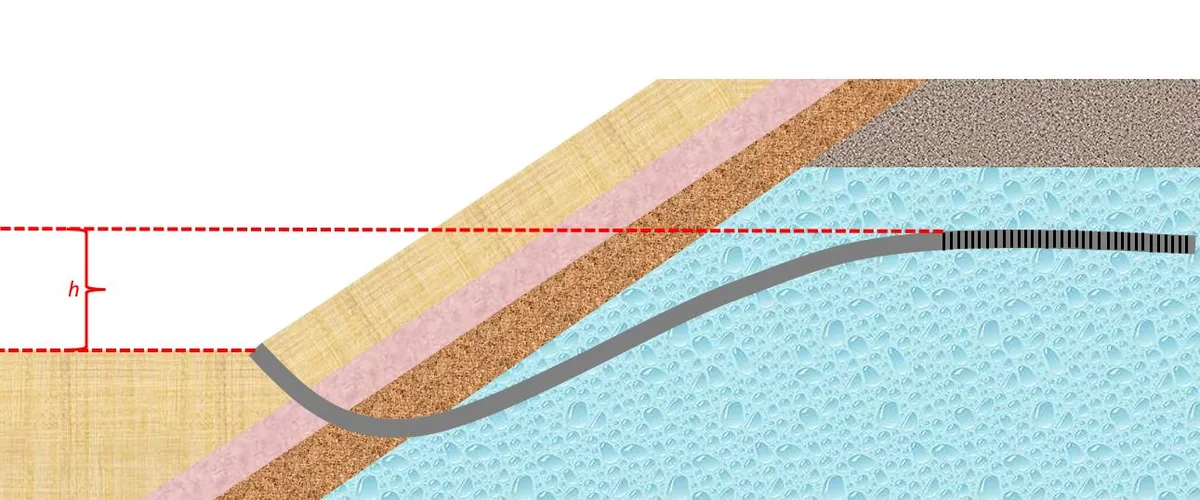
Image source: Bing (Web (fair-use with source credit))
Step-by-step instructions
- Locate the drain port. It’s on the back or bottom of the unit. It looks like a small brass or plastic spigot with a rubber cap. Remove the cap and save it.
- Attach the hose. Slide the end of the 3/8-inch hose over the barbed fitting. Push it on as far as it will go. If it feels loose, dip the end in hot water for a few seconds to soften it.
- Secure the connection. Tighten a hose clamp around the hose and the barb. Don’t overtighten. Finger-tight plus a quarter turn is enough.
- Route the hose downhill. Lay the hose so it slopes continuously toward the drain. Avoid dips and loops where water can pool. Those pools create clogs and air locks.
- Cut the hose to length. Trim the end so it extends an inch or two into the drain. If the hose touches the bottom, water can back up.
- Run a test. Pour a quart of water into the collection tray. Watch the water exit the hose. If you see a steady stream, you’re set.
If you’re routing to a floor drain with a grate, use a floor drain adapter. These inexpensive plastic rings hold the hose in place. Without one, the hose can slip out overnight.
Common Drain Mistakes That Cause Floods, Kinks, and Air Locks
Most continuous drainage failures come from a short list of mistakes. Avoid these, and your dehumidifier will run reliably for years.
Kinked hose. This is the number one cause of drainage failure. A kink blocks the flow completely. Water backs up inside the unit, trips the float switch, and shuts the dehumidifier off.
Route the hose in a straight line with gentle curves. If you must bend around a corner, use a 90-degree elbow fitting.
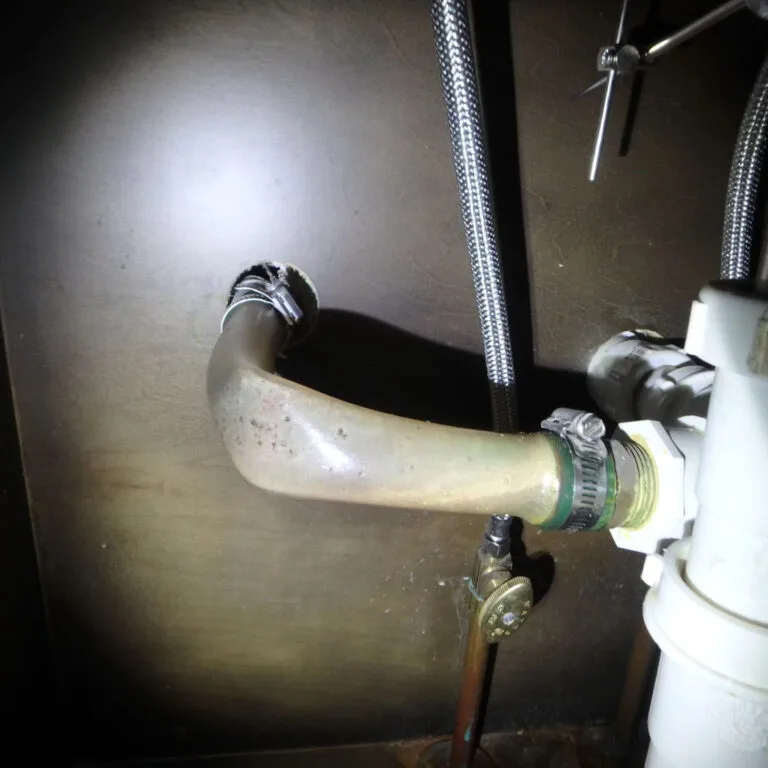
Image source: Bing (Web (fair-use with source credit))
Using a garden hose. Garden hoses are the wrong size and too stiff for a dehumidifier drain port. The barbed fitting is designed for 3/8-inch vinyl hose. A garden hose creates a loose connection that leaks.
Worse, some garden hoses collapse under the vacuum created by a condensate pump, stopping the flow entirely.
Routing the hose uphill. Gravity doesn’t work uphill. Even a small rise in the hose line stops the water. If you need to go up, you need a pump.
Not securing the hose. A loose hose can slip off the port overnight. You wake up to a wet floor. Use a hose clamp or zip tie.
It takes ten seconds and prevents a huge mess.
Blocking the hose end. If the hose rests against the bottom of the drain or gets pushed into debris, water can’t exit. The backup triggers the float switch and the unit stops. Keep the hose end clear.
Air locks. An air lock happens when a pocket of air gets trapped in the hose, blocking water flow. This is most common with long horizontal runs. To fix it, lift the hose at the dehumidifier end so the water pushes the bubble out.
Then re-secure the hose.
Algae and mold buildup. Over time, algae and mold grow inside the hose, especially in warm, humid basements. The slime narrows the tube and eventually blocks it. Flush the hose monthly with one part white vinegar to three parts water.
Not checking the drain port seal. The O-ring inside the drain port can dry out or crack. If the connection leaks even when the hose is tight, replace the O-ring. Most manufacturers sell replacement O-rings for a few dollars.
Most continuous drainage failures trace back to a kink, an air lock, or a pump that stopped working. All three are easy to prevent once you know what to look for.
Maintenance and Long-Term Care: Keep the Water Flowing
A continuous drain setup isn’t truly set-and-forget. Hoses clog, pumps lose prime, and fittings wear out. A small maintenance routine keeps everything running.
Weekly checks (30 seconds)
- Look at the hose for kinks, dips, or leaks.
- Confirm water is actually exiting the drain.
- Wipe down the drain port area to catch small leaks early.
If no water has flowed in a few minutes, check the drain port first, then the hose line.
Monthly maintenance (5 minutes)
- Disconnect the hose and flush it with a vinegar solution (1 part white vinegar to 3 parts water).
- Let the solution sit for 10 minutes, then rinse.
- Inspect the O-ring on the drain port and replace it if cracked.
- Clean any debris from the drain port itself.
Pump-specific care
- Clean the pump intake filter every month.
- Make sure the float switch moves freely.
- Test the check valve so water doesn’t flow backward into the pump.
- Follow the manufacturer’s priming instructions after any cleaning.
Seasonal care
- In cold climates, disconnect any hose that runs through an unheated space. Frozen condensate can crack the hose and back up water.
- If you store the unit for the season, dry the hose and wipe out the drain port before packing it away.
Keeping the drain system clean also helps your unit run efficiently. The Department of Energy notes that a well-maintained dehumidifier uses less energy and removes moisture more effectively.
Frequently Asked Questions
Can I use a garden hose for continuous dehumidifier drainage?
No. Garden hoses are too stiff and too wide for a dehumidifier drain port. They create loose connections that leak.
Some hoses even collapse under the vacuum from a condensate pump. Use a 3/8-inch vinyl hose for gravity setups or 1/4-inch tubing for pump setups.
Why does my dehumidifier still shut off when the drain hose is connected?
The float switch is likely stuck, or the bucket is still in place. Many units require you to leave the bucket installed for the float switch to function. Also check for a kink in the hose or a blocked drain port.
Water backing up will trip the safety switch.
How long can a dehumidifier drain hose be?
For gravity drainage, keep the hose under 10 feet for reliable flow. For pump drainage, check the pump’s specs. Most built-in pumps push water 8 to 12 feet vertically and 15 to 25 feet horizontally.
Anything longer needs a more powerful external pump.
Can I drain a dehumidifier into a sump pump pit?
Yes. The sump pit is a common drain target. Make sure the hose end sits above the pit floor and stays clear of the sump pump float.
If the pump activates and submerges the hose, water can back up. Secure the hose to the pit wall with a clamp.
Do I need a dehumidifier with a built-in pump?
Only if your drain is uphill or far away. If you can route a gravity hose downhill to a floor drain or sink, a built-in pump is unnecessary. But in finished basements where the drain sits above the unit, a built-in pump saves you from buying an external one.
Final Verdict: The Best Drain Setup for Your Situation
Here’s the short version. Start by looking at your drain location. If it’s lower than the dehumidifier and within 10 feet, use gravity.
It’s free, quiet, and nearly maintenance-free. Just attach a 3/8-inch hose with a clamp and route it downhill.
If the drain is uphill, far away, or in another room, you need a pump. A built-in pump keeps things tidy, but an external condensate pump works just as well for 50 to 150 dollars. Make sure the pump’s lift height exceeds your vertical distance.
When choosing a new unit, check whether the model lists a pump as a feature or an option. The best dehumidifiers include both gravity and pump drainage, so you’re covered no matter where you put the unit.
The golden rule: gravity when you can, pump when you must, and always secure your hose. Follow that, and you’ll never empty a bucket again.