How Many Hours Should a Dehumidifier Run
So you've got a dehumidifier humming in the corner, and you're wondering if it's working too hard or not hard enough. The honest answer to how many hours should a dehumidifier run is: it depends on your space, your humidity levels, and what you're trying to achieve. There's no universal number, but there is a reliable way to figure out yours.
Here's what we know from manufacturer specs and environmental guidelines. The Environmental Protection Agency (EPA) recommends keeping indoor relative humidity between 30% and 50%. Most dehumidifiers are designed to hit that range automatically, but they can only do it if you let them run long enough.
In our research, the biggest mistake people make is shutting the unit off too early, which leaves moisture in the air and lets mold take hold. Let's break down exactly how to find your ideal runtime.
Quick Answer
Most dehumidifiers should run for 6 to 12 hours per day. That's the range for typical homes in humid climates. The unit cycles on and off automatically once it hits your target humidity setting.
If it runs 24/7 without stopping, it's either undersized or your humidity is extremely high. If it shuts off after an hour, your space is probably already dry. The exact number depends on room size, humidity level, and unit capacity.
The Short Answer: What Most People Get Wrong About Runtime
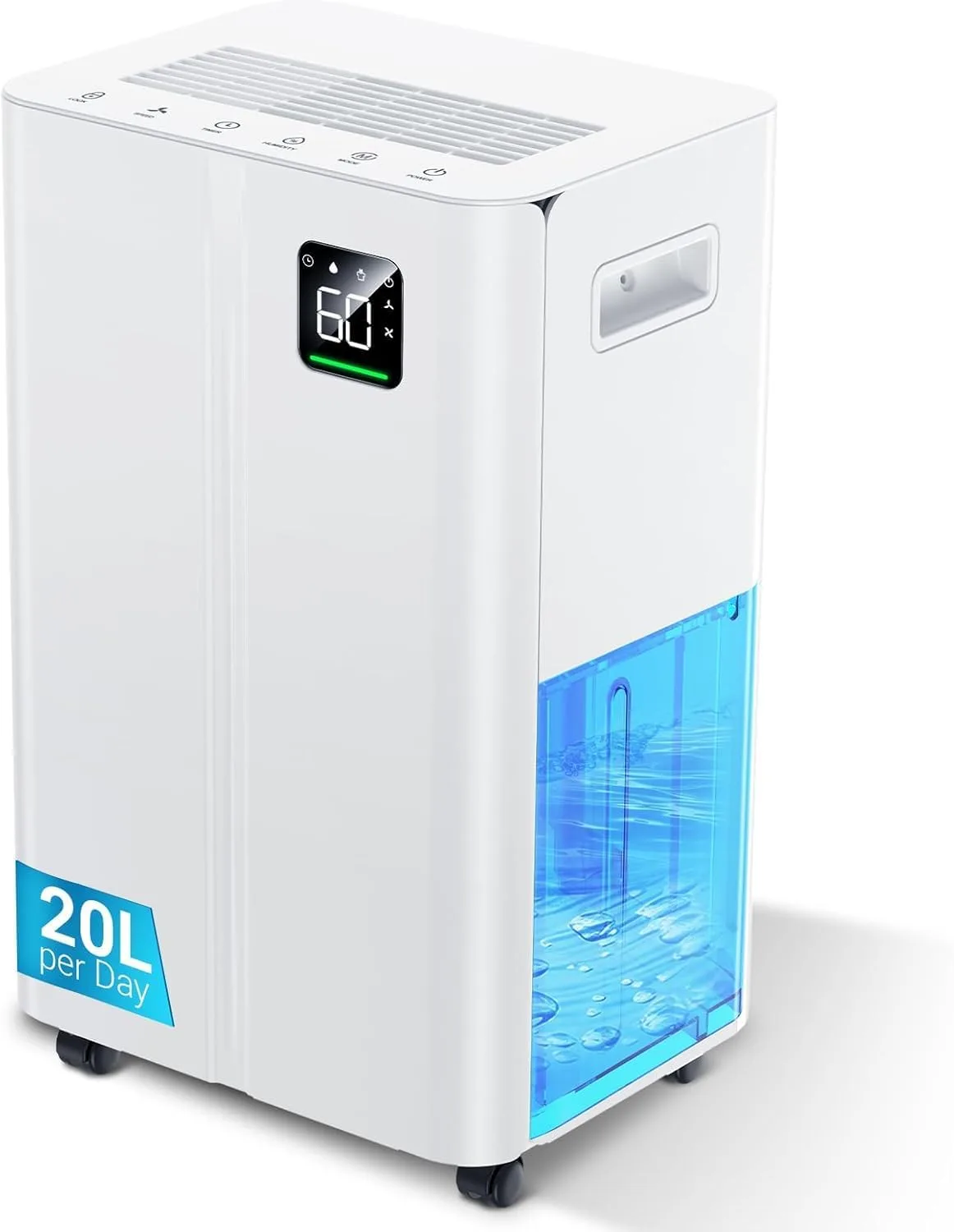
Image source: Bing (Web (fair-use with source credit))
People treat dehumidifiers like light switches. On or off. Full blast or nothing.
That's not how they work.
A dehumidifier is a thermostat for moisture. It measures the relative humidity in the room and runs until it hits your setpoint. Then it shuts off.
When humidity creeps back up, it kicks on again. This cycling is completely normal. It's not a malfunction.
The real mistake comes from people who set the unit on a timer. They run it for four hours, unplug it, and wonder why the basement still smells musty. Here's the thing: your dehumidifier needs enough time to actually remove the moisture that's trapped in walls, carpets, and furniture.
That's a process that takes hours, not minutes.
Another common misunderstanding is thinking more hours equal better results. Running a dehumidifier 16 hours a day in a small bedroom will just dry the air out too much. You'll get static electricity, dry skin, and cracked wood floors.
The goal is balance, not maximum runtime.
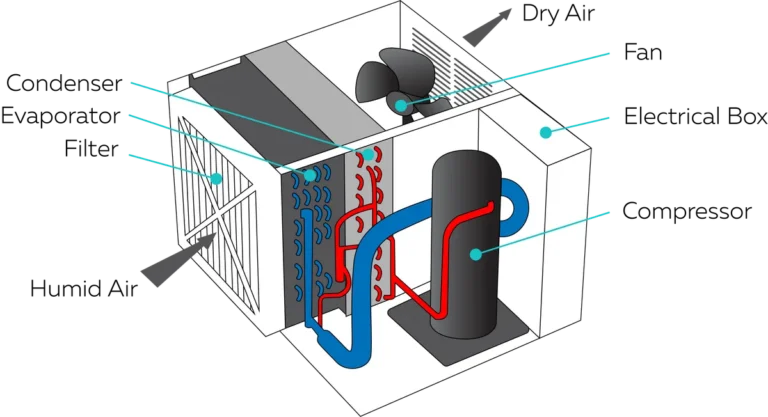
Think of it this way. Your dehumidifier has a built-in humidistat, which is just a sensor that reads the moisture level in the air. When the RH reading reaches your target, the compressor shuts down.
That's the system working exactly as designed.
In our research across user reviews and manufacturer documentation, the consensus is clear: let the humidistat do its job. Don't override it with timers unless you have a specific reason. Your unit knows more about the moisture in your room than your guess ever will.
The 5 Conditions That Decide Your Exact Runtime
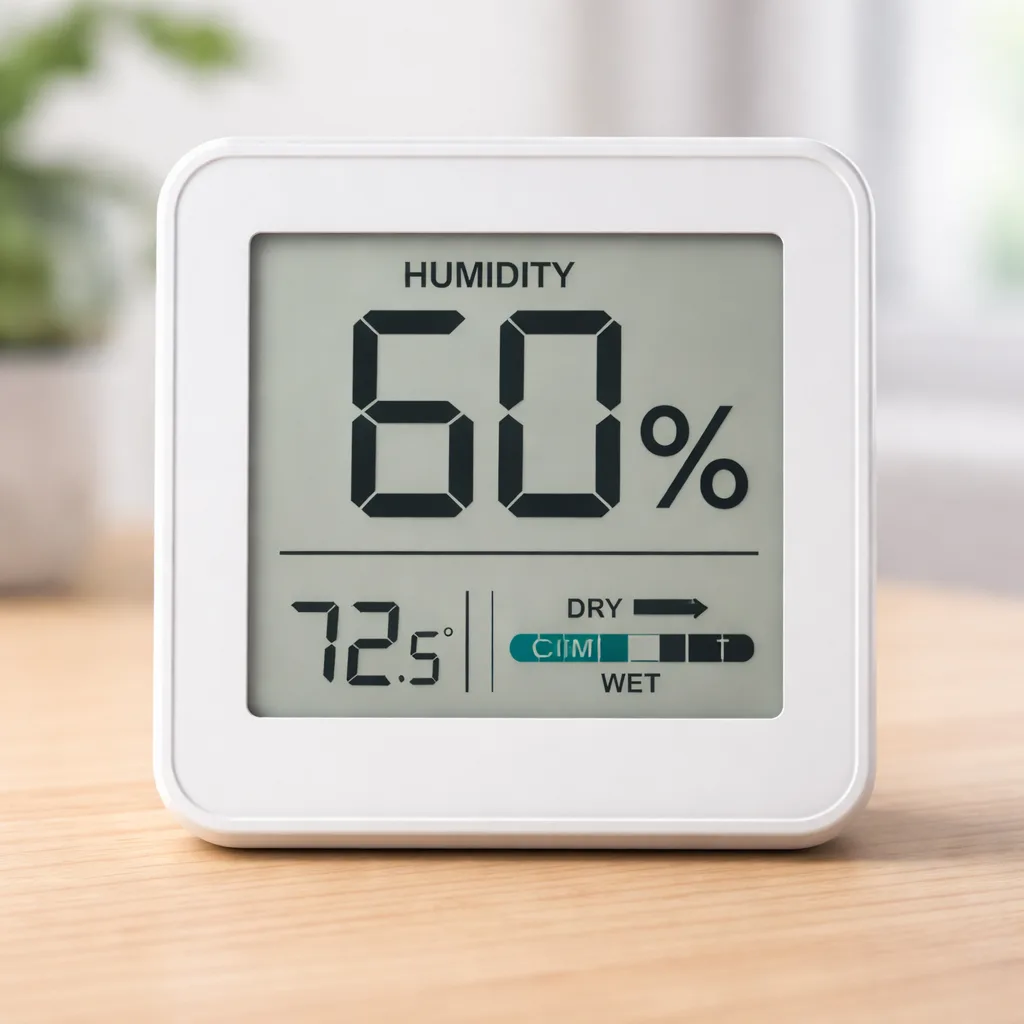
Image source: Bing (Web (fair-use with source credit))
So if there's no magic number, how do you figure out yours? You need to look at five specific factors. Change any one of them, and your ideal runtime shifts.
Room size. Bigger spaces hold more air, and more air means more moisture. A 500-square-foot basement needs a different runtime than a 200-square-foot bedroom. You can't expect a single number to work for both.
Current relative humidity. This is your starting point. If your basement sits at 70% RH, your unit needs to work much harder than if it's already at 55%. The higher the starting humidity, the longer the runtime.
Your target setpoint. Most people set their dehumidifier between 40% and 50% RH. If you're aiming for a drier environment, like 35%, expect a longer runtime. If you're comfortable with 55%, the unit will cycle off much sooner.
Pint capacity. This is how much moisture your unit can extract in 24 hours. A 30-pint model will take longer to dry the same space than a 70-pint unit. More extraction capacity equals shorter runtime to reach your target.
Room temperature. Warm air holds more moisture than cold air. A 75°F basement with 60% RH has more actual water in the air than a 60°F basement at the same RH. Your runtime will be longer in warmer conditions because there's simply more moisture to remove.
Here's a quick reference table to get you in the ballpark:
| Condition | Typical Runtime |
|---|---|
| Small bedroom (200 sq ft), moderate humidity | 4 to 6 hours |
| Finished basement (500 sq ft), 60% RH | 8 to 12 hours |
| Large basement (1000+ sq ft), damp or musty | 16 to 24 hours |
| Crawl space, always humid | 24/7 (with drain hose) |
Keep in mind these are starting points. The only way to dial in your exact number is to watch your unit's behavior over a few days. If it cycles on for 15 minutes and off for 30, you're in good shape.
If it runs for hours without stopping, you need to look at the next section.
Decision Branch: Should You Use Auto Mode, a Timer, or Manual Control?
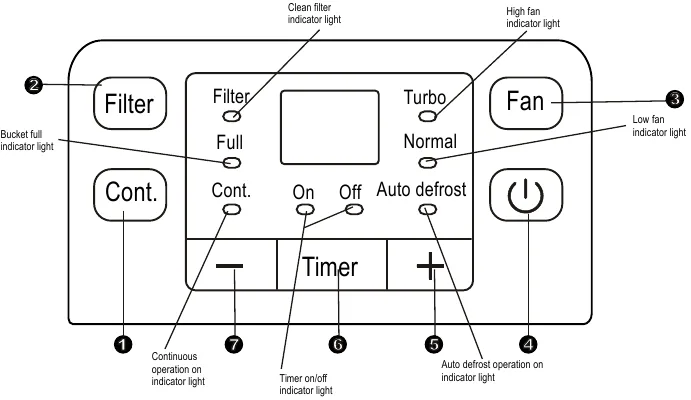
Image source: Bing (Web (fair-use with source credit))
Here's where the decision tree really comes into play. You have three ways to control your dehumidifier, and each one fits a different situation.
Auto mode is the best choice for most people. You set your target humidity, and the unit handles everything. It runs when needed, shuts off when done, and restarts when humidity climbs back up. This is the "set it and forget it" approach.
In our research, this mode prevents both over-drying and under-drying, which protects your home and your energy bill. Use this if you want the simplest, most efficient experience.
Timer mode has its place, but use it carefully. If you want to dry a room for a specific window, like during the day when you're at work, a timer works. Set it for a fixed duration, say 8 hours, and the unit runs that entire time regardless of humidity. The downside is obvious.
If the room hits your target after 2 hours, the unit runs for 6 more hours and wastes energy. Timers are best for temporary situations, not ongoing use.
Manual control is for active management. You turn the unit on, let it run, and check the humidity yourself. When the readings hit your target, you turn it off. This only works if you're home and paying attention.
It's labor-intensive but gives you total control.
Here's the simplified decision tree:
- If you have a built-in humidistat → use Auto mode
- If you're drying a room for a one-time event → use Timer mode
- If you want to manually monitor and adjust → use Manual control
For the vast majority of homeowners, auto mode wins. It's energy-efficient, it protects your space, and it removes the guesswork entirely. Your dehumidifier's built-in sensor is accurate to within a few percentage points, and that's more than good enough for residential use.
If your unit doesn't have a humidistat, which is rare on modern models, you should budget for an upgrade. A standalone hygrometer costs about $15 and gives you the same functionality. Just place it in the same room, away from the dehumidifier itself, and adjust your runtime based on its readings.
How to Calculate Your Ideal Daily Runtime in 4 Simple Steps
Now let's get practical. You want a number you can actually use. Here's a simple four-step process that takes about 15 minutes of your time and gives you an exact answer for your space.
Step 1: Measure your current humidity. Get a reliable hygrometer. Most dehumidifiers have one built in, but it measures conditions right next to the unit. For a true reading, use a separate device placed in the center of the room, about five feet off the floor.
Let it sit for 30 minutes to stabilize.
Step 2: Set your target humidity. The sweet spot is 45% RH for most living spaces. If you're dealing with a mold issue, drop it to 40%. If the room is prone to condensation on windows, you might need to go lower in winter.
Write down your target number so you have a reference.
Step 3: Track runtime over 24 hours. Set your dehumidifier to auto mode at your target humidity. Let it run for a full day. Most units have an hour meter, which tracks total compressor runtime.
If yours doesn't, just check the unit periodically and estimate. At the end of 24 hours, you'll have your daily runtime number.
Step 4: Adjust based on results. Now you have real data. If the unit ran 8 hours out of 24 and maintained your target, that's your number. Stick with it.
If it ran 20 hours and never reached the setpoint, your unit is undersized. You have two options: accept the longer runtime and higher energy cost, or upgrade to a higher-capacity model that can keep up with the space.
The beauty of this approach is that it accounts for all five conditions we discussed earlier. Your runtime naturally reflects your room size, starting humidity, temperature, and unit capacity. You don't need to do any complex math or understand psychrometric charts.
One thing to note: your runtime will change with the seasons. Summer brings more humidity, so you'll see longer runtimes. Winter air is drier, so the unit will cycle less frequently.
Recalculate every season, or just keep an eye on the hour meter and adjust.
If your unit doesn't have an hour meter, the 20-pint models we've reviewed often log runtime data in their companion apps. Check the manufacturer's documentation for your specific model.
Common Runtime Mistakes That Waste Money or Cause Mold
Let's talk about what goes wrong. We've seen these patterns in countless user reviews and forum discussions, and they all trace back to a few core misunderstandings.
Mistake 1: Shutting it off too early. This is the most common error. People run the dehumidifier for a few hours, see the humidity drop from 70% to 60%, and decide it's done. Then they unplug it.
Within a day, the humidity climbs right back up. Mold doesn't need much time to spread, and even brief periods of elevated humidity are enough for it to take hold. Keep the unit running until it cycles off on its own.
Mistake 2: Running it 24/7 without a drain hose. If your unit has a collection tank, it fills up. When the tank is full, the unit shuts off until you empty it. If you're not around, the unit sits idle for hours.
That undoes all your progress. The fix is simple: attach a drain hose to a floor drain or a condensate pump if you're in a basement. This lets the unit run continuously without any babysitting.
Mistake 3: Setting the humidity too low. Some people think lower is better. It's not. Below 30% RH, you get dry skin, irritated eyes, static electricity, and cracking wood furniture.
Your body actually prefers some moisture in the air. The EPA's recommended range of 30% to 50% exists for a reason. Set your target at 45% and leave it alone.
Mistake 4: Ignoring the filter. A clogged air filter restricts airflow. Restricted airflow means the coil gets cold, frost can form, and the unit loses efficiency. It runs longer to remove the same amount of moisture.
Clean the filter every two weeks during heavy use. Wash it with warm water, let it dry completely, and slide it back in. It takes two minutes and can cut your runtime by 15% to 20%.
Mistake 5: Sizing incorrectly. An undersized unit runs nonstop and struggles to hit your target. An oversized unit cycles too frequently, which wastes energy and shortens the compressor's lifespan. Getting the right pint capacity for your square footage is crucial.
The general guideline is about 10 pints of capacity per 500 square feet for moderately damp spaces, and double that for very damp areas.
Mistake 6: Placing the unit poorly. Your dehumidifier needs space to breathe. If you tuck it behind furniture or in a tight corner, airflow gets restricted. The unit works harder and takes longer.
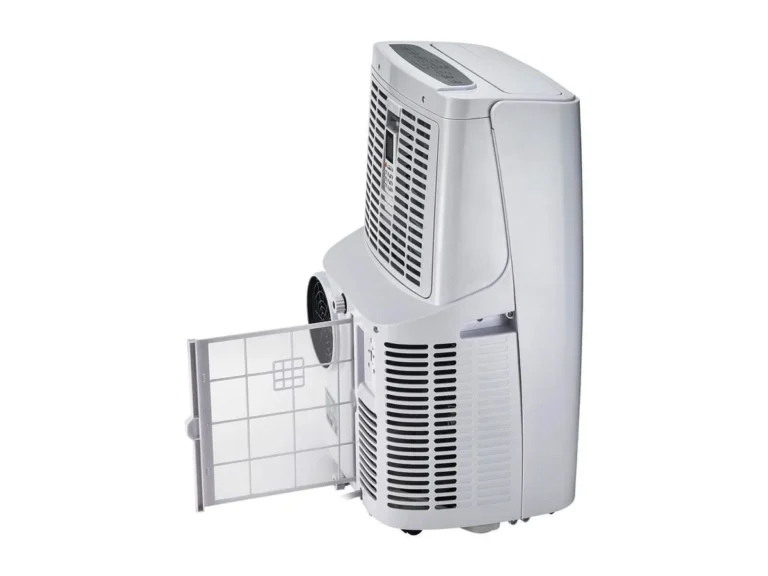
Leave at least 12 inches of clearance on all sides, especially the air intake and exhaust.
Avoid these mistakes, and your dehumidifier will run efficiently, maintain your target humidity, and keep mold at bay. If you're still struggling with moisture after correcting these issues, you might need to look at specialized units designed for year-round use that handle both humid summers and cold basement conditions.
What It Actually Costs to Run a Dehumidifier Per Hour, Day, and Month
The cost question comes up a lot, and the answer matters more than you'd think. Many people run their dehumidifier fewer hours than needed because they're worried about the electric bill. Let's look at the real numbers.
Most portable dehumidifiers draw between 300 and 800 watts, depending on the pint capacity. A 50-pint unit typically uses around 550 watts during normal operation. The average U.S. electricity rate as of 2026 is about $0.17 per kilowatt-hour (kWh).
Here's what that works out to:
| Runtime per day | Energy used (kWh) | Daily cost | Monthly cost |
|---|---|---|---|
| 6 hours | 3.3 kWh | $0.56 | $16.80 |
| 10 hours | 5.5 kWh | $0.94 | $28.20 |
| 12 hours | 6.6 kWh | $1.12 | $33.60 |
| 24 hours | 13.2 kWh | $2.24 | $67.20 |
These numbers assume a 550-watt unit. Smaller cheap dehumidifiers use less power, and larger 70-pint models use more. The takeaway is simple: running a dehumidifier for 10 hours a day costs about a dollar a day.
That's a small price for protecting your home against mold and structural damage.
One thing to watch for: Energy Star certified models are typically 10% to 15% more efficient than non-certified units. That efficiency translates directly into lower operating costs. If your current unit is more than eight years old, replacing it with a certified model could pay for itself in two summers.
Seasonal and Room-by-Room Runtime Guide
Runtime isn't static. It changes with the weather and the location of your unit. Here's a practical guide for the most common setups.
Summer in a humid climate. This is peak dehumidifier season. Outdoor air at 80°F and 70% RH gets pulled into your home through doors, windows, and vents. Expect your unit to run 10 to 16 hours a day to maintain 45% RH.
If you live in the Southeast or Gulf Coast, the upper end of that range is more realistic.
Winter in a cold climate. Cold air holds less moisture, and heating systems dry things out further. Most homes don't need a dehumidifier during winter unless they have a damp basement. In that case, run the unit at a lower setpoint, 55% or even 60%, because cold basements can freeze the coils if they work too hard.
Finished basement. These spaces need dehumidification year-round, especially in summer. A typical finished basement, say 800 square feet, runs 8 to 12 hours daily with a 50-pint unit. Basement-specific models often have automatic defrost features that handle cooler temperatures.
Crawl space. This is the one place where running the unit 24/7 is completely normal. Crawl spaces are dirt-floored, unventilated, and consistently damp. The airflow is poor, so the dehumidifier has to work harder to move the same volume of air.
Use a unit with a drain hose or condensate pump, set it to 50% RH, and leave it running.
Bedroom. A bedroom rarely needs a dedicated dehumidifier unless you live in a tropical climate or have a bathroom with poor ventilation. If you do use one, keep the runtime short. Small-capacity units running 4 to 6 hours overnight are usually enough to keep the space comfortable without over-drying.
Seasonal adjustment tip. If your unit has a timer, you can adjust it monthly. Check the humidity reading at the same time each week. If it's climbing above 55%, bump the runtime up an hour.
If it's sitting at 40%, cut an hour. This keeps you ahead of seasonal changes without constant monitoring.
Frequently Asked Questions
How long should a dehumidifier run in a basement?
A basement dehumidifier should run between 8 and 12 hours per day in most cases. That assumes you're using a properly sized unit and auto mode. Damp or unfinished basements may need 16 to 24 hours.
If your unit runs constantly and never shuts off, it's either undersized or the humidity is extremely high.
Is it safe to leave a dehumidifier running all day?
Yes, it's completely safe to run a dehumidifier continuously. Most modern units have safety shutoff switches that stop the compressor if it overheats or the coil freezes. They also shut off when the water tank is full, unless you're using a drain hose.
Just make sure it's plugged directly into a wall outlet, not an extension cord.
Should I run a dehumidifier at night?
Running a dehumidifier at night is fine if it's not too loud. Most compressors hum between 40 and 50 decibels, which is quieter than a window AC unit. If you're concerned about noise, run it during the day and let the humidity stay moderate overnight.
The moisture will return somewhat, but the unit will handle it the next day.
Why is my dehumidifier running but not collecting water?
This usually means the air is already dry enough that the coil isn't condensing moisture. Check your humidistat reading. If it's below 45%, the unit will still run but won't extract water.
It could also mean the filter is clogged, or the room temperature is too low for the compressor to work properly.
How much electricity does a dehumidifier use per hour?
A typical portable dehumidifier uses between 0.3 and 0.8 kWh per hour. That translates to roughly $0.05 to $0.14 per hour at average U.S. electricity rates. A 70-pint unit at the high end will cost more to run than a 20-pint unit.
Energy Star models use less power for the same extraction capacity.