How to Set up a Dehumidifier
Learning how to set up a dehumidifier the right way can save you a lot of frustration. Most people just plug it in, set it to some number, and hope for the best. That's usually why they end up with a unit that runs all day but barely collects any water.
The truth is that a dehumidifier works differently depending on where you put it, how you drain it, and what's happening with the air in your space. Per EPA guidance, keeping indoor relative humidity between 30% and 50% is the sweet spot for comfort and mold prevention. But getting there starts with the setup, not the settings.
Let's walk through the decisions that actually matter.
Quick Answer: The Setup Flow in 60 Seconds
Place the unit in the center of the room. Keep it at least six inches from any wall. Check that the air intake is clear.
Plug it directly into a wall outlet. Never use an extension cord.
Set the humidity target to 50%. Let it run for 24 hours. Check the water collection.
If the bucket fills fast, switch to a continuous drain hose. If the hose can't drain downhill, get a unit with a condensate pump.
That's the core flow. Everything else is about your specific room conditions.
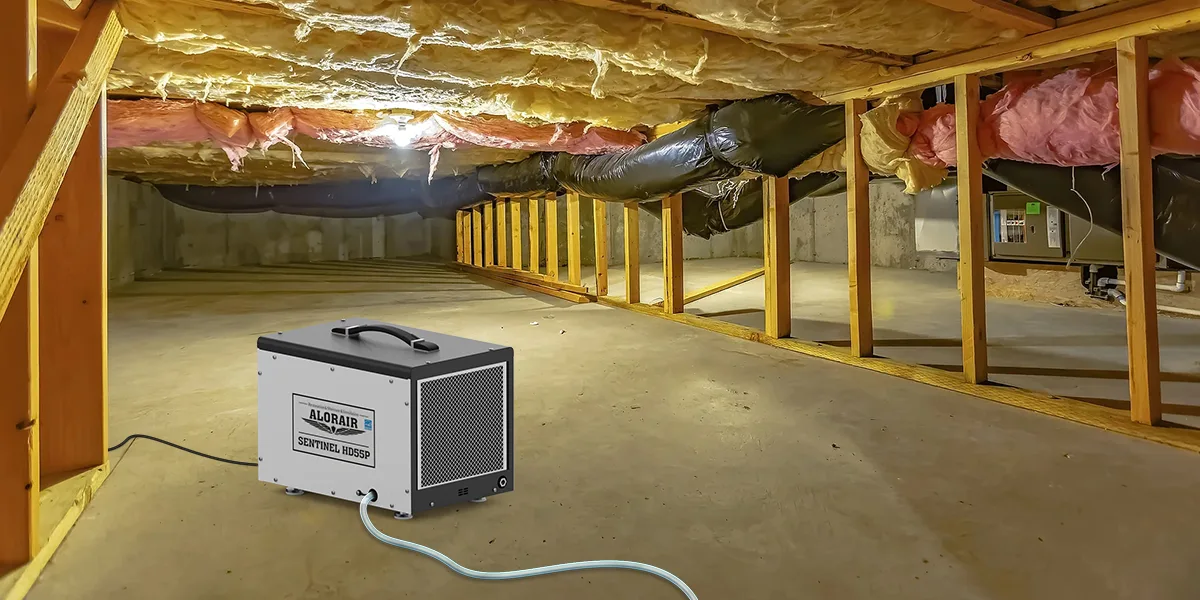
Image source: Bing (Web (fair-use with source credit))
What Your Setup Depends On: The Decision Variables
Your setup changes based on three things. Room size. How damp the space is.
And the temperature of the room.
Room size determines capacity. The Department of Energy notes that an oversized or undersized unit wastes energy. A 30-pint unit works for a small bedroom or office. A 50-pint unit covers a medium basement or large living area.
A 70-pint unit handles a big basement or a very damp space. Check the manufacturer's coverage rating, not just the pint number. If you're unsure about matching the capacity to your space, our guide on units built for large rooms breaks down the math.
Dampness level changes the target. A space that feels humid but has no visible moisture needs a 50% setting. A basement with musty smell or condensation on walls needs 40% or even 35%. If the room has standing water or heavy mold, you need a much larger unit first.
Temperature matters for compressor units. Most portable dehumidifiers use a compressor. They work best above 65°F. Below 60°F, they start to lose efficiency.
Below 50°F, the coils can freeze. If your basement stays cold, look for a desiccant dehumidifier or one with a good defrost mode.
| Variable | Condition | Action |
|---|---|---|
| Room size | Under 500 sq ft | 20-30 pint unit |
| Room size | 500-1500 sq ft | 50 pint unit |
| Room size | Over 1500 sq ft | 70+ pint unit |
| Dampness | Slightly humid | Set to 50% RH |
| Dampness | Musty/condensation | Set to 40% RH |
| Temperature | Above 65°F | Compressor works fine |
| Temperature | Below 60°F | Consider desiccant type |
Placement Rules: Where It Works and Where It Fails
Placement is the single most common mistake people make. Put the unit in the wrong spot and it will run forever without pulling down the humidity.
Center of the room is best. Air needs to circulate around the unit. The intake is on the side or front. The exhaust is on the top or side.
If you push it against a wall, the intake pulls from a dead air zone. It recirculates dry air and never captures the wet air across the room.
Keep six inches of clearance. All sides need space. The manual says six inches minimum. Twelve inches is better.
Do not tuck it behind furniture or curtains.
Level the unit. Most dehumidifiers have adjustable feet. If the unit tilts, the water may not drain properly into the bucket or the hose connection. A slight tilt can also confuse the humidistat sensor.
Room type changes placement. In a basement, put the unit near the center and away from the walls. In a bedroom, place it near the middle of the room but not right next to the bed. The noise and airflow are disruptive.
In a bathroom or laundry room, put it in a central spot where air moves freely. For crawl spaces, follow the manufacturer's specific instructions for that sealed environment.
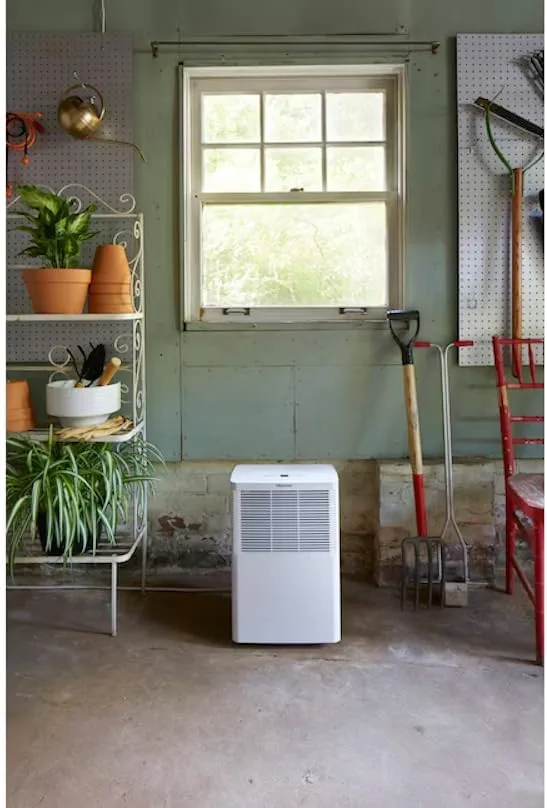
Image source: Bing (Web (fair-use with source credit))
Where not to put it. Never place it in a corner. Never put it directly against a wall. Never set it on a rug or carpet that blocks the bottom intake.
Never put it in direct sunlight. The sensor can read a false temperature and run inefficiently. Never put it near a heat source like a furnace or dryer vent.
If you're working with a basement, our article on common basement setups covers the specific placement challenges for below-grade spaces.
Drain Setup: Bucket, Gravity Hose, or Condensate Pump
This is the big fork in the road. Your drain method determines how much maintenance you do and whether the unit runs continuously.
Bucket mode is fine for small spaces. If you have a bedroom or small office, the bucket is convenient. You just empty it every day or two. The unit has an auto shutoff when the bucket is full.
That's a good safety feature. But if the bucket fills and the unit shuts off, your humidity spikes back up. You lose all the progress.
Continuous gravity drain is the best option when you can use it. You attach a hose to the drain port on the unit. The hose runs to a floor drain, utility sink, or sump pit. The water flows out by gravity.
The unit never shuts off from a full bucket.
The catch is that the hose must slope downhill. Every inch of hose must go downward. If the hose goes uphill at any point, water pools inside and the drain stops.
Most units need the hose to exit at the bottom of the unit. If your drain is higher than the unit, gravity won't work.
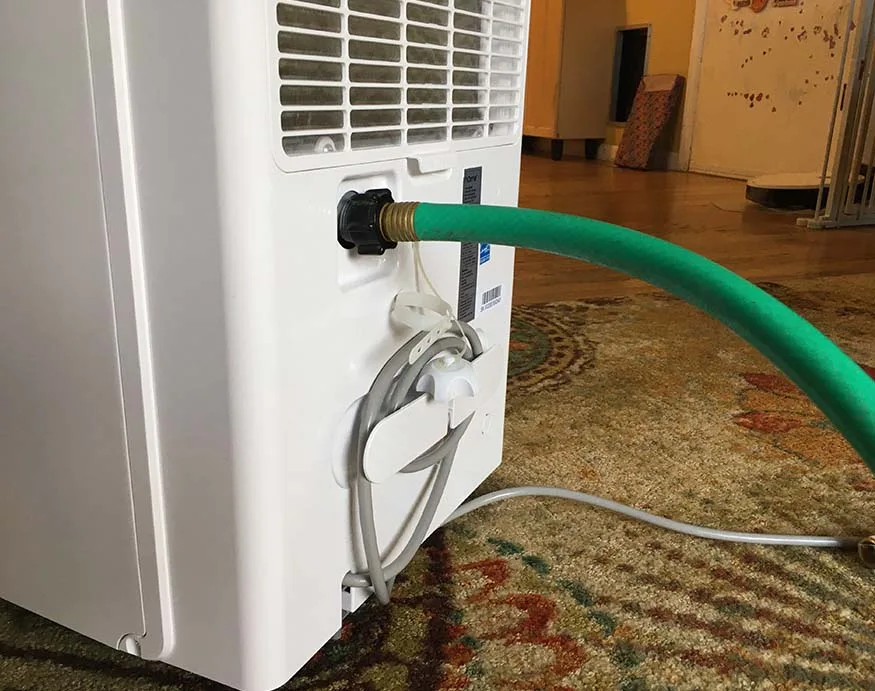
Image source: Bing (Web (fair-use with source credit))
Condensate pump is for when gravity fails. If your drain is above the unit, like a basement window well or a sink counter, you need a pump. Some dehumidifiers have a built-in pump. Others need an external pump.
The pump pushes water uphill through a small tube. Most pumps can lift water 10 to 20 feet vertically.
A built-in pump adds cost but eliminates the hassle. External pumps are cheaper but require extra installation and take up space. If you're shopping for new units, the ones with pumps are clearly labeled.
Look for "built-in pump" in the specs. Our guide to practical drainage options covers which units include a pump and which need an add-on.
Common Setup Mistakes and How to Avoid Them
Choosing the wrong size unit. An undersized unit runs constantly and never catches up. An oversized unit short cycles, turning on and off too fast. It removes surface moisture but never pulls the deep humidity out of materials.
Match the capacity to the room size and dampness level.
Placing it too close to walls. This blocks the intake. The unit works harder, uses more electricity, and removes less water. Keep that six inch minimum.
Twelve inches is safer.
Kinked or uphill drain hoses. A continuous drain hose must run straight downhill. Any kink or uphill section stops the flow. Check the hose path before you walk away.
Use a stiff hose, not a soft vinyl one that collapses.
Setting the humidity target wrong. People set it to 30% or 70%. At 30%, the unit runs constantly. At 70%, you barely remove any moisture.
Start at 50%. Adjust down by 5% each day until the room feels comfortable. Never go below 30% without a reason.
Overly dry air can cause static shocks and dry out wood furniture.
Using an extension cord. Dehumidifiers draw a lot of power. Extension cords can overheat. They can also cause a voltage drop that damages the compressor.
Plug directly into a grounded wall outlet. If you must use a cord, choose a heavy duty 12 gauge cord rated for the unit's amperage. Better yet, move the unit closer to the outlet.
Skipping the filter check. The filter catches dust and debris. A clogged filter reduces airflow. The unit runs longer and less efficiently.
Clean or replace the filter every one to three months. Check it on day one. Some units ship with a plastic film on the filter that you must remove.
If you want to keep the unit running well for years, our article on long term performance covers the maintenance schedule in detail.
Frequently Asked Questions
How long does it take before I notice a difference?
Most dehumidifiers pull down humidity noticeably within 24 to 48 hours. In a moderately damp room, you'll see the bucket fill within the first day. In a very damp basement, it can take three or four days to reach the target humidity.
The unit runs continuously at first. That's normal.
What humidity level should I set it to?
Start at 50%. That's the sweet spot for comfort and mold prevention per EPA guidance. If the room still feels damp after 24 hours, drop it to 45%.
If you see condensation on windows or walls, go to 40%. Never go below 30% without a specific reason. Overly dry air can damage wood furniture and cause static shocks.
Why is my unit running but collecting no water?
This usually means the room is already dry enough. Check the humidity reading on the display. If it's below your set point, the unit is maintaining, not collecting.
If the reading is high but the bucket is empty, check the filter. A clogged filter reduces airflow. Also check the drain hose for kinks if you're using continuous drain.
If the bucket is misaligned, the safety switch may prevent the unit from running in collection mode.
Can I use it in a cold basement or garage?
It depends on the type. Compressor dehumidifiers lose efficiency below 65°F and can freeze below 50°F. If your basement stays below 60°F, look for a unit with a good defrost mode or choose a desiccant dehumidifier.
Desiccant units work well down to freezing temperatures. They cost more to run. But they don't freeze up.
Do I really need a unit with a pump?
You need a pump if your drain point is higher than the dehumidifier. For example, a basement window well or a utility sink on a counter. If you can run a gravity hose downhill to a floor drain, you don't need a pump.
If you're not sure, measure the height difference. A pump lifts water 10 to 20 feet vertically. Gravity drains only work downhill.
The Final Setup Checklist: Did You Get It Right?
Use this checklist after you set the unit up. Run through it once. Then check again after 24 hours.
Right after setup:
- The unit is at least six inches from any wall. Twelve inches is better.
- The air intake is not blocked by furniture, curtains, or a rug.
- The unit is level. Check the adjustable feet.
- The drain hose runs continuously downhill. No kinks. No uphill sections.
- The hose connection is tight. No leaks at the port.
- The unit is plugged directly into a grounded wall outlet. No extension cord.
- The filter is clean and installed correctly. Remove any plastic film.
After 24 hours of running:
- The bucket has collected water. If not, check the settings and placement.
- The humidity reading on the display has dropped. It should be lower than the starting room humidity.
- The unit is not short cycling. That means it runs for at least 10 minutes before shutting off.
- The room feels less damp or musty. Trust your nose. A musty smell means moisture is still present.
Fine tuning if needed:
- If the humidity is not dropping, lower the set point by 5%. Wait another 24 hours.
- If the unit runs constantly and never shuts off, the room may be too large for the capacity. Check our guide on sizing for larger spaces.
- If the unit cycles on and off too fast, move it further from the wall. The sensor may be reading a false local humidity.