Can a Dehumidifier Run Continuously in a Basement
Can a dehumidifier run continuously in a basement? Yes, but only under the right conditions. The short answer is that it's safe and effective for many basements.
But it can also lead to ice buildup, a flooded floor, or a wasted electricity bill if you get the setup wrong.
The Department of Energy recommends keeping indoor relative humidity between 30% and 50%. Running a dehumidifier 24/7 is a common approach. Whether it works depends on your basement's temperature, your drainage setup, and the target humidity level.
Let's break down the conditions that make continuous operation safe and effective.
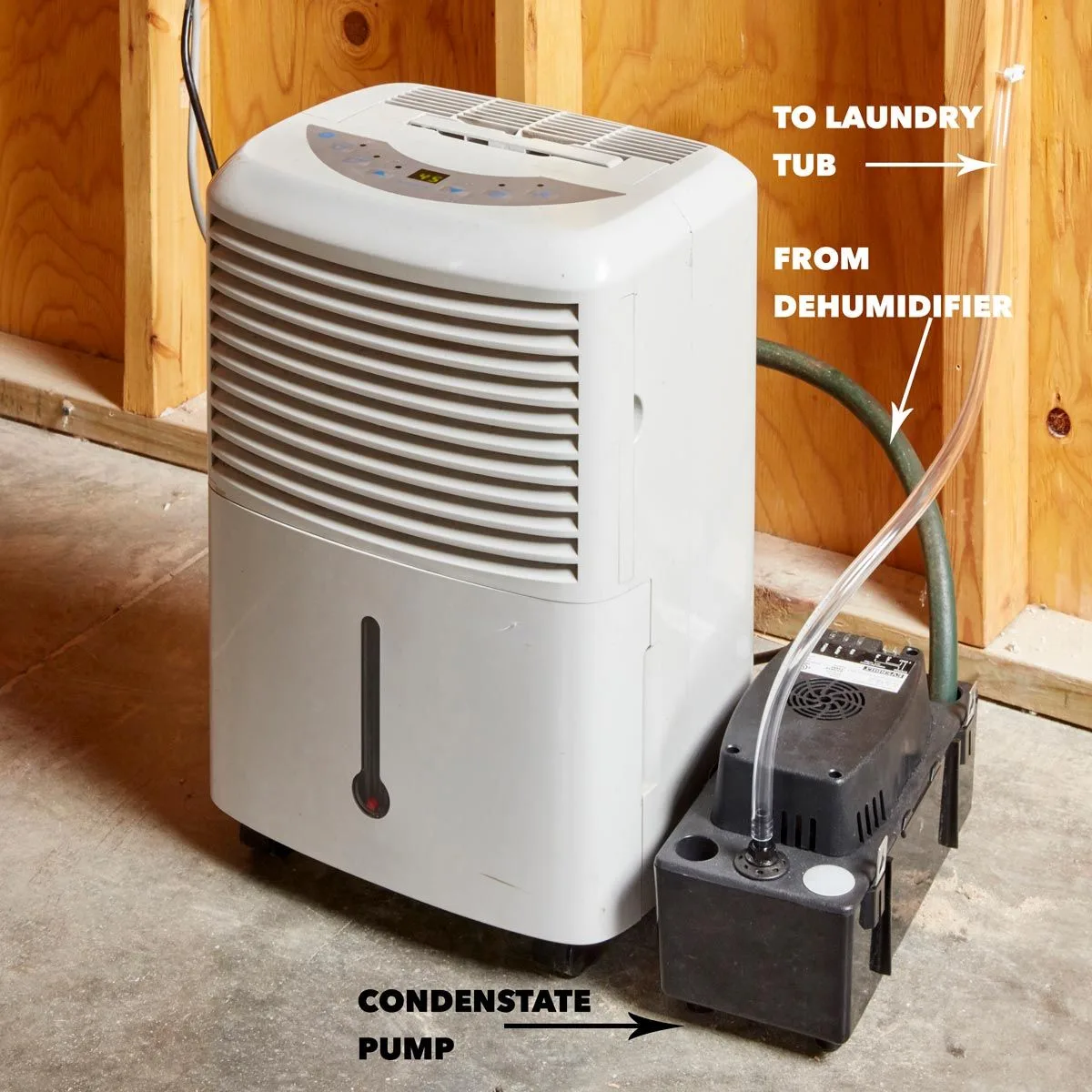
Image source: Bing (Web (fair-use with source credit))
Quick Answer
Yes, a dehumidifier can run continuously in a basement. But only if three conditions are met. The space must stay above 65°F.
You need a continuous drain line. And the humidity should stay above 30%.
If your basement is below 60°F, most compressor models will ice up. If you rely on the bucket, it will fill in hours. If you set the humidistat below 30%, the unit will run forever and never shut off.
For a deeper look at the right equipment, check out the best 50-pint dehumidifier for basement options if you're dealing with a large or damp space.
What Happens Inside When a Dehumidifier Runs Non-Stop
A dehumidifier pulls warm, humid air across refrigerated coils. The moisture condenses into water. The dry air is blown back into the room.
When you run it continuously, the compressor stays on and the fan keeps moving air.
The key component is the humidistat. This built-in sensor measures relative humidity. In continuous mode, the humidistat tells the compressor to keep running until the air reaches the setpoint.
If the setpoint is 50% and the basement is at 70%, the compressor will run non-stop until it crosses that threshold.
Per the U.S. Department of Energy testing, most units pull about 500 to 700 watts per hour under full load. That means running a 50-pint unit 24/7 costs roughly $1.50 to $2.00 per day in electricity depending on local rates.
A year-round model can handle this workload well, but the unit needs to be matched to the space.
The compressor cycles on and off to maintain the setpoint once the humidity target is reached. In a truly continuous run scenario, the compressor never shuts off unless the air is already dry enough. That's why the temperature and humidity conditions matter so much.
The Real Decision Tree: Temperature, Drainage, and Humidity Levels
This is where the decision tree comes in. You need to check three variables before you let the machine run 24/7. Here is the if/then logic.
Temperature Check
| Condition | What happens | What to do |
|---|---|---|
| Basement stays above 65°F | Unit runs normally | Continuous operation is fine |
| Basement stays 60°F to 65°F | Some models may ice up | Check owner manual for low-temp rating |
| Basement stays below 60°F | Coils freeze, water stops | Stop continuous run, use a desiccant unit or timer |
Drainage Check
| Setup | Result | Best practice |
|---|---|---|
| Floor drain or sump pit nearby | Continuous drain works | Use a garden hose, check for clogs |
| No floor drain, no sink | Must use bucket or pump | Add a condensate pump or empty bucket daily |
| Bucket only | Fills in 6 to 12 hours | Continuous run is not safe without drain |
Humidity Target Check
| Setpoint | Behavior | Recommendation |
|---|---|---|
| 50% to 60% | Unit cycles on and off | Ideal for mold prevention |
| 40% to 50% | Runs longer, may run continuously | Fine for comfort |
| Below 30% | Runs non-stop, never shuts off | Avoid – wastes energy, damages wood |
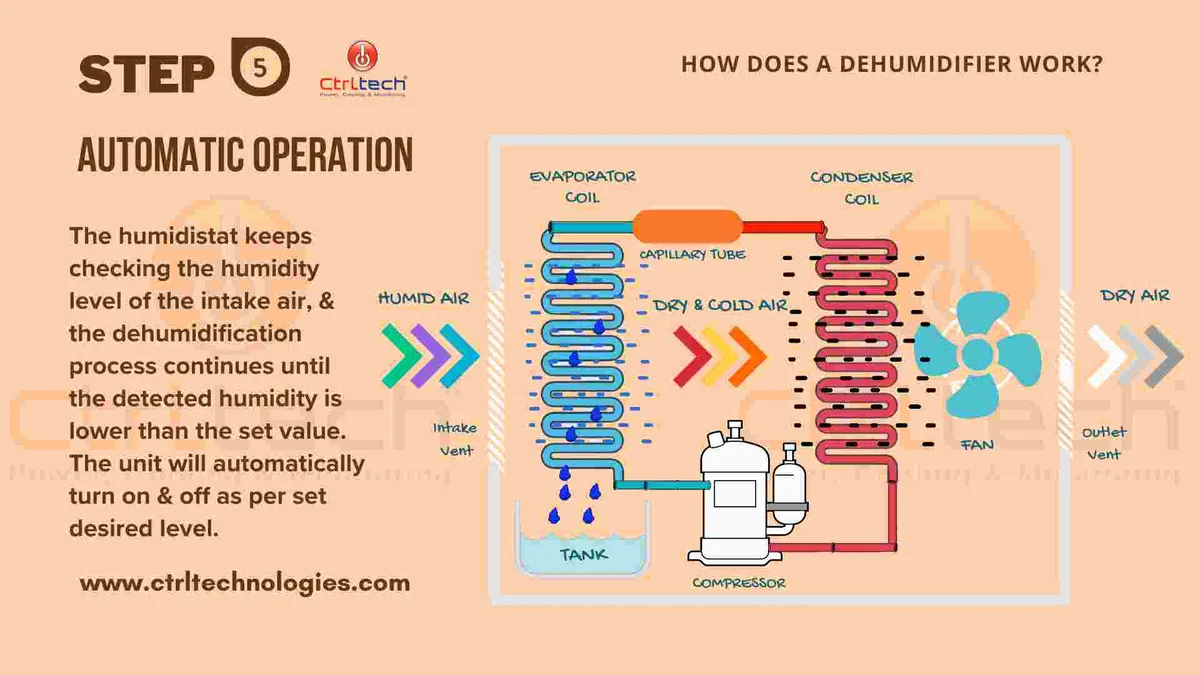
Image source: Bing (Web (fair-use with source credit))
If your basement checks all three boxes, continuous operation is safe. If even one condition fails, you need to adjust. A premium dehumidifier with a built-in pump and low-temperature rating can handle more challenging conditions.
But it still needs to be set up correctly.
Setting It Up for Continuous Operation: Drain Lines, Pumps, and RH Targets
Let's walk through the actual setup. This is the step that most people get wrong.
Step 1: Choose the Drain Method
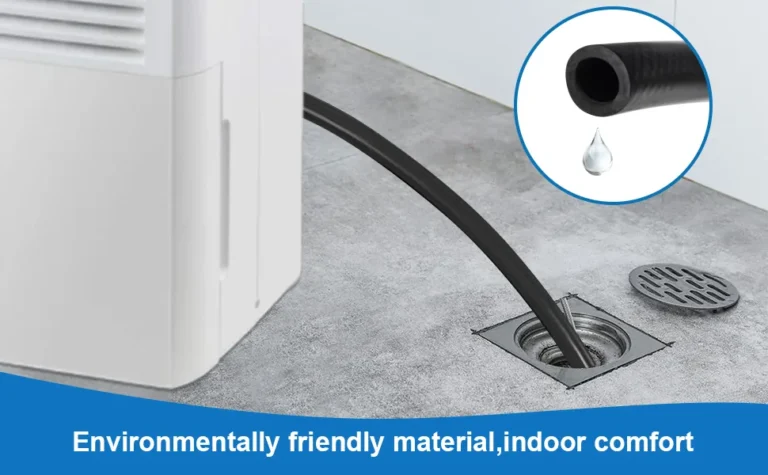
The easiest option is a gravity drain. Connect a standard garden hose to the unit's drain outlet. Run the hose downhill to a floor drain, sump pit, or utility sink.
The hose must slope downward continuously. If it dips or rises, water will back up and trigger the bucket-full sensor.
If you don't have a floor drain, you need a condensate pump. Many units come with a built-in pump. Others require an external pump.
The pump moves water uphill through a small tube. This allows you to route it to a sink or window. Most pumps can lift water 10 to 15 feet vertically.
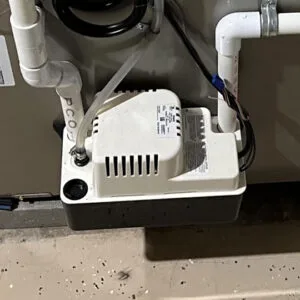
Image source: Bing (Web (fair-use with source credit))
Step 2: Set the RH Target
For continuous operation, set the humidistat to 50% to 60%. This is the sweet spot for mold prevention and energy efficiency. If you set it lower, the unit will run longer and may never cycle off.
If you set it higher, mold can grow.
Step 3: Use a Timer (Optional)
If your basement is very cold at night, use a timer on the outlet. Run the unit for 8 hours during the warmest part of the day. This prevents ice buildup and saves electricity.
A good-value option with a timer function can handle this gracefully.
Step 4: Check the Filter Weekly
A clogged filter reduces airflow. Low airflow causes ice on the coils. Clean or replace the filter every month during continuous operation.
This is the most common maintenance mistake.
Mistakes That Lead to Ice, Flooded Floors, and Wasted Electricity
These are the five most common errors people make when running a dehumidifier continuously in a basement.
Running Below 60°F
Most compressor dehumidifiers are rated for 65°F to 90°F. Below 60°F, the coils freeze. The fan still runs, but no water collects.
The unit wastes electricity and does nothing. If your basement is that cold, use a desiccant dehumidifier or run the unit on a timer.
Using the Bucket Instead of a Drain
A 50-pint unit pulls about 50 pints per day in a humid basement. That's 6 gallons. A typical bucket holds 2 to 3 gallons.
You will be emptying it every 4 to 8 hours. One missed emptying and the unit shuts off. The humidity climbs back up.
Continuous operation only works with a continuous drain.
Setting the RH Too Low
Setting the humidistat below 30% forces the unit to run non-stop. This wastes energy and can dry out wooden floors, furniture, and musical instruments. It also causes the compressor to wear out faster.
Per the EPA, indoor humidity below 30% is not recommended for health reasons.
Ignoring the Filter
A dirty filter is the number one cause of ice buildup. It reduces airflow, which lowers the coil temperature. Even a warm basement can cause ice if the filter is clogged.
Clean it every two weeks during continuous use.
Not Checking the Drain Hose
The drain hose can clog with algae, mold, or debris. It can also kink or get pinched behind furniture. Check the hose monthly.
Run a cup of white vinegar through it every three months to prevent algae growth.
If you are shopping for a budget-friendly choice, look for models with a washable filter and a clear drain hose. That makes maintenance much easier.
When Continuous Operation Is a Bad Idea (And What to Do Instead)
Continuous operation is not always the right call. Here are the situations where you should stop running the unit non-stop.
Your Basement Stays Below 60°F
Cold basements wreck compressor dehumidifiers. The coils freeze. The fan runs but no water collects.
You pay for electricity and get nothing. If your basement stays below 60°F most of the year, switch to a desiccant dehumidifier. These units use a chemical rotor instead of cold coils.
They work well down to 40°F. They cost more upfront but save you the headache of ice.
You Rely on the Bucket
A 50-pint unit pulls up to 6 gallons per day. The typical bucket holds 2 to 3 gallons. You will empty it every 4 to 8 hours.
Miss one session and the unit shuts off. The humidity climbs back up. This defeats the purpose of continuous operation.
If you cannot install a drain line, run the unit on a timer instead. Set it for 8 hours while you are awake and can check the bucket.
You Have a Small, Dry Basement
If your basement is already below 50% relative humidity, running the unit non-stop will over-dry the space. Wood floors can shrink. Musical instruments can crack.
You may also get static shock. In this case, use the humidistat to set a target and let the unit cycle off. A budget-friendly option with a reliable humidistat can handle this without wasting energy.
You Have a Sewer Gas or Radon Issue
Continuous operation pulls more air through the basement. If you have a radon problem, running the dehumidifier 24/7 can increase air exchange and draw more radon into the living space. The EPA recommends testing for radon first.
If levels are high, seal the slab and install a mitigation system before running the dehumidifier continuously.
FAQs: Continuous Drain vs. Bucket, Auto-Defrost, and Energy Costs
Can I use a bucket for continuous operation?
No. A bucket fills too fast for continuous run. You need a gravity drain hose or a condensate pump.
Without it, the unit shuts off every few hours and the humidity rises again.
What is auto-defrost and do I need it?
Auto-defrost is a sensor that stops the compressor when the coils get too cold. It lets the fan run until the ice melts. Most modern units have it.
If your unit lacks auto-defrost, do not run it continuously below 65°F.
How much does continuous operation cost per month?
A 50-pint unit running 24/7 uses about 360 kWh per month. At $0.12 per kWh, that is roughly $43 per month. A 70-pint unit costs more.
A 30-pint unit costs less. Check your local rate and adjust.
Should I run the dehumidifier in winter?
Only if your basement stays above 60°F. Most basements are colder in winter. The unit will ice up and waste energy.
Switch to a low-temperature model or use a timer for short runs.
Does continuous operation shorten the unit's lifespan?
Yes, it can. Compressors have a limited number of run hours. Running 24/7 accelerates wear.
Most units are designed for 3 to 5 years of continuous use. After that, the compressor may fail. A premium model with a sealed compressor lasts longer.
Can I use a smart plug to control the schedule?
Yes. A smart plug lets you set a timer or turn the unit on and off remotely. This is useful for cold basements.
Run the unit during the warmest hours of the day only.
Your Final Continuous-Run Decision Guide
Here is a quick checklist to decide if continuous operation is right for your basement.
| Condition | Pass | Fail | Action |
|---|---|---|---|
| Basement temperature above 65°F | Yes | Yes | Proceed |
| Continuous drain available | Yes | No | Install drain or use timer |
| RH target set between 50% and 60% | Yes | Yes | Adjust setpoint |
| Auto-defrost feature present | Yes | Yes | Check manual |
| Radon test completed | Yes | No | Test first, then mitigate |
| Filter cleaned within last month | Yes | Yes | Clean or replace |
If you pass all six checks, you can run the unit 24/7 safely. If you fail any check, fix that issue first. A well-maintained year-round model will handle continuous operation for years.
For larger basements, a 70-pint model with a built-in pump is the most practical choice. For smaller spaces, a 30-pint unit with a gravity drain works fine. Match the capacity to the square footage and the moisture level.
And always check the owner manual for the minimum operating temperature before you set it to run non-stop.