How Often Does a Dehumidifier Need to Be Emptied
It’s the middle of the night and you hear that little click followed by silence. The dehumidifier just shut itself off because the tank is full. Again.
If you’ve ever wondered how often does a dehumidifier need to be emptied, the honest answer is: it depends. But not in a vague way.
Our research shows most portable units fill up every 8 to 24 hours under normal conditions. That range depends on four specific factors you can measure and adjust. The Environmental Protection Agency recommends keeping indoor humidity between 30 and 50 percent.
Once you understand how your unit handles that target, you can predict your emptying schedule precisely. Let’s walk through what actually controls the clock.
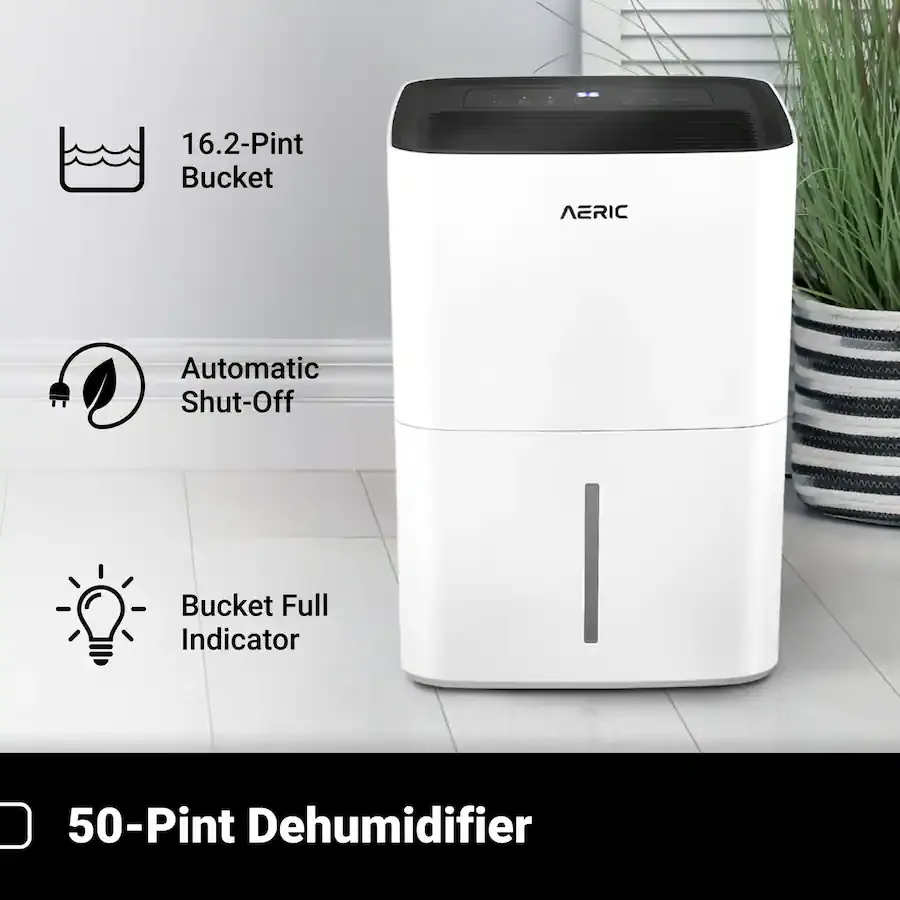
Image source: Bing (Web (fair-use with source credit))
Quick Answer
Most dehumidifiers need emptying every 8 to 24 hours. A 50-pint unit in a damp basement can fill a 2-gallon bucket every 12 hours. A 30-pint unit in a dry bedroom might run two days.
The tank size and humidity level set the pace. Drain hose setups never need emptying. Pump models push water to a sink automatically.
Why It Feels Like You’re Emptying It Nonstop
There’s a reason that bucket fills faster than you expect. Dehumidifiers are rated by how many pints of water they can pull from the air in 24 hours. A 50-pint unit in a humid basement is working hard.
It’s not broken. It’s doing its job.
The frustration usually comes from a mismatch between tank size and extraction rate. A 50-pint unit with a 1.5-gallon bucket fills up in roughly 6 to 8 hours at peak humidity. That means three empties per day.
That feels like a lot because it is a lot.
The real question isn’t “how often.” It’s “how can I make this less annoying.” The answer depends on your specific setup and space. Once you know the variables, you can change your routine or change your equipment.
The 4 Variables That Control How Fast the Tank Fills
Four things determine how quickly your dehumidifier’s bucket fills up. Adjust any of them, and your emptying schedule changes.
1. Humidity Level in the Room
This is the biggest factor. Higher relative humidity means more water pulled from the air. A basement at 80 percent RH fills the tank much faster than a living room at 60 percent RH.
As of 2026, most manufacturers recommend setting the target humidity at 50 percent. That’s the sweet spot for comfort and mold prevention.
2. Room Size and Airflow
A dehumidifier rated for 500 square feet placed in a 1,000-square-foot basement runs constantly. It never catches up. It fills the bucket faster because it’s working overtime.
Coverage area matters. A unit properly sized for the space cycles on and off, giving you more time between empties.
3. Extraction Rate (Pint Capacity)
This is the number on the box. A 70-pint unit pulls more water per hour than a 30-pint unit. All else being equal, a higher extraction rate means a faster fill.
But larger units tend to have larger tanks. The tradeoff matters.
4. Tank Size
Tank sizes range from about 0.5 gallons to 2.5 gallons on portable units. A 1.5-gallon bucket fills faster than a 2.5-gallon bucket. Simple math.
If you have a small tank and high humidity, you’re emptying every 6 to 8 hours. If you have a large tank and moderate humidity, you might get 24 hours or more.
Here’s a quick reference table:
| Variable | Low Impact | High Impact |
|---|---|---|
| Humidity level | 50% RH | 80% RH |
| Room size | Properly sized | Undersized unit |
| Extraction rate | 30 pints/day | 70 pints/day |
| Tank size | 2.5 gallons | 0.5 gallons |
Bucket, Drain Hose, or Pump? How Your Setup Changes the Answer
Your emptying frequency depends heavily on which drainage method you use. This is where most people can save themselves a lot of hassle.

Bucket Only (Manual Emptying)
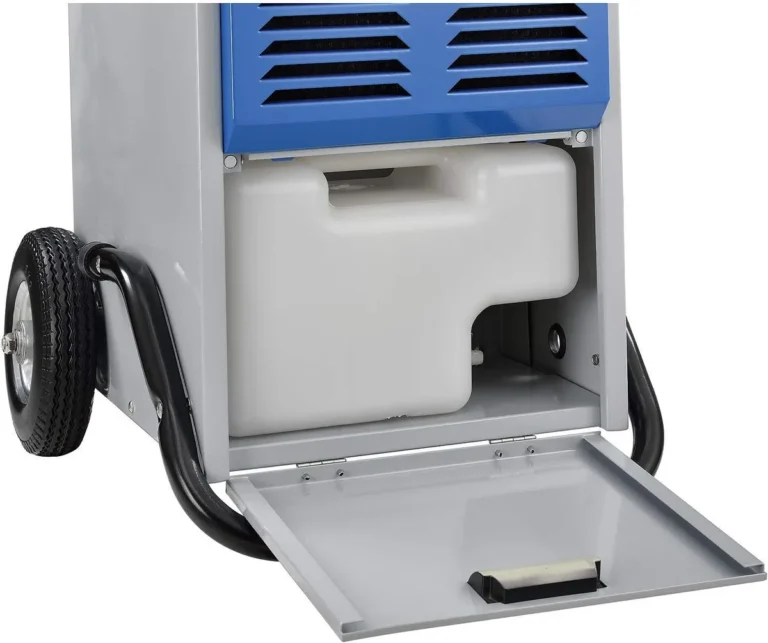
This is the default setup. You empty the bucket by hand when it’s full. Most units have an auto-shutoff feature that stops the dehumidifier when the bucket reaches capacity.
That’s a safety feature, but it also means your humidity control stops until you empty it. If you’re home all day, you can empty as needed. If you’re at work or asleep, the unit sits idle.
Continuous Drain Hose (Gravity Drain)
This is the simplest upgrade. Attach a garden hose to the drain port and route it to a floor drain, sink, or outside. Gravity pulls the water out.
No bucket to empty. The dehumidifier runs continuously without stopping. This is ideal for basements with a floor drain.
As long as the hose slopes downward, you never touch the water.
Condensate Pump (Automatic Pump-Out)
Some dehumidifiers have a built-in pump. The pump pushes water upward through a small-diameter tube to a sink, laundry tub, or even outside. This works when you can’t rely on gravity.
The pump activates automatically when the water level rises. You still need to empty the bucket if the pump fails or the drain line clogs. Under normal operation, it’s hands-off.
| Setup | Emptying Frequency | Best For |
|---|---|---|
| Bucket only | Every 6–24 hours | Small spaces, occasional use |
| Continuous drain hose | Never | Basements with floor drains |
| Condensate pump | Never (with proper drain) | Rooms without floor drains |
A Simple 3-Step Plan to Calculate Your Exact Emptying Schedule
You don’t need to guess. Here’s how to calculate your exact schedule using what you already know.

Step 1: Find Your Unit’s Extraction Rate
Look at the Energy Guide label or the manufacturer’s specs. It will say something like “50 pints per day” at standard temperature and humidity (usually 80°F and 60% RH). That’s your baseline.
If your space is more humid, the actual rate will be higher. If it’s less humid, lower.
Step 2: Measure Your Room’s Humidity
A simple hygrometer costs under $10. Place it in the same room as the dehumidifier. Check the reading after the unit has been running for a few hours.
If the humidity is above 60 percent, your unit is working hard and filling fast. If it’s below 50 percent, the unit cycles less and the bucket fills slower.
Step 3: Track How Long It Takes to Fill
Run the unit normally. Note the time when the bucket is empty. Check it every few hours.
When the unit shuts off or the indicator light comes on, note the time. Divide the bucket capacity by the run time. That gives you your personal fill rate.
Here’s a typical scenario table:
| Room Condition | Extraction Rate (est.) | Tank Size | Approx. Time to Fill |
|---|---|---|---|
| Damp basement (70% RH) | 50 pints/day | 1.5 gallons | 6–8 hours |
| Living room (55% RH) | 30 pints/day | 2.0 gallons | 16–20 hours |
| Dry bedroom (45% RH) | 20 pints/day | 2.5 gallons | 24–30 hours |
Once you know your fill time, you can plan your day around it. Or you can switch to a continuous drain and never worry about it again.
The Worst Emptying Mistakes I See People Make
After looking at hundreds of user reviews and manufacturer support threads, a few patterns stand out. These mistakes make the emptying problem worse than it needs to be.
Ignoring the Auto-Shutoff
Some people don’t realize the unit stops when the bucket is full. They think it’s broken. No, it’s just full.
Check the indicator light. If it’s flashing, empty the bucket. This is the most common reason for “my dehumidifier stopped working” complaints.
Not Using the Drain Hose Option
If your unit has a drain port and you have a floor drain nearby, use the hose. It takes five minutes to set up. It saves you from emptying the bucket forever.
Many people don’t even know the port exists. Check your manual.
Placing the Unit Incorrectly
Putting the dehumidifier in a corner or against a wall restricts airflow. The unit works harder and fills the bucket faster. Leave at least 6 inches of space on all sides.
Center it in the room if possible.
Setting the Humidity Too Low
Setting it to 30 percent when 50 percent is fine forces the unit to run constantly. It fills the bucket faster and wastes energy. The EPA recommends 30 to 50 percent.
Stick to 50 percent for most homes.
Not Cleaning the Filter
A dirty filter restricts airflow. The unit works harder, runs longer, and fills the bucket faster. Clean the filter every two to four weeks.
It takes 30 seconds. This alone can extend the time between empties.
From Basements to Bedrooms: Real Timelines That Surprise People
The numbers on paper only tell part of the story. Real-world conditions change everything. Here are three common scenarios that show how different the answer can be.
Scenario one: A finished basement in the Southeast during summer. Ambient humidity sits at 75 percent. A 50-pint unit with a 1.5-gallon bucket fills up in about 5 hours. That means four to five empties per day.
If you work outside the home, the unit sits idle for 8 to 10 hours. Humidity creeps back up. The unit works even harder when it kicks back on.
Scenario two: A master bedroom in a dry climate. Indoor humidity hovers around 45 percent. A 30-pint unit with a 2.5-gallon bucket runs for 28 to 32 hours before needing emptying. You empty it every other day.
That feels manageable. Most people in this scenario don’t mind the bucket.
Scenario three: A basement with a floor drain and a continuous hose. The setup takes 10 minutes. You never empty the bucket. The unit runs 24/7 during humid months.
Humidity stays steady at 50 percent. This is the gold standard for convenience.
| Scenario | Humidity | Unit Size | Tank Size | Empties Per Day |
|---|---|---|---|---|
| Damp basement, summer | 75% RH | 50 pint | 1.5 gal | 4–5 |
| Dry bedroom, year-round | 45% RH | 30 pint | 2.5 gal | 0.5 (every other day) |
| Basement with drain hose | 70% RH | 70 pint | N/A | 0 |
The surprise for most people is how much climate and room size matter. Moving the unit to a smaller, drier space can cut empties in half. Switching to a drain hose eliminates them entirely.
The Verdict: Is Frequent Emptying Just Your Life Now?
It doesn’t have to be. Here’s the honest decision tree based on your situation.
If you have a floor drain nearby: Use a continuous drain hose. Buy a 6-foot garden hose for under $10. Attach it to the drain port.
Route it to the drain. You’re done. No more emptying.
If you have a sink or laundry tub but no floor drain: Consider a dehumidifier with a built-in condensate pump. The pump pushes water upward through a tube. You route the tube to the sink.
The unit empties itself. Pump models cost more, but the convenience is worth it.
If you can’t use a drain or pump: You’re stuck with the bucket. But you can make it less annoying. Buy a unit with a larger tank (2.5 gallons or more).
Set the humidity to 50 percent, not lower. Clean the filter regularly. Place the unit in the center of the room.
These steps can stretch the time between empties from 6 hours to 12 or more.
If you’re away from home often: A drain hose or pump is almost mandatory. A unit that shuts off when you’re not there does nothing. Humidity returns.
Mold can grow. Smart dehumidifiers with Wi-Fi can send alerts, but they can’t empty themselves without a drain.
The bottom line is simple. Frequent emptying is a sign that your setup and your space aren’t matched. Fix the match, and the problem goes away.
Frequently Asked Questions
How often does a dehumidifier need to be emptied in a basement?
A basement dehumidifier typically needs emptying every 6 to 12 hours during humid months. The exact time depends on the humidity level, unit size, and tank capacity. Using a continuous drain hose eliminates the need to empty the bucket entirely.
Can I leave my dehumidifier running while I’m on vacation?
Only if it has a continuous drain hose or a condensate pump connected to a suitable drain. A bucket-only unit will fill up and shut off within hours. Humidity will rise again.
Consider a smart plug or Wi-Fi enabled unit to monitor status remotely.
Does a bigger tank mean less emptying?
Yes, but only up to a point. A 2.5-gallon tank holds about 40 percent more water than a 1.5-gallon tank. That translates to roughly 40 percent more time between empties.
However, a larger tank doesn’t help if the extraction rate is very high.
How do I know when my dehumidifier bucket is full?
Most units have a full-tank indicator light or an audible alarm. The unit will also shut off automatically. Some models display a flashing icon.
Check the manual for your specific model. The indicator is usually on the control panel.
Is it bad to let the dehumidifier sit with a full bucket?
It’s not harmful to the unit, but it’s counterproductive. The unit stops removing humidity when the bucket is full. Your room humidity will rise.
Mold and dust mites can thrive above 60 percent. Empty the bucket promptly to maintain control.
Can I empty the dehumidifier less often by setting the humidity higher?
Yes, setting the humidity higher (say 60 percent instead of 50 percent) reduces the unit’s run time. The bucket fills slower. But the tradeoff is less effective humidity control.
The EPA recommends staying at or below 50 percent for optimal indoor air quality.