Can a Dehumidifier Prevent Bathroom Mold
You have probably scrubbed that black gunk from the grout more times than you want to admit. The question of whether a dehumidifier can actually prevent it from coming back is a smart one. In short, yes, a dehumidifier can absolutely help prevent bathroom mold.
But it is not a magic bullet. It is one tool in a larger system.
Here is the thing. Mold needs two things to thrive. It needs a food source, like drywall or soap scum.
It also needs a relative humidity level consistently above 60 percent. The EPA sets that 60 percent mark as the critical threshold for mold growth. So before you decide if a dehumidifier is the right tool for your bathroom, you need to understand what you are actually fighting.
Quick Answer
Yes, a dehumidifier can prevent bathroom mold by lowering humidity. But it only works if the mold is from airborne moisture, not a leak. It is a tool, not a complete solution.
Think of it as a humidity manager, not a mold killer.
Image source: Bing (Web (fair-use with source credit))
The Real Cause of Bathroom Mold (and Where a Dehumidifier Fits In)
Mold in your bathroom is not the real problem. It is a symptom. The real problem is excess moisture that sits around long enough for spores to take root.
A dehumidifier directly addresses that moisture by pulling water vapor out of the air. That lowers the relative humidity and makes the environment inhospitable for mold.
The goal is to keep the relative humidity below 50 percent. Most standard dehumidifiers come with a built-in humidistat that lets you set a target. Once the air hits that level, the unit cycles off.
This is why a dehumidifier is useful for bathrooms that lack a window or have a weak exhaust fan. It runs quietly in the background and keeps the air dry even when nobody is in the room.
But there is a catch. A dehumidifier can only remove moisture from the air. It cannot dry out a wet wall, a leaking pipe, or a dripping shower head.
If the mold is growing because of a structural leak, you need to fix that first. Otherwise, you are just paying for electricity while the mold keeps eating your drywall.
Our research shows that the most effective approach is to use a dehumidifier as a supplement to good ventilation. If you are looking for a unit that can run consistently, check out some of the top-rated models available for year-round use. For smaller bathrooms, the pint-sized units are often a better fit.
Decision Point #1: Is Your Mold from a Leak or Just Steam?
This is the most important question you need to answer. The source of the moisture determines whether a dehumidifier will actually help. Here is a simple test you can do right now.
Take a dry paper towel and press it against the moldy area. Leave it there for ten seconds. Then pull it away and look at the paper.
| If the paper towel is… | The mold is likely from… | What to do |
|---|---|---|
| Completely dry | Airborne moisture (steam, condensation) | A dehumidifier and ventilation will help |
| Damp or wet | A leak or standing water | Fix the leak first, then consider a dehumidifier |
If the paper towel comes back dry, the mold is growing because the air is too humid. That is exactly the situation where a dehumidifier shines. The steam from your shower condenses on cold surfaces and creates a perfect breeding ground for spores.
A dehumidifier pulls that moisture out of the air before it can settle.
If the paper towel comes back wet, you have a leak. It could be a pipe behind the wall, a dripping faucet, or a toilet that runs. In that case, a dehumidifier is just a band-aid.
The water will keep coming, and the mold will keep growing. You need to find and fix the leak first. The EPA has clear guidance on this for mold remediation.
Once the leak is fixed, you can use a dehumidifier to dry out the area and prevent the mold from coming back. But do not skip the repair step. That is the most common mistake people make.
Decision Point #2: Do You Need a Dehumidifier or an Exhaust Fan?
This is where a lot of people get confused. Both devices remove moisture, but they do it in very different ways. The right choice depends on your bathroom setup and your habits.
An exhaust fan is designed to pull humid air out of the room and push it outside. It is the first line of defense. If you have a working exhaust fan that vents to the outside, and you actually use it during and after every shower, you might not need a dehumidifier at all.
The fan is faster at removing large bursts of steam.
A dehumidifier works differently. It recirculates the air in the room and pulls moisture out of it. It does not vent anything to the outside.
This makes it slower but more consistent. It can run all day and keep the humidity low even when nobody is in the room.
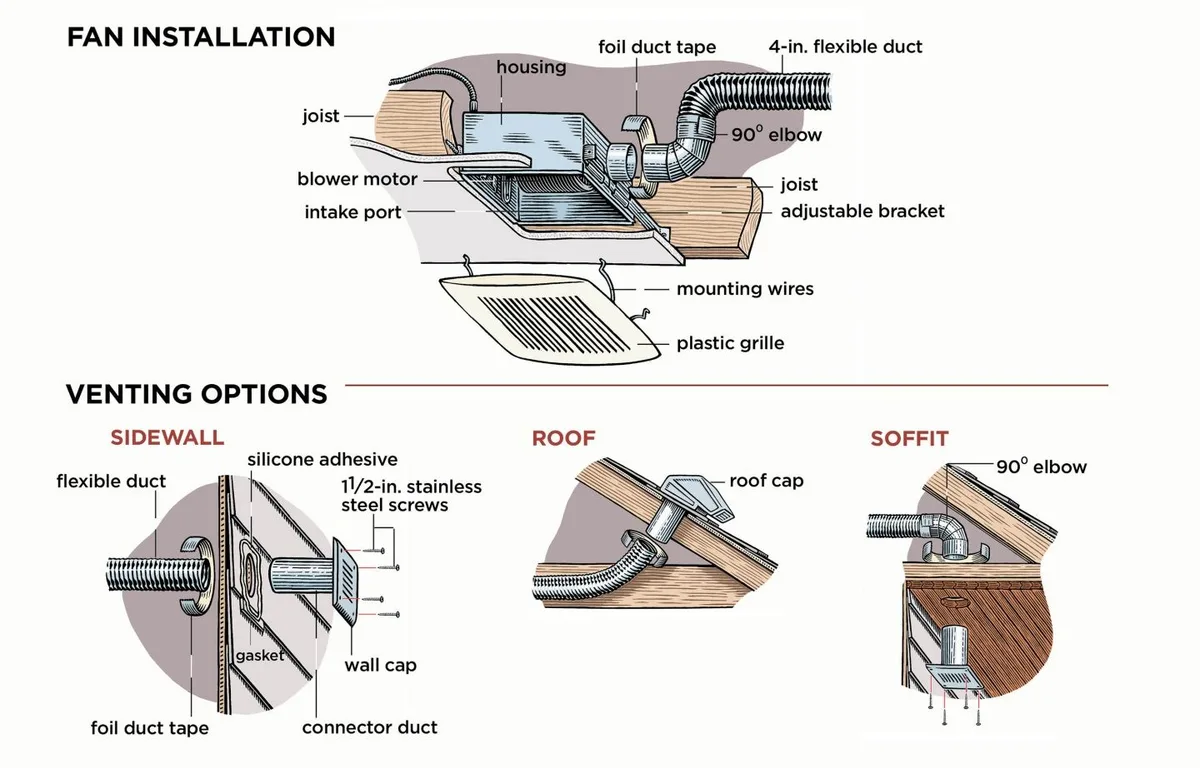
Image source: Bing (Web (fair-use with source credit))
Here is a quick comparison to help you decide.
| Consider an exhaust fan if… | Consider a dehumidifier if… |
|---|---|
| You have a working fan that vents outside | Your bathroom has no window or weak ventilation |
| You remember to run it for 20 minutes after each shower | You want a set-and-forget solution |
| Your bathroom is small and the fan is powerful enough | You have chronic mold even with the fan running |
| You want a cheaper upfront option | You want to protect the whole room, not just remove steam |
Our analysis of user experiences shows that the best scenario is to use both. Run the exhaust fan during and right after a shower to remove the bulk of the steam. Then let a dehumidifier handle the rest for the next few hours.
This approach keeps the humidity below 50 percent without running the dehumidifier nonstop.
If you are leaning toward a dehumidifier, you will want to know what specs actually matter. That is what we cover next.
What to Look for in a Bathroom Dehumidifier (Key Specs)
Not every dehumidifier is a good fit for a bathroom. Bathrooms are small, typically between 40 and 100 square feet. They also have high humidity spikes that can overwhelm an undersized unit.
Here are the specs that matter most.
Pint capacity. This is the most important number. For a standard bathroom, you want a unit rated between 20 and 30 pints per day. A 20-pint unit is usually enough for a small half-bath or a powder room.
A 30-pint unit is better for a full bathroom with a shower. If you go too big, the unit will cycle on and off too quickly and not remove enough moisture. If you go too small, it will run constantly and never catch up.
Continuous drain. This is a game changer. A dehumidifier with a continuous drain option lets you hook up a garden hose and let the water run down the drain. That means you never have to empty the bucket.
In a bathroom where the unit runs every day, that is a huge convenience. Most units come with a standard drain port, but make sure the hose is long enough to reach your sink or shower drain.
Auto-humidistat. This is a built-in sensor that measures the humidity level and turns the unit on and off automatically. You set a target, usually between 40 and 50 percent, and the unit does the rest. Without this feature, you have to manually turn the unit on and off, which defeats the purpose of a set-and-forget solution.
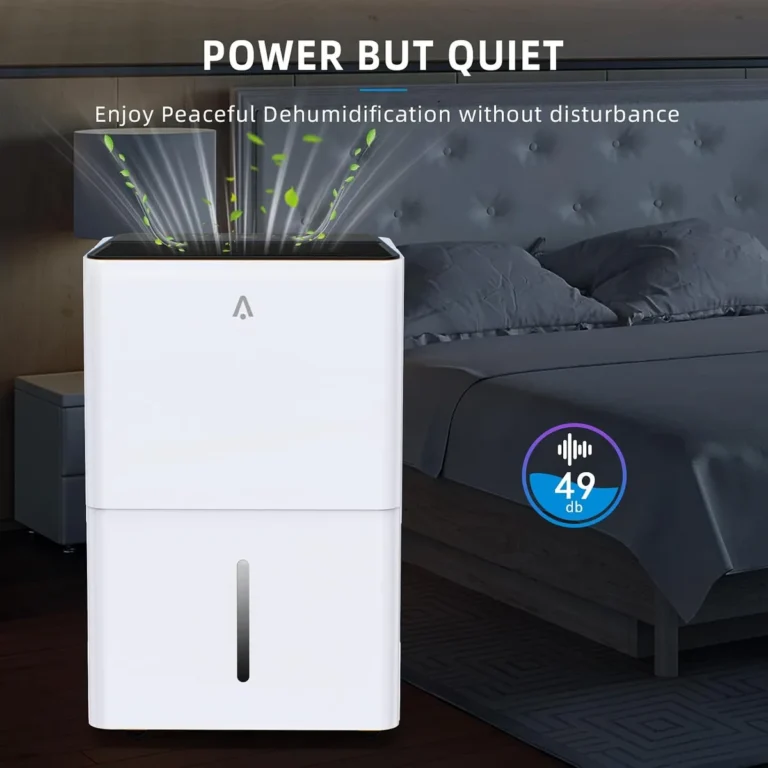
Noise level. Bathrooms are small, and a loud dehumidifier can be annoying. Look for a unit with a noise rating below 50 decibels. That is about as loud as a quiet conversation.
Units above 55 decibels can be distracting, especially if you run them at night.
Here is a quick reference table for the key specs.
| Spec | What to look for | Why it matters |
|---|---|---|
| Pint capacity | 20 to 30 pints per day | Matches the size of a typical bathroom |
| Continuous drain | Yes, with a hose port | No bucket emptying needed |
| Auto-humidistat | Yes, with 30 to 50 percent range | Set and forget operation |
| Noise level | Below 50 dB | Quiet enough for small spaces |
| Size | Compact, under 12 inches wide | Fits on a counter or floor |
If you are looking for specific models, a look at what is available in the 30-pint range can help you narrow down your options. The same search for a 20-pint unit will give you smaller, more compact models that fit on a bathroom counter.
Common Mistakes People Make When Using a Dehumidifier for Mold
A dehumidifier is a useful tool, but only if you use it correctly. Our research shows that most people make the same few errors. These mistakes can turn a helpful device into a waste of money.
Setting the humidity too high. If you set the humidistat at 60 percent or above, the dehumidifier will barely run. Mold can still grow at that level. The EPA recommends keeping indoor humidity between 30 and 50 percent.
Set your unit at 50 percent for a good balance of comfort and mold prevention.
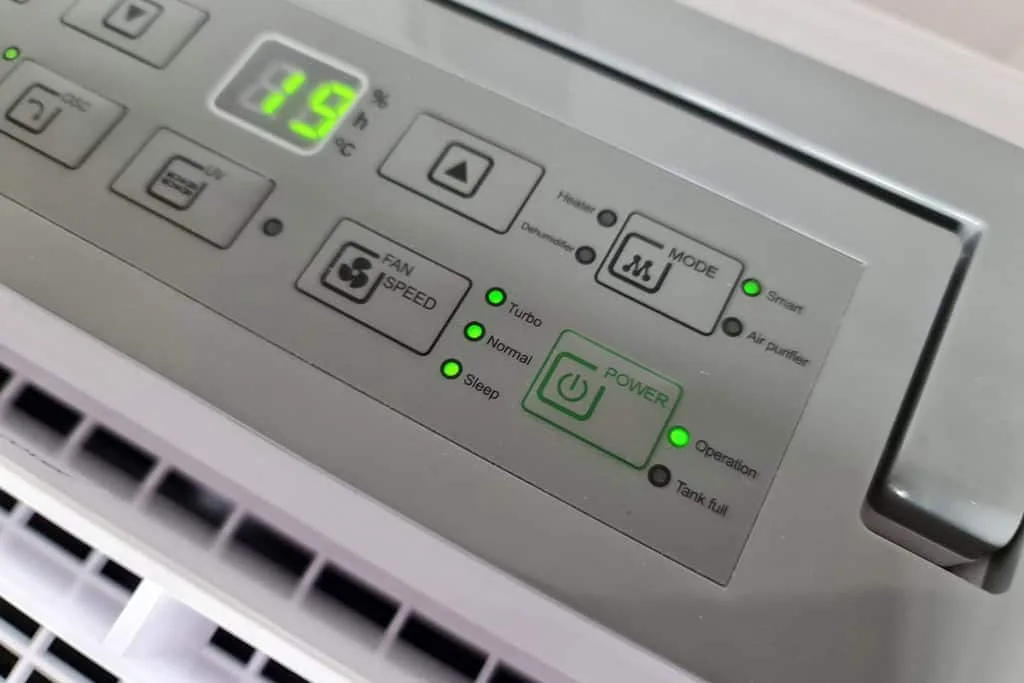
Image source: Bing (Web (fair-use with source credit))
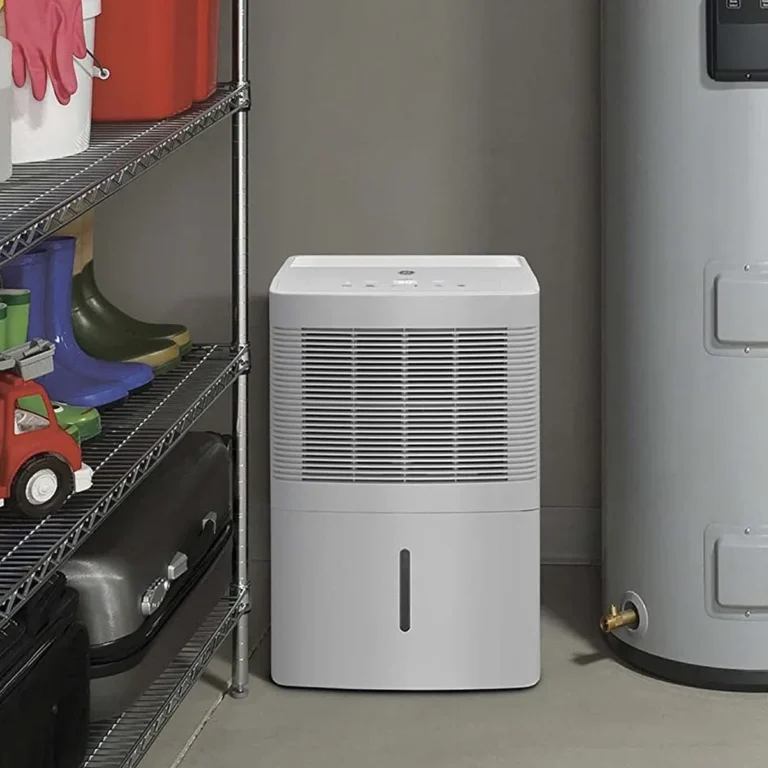
Putting the unit in the wrong spot. A dehumidifier needs airflow to work. If you shove it into a corner or behind the door, it cannot pull in enough moist air. Place it in an open area, at least a few inches from the wall.
Make sure nothing blocks the intake or the exhaust.
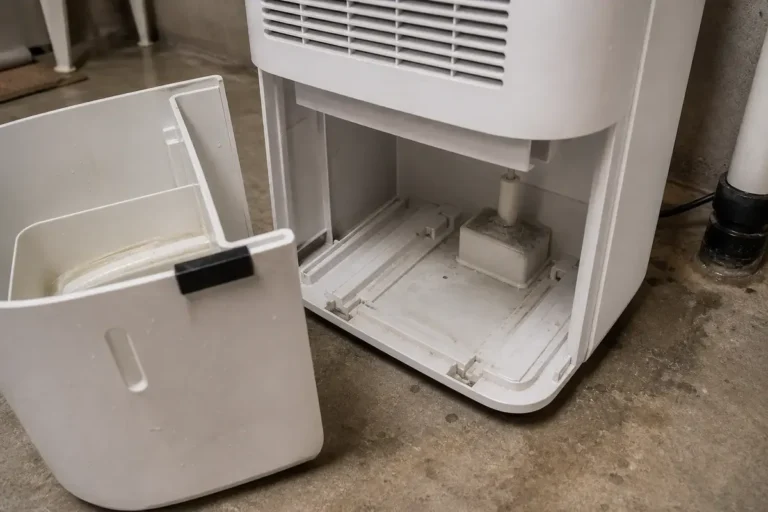
Forgetting to clean the filter. This is the most common mistake. A dirty filter blocks airflow. The unit has to work harder, and it pulls out less moisture.
Clean the filter every two weeks. Most filters are washable with warm water and mild soap.
Emptying the bucket too late. A full bucket triggers an automatic shutoff. If you are not home, the unit stops running. The humidity rises again.
If you cannot empty the bucket every day, use the continuous drain option. That way, the water goes straight down the drain.
Running the unit only during showers. Mold grows when the humidity stays high for hours. A dehumidifier works best when it runs for a few hours after the shower to dry the room out completely. A timer or auto-humidistat helps with this.
Your Final Decision Guide: Should You Buy a Dehumidifier?
Here is a simple way to decide. Walk through these questions in order. Each answer will point you to the right choice.
Question 1: Do you have a leak?
If yes, fix the leak first. A dehumidifier will not help until the water stops. Come back to this guide after the repair.
If no, move to the next question.
Question 2: Do you have a working exhaust fan that vents outside?
If yes, and you use it every time you shower, start there. Run the fan for 20 minutes after each shower. If the mold still comes back, add a dehumidifier.
If no, a dehumidifier is a good option. It can handle the moisture that the fan cannot.
Question 3: Is your bathroom smaller than 80 square feet?
If yes, a 20-pint or 30-pint dehumidifier is the right size. Anything larger will cycle too quickly and waste energy.
If no, you might need a larger unit. But most standard bathrooms fall into the smaller category.
Question 4: Can you set up a continuous drain?
If yes, buy a unit with a drain port. It will save you from emptying the bucket every day.
If no, look for a unit with a large bucket. A 4-pint or larger bucket means less frequent emptying.
Question 5: Do you want a set-and-forget solution?
If yes, choose a unit with an auto-humidistat. Set it to 50 percent and let it run. You only need to check the filter every two weeks.
If no, a manual unit is cheaper. But you will need to turn it on and off yourself.
If you answered yes to most of these questions, a dehumidifier is a solid investment. It will not fix every problem, but it will keep the air dry enough to stop mold from coming back. For a deeper look at what is available, check out our picks for the best value models on the market.
Frequently Asked Questions
Will a dehumidifier get rid of existing mold?
No. A dehumidifier only prevents new mold from growing. Existing mold needs to be cleaned with a mold killer or a bleach solution.
Once the mold is gone, the dehumidifier keeps the area dry so it does not return.
How long should I run a dehumidifier in the bathroom?
Run it for at least two to three hours after a shower. With an auto-humidistat, the unit runs until the humidity drops below your set point. In a small bathroom, that usually takes about one to two hours.
Can a dehumidifier replace an exhaust fan?
Not exactly. An exhaust fan removes steam quickly during a shower. A dehumidifier works slower but runs longer.
The best approach is to use both. The fan handles the burst of steam, and the dehumidifier handles the lingering moisture.
What humidity level stops mold growth?
Mold stops growing when the relative humidity stays below 50 percent. The EPA recommends keeping indoor humidity between 30 and 50 percent. Set your dehumidifier to 50 percent for a good balance.
Is it safe to leave a dehumidifier on all night?
Yes, most modern units are safe to run continuously. They have automatic shutoff features for when the bucket is full. For extra safety, use a unit with a tip-over shutoff and keep it away from water splashes.
A GFCI outlet is recommended.
How often should I clean the dehumidifier filter?
Clean the filter every two weeks. A dirty filter reduces airflow and makes the unit less effective. Washable filters can be rinsed with warm water.
Let them dry completely before putting them back.