What Should I Look for When Buying a Hygrometer
So you're asking yourself what should I look for when buying a hygrometer. That's a smart first move. There are dozens of models out there, and most reviews focus on brand names instead of your real situation.
The right choice has nothing to do with price and everything to do with where you'll use it.
Manufacturer specs vary, but one number matters most: accuracy. A good consumer hygrometer rates at ±2% relative humidity. Cheaper units sit around ±5%, which can hide a mold problem until it's too late.
As of 2026, the saturated salt calibration method remains the accepted standard, so you'll want a device that lets you adjust for that.
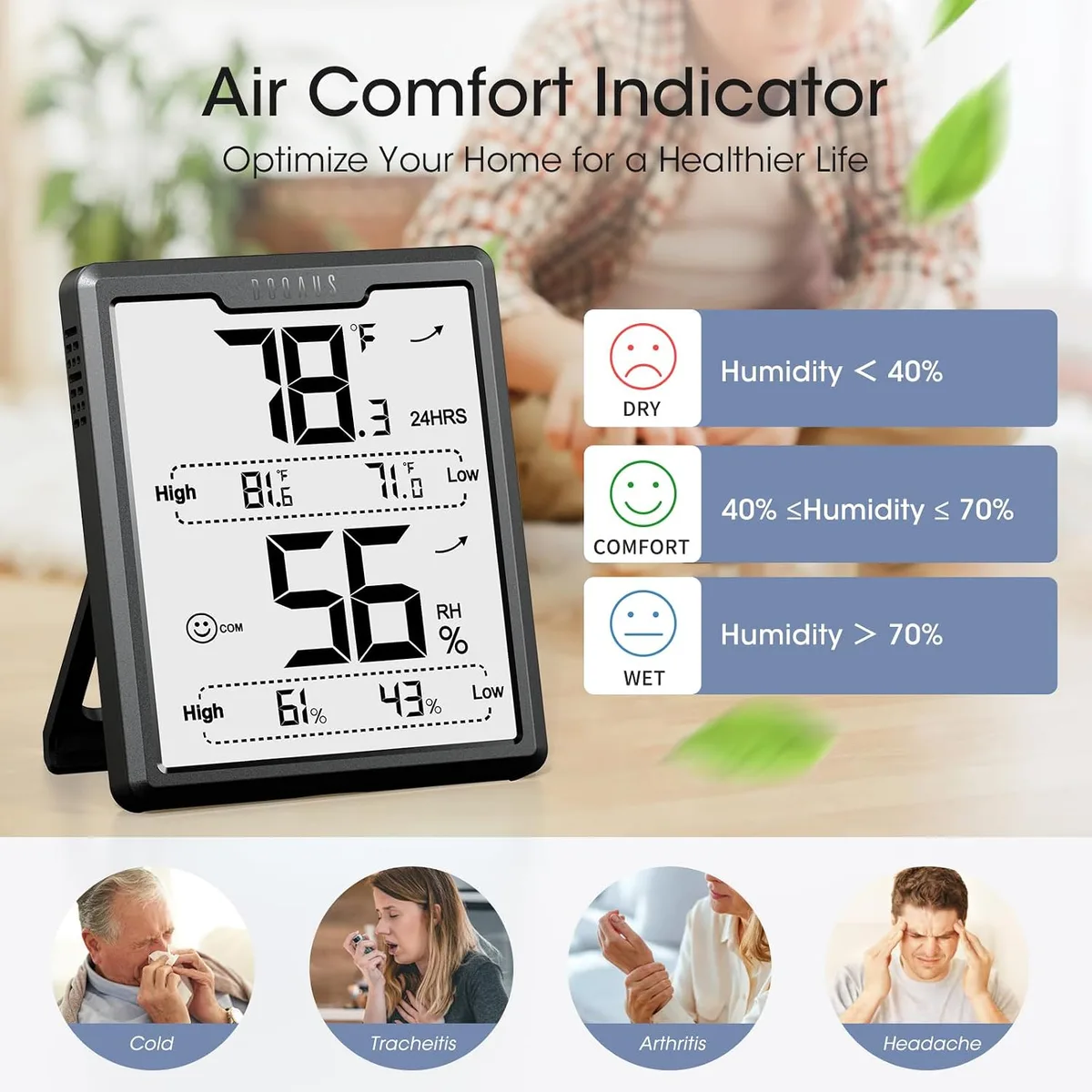
Image source: Bing (Web (fair-use with source credit))
Quick Answer
What should I look for when buying a hygrometer? Start with accuracy. Look for ±2% RH or better.
Make sure it can be recalibrated. Choose a model that fits your space. Consider smart features only if you need them.
First, Stop Shopping: Ask Yourself This One Question
Before you scroll through product pages, write down the exact space you're monitoring. That one detail determines everything else. A cigar humidor demands precision.
A garage doesn't. A reptile tank needs a water-resistant sensor. A grow tent benefits from logging.
Here's the principle: if your use case has a narrow safe humidity range, you need a more accurate device. If you're just checking whether your bedroom feels stale, a basic model works fine. Let's put some numbers on it.
Cigars want 65 to 72 percent relative humidity. Guitars and other wooden instruments prefer 45 to 55 percent. Most tropical reptiles need 60 to 80 percent.
For general indoor living, the EPA recommends keeping relative humidity between 30 and 50 percent to prevent mold and respiratory irritation.
So ask yourself how much drift you can tolerate. Then look for a hygrometer whose measurement range covers your zone and whose accuracy rating doesn't push you outside that zone. If you're monitoring something with a tight window, pass on any model rated worse than ±3% RH.
For low-stakes spots, you have more freedom.
Also think about who reads the device. If you check occasionally, a simple built-in screen works. If you need alerts while away, a smart model with WiFi or Bluetooth is worth the extra cost.
If you're tracking trends over time, look for a data logger with memory.
That last point often gets overlooked. People buy on specs alone, only to find out they have no way to calibrate the sensor or track changes. Your first question shouldn't be "which brand?" It should be "what am I protecting and how much error can it handle?"
The Hygrometer Decision Tree: Match the Device to Your Space
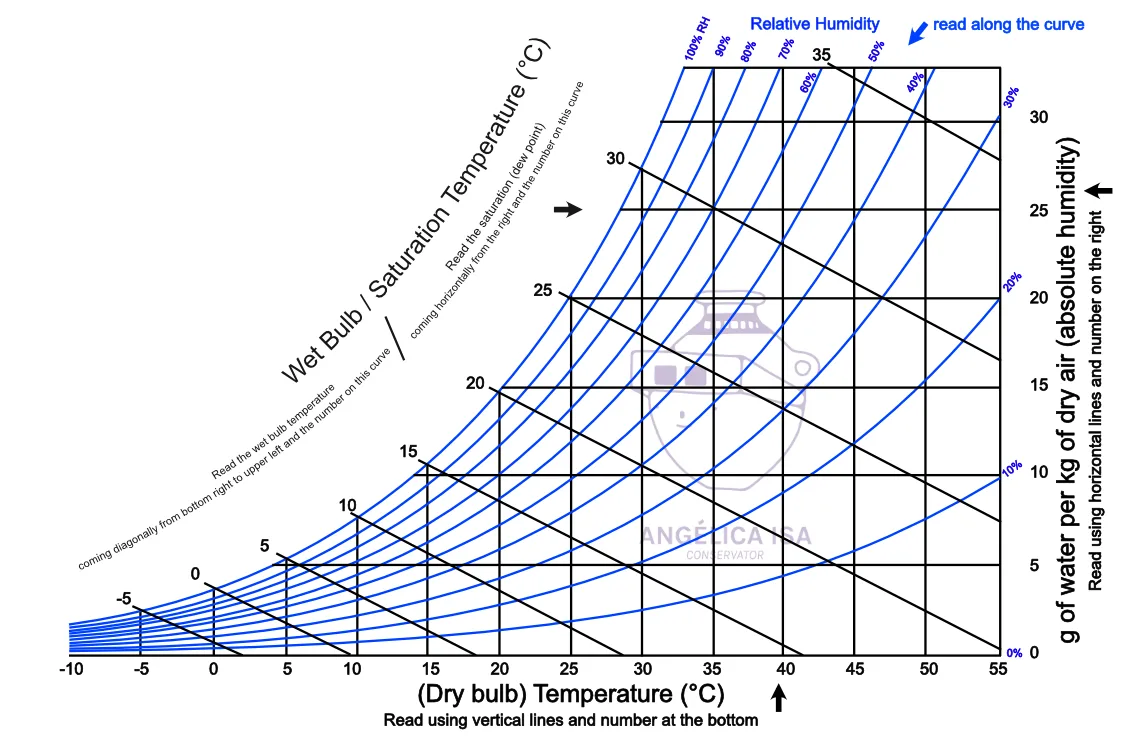
Image source: Bing (Web (fair-use with source credit))
Find your scenario in this table. Then follow the accuracy and features that match.
| Use case | Target RH range | Accuracy needed | Recommended type |
|---|---|---|---|
| Home comfort | 30 to 50% | ±3% RH | Basic thermo-hygrometer |
| Cigar humidor | 65 to 72% | ±1 to 2% RH | Digital hygrometer with calibration |
| Guitar / hardwood | 45 to 55% | ±2% RH | Thermo-hygrometer with max/min memory |
| Reptile terrarium | 60 to 80% | ±3% RH | Probe hygrometer with a remote sensor cable |
| Grow tent / greenhouse | 50 to 70% (VPD) | ±2% RH + logging | Smart hygrometer with WiFi and data logging |
| Basement / crawlspace | 30 to 60% | ±3% RH | Simple display with min/max memory |
How to use the tree: find your row first. If two rows overlap, choose the stricter accuracy. Most people get into trouble when they pick a generalized gadget for a specialized job.
A garden-center thermometer won't cut it for a wine cellar, and a cigar humidor hygrometer will feel lost in an open living room.
Digital is almost always the right call for serious use. Analog units look nice, but their accuracy drifts and you can't adjust them once they shift. If you're just measuring a living room, analog is fine.
For anything where cost of error is high, go digital. Also consider how many micro-zones your space has. A single reading rarely tells the whole story.
Two cheap units in different corners will give you more insight than one expensive display.
Specs That Matter (and the Ones You Can Ignore)
Focus on the sensor and the calibration path. Everything else is secondary. Most people think the big number on the display is what matters.
It's not. A resolution of 0.1% RH looks precise, but if the sensor inside is rated at ±5% RH, your reading is still a guess. Precision and accuracy are different things.
| Care about | Why |
|---|---|
| Accuracy rating | Look for ±2% RH or better |
| Calibration feature | Allows you to reset drift |
| Response time | Lower is better for terrariums and grow tents |
| Sensor type | Capacitive sensors drift less than resistive ones |
| Range coverage | Make sure it spans your target zone |
| Memory or logging | Needed for tracking trends |
| Ignore | Why |
|---|---|
| Display backlight color | Doesn't affect readings |
| App aesthetic | Weight functionality over looks |
| Decimal places | Resolution doesn't equal accuracy |
| Fancy dial markings | They don't improve sensor stability |
The sensor type matters more than you'd think. Capacitive sensors handle humidity better and drift less over time. Resistive sensors cost less but degrade faster.
If you're budgeting, spend on a capacitive unit with a calibration adjustment. Per NIST's humidity standards, a saturated salt test is the accepted way to verify consumer hygrometers. That means you need a device that can be adjusted after testing.
You'll also see response time listed in the spec sheet. A fast response is helpful if you're monitoring a terrarium or a grow tent. For a home, a one-minute lag won't matter.
And ignore the gimmicks. Bright color screens, sunrise alarms, and decorative dials don't make readings more accurate.
Which Hygrometer Should You Pick? A Quick Use-Case Breakdown
Here's a quick way to match a device to your scene.
For home comfort, pick a thermo-hygrometer with max/min memory. Accuracy of ±3% is fine. You'll see the daily swing and know when to run a humidifier.
For cigars, grab a small digital hygrometer with ±2% accuracy and manual calibration. Size matters because you want to place it close to the cigars without taking up the box.
For guitars and wooden furniture, choose a digital hygrometer with ±2% accuracy and a remote sensor or a slim footprint. Keep it near the instrument, not on an outside wall.
For reptiles and birds, use a probe hygrometer with a cable sensor. You want the sensor inside the enclosure, not stuck to the glass with a suction cup. Aim for ±3% and a water-resistant tip.
For grow tents and greenhouses, invest in a smart hygrometer with WiFi or Bluetooth, data logging, and VPD calculation. The sensor needs a faster response time and the app should record history so you can spot trends.
For basements and attics, get a simple digital monitor with min/max memory. These spaces swing seasonally, so you need something that tells you the worst spike, not just the current reading.
Analog hygrometers have a nostalgic charm, but they drift. Unless you're matching the décor of an old library, go digital. The gap in accuracy isn't even close.
Smart models are worth it if you travel or keep sensitive items. A basic unit sits quietly and only gets read when you happen to look. A smart one alerts you the moment humidity crosses your threshold.
Where to Put It: Placement Mistakes That Ruin Your Readings
You can buy an expensive hygrometer and still get useless data if you mount it in the wrong spot. The sensor is only guessing at the air around it. If that air isn't representative of your actual space, everything else falls apart.
Here are the classic mistakes. Avoid placing a hygrometer near a heat vent or air conditioner. Keep it away from direct sunlight, windows, and exterior walls.
Don't set it right above a humidifier or dehumidifier. And never stick it in a dead corner with no airflow.
Here's what works instead. Place the sensor at the level where the object or activity is. For reptiles, that's inside the enclosure.
For guitars, that's at the same height as the case. For general room readings, put it on an interior wall, about 4 to 5 feet off the floor. That's the breathing zone.
The EPA's mold guidance recommends keeping indoor RH between 30 and 50 percent, so monitoring the right spot isn't a small detail.
If you're using a smart hygrometer with multiple sensors, test different locations before committing one to the wall. You want the microclimate your stuff actually lives in. Also, give the sensor time to stabilize after you move it.
A unit that sat in a dry hallway will read higher for a few hours after being moved to a humid basement. Once it settles, you'll trust it.
Calibration: How to Trust Your Hygrometer (and When to Recalibrate)
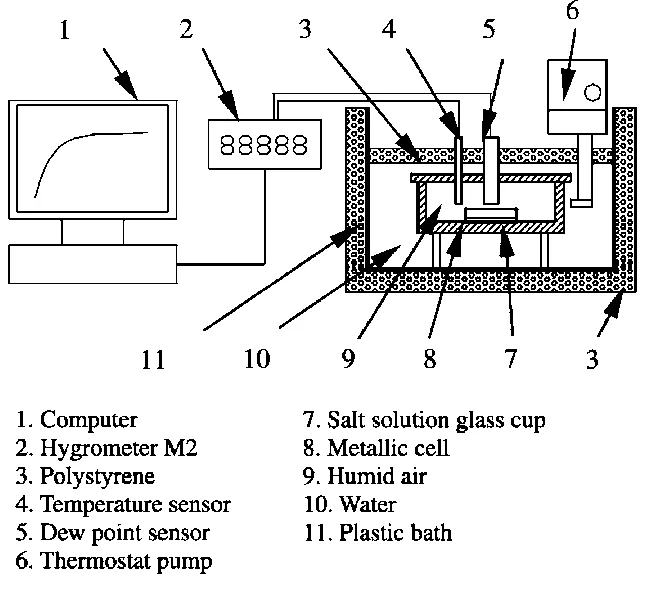
Image source: Bing (Web (fair-use with source credit))
A hygrometer that isn't calibrated is just a decoration. Sensors drift over time. Temperature changes, humidity extremes, and age all push the reading off.
Most consumer hygrometers need recalibration every 6 to 12 months. For critical use like cigar storage or a grow tent, do it every 3 months.
The accepted method is the salt test. You need table salt, distilled water, and a sealed container. Mix the salt with a few drops of water to make a thick slurry.
It should be wet but not floating. Place the slurry in the container. Put the hygrometer in the same container.
Make sure the sensor doesn't touch the salt. Seal it tight.
Wait 24 hours. The salt creates a stable environment of 75.3% RH at room temperature. After 24 hours, check the reading.
If your hygrometer shows anything other than 75.3%, adjust it using the calibration feature. Not all models have this. If yours doesn't, you can't fix the drift.
That's why a calibration adjustment is a key spec to look for when buying.
After you adjust, let it sit another 2 hours. Check again. It should hold steady at 75.3%.
If it doesn't, the sensor may be faulty. Replace it.
FAQs About Buying Hygrometers
What's the difference between analog and digital hygrometers?
Analog hygrometers use a spring or a hair mechanism. They look classic but drift over time. Digital hygrometers use electronic sensors.
They're more accurate, easier to read, and most can be calibrated. Unless you need the vintage look, choose digital.
How do I calibrate a hygrometer without a salt test?
You can buy a calibration kit with a sealed humidity packet, often rated at 75%. Some humidity calibration packs work like small salt chambers. For a home check, you can also compare two hygrometers side by side.
If they match, they're probably fine.
Why does my hygrometer show different readings in different rooms?
That's normal. Humidity varies by room. A bathroom after a shower can hit 90%.
A basement might stay at 60%. A heated living room in winter can drop to 20%. The reading is a snapshot of that exact spot.
Move the sensor around to map your home.
Do I need a smart hygrometer?
Only if you need alerts or history. A smart hygrometer sends notifications when humidity goes out of range. It also logs data so you can spot trends.
For a grow tent or a wine cellar, it's worth the extra cost. For a bedroom, a basic display works fine.
How often should I replace a hygrometer?
Replace it when the sensor drifts and can't be recalibrated. This usually happens after 2 to 3 years for cheap models. Higher-end capacitive sensors last 5 years or more.
If you notice the reading is always off by 5% or more, replace it.
Can I use a hygrometer outdoors?
Most consumer hygrometers are not weatherproof. Check the IP rating. For outdoor use, look for a model with a remote probe and a protected sensor.
Avoid leaving a basic unit exposed to rain or direct sunlight.
The Final Decision Guide: What to Actually Buy
Here's the short version. Start with your use case. Find it in the decision tree.
Match the accuracy and features. Make sure the model has a calibration adjustment. Place it in the right spot.
Recalibrate it regularly.
If you're protecting something valuable, spend the extra money on a digital hygrometer with ±2% accuracy and a capacitive sensor. If you're checking room comfort, a ±3% model with min/max memory is plenty. Skip the analog units.
Ignore the gimmicks. The right hygrometer for you is the one that fits your space and your tolerance for error.