Can a Hygrometer Help Reduce Humidity
You've got a hygrometer sitting on your shelf, or you're thinking about buying one, because your home feels sticky and you're worried about mold. But can a hygrometer actually help reduce humidity? The short answer is no.
It measures humidity, it doesn't lower it. That sounds disappointing, but that measurement is the single most important piece of information you need to actually fix the problem.
Without a hygrometer, you're guessing. You either run a dehumidifier 24/7 and waste electricity, or you don't realize your basement is sitting at 68% relative humidity until you smell mildew. The Centers for Disease Control and Prevention (CDC) recommends keeping indoor humidity between 30% and 50% to limit mold and dust mites.
A hygrometer tells you exactly where you stand, so you only take action when it's actually needed. Let's walk through how this works in practice.
Quick Answer
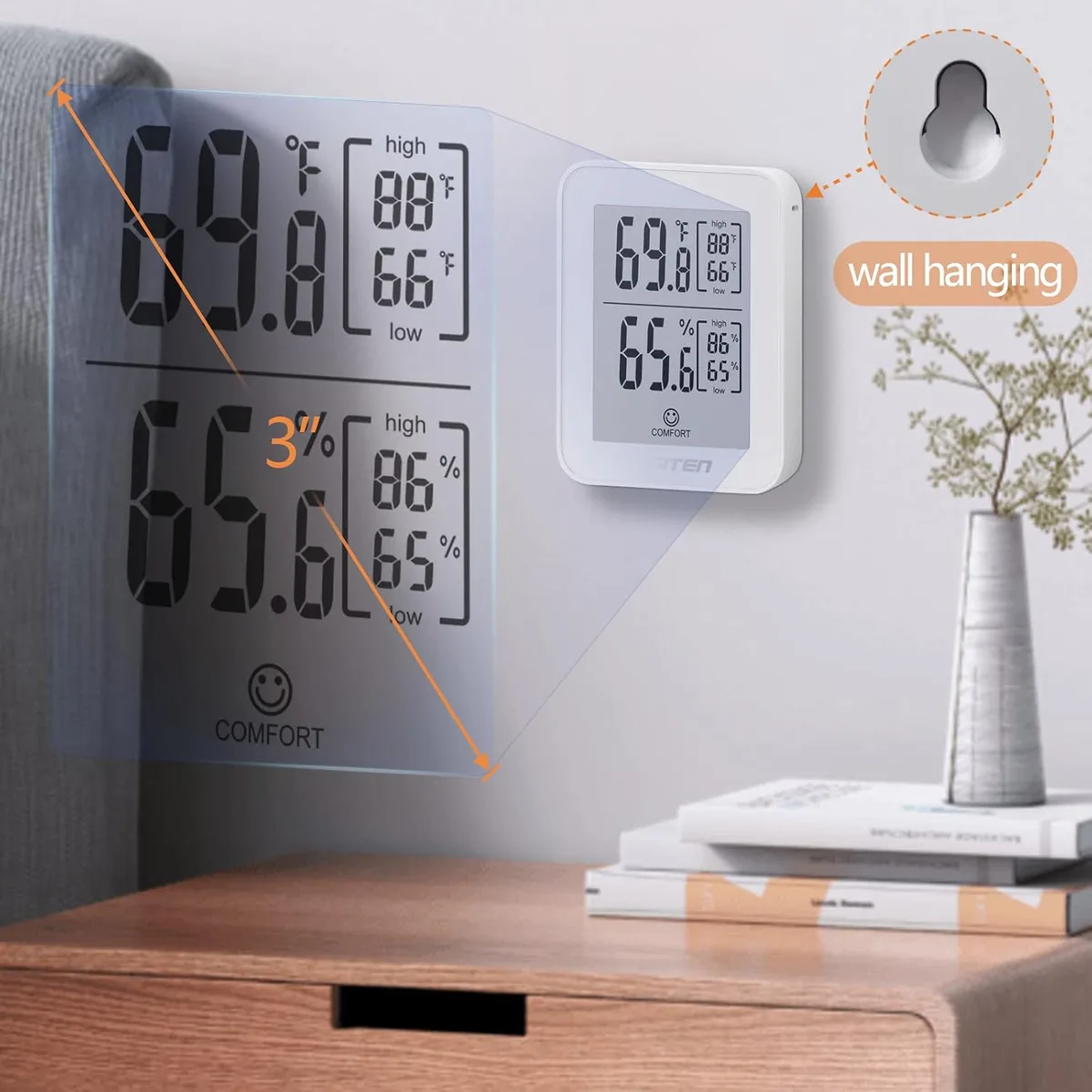
A hygrometer measures relative humidity. It does not reduce humidity. It tells you when humidity is too high.
Then you can use a dehumidifier, air conditioner, or ventilation to lower it. Without a hygrometer, you are guessing. With one, you take action only when needed.
That saves energy and prevents mold.
The Truth About Hygrometers and Humidity (Most People Get This Wrong)
The biggest misunderstanding is right in the name. People hear "hygrometer" and think "humidifier" or "dehumidifier." They assume it's a device that changes the air. It isn't.
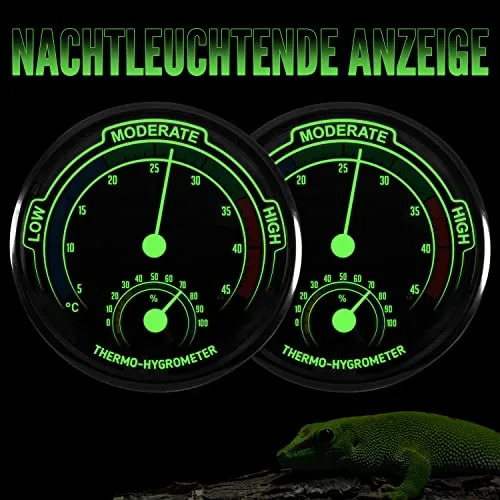
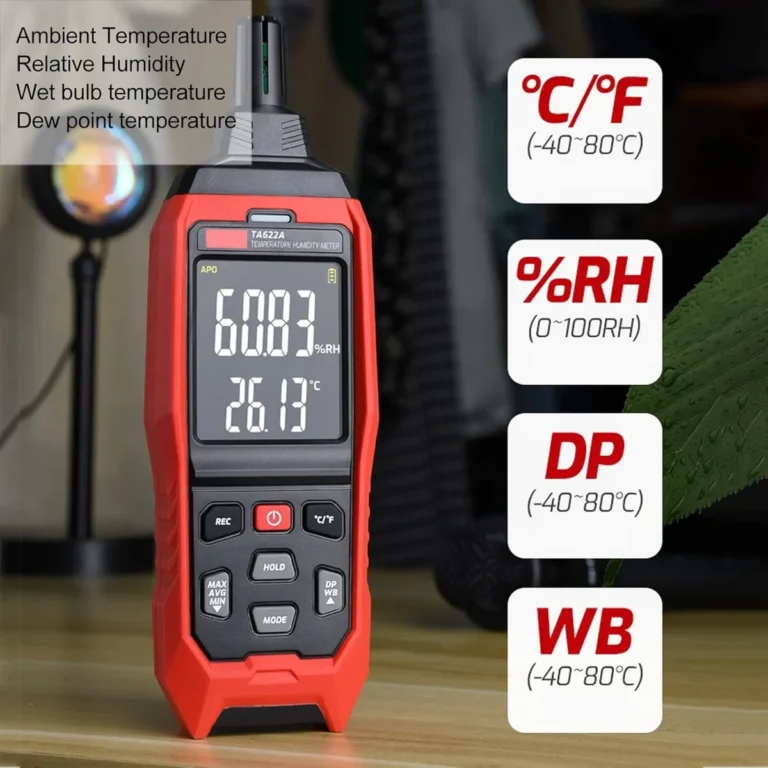
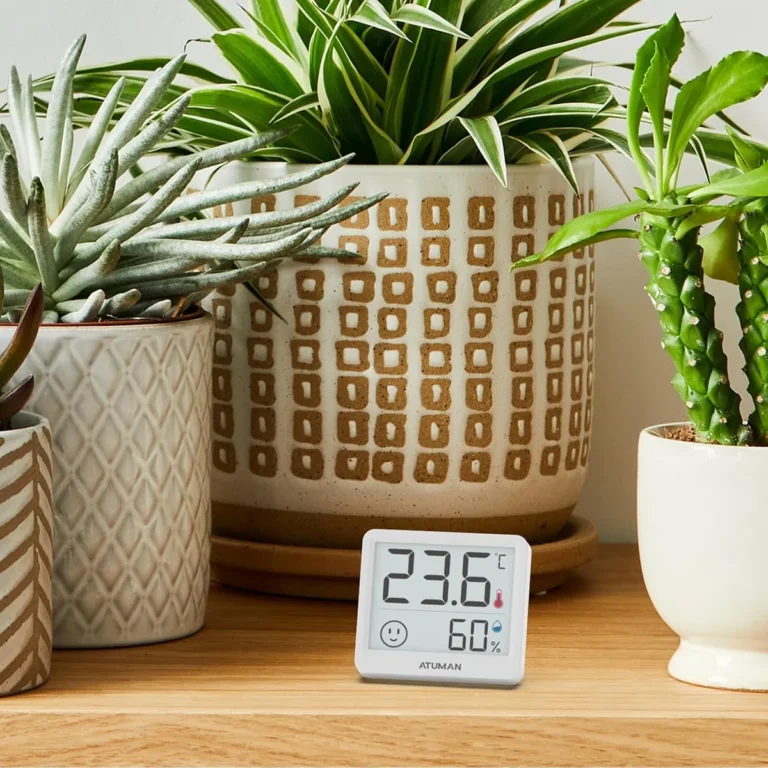
A hygrometer is a sensor, pure and simple. Think of it like a thermometer for moisture. A thermometer tells you the temperature.
It doesn't heat or cool the room. A hygrometer tells you the relative humidity. It doesn't add or remove moisture.
So where does the help come from? It comes from the information. You can't fix a problem you can't measure.
In our research, the most common cause of persistent mold issues isn't a lack of dehumidifiers. It's a lack of awareness. Homeowners run their AC but never check if the humidity is actually dropping below 60%.
They assume the air is dry because the temperature feels cool. That assumption is wrong more often than you'd think.
Here is the key point. A hygrometer turns a vague feeling of "sticky" into a specific number. That number tells you whether you need to act at all.
If your reading is 48%, you're fine. No action needed. If it's 68%, you have a problem.
That clarity is the real value. Without it, you either ignore the problem or overreact by running equipment unnecessarily.
Manufacturer specifications for consumer hygrometers typically show ±2% to ±5% relative humidity accuracy. That's good enough for home use. The important thing is consistency.
A cheap hygrometer that reads 5% high is still useful, because you learn your baseline. You know what "normal" looks like for your space. Then you notice when it spikes.
How a Hygrometer Actually Works (And What It Can't Do)
Most hygrometers you find online or at the hardware store use a capacitive sensor. It has a thin layer of polymer that absorbs moisture from the air. As the moisture level changes, the electrical capacitance of the sensor changes.
The device measures that capacitance and converts it into a relative humidity reading. This happens continuously, updating every few seconds or minutes depending on the model.
There are also resistive sensors and mechanical hair hygrometers. The hair type uses actual human hair or synthetic fiber that expands and contracts with humidity. Those are less accurate and slower to respond.
Digital capacitive sensors are the standard for home use as of 2026. They're affordable, reliable, and accurate enough for most situations.
What a hygrometer cannot do is change the air. It can't pull moisture out. It can't ventilate a room.
It can't run your AC. It is purely a measurement tool. That sounds limiting, but it's actually empowering.
You get data. Then you decide what to do with it.
Some smart hygrometers connect to WiFi or Bluetooth. They send alerts to your phone when humidity crosses a threshold you set. That's a huge upgrade over a basic analog dial.
You can set an alarm at 60% and get a notification the moment your basement creeps into the danger zone. Without that alert, you might not check for days or weeks.
The device also has limitations. It measures only the air immediately around it. Place it too close to a window or a bathroom vent, and you get a false reading.
It also responds slowly to rapid changes. A sudden burst of steam from cooking might not show up for a minute or two. That's normal.
You're looking for trends, not instantaneous spikes.
Your Decision Tree: What to Do When Humidity Is Too High
This is where the real help begins. You have a number. Now what do you do with it?
Follow this simple decision tree. It works for any room in your home.
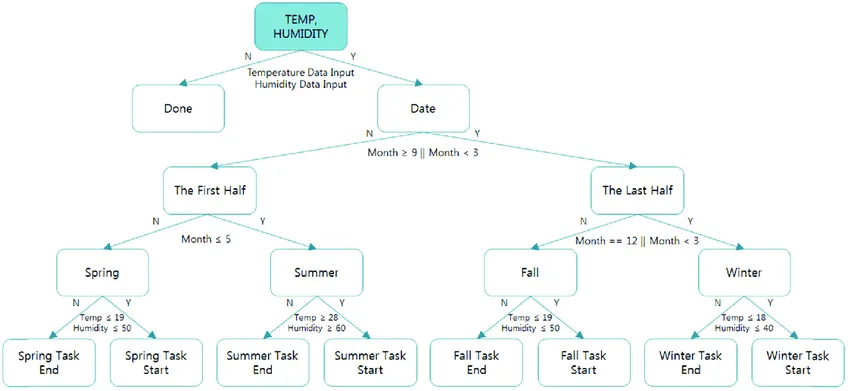
Step 1: Get an Accurate Reading
Place your hygrometer in the center of the room, about five feet off the floor. Keep it away from windows, doors, vents, direct sunlight, and heat sources. Let it sit for at least 30 minutes before you trust the number.
If you just moved it from another room, give it time to stabilize.
Step 2: Compare Your Number to the Target Range
The target range recommended by the CDC and ASHRAE is 30% to 50% relative humidity. Some sources say up to 60% is acceptable for short periods. But sustained readings above 60% increase mold risk significantly.
Here is your decision tree.
- If your reading is below 30%: The air is too dry. You might need a humidifier, especially in winter. This is less common for people asking about reducing humidity.
- If your reading is between 30% and 50%: You're in the ideal zone. No action needed. Check again in a few days.
- If your reading is between 50% and 60%: You're in the caution zone. Monitor closely. If it stays there for more than a day or two, take action.
- If your reading is above 60%: You need to act. This is the danger zone for mold, dust mites, and structural damage.
Step 3: Choose Your Action Based on the Reading
For readings between 50% and 60%, start with the simplest fix. Open windows if the outdoor air is drier. Run the bathroom exhaust fan during and after showers.
Use the kitchen vent while cooking. If you have central AC, check that it's running long enough to dehumidify. Short cycling leaves humidity high even when the temperature feels cool.
For readings above 60%, you need mechanical dehumidification. A portable dehumidifier is the most direct solution. Choose one rated for the size of your room.
A 50-pint model works for a typical basement. A 30-pint model covers a bedroom or living area. Set the built-in humidistat to 50% and let it run.
Check your hygrometer after 24 hours to confirm the reading dropped.
If you have central HVAC, consider a whole-house dehumidifier integrated with your system. This is a bigger investment but handles the entire home. Many modern thermostats have a humidity control setting.
You can set it to call for dehumidification instead of just cooling.
Step 4: Re-Measure and Adjust
Wait 24 hours after taking action. Check your hygrometer again. If the reading dropped into the target range, you're set.
If it's still above 60%, you need a larger dehumidifier, better ventilation, or both. Sometimes the equipment is undersized for the space. Sometimes the room has a moisture source you missed, like a leaky pipe or a damp crawl space.
Common Mistakes That Ruin Your Hygrometer's Usefulness
A hygrometer is only as good as how you use it. The most common mistake is placement. People put the hygrometer on a windowsill because it looks nice there.
But the window is cold in winter and warm in summer. That changes the local humidity reading. You get a number that doesn't reflect the room.
Place it in the center of the room, away from exterior walls.
The second mistake is never calibrating. Most consumer hygrometers come from the factory with a baseline calibration. But they drift over time.
You can test yours with a simple salt test. Place a tablespoon of salt in a small cup. Add a few drops of water to make a wet paste.
Put the cup and your hygrometer in a sealed plastic bag for 24 hours. The air inside the bag should reach 75% relative humidity. If your hygrometer reads 70% or 80%, you know the offset.
Adjust your readings mentally, or use a model that allows calibration.
The third mistake is ignoring the trend. A single reading at 52% is fine. But if the reading has been climbing all week, you have a problem brewing.
Log your readings daily, or use a smart hygrometer that tracks history. Look for patterns. Humidity that rises after rain suggests a leak or poor drainage.
Humidity that spikes after showers points to inadequate ventilation.
The fourth mistake is treating the hygrometer as a replacement for action. You get an alert that your basement is at 72%. You acknowledge it.
Then you do nothing. The alert is useless if you don't follow through. Set a rule for yourself.
Any reading above 60% gets a response within 24 hours. That response could be turning on a dehumidifier, opening a window, or calling a contractor.
Real Scenarios: What Works for Basements, Bathrooms, and Workshops
Different rooms have different humidity challenges. Here is how the hygrometer helps in each.
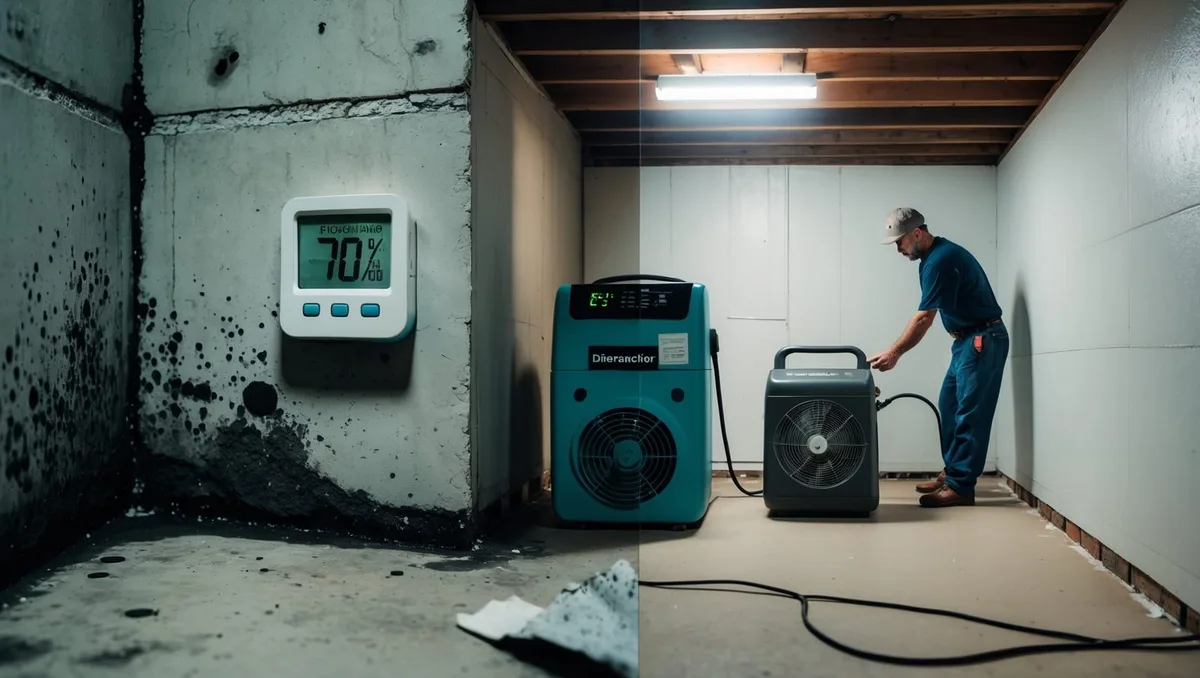
Basements are the most common problem area. They're below grade, surrounded by cool soil, and often have poor ventilation. Finished basements with wall-to-wall carpet are the highest risk.
A hygrometer placed on a shelf in the center of the basement gives you a baseline. If the reading is consistently above 60%, you need a dehumidifier. Set it to 50% and empty the tank daily, or connect a hose to a floor drain.
Monitor the hygrometer weekly to confirm the dehumidifier is keeping up.
Bathrooms are a different story. They spike quickly during a shower and then drop back down. A hygrometer here helps you test your ventilation.
Run the exhaust fan during your shower. After you finish, check the reading. If it stays above 60% for more than 30 minutes, your fan is undersized or not venting outside.
Upgrade the fan, or run it longer. A five-minute fan run is rarely enough.
Workshops and garages often have humidity issues from stored wood, tools, and chemicals. High humidity rusts tools and warps wood. A hygrometer helps you decide when to run a dehumidifier.
If you work with wood, keep the reading between 40% and 50% for stability. Check the hygrometer before you start a project. If it's too high, wait, or run the dehumidifier first.
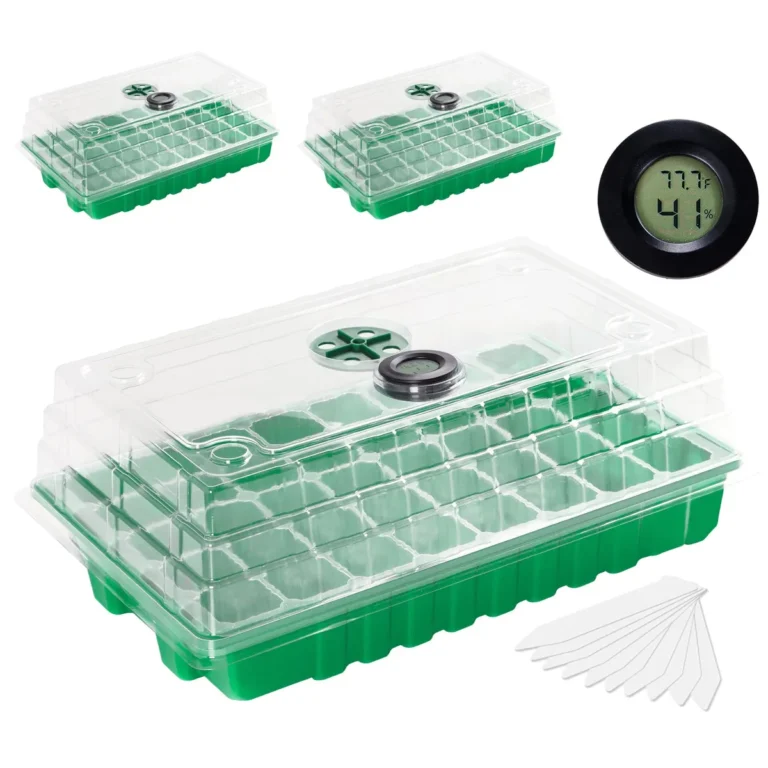
Grow tents and greenhouses are a special case. Plants need higher humidity, often 60% to 70% during vegetative growth. A hygrometer is essential here.
You want to measure and maintain that higher range without letting it get so high that mold develops. Target your specific plants. Tomatoes need different humidity than orchids.
Use the hygrometer to dial in the environment.
Expert Tips for Getting the Most Out of Your Hygrometer
Once you own a hygrometer, a few habits make the difference between a gadget and a genuinely useful tool. Here are the ones that matter most.
Calibrate once a year. The salt test takes 24 hours and costs a few cents. It tells you if your unit is drifting. A hygrometer that reads 5% high will make you overreact.
One that reads 5% low will let problems hide.
Take readings in every room. Humidity varies by space. Your basement might be at 65% while your bedroom sits at 45%. A single hygrometer in one room tells you nothing about the rest of the house.
Move it around over a few days, or buy a couple of cheap units for problem areas.
Watch the trend, not just the number. A weekly pattern is more useful than a one-time reading. If humidity climbs every evening after dinner, the kitchen vent needs attention. If it spikes after rain, check for leaks.
Test your equipment. The hygrometer is the only honest way to know if your dehumidifier is working. Place it across the room from the unit and check the reading after 24 hours. If it hasn't dropped below 60%, the dehumidifier is undersized or malfunctioning.
Use alerts if you can. Smart hygrometers send push notifications when humidity crosses a threshold. That feature alone prevents the most expensive mistake, which is discovering a mold problem weeks after it starts.
Frequently Asked Questions
Does a hygrometer remove moisture from the air?
No. A hygrometer only measures relative humidity. It has no fan, filter, or mechanism to change the air.
To actually reduce humidity, you need a dehumidifier, air conditioner, or ventilation. The hygrometer's job is to tell you when those tools are needed and whether they're working. That split between measuring and fixing is the core of the confusion.
How accurate are household hygrometers?
Most consumer models advertise ±2% to ±5% relative humidity. That's accurate enough for home use. The main risk is drift over time, which is why experts recommend calibrating with a salt test every 12 months.
Professional-grade units reach ±1% accuracy, but they cost several times more.
Where should I place a hygrometer?
Put it in the center of the room, about five feet off the floor. Keep it away from windows, exterior walls, vents, direct sunlight, and heat sources. Each of those distorts the reading.
For basements, place it on a shelf or counter away from the dehumidifier and the sump pump. For bathrooms, position it outside the shower but inside the room.
What humidity level causes mold?
Sustained relative humidity above 60% creates the conditions mold needs. The Environmental Protection Agency (EPA) considers moisture control central to mold prevention. Health experts recommend keeping indoor humidity between 30% and 50%.
Readings above 60% for more than a day or two should trigger action. The longer moisture sits, the higher the risk of damage to drywall, wood, and insulation.
Is a hygrometer worth it if I already own a dehumidifier?
Yes. The dehumidifier has its own humidistat, but that sensor sits inside the unit and often reads differently from the room. An external hygrometer gives you the ground truth.
Place it across the room and check it after the dehumidifier runs for a day. If the room is still above 60%, the unit is undersized or failing.
Final Verdict: Should You Buy a Hygrometer to Reduce Humidity?
A hygrometer will not reduce humidity on its own. That's the honest, literal answer. But it's also the wrong way to frame the question.
A hygrometer is the tool that tells you when to act, when to hold off, and whether your equipment is actually working.
If you live in a humid climate, have a basement, or have ever wondered whether your home is too damp, a hygrometer is worth the $10 to $40. Buy a digital model with an accuracy rating of ±3% or better. Place it properly.
Calibrate it once a year. Check it weekly.
You'll run your dehumidifier less, because you'll know exactly when it's needed. You'll catch humidity spikes before they become mold colonies. And you'll finally have a number instead of a guess.
The CDC and EPA both point to measuring humidity as the first step in mold prevention. So, can a hygrometer help reduce humidity? Not by itself.
But it's the trigger for every action that does.