How Accurate Is an Analog Hygrometer
If you've ever stared at an analog hygrometer and wondered if you can trust that little needle, you're not alone. The question of how accurate is an analog hygrometer comes up constantly from people who own humidors, wine cellars, or just want to keep their home's humidity in check. The answer isn't a single number.
But it's worth understanding before you rely on one.
Most consumer analog hygrometers land somewhere in the ±5 to ±10 percent relative humidity range straight out of the box. That's a wide swing. It explains why many people dismiss them as unreliable.
But the real story depends on the type of hygrometer, how you use it, and whether you calibrate it properly. Let's start with the quick answer, then dig into the details.
Quick Answer
An analog hygrometer is typically accurate within ±5 to ±10 percent relative humidity. Cheaper models drift toward the wider end of that range. Professional-grade units can hold ±2 to ±3 percent after calibration.
Without calibration, most are not trustworthy for precision tasks. With proper setup, they can be reliable enough for general monitoring.

Image source: Web (Bing) / rawpixel.com (Web image (fair-use with source credit))
Inside the Dial: Hair vs. Bimetallic Coil Hygrometers
Not all analog hygrometers work the same way. The two main types are hair hygrometers and bimetallic coil hygrometers. Each has a different mechanism.
That difference directly affects accuracy.
Hair Hygrometers
These use a strand of human hair or synthetic fiber that expands and contracts with humidity changes. The hair is attached to a spring and lever system that moves the needle. Hair hygrometers are sensitive.
They respond to even small humidity shifts. But they have a downside. Hair can become brittle in very dry conditions.
It also loses elasticity over time, which causes drift. Manufacturer specifications show that a clean, properly conditioned hair hygrometer can hold ±3 to ±5 percent RH. Dirt, oil, or age can push that to ±10 percent or worse.
Bimetallic Coil Hygrometers
These use two strips of different metals bonded together. As humidity changes, the metals expand at different rates. The coil twists.
That motion moves the needle. Bimetallic hygrometers are more durable than hair types. They don't dry out or become brittle.
But they tend to be less sensitive to small humidity changes. Aggregate reviews report that most bimetallic units ship with an accuracy of ±5 to ±8 percent RH. Better models use a thicker coil and better bearings.
That improves consistency.
Which One Is Better?
It depends on what you need. For a cigar humidor where you want ±2 to ±3 percent precision, a high-quality hair hygrometer that you calibrate regularly is the better choice. For a workshop or garage where you just want a general idea of humidity, a bimetallic coil unit is more durable and requires less maintenance.
Neither type will match a digital sensor out of the box. But a well-maintained hair hygrometer can get close. The key is understanding what you're working with and being realistic about its limits.
The Real-World Numbers: Accuracy, Response Time, and Drift
Let's get specific about the numbers. As of 2026, aggregate user feedback and manufacturer specs confirm that analog hygrometers fall into three broad accuracy tiers.
Accuracy by Tier
| Tier | Typical Accuracy | Price Range | Example Users |
|---|---|---|---|
| Budget | ±8 to ±12 percent RH | $5 to $15 | Casual home use |
| Mid-range | ±4 to ±6 percent RH | $15 to $40 | Humidor owners, hobbyists |
| Professional | ±2 to ±3 percent RH | $40 to $150+ | Museums, archives, labs |
Budget models often use the cheapest hair or coil materials. They are barely adequate for telling you if the room is dry or damp. Mid-range units are where most people should look.
They are accurate enough for practical use after calibration. Professional-grade analog hygrometers, made by companies like Bacharach or Abbeon, are calibrated at the factory. They hold their accuracy much longer.
Response Time
Analog hygrometers are slow. That is not a design flaw. It is physics.
A hair hygrometer can take 10 to 30 minutes to register a significant humidity change. A bimetallic coil is even slower. Compare that to a digital sensor, which responds in seconds.
For steady-state monitoring like a humidor or wine cellar, the slow response is fine. For a room where humidity fluctuates rapidly, it will give you misleading readings.
Drift Over Time
Drift is the biggest problem with analog hygrometers. The hair or coil materials change over time. Humidity cycles, temperature swings, and dust all affect the mechanism.
Most analog hygrometers drift by 1 to 3 percent per year. A unit that reads correctly in January could be off by 5 percent by December. The fix is simple but requires discipline.
You need to calibrate it every 6 to 12 months.
Per NIST guidelines for humidity measurement, any instrument used for critical monitoring should be verified against a known standard regularly. The same principle applies to your analog hygrometer, even if you are just using it at home.
Analog vs. Digital: The Honest Side-by-Side Comparison
This is the comparison most people are really asking about. Should you buy an analog hygrometer or a digital one? Let's lay it out honestly.

Image source: Bing (Web (fair-use with source credit))
The Case for Digital
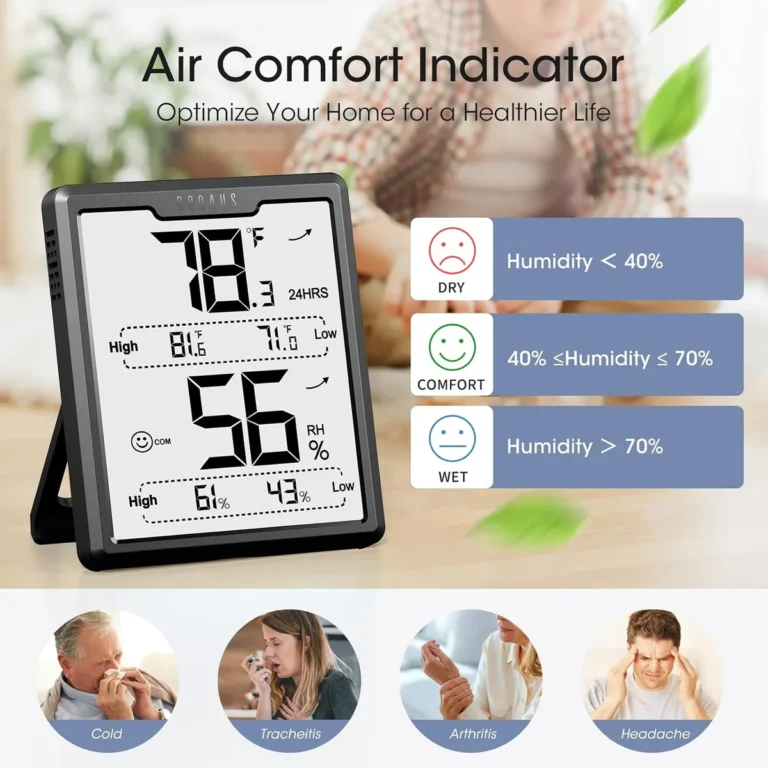
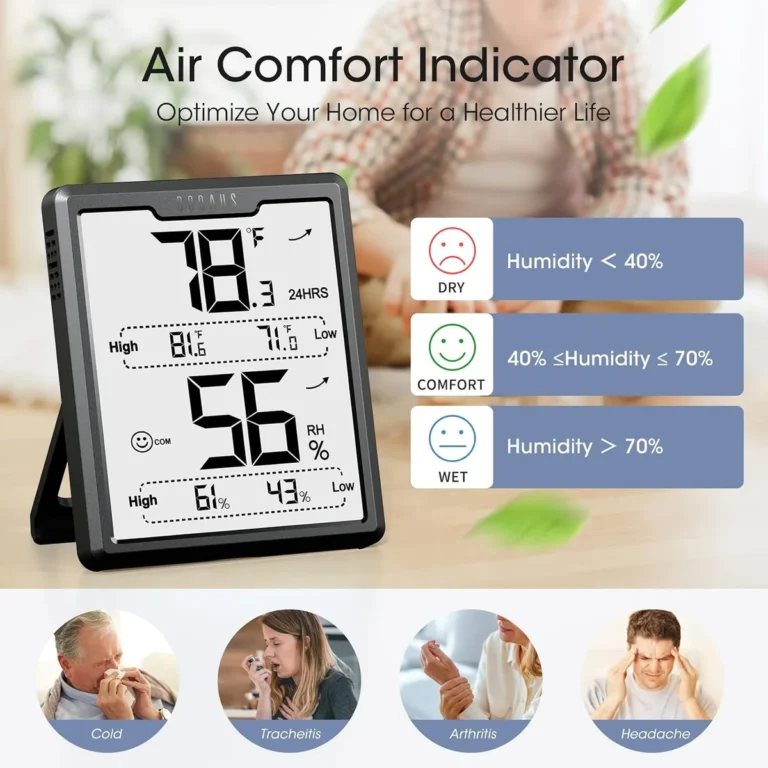
Digital hygrometers are cheap and accurate. A basic digital model costs about the same as a mid-range analog unit. It typically reads within ±2 to ±3 percent RH out of the box.
It responds quickly. It has a clear display. Many models include a thermometer and log data or connect to a smartphone app.
For most people, digital is the better choice.
The Case for Analog
Analog hygrometers have one big advantage. They do not need batteries. That means they work in places where a digital display might fail.
Extreme cold or heat can kill an LCD screen. A battery can die at the worst moment. An analog hygrometer just keeps working.
It also has a classic look that fits certain spaces. A brass dial hygrometer looks right in a wine cellar or a vintage humidor in a way that a plastic digital unit does not.
Side-by-Side Comparison
| Feature | Analog | Digital |
|---|---|---|
| Typical accuracy out of box | ±5 to ±10% RH | ±2 to ±3% RH |
| Response time | 10 to 30 minutes | Seconds |
| Requires batteries | No | Yes |
| Drift over time | 1 to 3% per year | Minimal with quality sensor |
| Calibration needed | Every 6 to 12 months | Rarely |
| Durability in extreme temps | Excellent | Poor (LCD can fail) |
| Aesthetic appeal | High (vintage look) | Low (plastic box) |
| Price for decent unit | $15 to $40 | $10 to $25 |
Who Wins
For most people, digital is the practical choice. It is more accurate, faster, and requires less maintenance. But analog still has a place.
If you need a monitor that works in a hot attic, a cold garage, or an off-grid cabin, analog is the safer bet. If you want something that looks good in a traditional setting, analog wins on aesthetics. Just know that you are trading convenience for style.
Where Analog Makes Sense: Best Use Cases and Red Flags
Analog hygrometers are not for everyone. But they are perfect for certain situations. Let's look at where they shine and where they fall short.
Best Use Cases
Cigar humidors. This is the most common use for analog hygrometers. A well-calibrated analog unit is accurate enough to keep your cigars in the 65 to 72 percent RH sweet spot. Many premium humidors come with an analog hygrometer built in.
The key is to calibrate it before trusting it.
Wine cellars. Wine needs stable humidity, typically 50 to 70 percent RH. An analog unit works well here because the conditions are stable and slow-changing. The slow response time is actually an advantage.
It smooths out short-term fluctuations and gives you a meaningful average.
Musical instruments. Guitars, pianos, and violins are sensitive to humidity swings. An analog hygrometer placed inside a guitar case or near a piano can give you a reliable reading. No batteries mean you never have to worry about dead electronics.
Off-grid or remote locations. If you have a cabin, a boat, or a workshop without regular power, analog is the practical choice. It works in freezing temperatures, high heat, and high humidity. Digital units can fail in those conditions.
Greenhouses and plant rooms. You do not need pinpoint accuracy for most plants. A general sense of humidity is enough. An analog hygrometer is durable, cheap, and easy to read at a glance.
Red Flags and When to Avoid
Do not use analog for precise scientific work. If you need to document humidity within ±1 percent, use a digital data logger or a sling psychrometer. Analog is not that accurate.
Avoid cheap analog units for critical storage. A $5 hygrometer from a discount store is often off by 10 to 15 percent. It can give you a false sense of security. You are better off spending a little more on a decent mid-range unit.
Do not rely on analog in rapidly changing conditions. A bathroom or a kitchen where humidity spikes and drops quickly will confuse an analog hygrometer. It cannot respond fast enough to give you useful readings.
Watch for units that cannot be calibrated. Some analog hygrometers have no adjustment screw. If the needle is off, you cannot fix it. Always check before buying.
In our research, the most common mistake people make is assuming their analog hygrometer is accurate straight out of the box. It almost never is. But with calibration and proper placement, it can be a reliable tool for the right use case.