How Long Does a Hygrometer Take to Read Humidity
If you just unboxed a hygrometer, you're probably staring at the display, waiting for a number that makes sense. So how long does a hygrometer take to read humidity? The short answer is that it depends on the sensor, but most digital hygrometers settle within 1 to 5 minutes.
Analog dial models are slower, often taking 10 to 30 minutes.
Manufacturer specifications and NIST guidance show that capacitive sensors, the kind inside most digital hygrometers, reach around 90% of their final relative humidity reading within about 60 seconds in moving air. In still air, that same sensor may need several more minutes to fully equalize. The display can update faster than the sensor stabilizes, which fools a lot of people.
Let's look at what actually controls that wait time.
Quick Answer
Most digital hygrometers take 1 to 5 minutes to read humidity. Analog models need 10 to 30 minutes. The sensor type decides the timing, not the display.
Give the device still air. Wait for the number to stop moving.
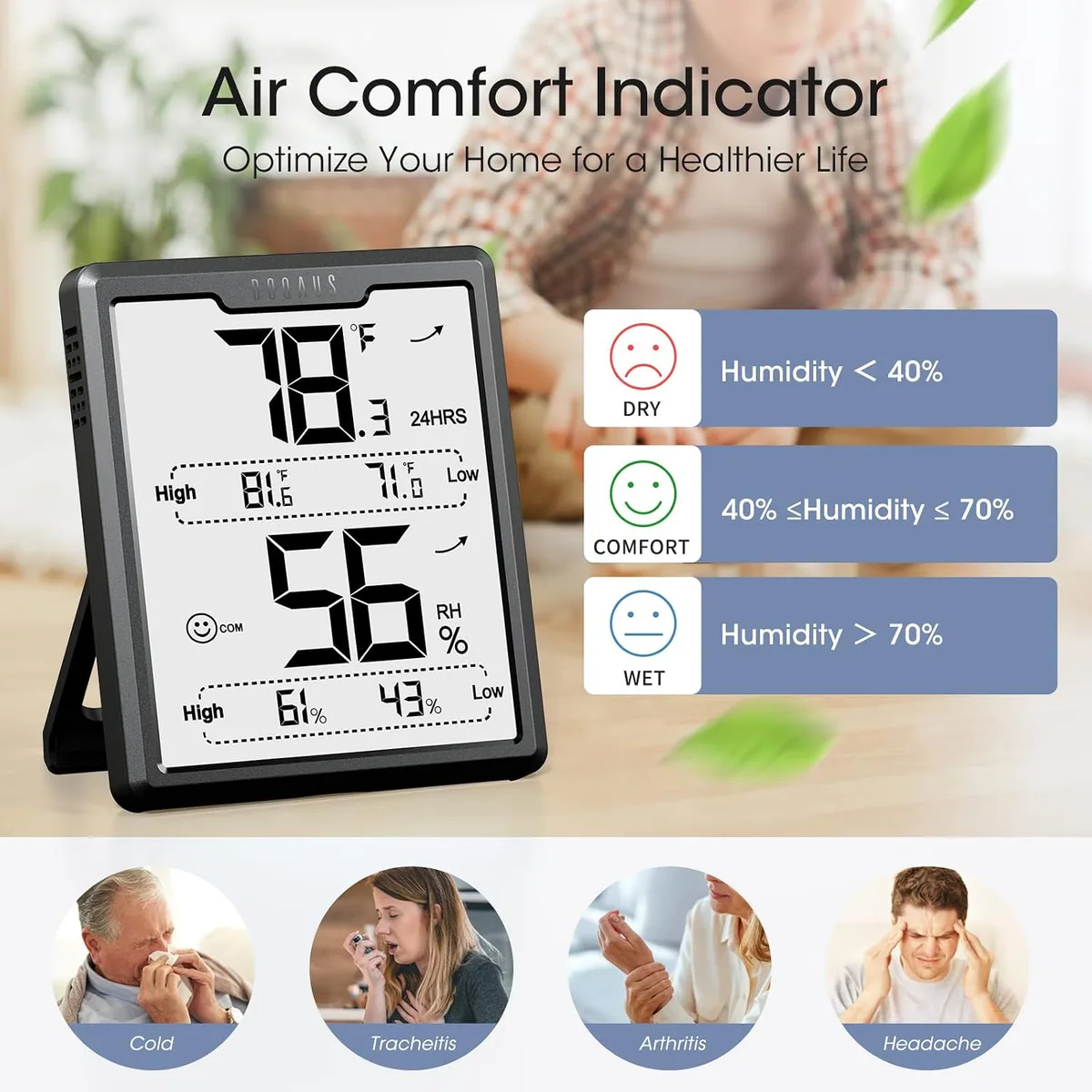
Image source: Bing (Web (fair-use with source credit))
What Actually Determines How Fast a Hygrometer Reads
Digital vs. Analog Sensor Response Times
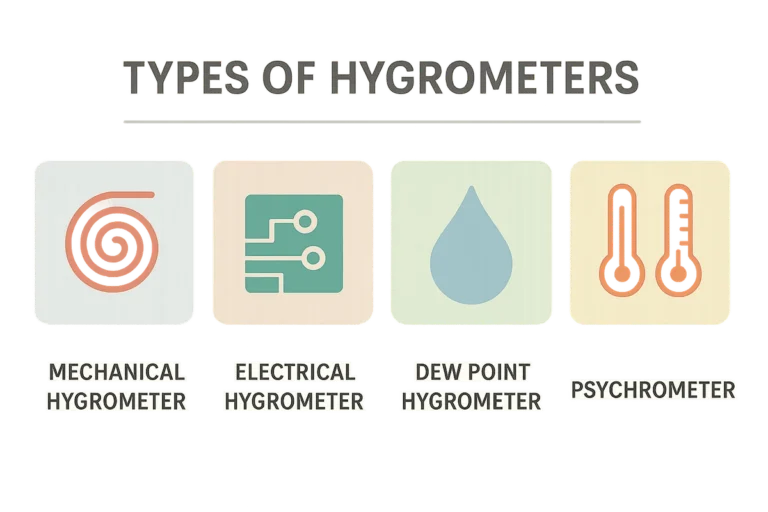
Capacitive sensors are the workhorses inside most digital hygrometers. They measure how moisture changes an electrical charge on a tiny film. As of 2026, nearly every mid-range digital hygrometer on the market uses this type.
Under normal conditions, the sensor responds within 15 to 60 seconds, then takes another few minutes to stop drifting.
Resistive sensors, found in budget digital units, operate differently. They absorb moisture into a coating that changes resistance. They're slower, and they can lose accuracy as they age.
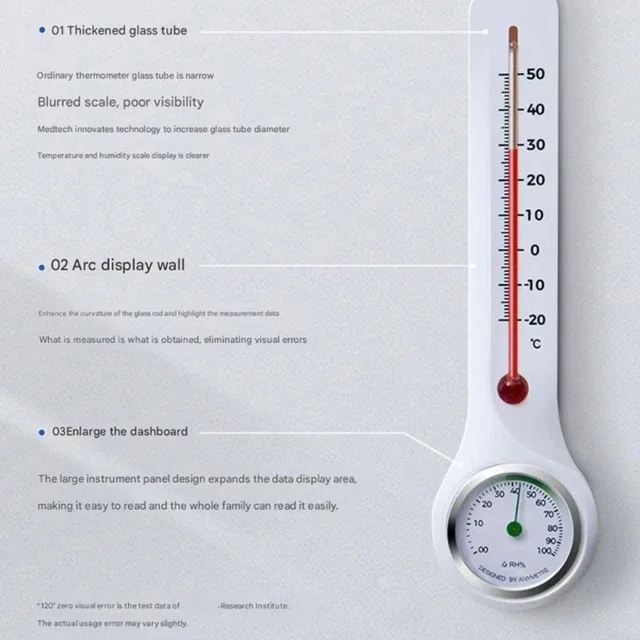
Mechanical hygrometers use a coil of treated hair or synthetic fiber that expands and contracts with moisture. Hair moves slowly, so dial models lag several minutes behind. That's why a cheap dial hygrometer can still be climbing toward the real humidity 20 minutes after you turn it.
| Sensor Type | Typical Response | Accuracy | | Capacitive (digital) | 15-60 seconds to detect, 1-5 min to stabilize | ±2-3% RH | | Resistive (budget digital) | 1-3 minutes | ±5% RH | | Hair/fiber (analog dial) | 10-30+ minutes | ±5-10% RH |
Why Airflow and Room Conditions Change the Numbers
Airflow matters more than any other external factor. Moving air forces moisture toward the sensor, so a fan can cut response time nearly in half. Still air inside a sealed closet leaves the sensor waiting on slow diffusion.
Temperature changes also throw off readings. Cold sensors respond slower, and placing a hygrometer against an exterior wall measures wall temperature, not room temperature. Keep the device away from direct sunlight, vents, and cold windows.
How Long Should You Wait? A Quick Decision Guide
If You Just Unboxed It
If you just opened a digital hygrometer, wait 5 minutes before judging the reading. The unit sat in a warehouse filled with different air than your home. It needs time to shed that old humidity and reach equilibrium with the room.
After 5 minutes, the number should stop moving.
If you're testing an analog dial hygrometer, budget 30 minutes to an hour. New hair or fiber coils start stiff, and the mechanical linkage takes a while to break in. Some dials keep creeping for a full hour after first power-up.
If You Moved It to a New Room
If you move a hygrometer from a bathroom to a bedroom, it carries moisture from the old space. The sensing element still holds that residual humidity. Wait 5 to 10 minutes for digital units.
Wait 30 to 60 minutes for analog dials.
If You Opened a Humidor or Enclosure
Opening a humidor, wine cabinet, or reptile enclosure causes humidity to drop fast. Once the lid closes, the sensor starts recovering. Digital hygrometers usually settle back to an accurate reading within 3 to 5 minutes.
Analog models need 15 minutes or more.
How to Test Your Hygrometer's True Reading Speed at Home
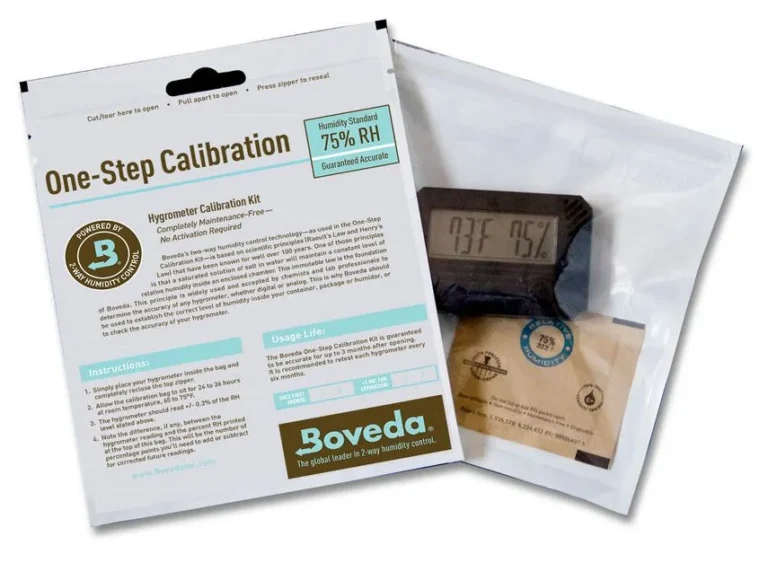
The salt test is a standard method for checking hygrometer accuracy. It creates a known relative humidity of 75% inside a sealed container. With a little timing, it also shows you exactly how fast your sensor responds.

Image source: Bing (Web (fair-use with source credit))
Here's how to set it up:
- Fill a small bottle cap with table salt.
- Add two or three drops of water until the salt becomes a damp slurry, not dissolved.
- Place the cap and the hygrometer inside a sealed plastic bag or glass jar.
- Keep the salt and the sensor side by side, but not touching.
- Close it up and start a timer.
For calibration, leave everything sealed for 6 to 12 hours. When you open the container, the hygrometer should read 75% RH. If it doesn't, the difference is your offset.
To measure response time, watch how long the reading takes to reach 75%. A fast digital unit should hit the mark within a few minutes. A budget resistive sensor can take 10 to 20 minutes.
A mechanical dial may never fully arrive in the first few minutes, and that's your answer.
Why Your Hygrometer Might Be Lying to You
Hysteresis, Overshoot, and Sensor Saturation
Hysteresis means the reading depends on where the sensor was before. A hygrometer moving from 80% to 50% will read a little higher than one moving from 30% to 50%. The sensor doesn't snap back perfectly, so it lags in both directions.
Overshoot is the opposite. When humidity jumps fast, a digital sensor can spike past the real value before settling back down. That's why a fresh reading right after misting a plant or opening a humidor shouldn't be trusted.
Sensor saturation happens when the sensing element gets wet. It stays near 99% RH while the moisture evaporates, and drying out can take hours. The display stays pinned the whole time.
Common Placement Mistakes That Delay Readings
You might be putting your hygrometer in a spot that guarantees a false reading. Corners and walls hold stagnant air, which is usually more humid than the middle of a room. Give the device at least a few inches of clearance on every side.
Don't place it above a radiator, next to a humidifier, or in direct sunlight. Each microclimate pushes the sensor around, so you'll never get a stable number. Once you move the device, reset the wait timer from zero.
Real-World Timelines: What to Expect in Everyday Scenarios
Everyday situations don't follow the spec sheet, so here are practical timelines you can use.

Image source: Bing (Web (fair-use with source credit))
| Scenario | Digital Hygrometer | Analog Hygrometer | | Cigar humidor after opening the lid | 3-5 minutes | 15-30 minutes | | Reptile enclosure after misting | 5-10 minutes | 30 minutes | | New room setup | 10 minutes | 30-60 minutes | | Whole-room HVAC reading | 10 minutes | 30 minutes |
Cigar humidors are quite forgiving. The humidity inside a sealed box doesn't swing wildly, so a digital sensor returns to the correct number within a few minutes. An analog dial mounted in the lid moves slower because the surrounding wood also absorbs and releases moisture.
Reptile enclosures are the toughest case. Misting systems create sharp humidity spikes that saturate the sensor. A digital hygrometer on the wall will show a false high for several minutes after spraying.
Wait until the mist settles, then check the reading.
For whole-room HVAC use, the sensor isn't the bottleneck. The room air itself takes time to mix after the furnace or air conditioner runs. Give a digital unit 10 minutes and an analog unit 30 minutes before making adjustments.
When to Trust Your Hygrometer and When to Replace It
Sensor drift is a real problem. It happens slowly, so you might not notice until your hygrometer is off by 10% or more. The sensing element degrades over time, and the calibration shifts.
How Sensor Drift Creeps In Over Time
Capacitive sensors drift about 1% to 2% per year under normal use. Resistive sensors drift faster, sometimes 5% per year. High humidity, temperature swings, and dust accelerate the decline.
You can check for drift with the salt test we described earlier. If your hygrometer reads 75% RH correctly after 6 to 12 hours, you're fine. If it reads 70% or 80%, you need to recalibrate or replace the unit.
| Check Method | What It Tells You | How Often | | Salt test | Accuracy at 75% RH | Every 6 months | | Ice cube test | Basic function check | As needed | | Cross-check with a known good unit | Relative accuracy | Yearly |
Quick Checks to Confirm Your Unit Is Still Accurate
The salt test is the gold standard, but you can do a faster check. Place two hygrometers side by side for an hour. If they disagree by more than 5%, one of them is failing.
You can also use the wet sock method. Wrap a damp cloth around the sensor for 10 minutes. A properly functioning hygrometer should read near 100% RH.
If it reads 85% or 90%, the sensor is tired.
Signs It's Time to Replace
Replace your hygrometer if any of these apply. It reads the same number no matter what the room does. It takes more than 30 minutes to respond to a clear change.
Moisture has gotten inside the display casing. The reading jumps around wildly without any reason.
Digital hygrometers usually last 3 to 5 years. Analog dials can last longer, but they lose accuracy faster. A cheap analog unit may be worth replacing after 12 months.
You can also watch for battery corrosion. Leaking batteries destroy sensors and electronics. If you see green or white crust around the battery compartment, replace the unit immediately.
Frequently Asked Questions
How long does a hygrometer take to read humidity after a big change?
After a big swing of 20% or more, digital hygrometers need 5 to 10 minutes to stabilize. Analog dials need 30 to 60 minutes. The sensor has to equalize with the new air, and that takes time.
Should I wait longer for analog or digital?
Always wait longer for analog. Digital capacitive sensors respond in seconds. Analog hair or fiber sensors are slow to move.
Budget 30 minutes for analog and about 5 minutes for digital before trusting the reading.
How often should I calibrate my hygrometer?
Calibrate every 6 months for digital units. Calibrate every 3 months for analog dials. If you live in a humid climate or use the hygrometer in a greenhouse or reptile enclosure, calibrate more often.
Why does my hygrometer read 99% after cleaning?
The sensor is saturated with water. Let it dry in open air for several hours. Do not place it near a heater.
The reading will drop slowly as the moisture evaporates from the sensing element.
Can I speed up the response time of my hygrometer?
You can add airflow. A small fan moving air past the sensor cuts response time nearly in half. That's the only safe method.
Do not heat the sensor or blow on it directly.