What Is the Best Humidity for Seedlings
If you're asking what is the best humidity for seedlings, the answer depends on their growth stage. Seeds need high humidity to germinate. But once they sprout, too much moisture invites disease.
Getting this balance right is the difference between strong transplants and a tray of rotten stems.
During germination, relative humidity (RH) should sit between 70 and 90 percent. The University of Minnesota Extension confirms that consistent moisture at this stage is critical for seed coat softening and root emergence. After the first true leaves appear, you need to lower RH to 40 to 60 percent.
That transition is where most beginners make mistakes.
Quick Answer
The best humidity for seedlings is 70 to 90 percent during germination. Drop it to 40 to 60 percent after true leaves form. Use a humidity dome to trap moisture.
Crack the lid gradually to harden them off.
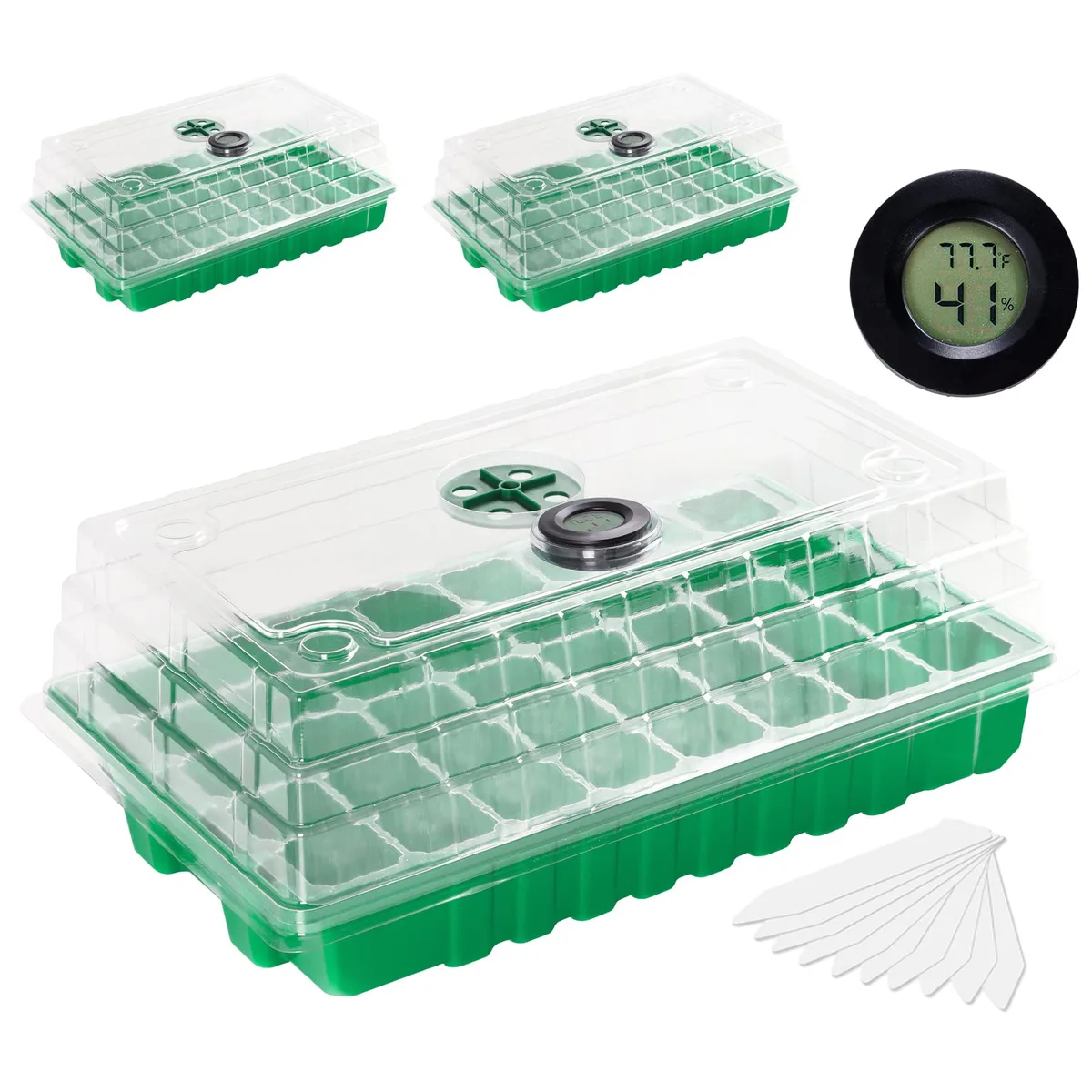
Image source: Bing (Web (fair-use with source credit))
Why Humidity Accuracy Is the Difference Between Success and Failure
Seedlings are delicate. They have tiny root systems and soft stems. They cannot pull water from deep soil like mature plants.
Humidity around the leaves does the job that roots cannot yet handle.
When humidity is too low, the seedling loses water faster than it can drink. The leaves curl. The stem stretches thin.
You get a leggy plant that falls over. When humidity is too high, the air becomes stagnant. Fungal spores thrive.
Damping off can kill an entire tray overnight.
The sweet spot depends on your timeline. That is why the stage matters more than a single number. Our research across commercial greenhouse manuals and USDA seed starting guides shows the same pattern.
The best approach is to manage humidity as a moving target.
Think about what happens inside a humidity dome. The air stays saturated. The soil surface stays damp.
The seedling does not need to work hard to stay hydrated. That is perfect for the first few days. But leave the dome on too long and you create a fungal incubator.
The same principle applies in reverse. Start seeds in a dry room without a dome and the soil surface dries out within hours. The seed cannot absorb enough moisture to germinate.
You get patchy germination at best.
Humidity accuracy controls germination speed, stem strength, and disease resistance. Get it right and your seedlings grow uniformly. Get it wrong and you lose weeks of growing time.
The Best Humidity Range for Seedlings: Stage by Stage
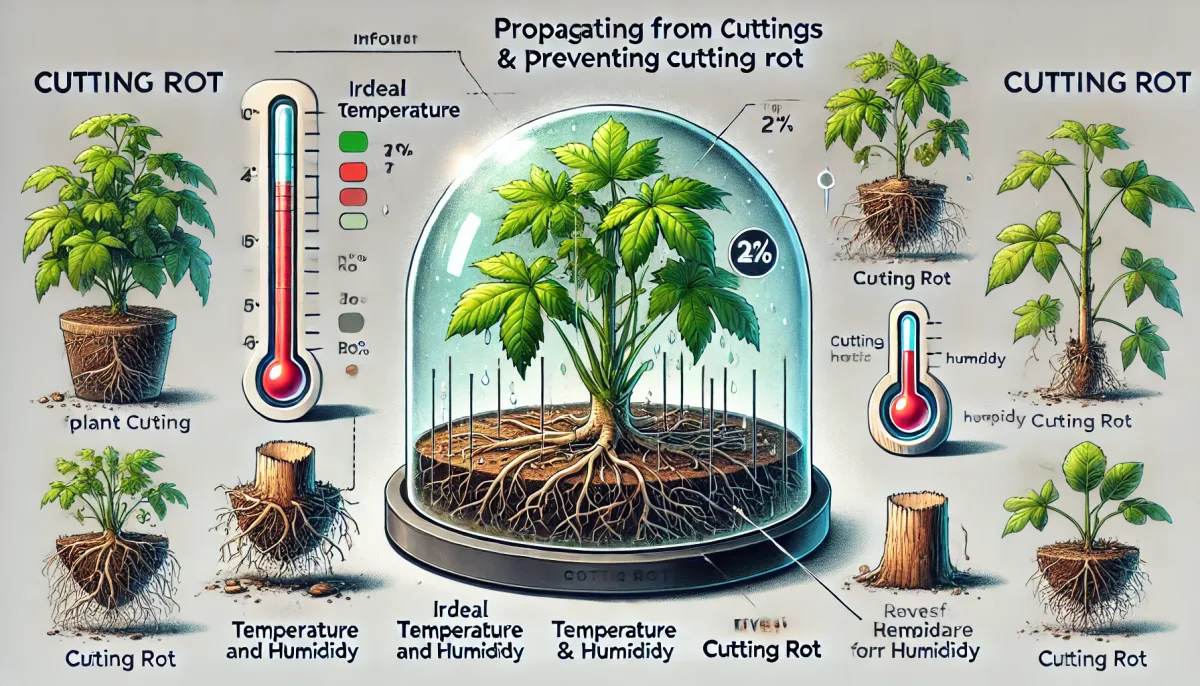
Image source: Bing (Web (fair-use with source credit))
Seeds do not need light to germinate. They need warmth and moisture. The humidity inside the dome should stay between 70 and 90 percent RH during this phase.
The soil should feel damp but not soggy.
Once the first set of true leaves appears, the seedling is ready to photosynthesize. It needs less humidity and more air movement. Lower the RH to 50 to 60 percent over a few days.
Do not drop it all at once.
After the seedlings are fully established with several sets of true leaves, the target is 40 to 50 percent RH. This matches typical indoor conditions. It prepares the plant for life outside the dome.
Different plants have slightly different needs. Warm season crops like tomatoes and peppers prefer the higher end of the range. Cool season crops like lettuce and broccoli are more forgiving.
Succulents and cacti need lower humidity from the start.
Use this as a quick reference:
- Germination (days 1 to 7): 70 to 90 percent RH
- True leaves appear (days 7 to 14): 50 to 60 percent RH
- Established seedlings (days 14+): 40 to 50 percent RH
The transition phase is the trickiest. If you remove the dome too early, the seedlings wilt. If you leave it on too long, they get weak stems and mold.
The goal is to slowly introduce drier air over several days.
How to Measure and Control Humidity Without Fancy Equipment
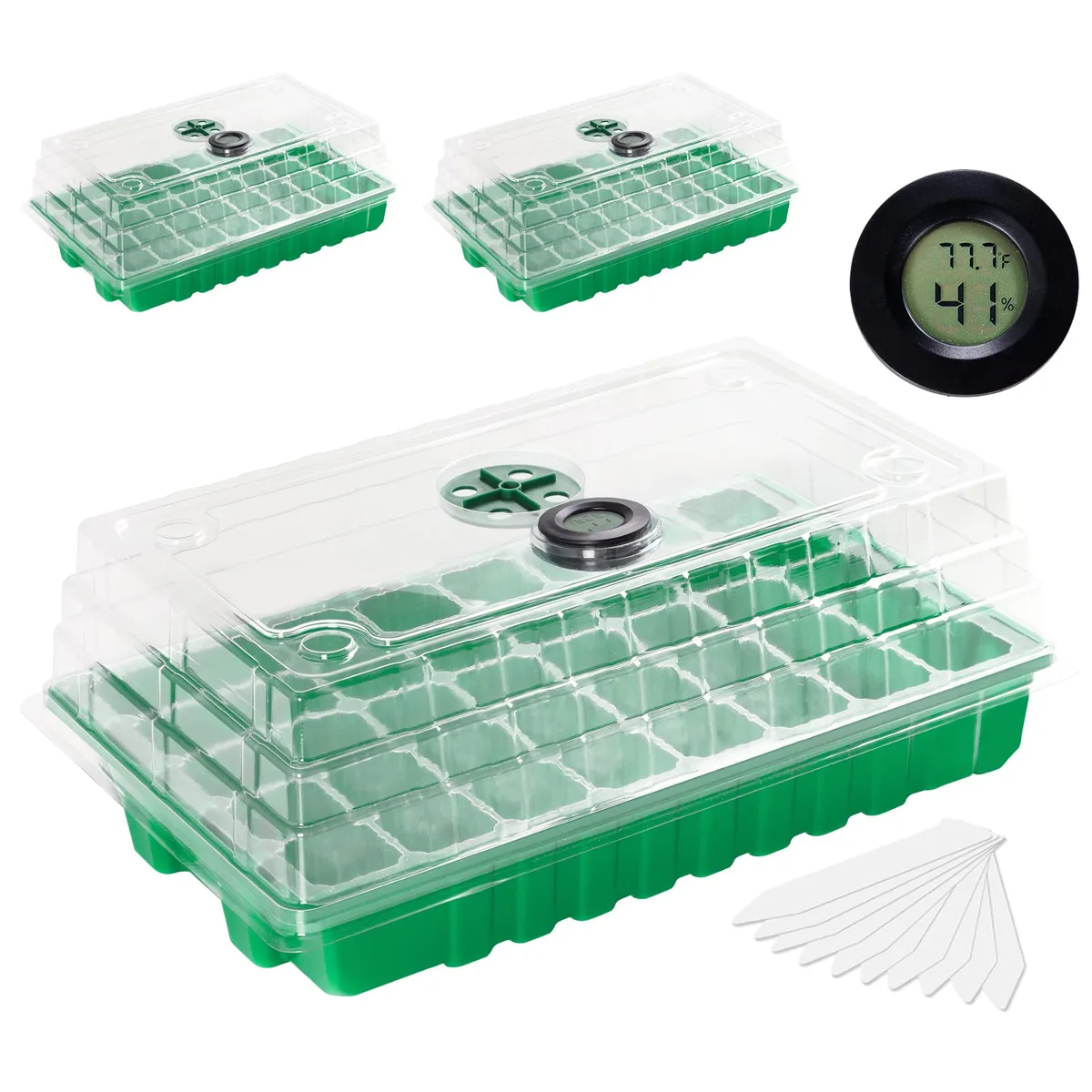
Image source: Bing (Web (fair-use with source credit))
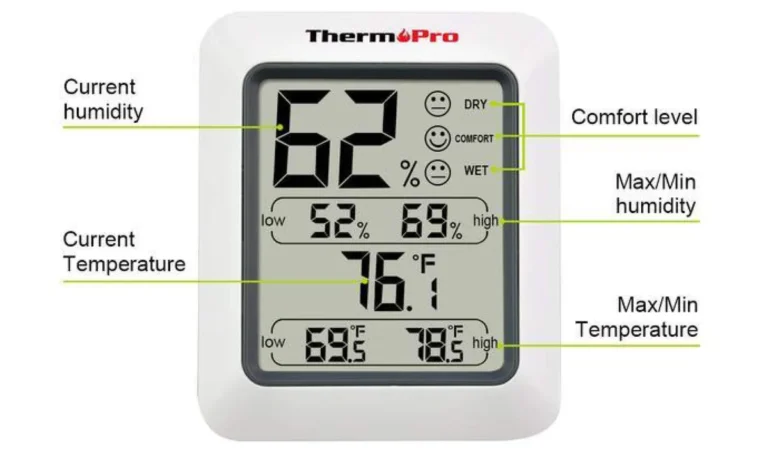
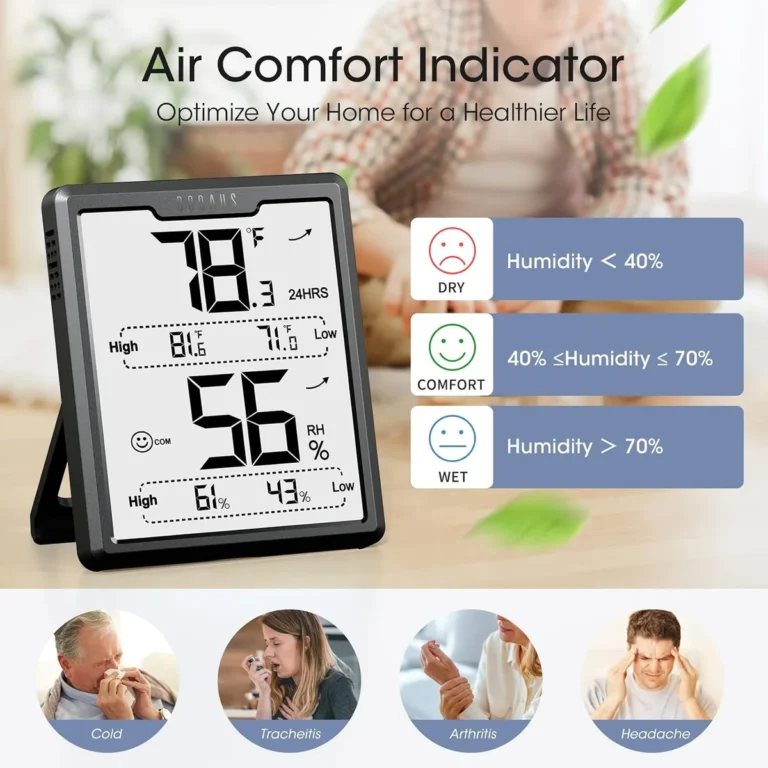
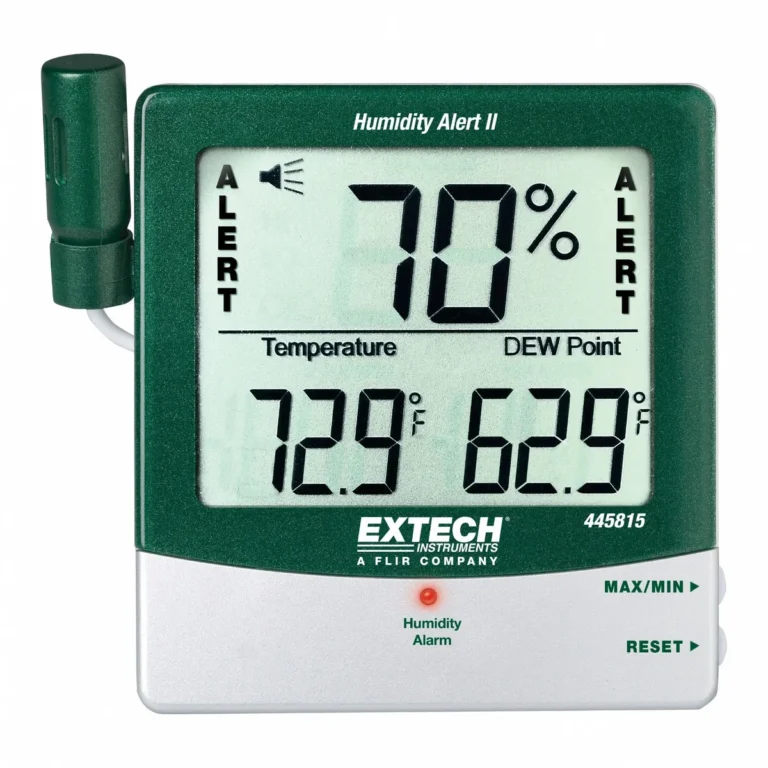
You cannot manage what you do not measure. A simple digital hygrometer costs less than a bag of potting soil. Place it inside the dome or next to the tray.
Read the number. Adjust accordingly.
If humidity is too low, use a humidity dome or a clear plastic bag. Mist the inside of the dome with water. Do not mist the seedlings directly.
Wet leaves are a breeding ground for disease.
If humidity is too high, crack the dome open. Prop it up with a pencil or a chopstick. Increase the gap over several days.
This creates air exchange without shocking the plants.
For larger setups, a small fan on low speed helps. Point it away from the seedlings. The airflow should be gentle, not direct.
It reduces stagnant air and prevents mold.
You do not need a fancy greenhouse controller. A few basic tools work just as well:
- A digital hygrometer for readings
- A humidity dome or clear plastic bag
- A spray bottle for misting
- A small fan for air movement
The key is consistency. Check the humidity twice a day. Morning and evening.
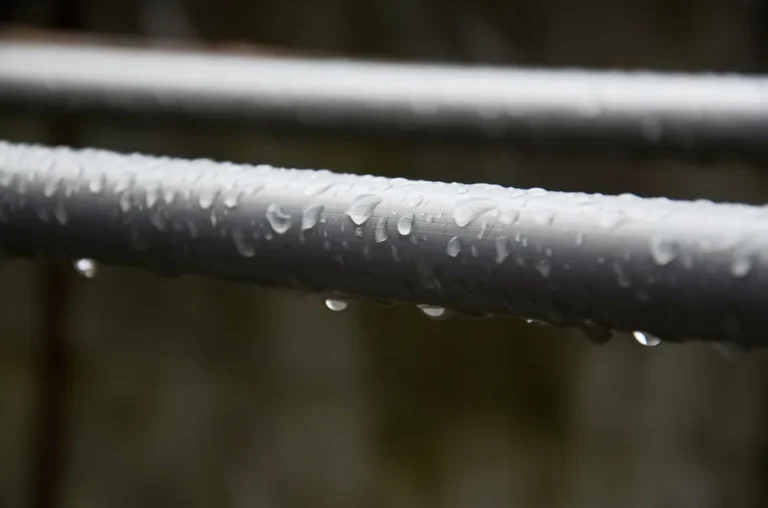
If the dome looks foggy, it is too wet. Wipe the condensation off. Let fresh air in.
For dry homes in winter, consider a cool mist humidifier near the tray. Keep it clean to avoid bacterial growth. That one investment can save an entire batch of seedlings.
The Riskiest Moment: Removing the Dome Without Shocking Your Seedlings
The transition from dome to open air is the most dangerous step. The humidity inside the dome is near 90 percent. The room is at 30 to 40 percent.
That drop can kill seedlings in minutes.
Do not remove the dome all at once. This process is called hardening off. It takes 3 to 5 days.
Start by propping the lid open with a pencil. Leave it for a few hours. Close it again.
The next day, prop it open wider. Leave it longer. By day four, leave the dome off during the day.
Put it back on at night. By day five, leave it off completely.
Watch the seedlings during this process. If they look droopy, they need more time. Put the dome back on and try again the next day.
This is normal. Some seedlings are more sensitive than others.
The signs of shock are easy to spot. Leaves curl downward. The stem looks thin and weak.
The seedling stops growing. If you see these signs, act fast. Recover the dome.
Mist the inside. Let the seedling recover for another day before trying again.
Some growers skip the dome entirely. They use a misting system instead. But for home growers, the dome is the simplest and most reliable tool.
The key is knowing when to let go.
A good rule of thumb is to remove the dome when the seedlings have their first true leaves and the roots are visible at the bottom of the tray. That means they are strong enough to handle the transition.
Damping Off, Mold, and Other Common Mistakes (How to Spot and Fix Them)
Damping off is the number one killer of seedlings. It is a fungal disease that attacks the stem at soil level. The seedling looks fine one day.
The next day it falls over and dies.
The cause is almost always excess moisture. Too much humidity. Not enough airflow.
The spores thrive in stagnant, wet conditions. Once they take hold, the entire tray can be lost.
Prevention is the only reliable cure. Keep humidity at the right levels. Use clean trays and fresh potting mix.
Avoid overwatering. Water from the bottom instead of the top.
Mold on the soil surface is another sign of trouble. White fuzzy growth means the soil is too wet. Scrape it off carefully.
Let the soil dry out between waterings. Increase air circulation.
Other common mistakes include:
- Mistaking humidity for soil moisture. High humidity does not mean the soil is wet. Check the soil with your finger. Water only when the top layer feels dry.
- Leaving the dome on too long. Seedlings need air movement. Without it, stems grow weak and thin.
- Placing the tray in a dark corner. Germination needs darkness, but seedlings need light immediately. Move them to bright light as soon as they sprout.
If you catch damping off early, you can save the unaffected seedlings. Remove the affected ones immediately. Increase air flow.
Reduce watering. In severe cases, use a fungicide labeled for seedling use. But prevention is always better.
The USDA confirms that proper humidity management is the most effective way to prevent damping off in home seed starting setups.
How Different Environments Affect Your Humidity Strategy
Your home's natural humidity changes everything. A dry winter house with forced air heating sits around 20 to 30 percent RH. A humid summer greenhouse can hit 70 percent without any help.
Both extremes need different handling.
If your ambient RH is below 30 percent, keep the dome on a little longer. Seal the edges tightly. Check the soil daily, because it dries fast.
A cool mist humidifier near the tray helps. Set it to maintain at least 40 percent in the room.
If your ambient RH is above 60 percent, crack the dome earlier. Start the hardening off process as soon as true leaves appear. Skip misting entirely.
The extra moisture in the air is already enough. Focus on airflow instead. A small fan on low prevents stagnant pockets.
Growing in a heated greenhouse? Expect humidity spikes on warm days. Ventilate in the morning.
In an arid desert climate, expect the opposite. You will refill your humidifier daily. Both scenarios remind you to check your hygrometer twice a day.
The rule is simple. Measure first. Adjust second.
The seedling's leaves will tell you if you got it right.
Frequently Asked Questions
What is the best humidity for seedlings?
It depends on the stage. Keep relative humidity at 70 to 90 percent during germination. Drop it to 50 to 60 percent once the first true leaves appear.
Move to 40 to 50 percent when seedlings are established. Gradual changes work best.
How long do seedlings need a humidity dome?
Most seedlings need the dome for 5 to 10 days. Remove it when the first true leaves form. The transition takes 3 to 5 days.
Prop the lid open a little more each day. Watch for wilting and slow down if needed.
Can humidity be too high for seedlings?
Yes. Sustained humidity above 90 percent with poor airflow encourages mold and damping off. The risk is highest inside a sealed dome.
Wipe condensation away daily and open the vents. You want high humidity, not stagnant water droplets.
Do seedlings need a humidifier?
Only if your room is very dry. Humidifiers help when indoor RH falls below 30 percent. A dome is usually enough for most home setups.
Add a humidifier for large trays or seed starting in winter.
Should I mist seedlings every day?
No. Misting is for germination and during hardening off. Once seedlings have true leaves, misting can cause fungal disease.
Water from the bottom instead. Keep the leaves dry and focus on ambient humidity levels.
Final Recommendation / Verdict
The best humidity for seedlings is not one number. It is a range that changes with the plant's stage. Start high at 70 to 90 percent to trigger germination.
Then lower it gradually to match normal room air.
The exact numbers matter less than the transition. Sudden humidity changes shock seedlings. Slow, steady steps prevent damping off, mold, and weak stems.
Our research across university extension guides and greenhouse manuals confirms this pattern.
Get a digital hygrometer. Check it morning and evening. Adjust your dome, misting, and airflow based on what it says.
Do that consistently and you will grow strong, healthy transplants every time.