What Is a Hygrometer Used For
You walk into a room and something feels off. Maybe the air is sticky, or your throat is dry, or you notice a musty smell near the basement stairs. That's your body telling you the humidity is wrong.
So what is a hygrometer used for? It measures the moisture in the air, giving you a number you can actually act on instead of guessing.
The relative humidity (RH) scale runs from 0 to 100 percent. As of 2026, most digital hygrometers claim accuracy within ±3 percent RH, which is good enough for almost any home or hobby use. A simple battery-powered sensor can tell you whether you need to run a dehumidifier, turn on a humidifier, or just open a window.
That's a lot of power for a gadget that costs less than a pizza.
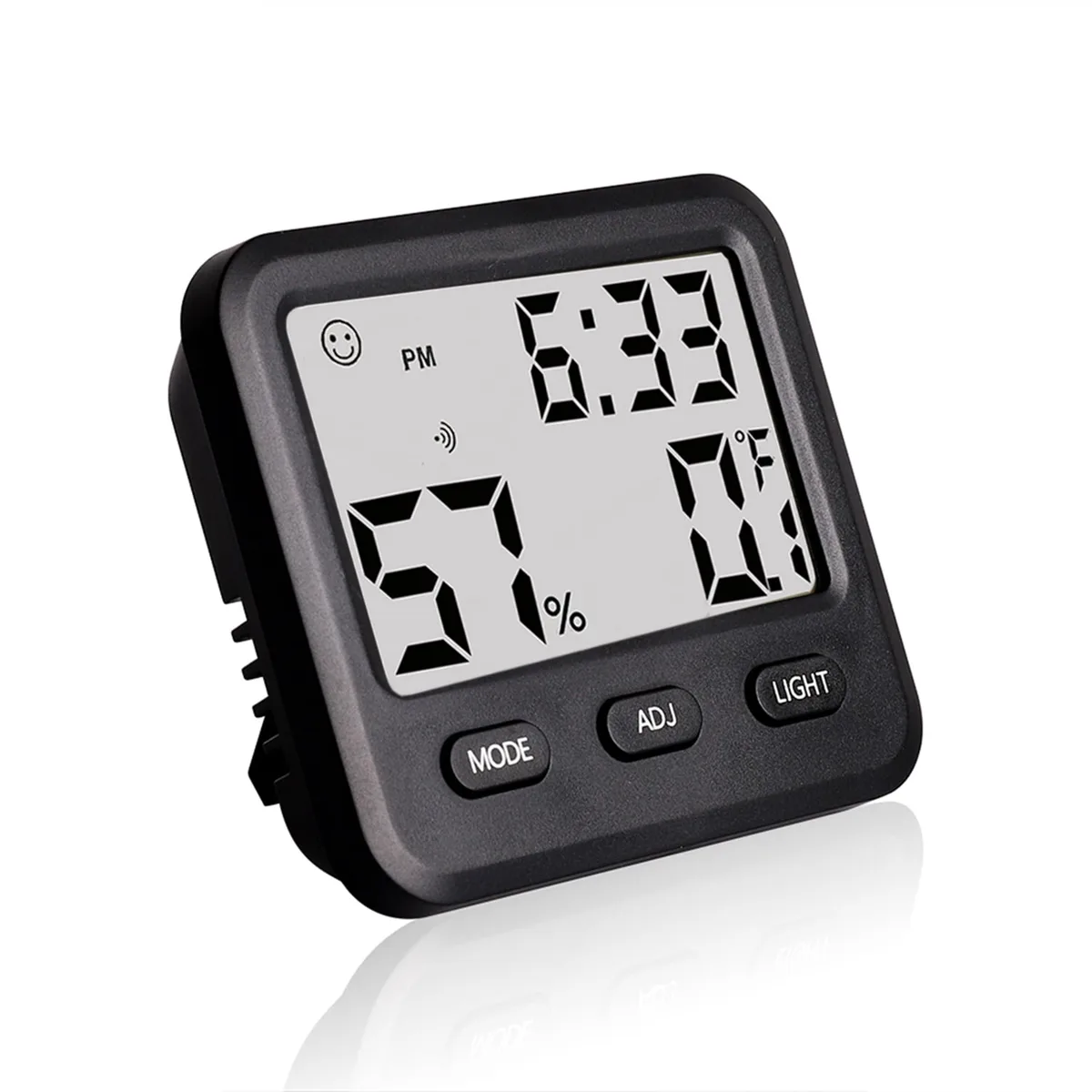
Image source: Bing (Web (fair-use with source credit))
Quick Answer
A hygrometer measures relative humidity. It tells you how much moisture is in the air. You use it to prevent mold, protect wood, and stay comfortable.
The number helps you decide if you need a humidifier or dehumidifier. That's it. No guesswork, no expensive damage.
What a Hygrometer Actually Does (And Why You Might Already Need One)
A hygrometer doesn't control humidity. It measures it. That distinction matters because you can't fix what you can't see.
The device reads the percentage of water vapor in the air compared to the maximum the air can hold at that temperature. At 50 percent RH, the air is half saturated. At 70 percent, it's holding enough moisture to feed mold spores.
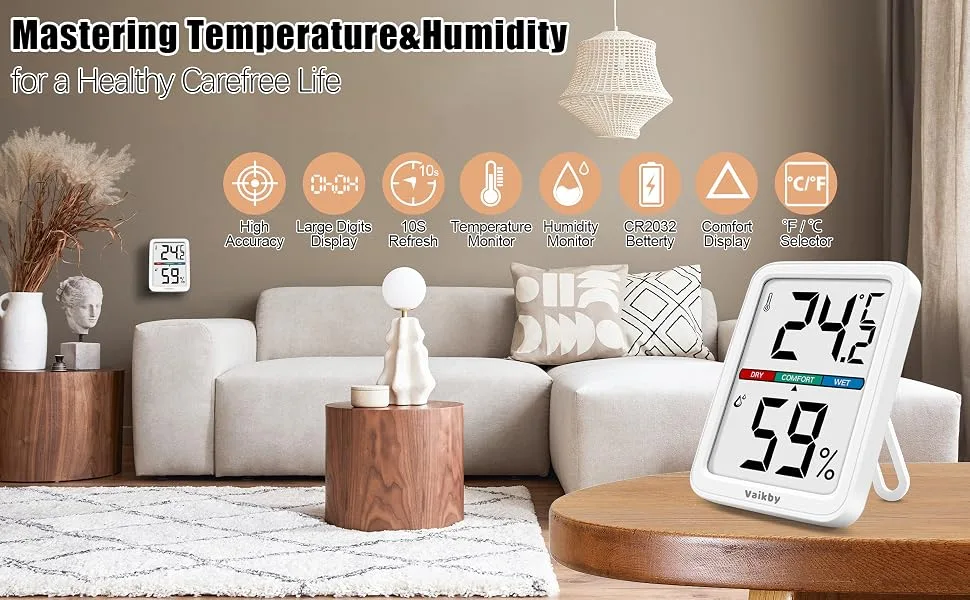
Image source: Bing (Web (fair-use with source credit))
The real value shows up when you pair the reading with action. If you see 65 percent in your basement and you know mold starts growing above 60 percent sustained, you now have a decision to make. Run a dehumidifier.
Move stored cardboard boxes. Improve ventilation. The hygrometer gives you the data point that turns a vague feeling into a specific problem.
Most people don't realize how much humidity varies inside a home. A winter day with the furnace running can drop RH below 20 percent, which is dry enough to crack wood flooring and cause static shocks. A summer thunderstorm can push it past 70 percent indoors if windows are open.
The hygrometer catches both extremes. Manufacturer specifications indicate that analog models need about 15 minutes to stabilize, while digital sensors respond in 10 to 30 seconds. That speed matters when you're troubleshooting a sudden change.
Do You Have a Humidity Problem? 5 Clues You Can't Ignore
You don't need a hygrometer to know something is wrong. But you need one to know exactly what is wrong. Here are five signs that your humidity is out of balance and a hygrometer would help.
- Condensation on windows. If you wake up to water droplets on the inside of your double-pane windows, your indoor RH is likely above 60 percent. The cold glass surface causes moisture to condense out of warm air. That water can run down and damage window sills and drywall.
- Musty smell in one room. A persistent basement or closet odor that doesn't go away with cleaning usually means mold or mildew. Mold needs humidity above 60 percent to grow. A hygrometer tells you if the source is air moisture or a hidden leak.
- Static shocks and dry skin. When you touch a doorknob and feel a zap, or your hands feel tight and cracked, the air is too dry. Static discharge becomes common below 30 percent RH. Dry air also dries out nasal passages and makes you more susceptible to colds.
- Wood floors that creak or gap. Wood expands and contracts with humidity. Seasonal gaps between floorboards are normal, but sudden cupping or cracking means a rapid humidity swing. A hygrometer helps you catch it before the damage is permanent.
- Plants with brown edges or mold on soil. Houseplants are sensitive to humidity swings. Crispy leaf tips usually mean the air is too dry. Fuzzy white mold on the soil surface means the air is too humid and stagnant. The hygrometer tells you which direction to adjust.
If you recognize three or more of these, you already have a humidity problem that needs measuring. The next step is figuring out which use case applies to you.
What Should You Use One For? Follow Your Situation
The decision tree starts with one question: what are you trying to protect? The answer changes the target RH range, the placement of the sensor, and the action you take. Here are the most common branches.
Protecting Wood Floors, Furniture, and Drywall
Wood is a humidity sponge. It absorbs moisture and swells, then releases it and shrinks. The stable range for interior wood is 30 to 50 percent RH.
Below that, wood cracks. Above that, wood cups and warps. If you have hardwood floors, solid wood furniture, or real wood trim, keep it in that band.
Place the hygrometer in the room where the wood lives, not in a hallway. Set a dehumidifier to kick on at 55 percent.
Keeping Guitars, Pianos, and Other Instruments Safe
Musical instruments are precision machines made of thin wood and glue. A guitar left in dry air can develop a sunken top, fret sprout, or a cracked bridge. Acoustic pianos are even more sensitive.
The target range for stringed instruments is 40 to 50 percent. Below 35 percent, the wood shrinks and glue joints fail. Above 60 percent, the soundboard can swell.
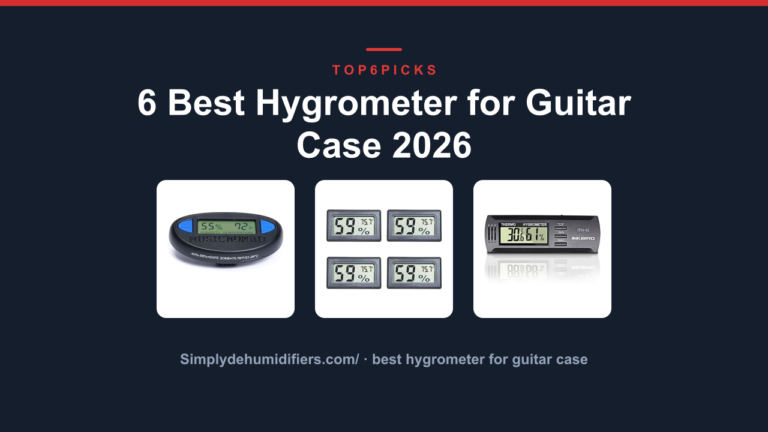
Place a hygrometer inside the case or near the instrument, not across the room. A small digital sensor inside a guitar case costs under $15 and can save you a $500 repair.
Maintaining Cigars, Wine, and Collectibles
Cigars need 65 to 72 percent RH. Too dry and they crack. Too wet and they mold or burn poorly.
A hygrometer inside a humidor is standard equipment. Wine cellars target 50 to 70 percent RH. Below that, corks dry out and let air in.
Above that, labels peel and mold grows on the bottles. Art, documents, and textiles need 40 to 55 percent. Museums use calibrated hygrometers to protect collections.
If you store anything that can decay, you need a reading.
Growing Healthier Plants and Seedlings
Most houseplants prefer 40 to 60 percent RH. Tropical plants like ferns and orchids thrive at 60 to 80 percent. Seedlings under grow lights need higher humidity to prevent damping off.
If your leaves have brown tips or your soil stays wet too long, check the humidity. A cheap hygrometer in the grow tent or on the shelf gives you actionable data. Pair it with a small humidifier or better ventilation based on what the reading says.
Improving Comfort, Sleep, and Allergies
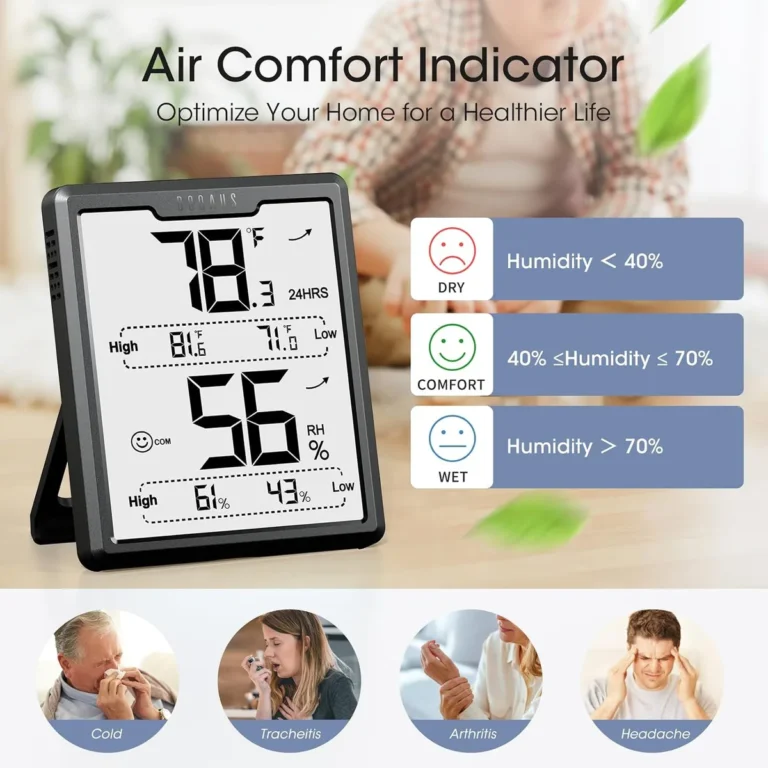
The human body feels best between 30 and 50 percent RH. Dry air dries out your eyes, nose, and throat. Humid air feels stuffy and can trigger dust mites and mold allergies.
A hygrometer in your bedroom lets you adjust before you sleep. If the reading is below 30 percent, run a humidifier. Above 55 percent, run a dehumidifier or increase ventilation.
The Centers for Disease Control and Prevention recommends keeping indoor humidity below 60 percent to control allergens and respiratory irritants.
How to Use a Hygrometer Correctly: Placement, Calibration, and Reading Tips
A hygrometer is only useful if it gives accurate readings. And accuracy depends entirely on where you put it and whether you calibrate it. Here is the practical workflow.
Placement matters more than the model. Keep the sensor away from direct sunlight, heating vents, air conditioners, windows, and exterior walls. Those spots read local microclimates, not the room average. Place it at eye level in the middle of the room or on an interior wall.
If you are monitoring a specific item like a guitar or humidor, place the sensor inside that space. For a whole-room reading, mount it 3 to 5 feet off the floor.

Image source: Bing (Web (fair-use with source credit))
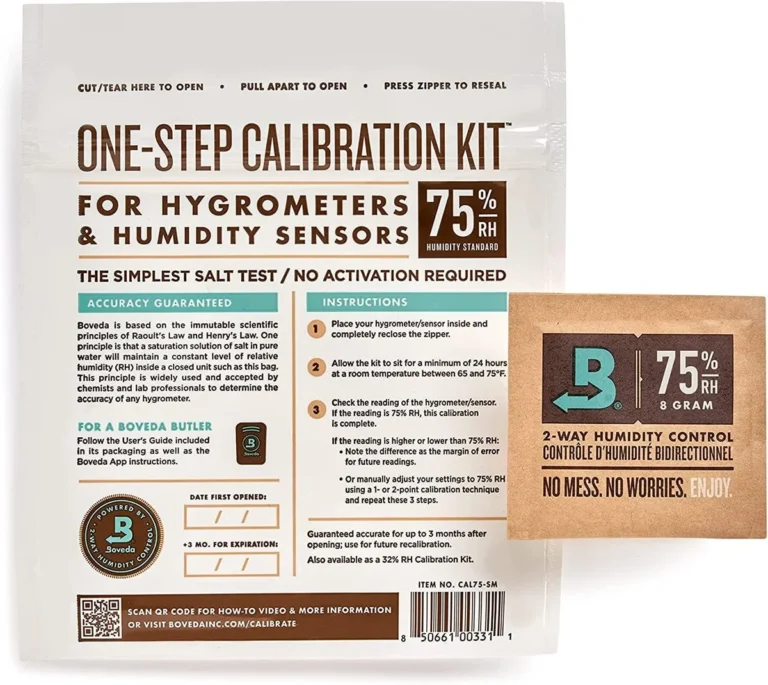
Calibrate once a year. Analog hygrometers drift over time. Digital sensors drift too, but more slowly. The salt test is the standard method.
Put a tablespoon of salt in a small container and add a few drops of water to make a wet slurry. Place the hygrometer and the salt container inside a sealed plastic bag for 6 to 12 hours. The air inside the bag stabilizes at 75 percent RH.
If your hygrometer reads anything other than 75 percent, note the offset. Per NIST calibration guidelines, this test gives you a reliable reference point. Some digital models have a calibration button, but most analog models require you to manually adjust the needle.
Read the trend, not the number. A single reading of 55 percent is fine. A reading that climbs from 45 to 58 percent over three hours means something is adding moisture. That could be a running shower, a cooking pot, or a slow leak.
The hygrometer gives you the trend, and the trend tells you what to investigate.
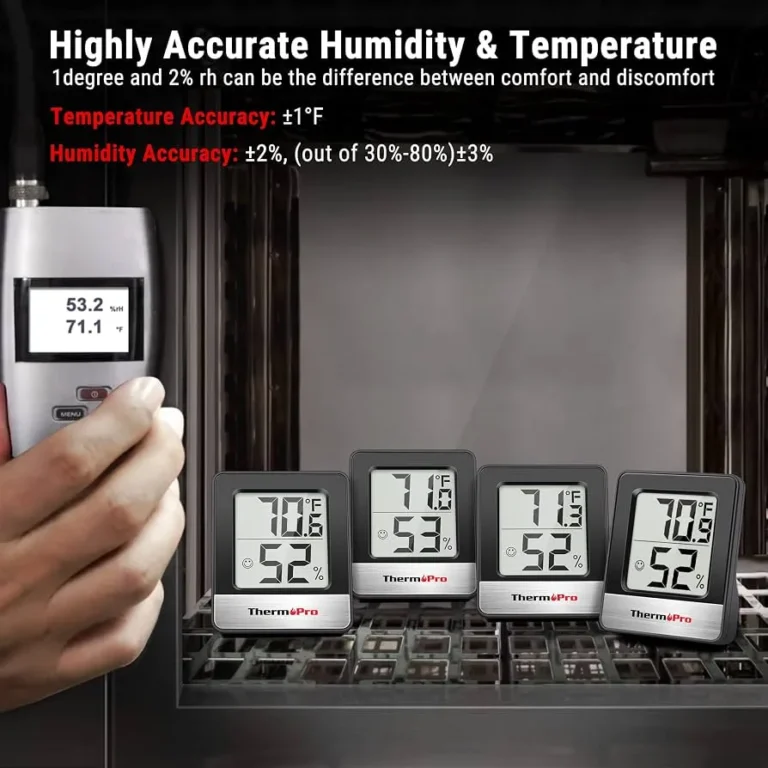
Check the accuracy rating. Consumer models range from ±2 percent to ±5 percent. A ±5 percent model might read 55 percent when the actual RH is 60 percent. That is a big difference if you are protecting a guitar or a cigar collection.
For critical storage, spend the extra $10 for a ±2 percent unit. For general home comfort, ±3 percent is fine.
The 6 Most Common Hygrometer Mistakes (And What They Cost You)
Even with a good hygrometer, people make the same errors. Avoid these and your readings will be reliable.
| Mistake | What Happens | How to Fix It |
|---|---|---|
| Placing it on an exterior wall | Reads cold wall temperature, not room air | Move to an interior wall |
| Putting it near a humidifier or dehumidifier | Reads the local blast, not the room average | Place at least 6 feet from the appliance |
| Never calibrating | Readings drift 5 to 10 percent over time | Salt test every 12 months |
| Using a cheap analog dial in a humidor | Sticks or reads slow; can ruin cigars | Use a digital sensor for sealed spaces |
| Checking it once and ignoring the trend | Misses humidity swings that cause damage | Log readings for a week to see the pattern |
| Placing it in direct sunlight | Reads 10 to 15 percent low due to heat | Move to a shaded spot |
The cost of these mistakes adds up. A misread hygrometer that shows 50 percent when the actual humidity is 70 percent can lead to mold growth in a basement or a cracked guitar top. The repair for a mold remediation or a luthier visit is 10 to 20 times the cost of a good hygrometer.
Get the placement right, calibrate it, and trust the trend.
Analog vs. Digital vs. Smart: Which One Fits Your Life?
You have three main options. The right choice depends on how much effort you want to put into reading and responding to the data.
Analog hygrometers use a coiled spring or a strand of human hair that expands and contracts with moisture. They are cheap, quiet, and need no batteries. But they are slow to respond and drift over time.
Aggregate reviews report that a $10 analog dial can be off by 10 percent or more after a year without calibration. Best for: a backup sensor or a decorative piece in a humidor where you check it weekly.
Digital hygrometers use a capacitive sensor to measure humidity electronically. They respond in seconds, hold calibration longer, and usually show temperature too. A basic model costs $10 to $20 and reads within ±3 percent.
Best for: general home use, guitar cases, plant shelves, and anyone who wants a reliable number without fuss.
Smart hygrometers connect to WiFi or Bluetooth and log data to an app. You can set alerts for high or low humidity and check the trend from your phone. They cost $30 to $80 and often include multiple sensors for different rooms.
Best for: monitoring a basement or crawlspace you don't visit daily, or tracking humidity swings over time for a wine cellar or instrument collection.
| Type | Price Range | Accuracy | Response Time | Best For |
|---|---|---|---|---|
| Analog | $5 to $15 | ±5 to 10% | 5 to 15 minutes | Backup, decorative |
| Digital | $10 to $30 | ±2 to 5% | 10 to 30 seconds | General home, hobbies |
| Smart | $30 to $80 | ±2 to 3% | 10 to 30 seconds | Remote monitoring, logging |
Our research shows that for most people, a single digital hygrometer in the main living area plus a second in the basement or bedroom covers 90 percent of use cases. Smart sensors add convenience but aren't necessary unless you travel frequently or have a high-value collection.
Frequently Asked Questions
How often should I check my hygrometer?
Check it once a day initially to learn your home's pattern. After a week, once a week is enough unless you notice a problem. Smart sensors do this automatically.
Can I use a hygrometer outdoors?
Yes, but most consumer models are not weatherproof. Look for a weather-resistant model if you want an outdoor reading. A standard indoor sensor placed under a covered porch works in a pinch.
What is the ideal humidity for a bedroom?
Between 30 and 50 percent. Below 30 percent, you get dry skin and static shocks. Above 50 percent, dust mites and mold thrive.
The CDC recommends keeping indoor humidity below 60 percent.
How do I know if my hygrometer is accurate?
Use the salt test. Place a tablespoon of salt with a few drops of water in a sealed bag with the hygrometer for 6 to 12 hours. The reading should be 75 percent.
If it is off, note the difference or calibrate if the model allows.
Do I need a hygrometer if I have a humidistat?
A humidistat controls your humidifier or dehumidifier automatically. But it only reads the air near the unit. A separate hygrometer gives you a second data point to confirm the system is working correctly.
Can a hygrometer help with allergies?
Yes. Dust mites and mold thrive above 50 percent RH. Keeping humidity between 30 and 50 percent reduces allergen populations.
A hygrometer helps you maintain that range consistently.