Should Every Room Have a Hygrometer
So you're wondering: should every room have a hygrometer? It's a fair question. You've probably dealt with condensation on windows, a musty closet, or dry air that leaves your skin tight.
The short answer is no, not every room needs one. But the real answer depends on your home.
ASHRAE, the standard body for indoor environmental quality, recommends keeping indoor relative humidity between 30 and 50 percent for comfort and health. Most homes can manage that with just one or two sensors placed wisely. The trick is knowing where humidity actually changes in your space and where it stays stable.
Quick Answer
No. Not every room needs a hygrometer. Most homes need only one or two.
Place them in high-moisture areas. The bathroom shows if your fan works. The basement catches mold risk early.
The bedroom shows if closed doors trap moisture. The rest of your home stays stable enough.
The Real Question: Do You Actually Need a Hygrometer in Every Room?
Let's start with the honest answer. No, you probably don't need a hygrometer in every room. Most homes can maintain healthy humidity levels with two or three well-placed sensors.
The real question is which rooms actually need monitoring.
Here's the decision framework. If a room has a direct moisture source, it needs monitoring. Bathrooms, kitchens, and laundry rooms are obvious candidates.
If a room is prone to condensation or mold, it needs monitoring. Basements, crawl spaces, and closets on exterior walls fall into this category. If a room is where you spend most of your time, it benefits from monitoring.
Bedrooms and home offices are worth the investment.
If a room is a pass-through space with no moisture source, skip it. Hallways, formal dining rooms, and spare bedrooms rarely need their own sensor. The air in those spaces tends to mirror the adjacent rooms anyway.
The mistake most people make is buying too many sensors. They end up with five or six devices all showing the same number. That's wasted money and unnecessary clutter.
Start with one sensor in your main living area. Move it around for a few days to map your home's humidity patterns. Then decide where permanent sensors make sense.
Think of it this way. A hygrometer is a tool, not a decoration. Use it where it solves a problem.
Leave it out where it doesn't.
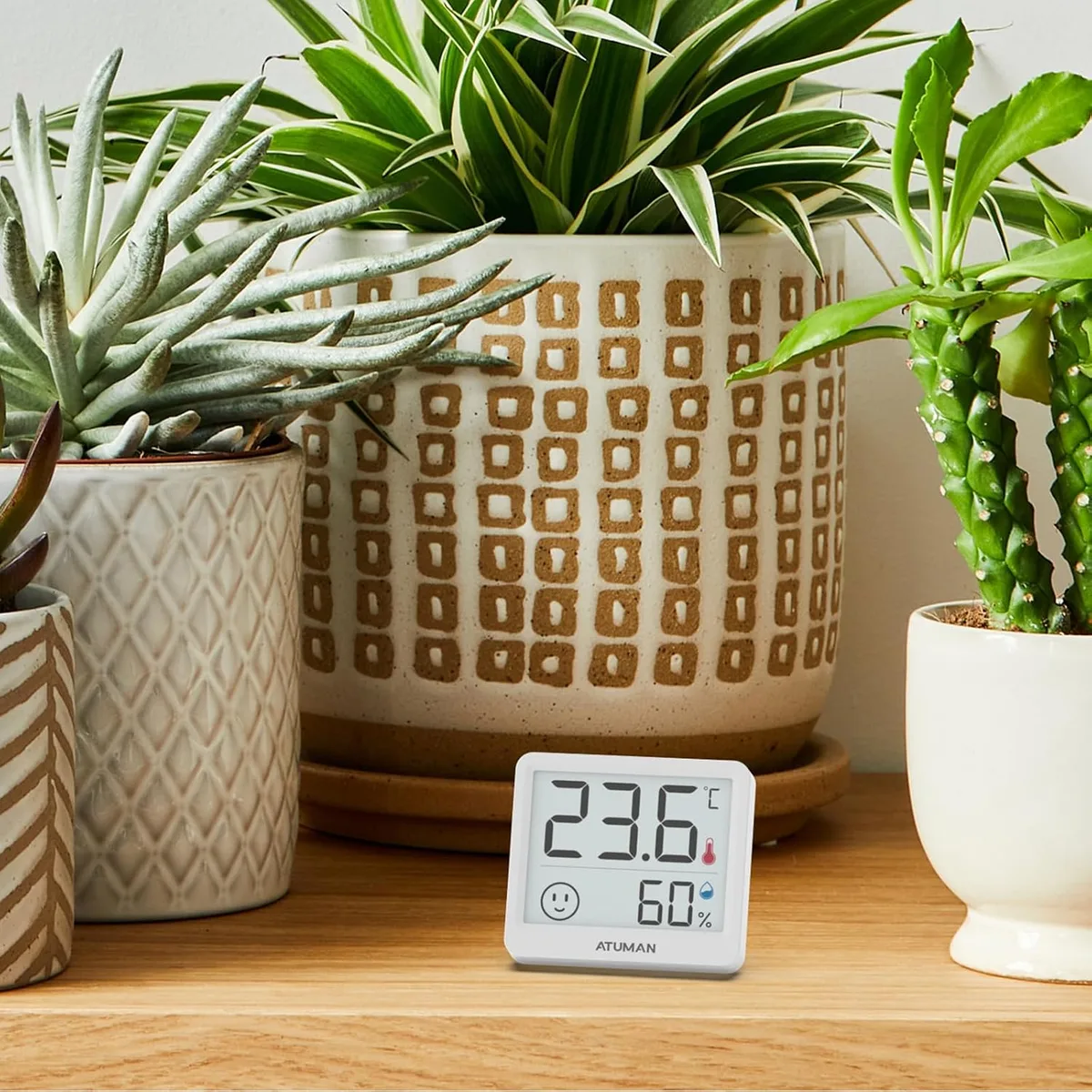
Image source: Bing (Web (fair-use with source credit))
How Humidity Actually Moves Through Your Home
Before you buy sensors, understand how humidity moves in your house. It follows predictable patterns. Heat rises, and warm air holds more moisture.
The upstairs of a two-story home is usually more humid than the basement. Closed bedroom doors trap humidity from your breath and body heat. Open-plan spaces equalize more quickly.
The air in your home is a connected system. Unless you close doors, humidity flows freely. A running shower can raise humidity in adjacent rooms within minutes.
Boiling pasta can spike the humidity in your dining area.

Image source: Bing (Web (fair-use with source credit))
This is why one or two sensors can tell you a lot. A hygrometer in the hallway outside the bathroom shows the shower's effect immediately. One in the basement reveals your lower level's general moisture level.
The EPA's indoor air quality guidance emphasizes that most moisture problems are local, not whole-house issues.
The exception is rooms with closed doors and separate HVAC zones. A finished basement with its own return vent behaves differently than the main floor. A closed bedroom in winter becomes a dry box.
A closed bathroom after a shower becomes a steam room. Those are the rooms where a dedicated sensor makes sense.
Most other rooms share the same air. One sensor per floor usually covers them.
The Room-by-Room Decision Guide
Five room types where a hygrometer earns its keep. The rest are optional.
| Room Type | Decision | Key Condition |
|---|---|---|
| Bathroom | Yes, if you have an exhaust fan | Fan should keep RH below 60% after a shower |
| Basement | Yes, almost always | Below-grade rooms need monitoring for mold |
| Bedroom | Yes, if you sleep with the door closed | Closed doors trap moisture from breathing |
| Kitchen | Optional | Open kitchens equalize quickly |
| Living Room | No | One per floor is enough |
Here's the if/then logic. If your bathroom fan leaves humidity above 60 percent after a shower, you need better ventilation. If your basement consistently reads above 55 percent, run a dehumidifier.
If your closed bedroom reads above 60 percent in the morning, crack the door at night.
If a room is a pass-through or rarely used, skip the sensor. The air there mirrors the adjacent spaces. Save your money for the rooms that actually need it.
Where to Place Hygrometers for Accurate Readings
Placement matters more than the sensor itself. A hygrometer in the wrong spot gives you useless data. Here's where to put them.
Bathroom. Place it on a shelf near the door, not in the shower. The goal is to measure the overall room humidity, not the steam cloud.
Wait at least 30 minutes after a shower to check the reading.
Basement. Mount it on a wall that's not the exterior concrete wall. Concrete wicks moisture and gives a false high reading.
Place it at least 4 feet off the floor and away from any HVAC vents.
Bedroom. Put it on a nightstand or dresser. Keep it away from the bed.
Your breath and body heat can skew the reading if it's too close. Place it at least 3 feet from any window.
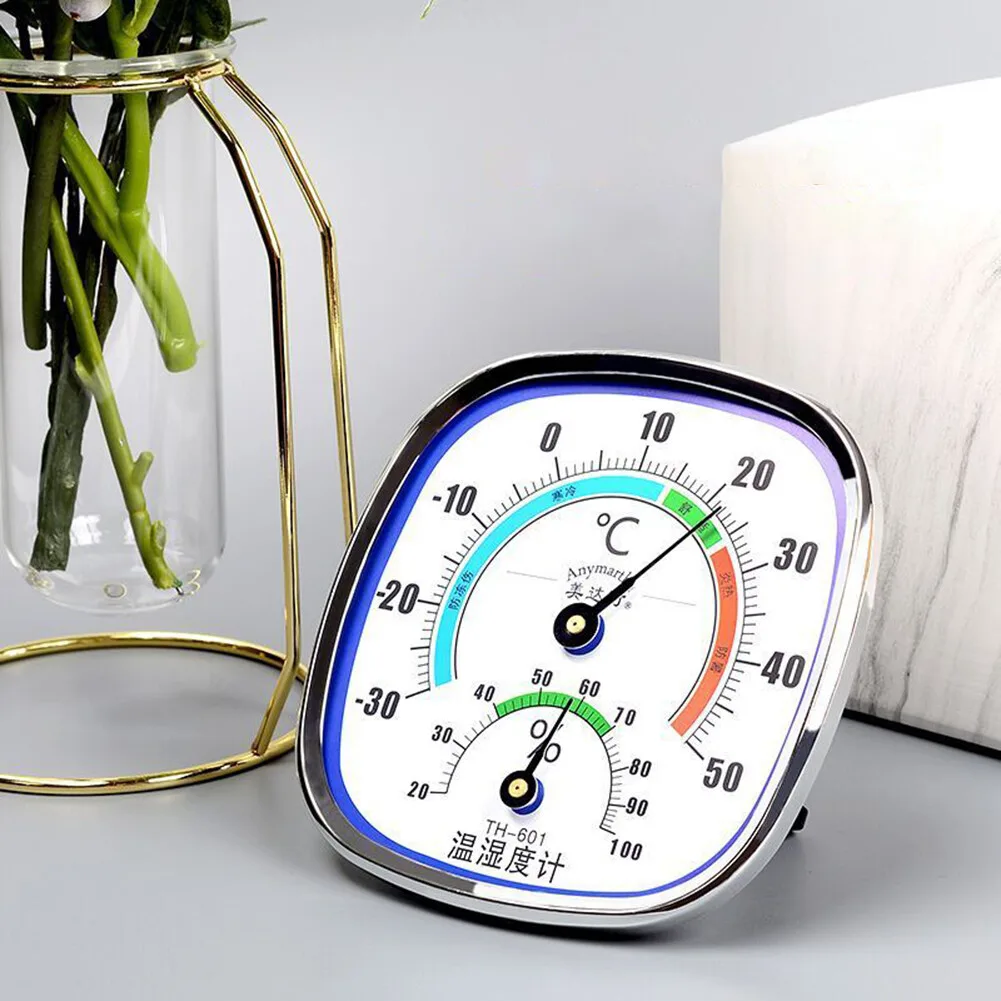
Image source: Bing (Web (fair-use with source credit))
General rules apply to all rooms. Keep the sensor away from direct sunlight, heat registers, and exterior doors. Don't place it on a cold wall or near a window.
Those spots give you a local temperature reading, not the room's average humidity. Mount it at about 4 to 5 feet off the floor. That's the comfortable breathing zone.
If you're using a portable hygrometer, take readings at different times of day. Humidity changes throughout the day. Morning readings are usually higher.
Afternoon readings are lower. Take a few samples before you decide where to mount it permanently.
How to Use the Data Without Driving Yourself Crazy
Once you have sensors, you need a plan for the data. Set your target range. The sweet spot is 30 to 50 percent relative humidity.
Below 30 percent, you get dry skin and static shocks. Above 55 percent, you risk mold growth. Stay in the middle.
Don't chase small fluctuations. A 5 percent swing is normal. A 10 percent swing usually means a moisture source is active.
A consistent reading above 55 percent means you need action.
Use alerts only for problem rooms. Set an alert at 55 percent for your basement. Set one at 60 percent for your bathroom.
Don't set alerts for every room. You'll get notification fatigue.
Take action on patterns, not single readings. Three days of high readings in the same room is a problem. Check ventilation.
Run a dehumidifier. Open a window.
Maintain your sensors. Check batteries every few months. Wipe the sensor cover if it gets dusty.
Calibrate once a year with the salt test. Consumer hygrometers drift over time.
The goal is to catch problems early. A hygrometer is a warning system, not a hobby.
Common Mistakes That Make Hygrometers Useless
A hygrometer is only as good as its placement. Ignore that, and your readings tell you nothing useful.
The most common mistake is putting a sensor near a heat vent or window. Those spots skew the local humidity reading. You'll get an inaccurate picture of the entire room.
Place it on an interior wall instead.
Second, buying a cheap analog hygrometer with poor accuracy. Aggregate reviews show many budget units drift by 5 percent or more. That's the difference between "fine" and "risk of mold."
Third, skipping calibration. Sensors drift over time. A yearly drift of 3 percent is normal.
Use the saturated salt test to recalibrate. The National Institute of Standards and Technology outlines the procedure.
Fourth, reacting to a single reading. One day at 55 percent is no big deal. Three days straight is a pattern.
Watch the trend, not the number.
Another mistake: mounting a sensor in direct sunlight. A sunlit spot reads warmer and drier than the rest of the room. Keep the device shaded.
Finally, alert fatigue. Setting every room to ping you with notifications makes you tune them out. Limit alerts to your high-risk rooms only.
When One Hygrometer Is Honestly Enough
If you live in a single-floor apartment, one sensor is enough. The air mixes quickly. There are no closed-off spaces creating separate microclimates.
Small homes under 1,000 square feet also do fine with one. Temperature and humidity equalize across open-plan layouts.
Ask yourself three questions. Do you have a basement or crawl space? Is your home open-plan?
Do you live in a climate with mild humidity swings? If you answered no, yes, and yes, one hygrometer in your main living area is all you need.
Another tip: use one portable hygrometer as your "checker." Walk it room by room once a season. You'll map your home's humidity profile without permanent sensors in every space.
But here's the catch. If you discover a problem room, keep a sensor there permanently. That's when the room earns its own device.
Also, use one sensor to learn your home's baseline. After a few months, you'll know what's normal for your space. That knowledge beats a house full of gadgets.
Frequently Asked Questions
How many hygrometers do I really need?
Most homes need one or two. Start with one in your living area. Move it around to find problem spots.
If you find one, add a permanent sensor to that room. If you have a basement, add a second unit there. That covers the majority of homes.
What's the ideal indoor humidity level?
Between 30 and 50 percent relative humidity. ASHRAE recommends this range for comfort and to prevent mold. Keep it above 30 percent to avoid dry skin and static.
Keep it below 55 percent to stop mold growth.
Where should I put a hygrometer?
Place it on an interior wall, 4 to 5 feet off the floor. Keep it away from windows, heat vents, and exterior doors. Those locations skew readings.
For a bathroom, place it near the door. For a basement, mount it away from concrete walls.
Are cheap hygrometers accurate?
Budget digital hygrometers typically claim accuracy within 3 to 5 percent. That's good enough for general monitoring. Analog units are often less reliable.
Check yours with the saturated salt test. Individual units vary in real accuracy.