Frigidaire Dehumidifier Making Noise
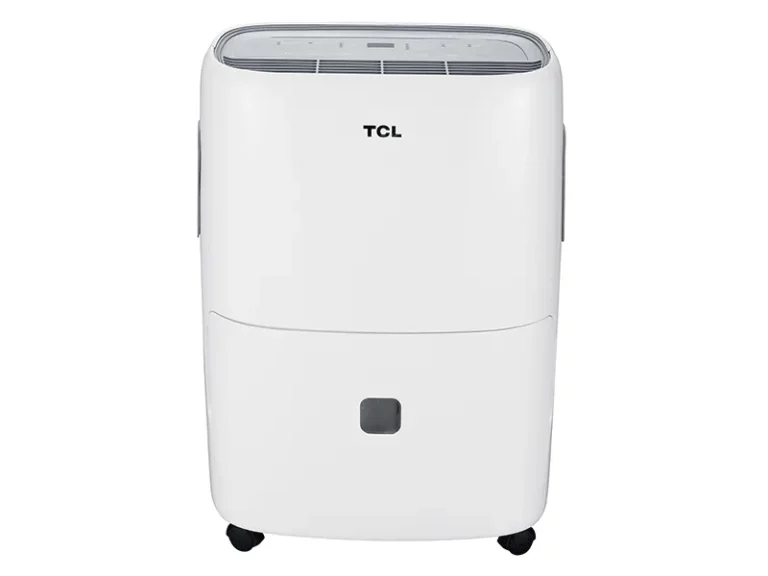
That rattling, humming, or squealing sound coming from your basement is not just annoying. It is your Frigidaire dehumidifier trying to tell you something. In our research, the issue of a Frigidaire dehumidifier making noise is one of the most common search topics from homeowners.
The good news is that many of these sounds are fixable without a service call.
Most Frigidaire units operate between 48 and 56 decibels according to manufacturer specifications. That is quieter than a normal conversation. When the sound changes or gets louder, something inside needs your attention.
Let us walk through what each sound means and how to fix it.
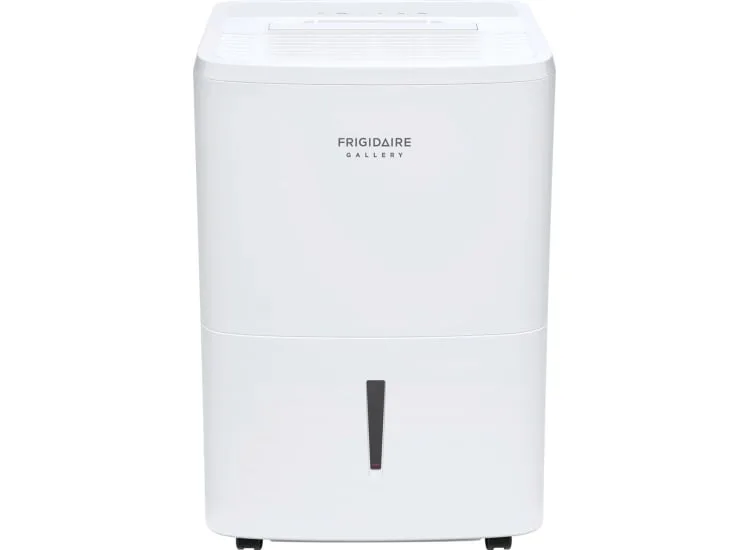
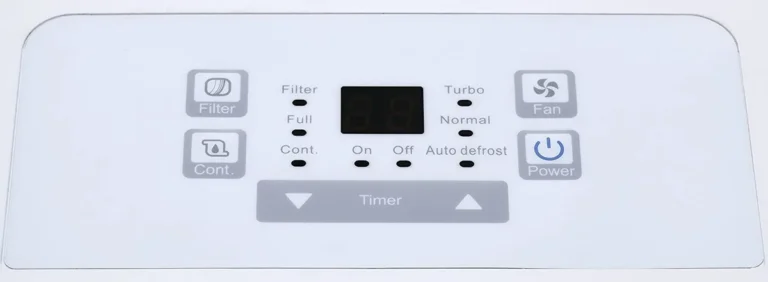
Image source: Bing (Web (fair-use with source credit))
Quick Answer
The noise usually comes from the compressor, fan, or loose parts. Check for ice buildup on the coils. Level the unit on the floor.
Clean or replace the air filter. Most fixes take under 10 minutes without tools. If the sound persists after these steps, the fan motor or compressor may need professional service.
Normal vs. Abnormal Sounds: What Your Dehumidifier Is Telling You
Not every sound from your Frigidaire is a problem. Some noises are completely normal and just part of how the machine works. The key is knowing which sounds are routine and which ones mean something is wrong.
A gurgling or hissing sound is usually refrigerant flowing through the coils. That is perfectly normal. A single click when the compressor turns on or off is also normal.
These are not causes for concern.
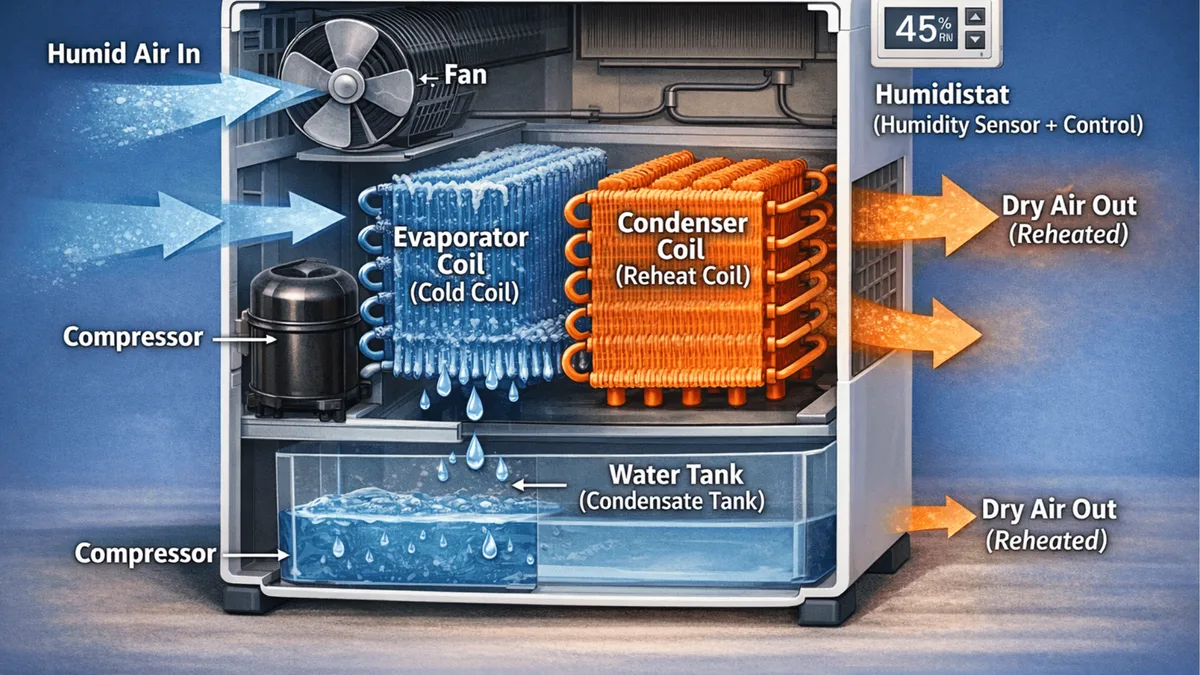
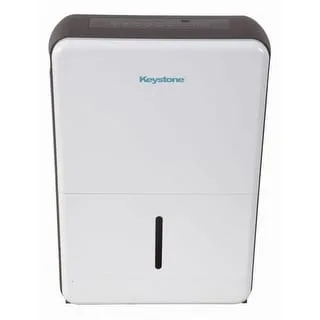
Image source: Bing (Web (fair-use with source credit))
Here is a quick reference for what you are hearing:
| Sound Type | What It Usually Means | Action Needed |
|---|---|---|
| Gurgling / hissing | Refrigerant flowing through coils | None, normal operation |
| Single click at start/stop | Compressor cycling on and off | None, normal operation |
| Low steady hum | Compressor running normally | None |
| Loud humming / droning | Compressor struggling or unit unlevel | Check level and filter |
| Rattling / vibrating | Loose panel, bucket not seated, or floor uneven | Tighten panels and check bucket |
| Squealing / screeching | Fan motor bearing or debris in fan | Inspect fan and clean or replace motor |
| Rapid clicking (every few seconds) | Compressor short-cycling or control board issue | Check for ice or electrical issue |
If you hear a squealing sound, that is not normal. It points to the fan motor or something stuck in the fan blade. If you hear a loud rattling, check the bucket first.
The bucket on most Frigidaire models needs to be fully seated and the float must move freely.
How to Diagnose the Noise in 5 Minutes (No Tools Required)
You do not need a screwdriver or any special skills to start figuring out what is wrong. Follow these steps in order. Stop after each one to see if the noise changes.
Step 1: Unplug the unit. Always disconnect power before touching anything inside. This is a safety rule you should never skip.
Step 2: Remove the water bucket. Empty it and set it aside. Run the unit without the bucket for a moment. If the noise stops or changes, the issue is the bucket not seated properly or the float sticking.
Step 3: Check the air filter. A dirty filter blocks airflow and makes the fan work harder. That creates a louder hum or a whistling sound. Pull the filter out.
Hold it up to the light. If you cannot see light through it, wash it with warm water and let it dry completely before putting it back.
Step 4: Listen for the origin. Put your ear near the unit while it runs. Is the sound louder at the front, back, or bottom? Front noises usually point to the fan.
Bottom noises point to the compressor. Back noises could be the drain or the coils.
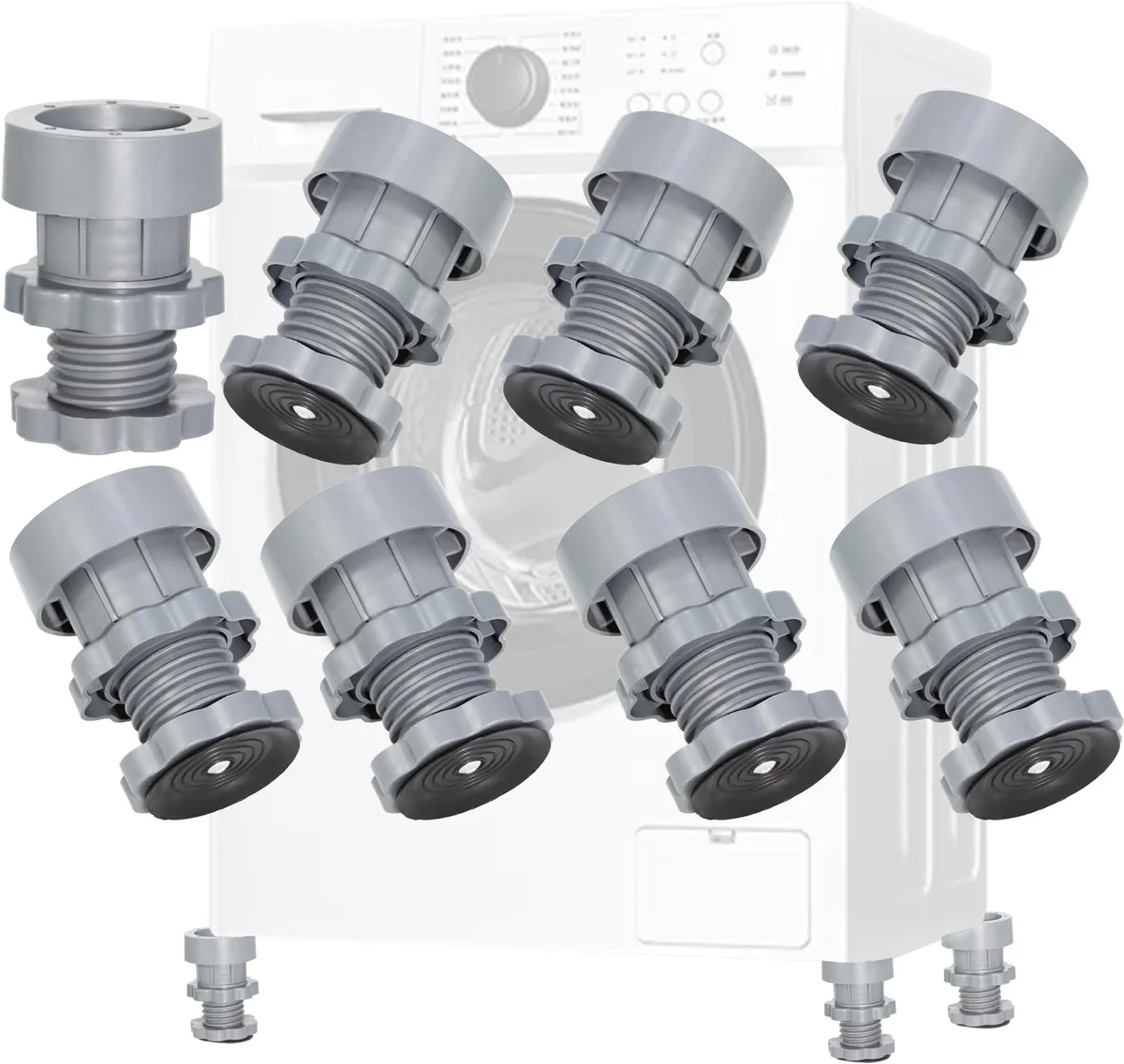
Image source: Bing (Web (fair-use with source credit))
Step 5: Check the level. Place a bubble level on top of the unit side to side and front to back. If it is not level, the compressor can vibrate against the housing. Twist the adjustable feet at the bottom corners to level it out.
Even a small tilt of 1/4 inch can cause a loud rattle.
What to Do If the Noise Is Coming From… (Rattle, Hum, Squeal, Click)
Once you know what kind of noise you are dealing with, the fix gets much more specific. Here is how to handle each common sound.
Loud humming or droning. This is often the compressor. Check the level first. If the unit is on a soft or uneven surface, the compressor shakes the whole frame.
Place a flat board or a rubber mat underneath to absorb vibration. If the hum is new and the unit is level, the compressor mounts inside may have loosened over time. That requires opening the housing with a Phillips screwdriver.
Tighten any visible bolts around the compressor base.
High-pitched squeal or screech. This is almost always the fan motor. Dirt, dust, or a small object like a piece of debris can get into the fan blade area. Unplug the unit.
Remove the front grille. Look at the fan blade. Turn it by hand.
If it feels rough or does not spin freely, the bearings are worn. This means the fan motor needs replacement. You can order a replacement fan motor from Frigidaire or an appliance parts supplier.
It is a straightforward swap if you are comfortable with basic wiring.
Rattling sound that changes with fan speed. Set the fan to low and then high speed. If the rattling gets faster or louder on high, it is something in the fan assembly or a loose panel. Check the screws on the back panel and the side panels.
Tighten them by hand. Also check the drain pan inside. If the pan is cracked or not seated correctly, it vibrates against the coils.
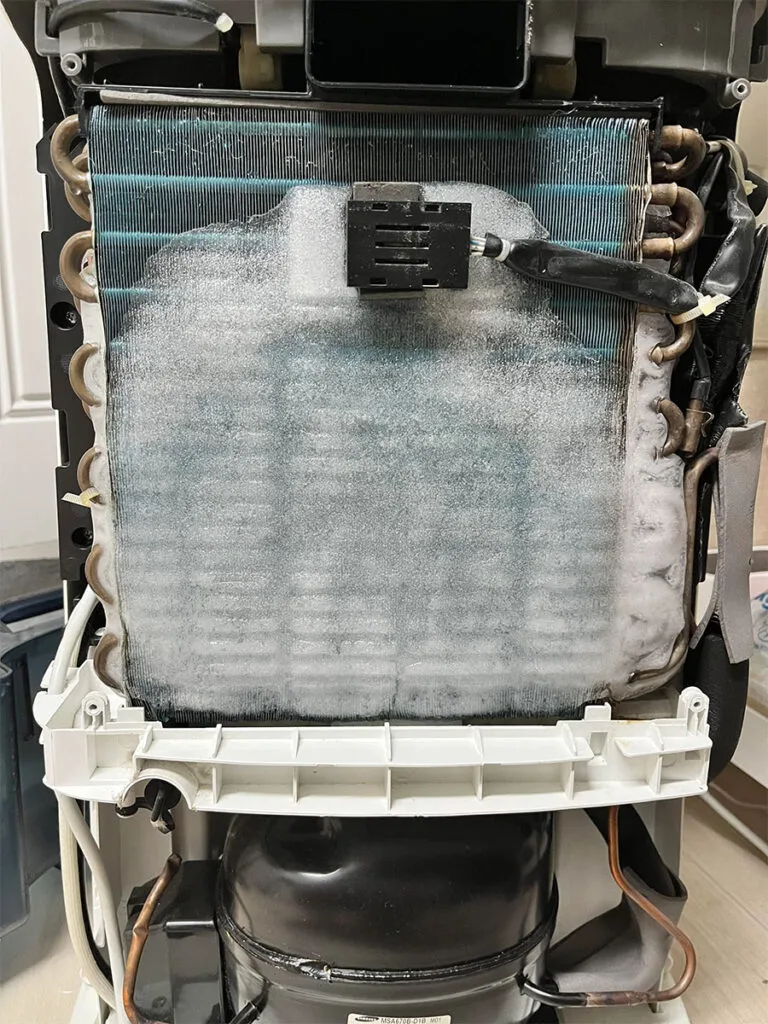
Clicking on and off every few seconds. This is called short-cycling. It means the compressor turns off too quickly and restarts. The most common cause is ice buildup on the evaporator coils.
If the room temperature is below 65°F, the unit can freeze up. Let it thaw for a few hours with the unit turned off. Clean the coils with a soft brush.
If the clicking continues, the control board may have a fault. That is a job for a technician.
Gurgling that sounds like water moving inside. This is normal refrigerant flow. If it suddenly stops, the unit may have a refrigerant leak. If the air coming out is warm instead of cool and the unit runs constantly without collecting water, that is a sign of low refrigerant.
Only a certified technician can fix that.
4 Mistakes That Make the Noise Worse (And How to Avoid Them)
Some fixes seem obvious but actually create more problems. Avoid these common errors if you want a quieter machine long term.
Mistake 1: Letting the filter clog. A dirty filter makes the fan work harder, which creates a louder hum and can burn out the motor. Wash the filter every two to four weeks. Set a calendar reminder.
It takes two minutes and prevents a lot of noise.
Mistake 2: Placing the unit on carpet or soft foam. The vibrations travel through soft surfaces and amplify the sound. It can also block the air intake at the bottom. Place the unit on a hard, level floor.
A thin rubber mat helps absorb vibration without blocking airflow.
Mistake 3: Ignoring ice buildup. When the coils ice over, the fan hits the ice and makes a grinding or scraping sound. Some people turn up the fan speed to try to thaw it faster. That just makes the ice worse because the compressor keeps running.
Turn the unit off and let it thaw naturally. This can take up to 24 hours in a cold basement.
Mistake 4: Using an extension cord. Dehumidifiers draw a lot of power, especially during compressor startup. An extension cord causes voltage drop, which makes the compressor strain harder and run louder. It is also a fire hazard.
Always plug the unit directly into a grounded wall outlet. If you must use an extension cord, use a 14-gauge or heavier cord and keep it as short as possible as noted in the National Electrical Code standards.
How to Keep Your Frigidaire Quiet for Years
A little regular maintenance goes a long way in preventing noise before it starts. Think of it like changing the oil in your car. Skip it long enough and things start grinding.
Here is a simple maintenance schedule that works for most Frigidaire models:
Every two to four weeks. Wash the air filter with warm water and mild soap. Let it dry completely before reinserting it. A wet filter grows mold and restricts airflow, which causes the fan to work harder and louder.
Every three months. Check the drain hose for kinks or clogs. If you use continuous drainage, the hose can develop mineral buildup over time. Replace it if the water flow slows down.
A blocked drain can cause the bucket to fill and the unit to shut off repeatedly, creating clicking sounds.
Every six months. Vacuum the condenser coils and evaporator coils using a soft brush attachment. Dust buildup on the coils reduces efficiency and forces the compressor to run longer. That extra runtime means more noise over the life of the unit.
Be gentle with the fins. They bend easily.
Once a year. Inspect the fan blade for dust buildup or debris. Remove the front grille and look at the blade. Clean it with a soft cloth.
If the blade is chipped or cracked, replace it. An unbalanced fan blade creates a wobble that turns into a loud vibration over time.
Check the bucket seals. The gasket around the bucket can dry out and shrink. If the bucket does not seat tightly, it rattles against the frame. A thin strip of weatherstripping tape along the contact edge can quiet that rattle instantly.
Following this schedule keeps your unit running at its rated noise level, which is typically 48 to 52 decibels for most Frigidaire models as of 2026. That is about as loud as a quiet library.
When to Repair vs. Replace Your Noisy Frigidaire
Some noises signal a problem that DIY fixes cannot solve. If you have leveled the unit, cleaned the filter, checked for ice, and tightened all panels but the noise remains, it is time to decide between repair and replacement.
Fan motor replacement is a good DIY job if you are handy. The squealing fan motor is the most common fix after cleaning. Replacement motors cost $25 to $50 for most Frigidaire models.
The job takes about 30 minutes with a Phillips screwdriver. Unplug the unit, remove the front grille and filter, take off the fan blade, disconnect the old motor, and install the new one. If the unit is under three years old, this repair makes sense.
If the unit is older than five years, consider replacement because other parts may fail soon.
Warranty coverage can save you money. Frigidaire offers one year parts and labor on the whole unit and five years on the sealed system (compressor, condenser, evaporator, connecting tubing). If your noise is from the compressor or a refrigerant leak within five years of purchase, you get a free repair.
After that, you pay. Keep your original receipt. Without it, the warranty starts from the manufacturing date.
Compressor replacement rarely makes financial sense. A compressor repair costs $200 to $400. A new 50-pint Frigidaire costs $180 to $250.
If the unit is over five years old and the compressor is making grinding or knocking sounds, replace the whole unit. Newer models are quieter and more energy efficient. An Energy Star certified model can save you $20 to $40 per year on electricity.
Refrigerant leaks require a certified technician under EPA regulations. Only licensed professionals can handle refrigerant. If you hear a persistent hiss and the air blows warm, a leak is likely.
Get a diagnosis quote first. If the repair exceeds $150 and the unit is older, replacement wins.
Here is the decision guide:
- Rattle or vibration after checking level and panels: Fix with a rubber mat or weatherstripping. No replacement needed.
- Squeal or screech: Replace the fan motor yourself. Cost effective if unit is under 5 years old.
- Rapid clicking after thawing: If it returns, control board issue. Replace if repair cost is high.
- Grinding or knocking: Compressor failure. Replace the unit if over 5 years old or repair cost exceeds $150.
- Hissing with warm air: Refrigerant leak. Get a diagnosis. Replace if unit is old.
Frequently Asked Questions
Why is my Frigidaire dehumidifier making a loud humming noise?
A loud hum usually means the unit is not level or the compressor mounts have loosened. Check the leveling feet first. Adjust them until the bubble is centered.
If the hum persists, tighten the bolts around the compressor base inside the housing.
Is it normal for my dehumidifier to make clicking sounds?
A single click when the compressor turns on or off is normal. Rapid clicking every few seconds is not normal. That usually signals ice on the coils, a dirty filter, or a failing compressor.
Turn the unit off and let it thaw before troubleshooting further.
What does a squealing sound from a dehumidifier mean?
A squealing sound points to the fan motor bearings or debris caught in the fan blade. Unplug the unit and inspect the fan area. If the blade spins freely by hand, the motor bearings may be worn.
Replacement is usually needed.
Why does my Frigidaire dehumidifier rattle when it runs?
Rattling often comes from a loose panel, a bucket that is not fully seated, or an uneven floor. Check the bucket first. Then tighten all screws on the back and side panels.
Finally, make sure the unit sits flat on a hard surface.
How do I reset my Frigidaire dehumidifier after it ices up?
Unplug the unit and let it sit for at least 24 hours to thaw completely. Once thawed, clean the air filter and the coils. Plug it back in and set the humidity level to 50 percent.
If it ices up again quickly, the refrigerant level may be low.
When should I call a repair technician for a noisy dehumidifier?
Call a technician if the noise continues after you have leveled the unit, cleaned the filter, and checked for ice. Also call if the air coming out feels warm instead of cool, or if the unit runs constantly without collecting water. These signs point to a refrigerant leak or compressor failure that requires professional service.