Why Is My Dehumidifier Running but Not Collecting Water
You walk into your basement expecting to find a full bucket. Instead, the dehumidifier is humming away with nothing in the tank. If you're asking why is my dehumidifier running but not collecting water, you're not alone.
It's one of the most common service complaints among dehumidifier owners.
Most portable units are rated to pull 30 to 70 pints per day under standard test conditions (80°F, 60% relative humidity). But real rooms rarely match a test lab. A cold room below 65°F, a humidity level below 50%, or a dirty air filter can stop the water flow completely.
Let's work through the likely causes in the order you should check them.
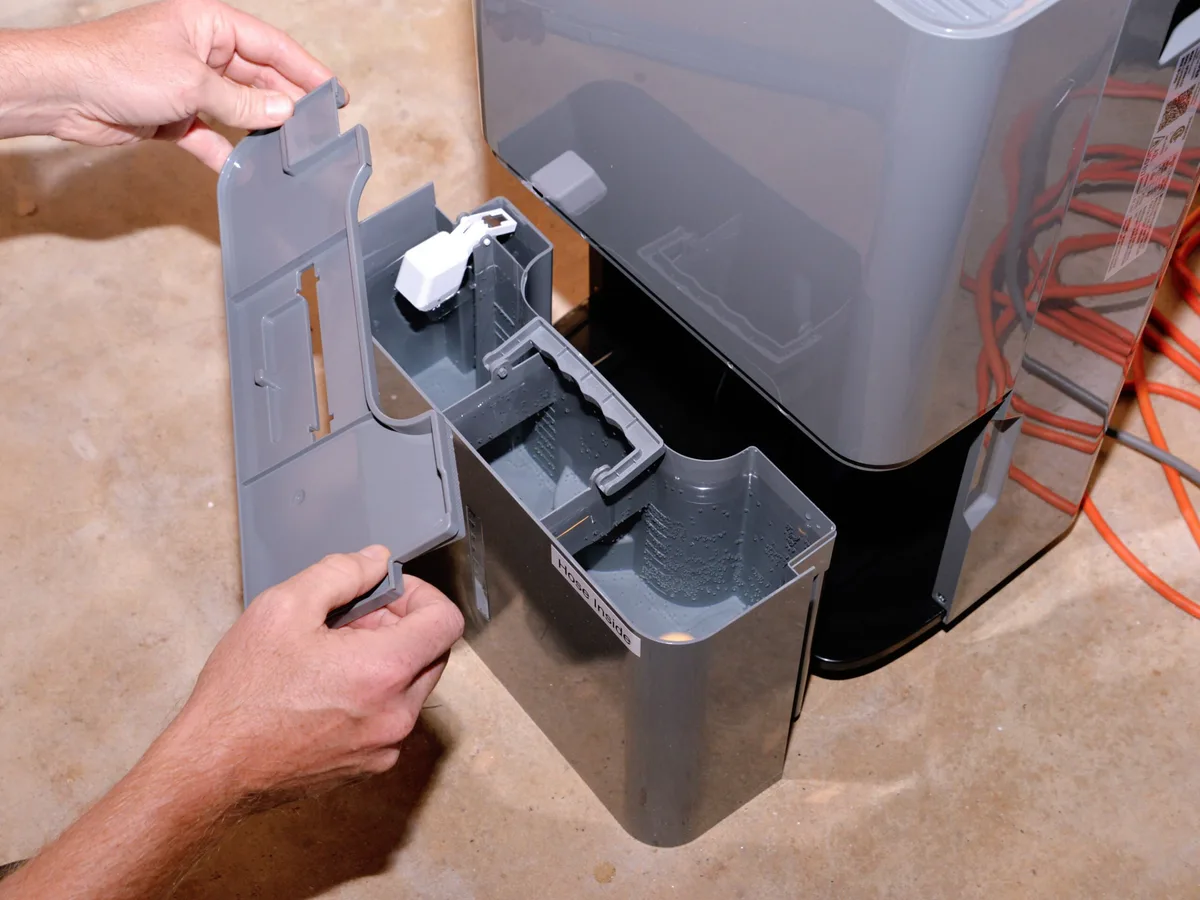
Image source: Bing (Web (fair-use with source credit))
Quick Answer
Your dehumidifier runs but collects no water for a handful of common reasons. The room may already be dry enough. The temperature might be too low.
The air filter could be clogged. Or the bucket float switch may be stuck.
Check the room's humidity first. If it's below 50%, the unit has nothing to pull. If humidity is high, look for a mechanical problem.
Start with the air filter and the float switch. Those two causes cover most cases.
How a Dehumidifier Actually Works
A dehumidifier does one basic job. It pulls humid air in, removes the moisture, and blows dry air back out. Understanding this process helps you spot exactly where the breakdown happens.
Inside a Compressor Dehumidifier
Most home units use a compressor system. A fan draws humid air across cold metal coils. The coils drop below the dew point, and water vapor condenses into liquid water.
That water drips into a bucket or flows out a drain hose. The air then passes over warm coils and exits the unit a few degrees hotter but much drier.
This process only works when the coil temperature stays below the room's dew point. If the room is too cold, the coils won't get cold enough. If the room is already dry, there's little vapor to condense.
And if airflow is blocked, the fan can't move enough air across those coils.
The Difference with Desiccant Units
Not all dehumidifiers work the same way. Desiccant models use a moisture-absorbing wheel instead of cold coils. These units perform better in cooler conditions, often down to 32°F.
But they are less efficient in warm, humid spaces. If you're running a desiccant unit and getting no water, the desiccant wheel may be worn out or the heater element may have failed.
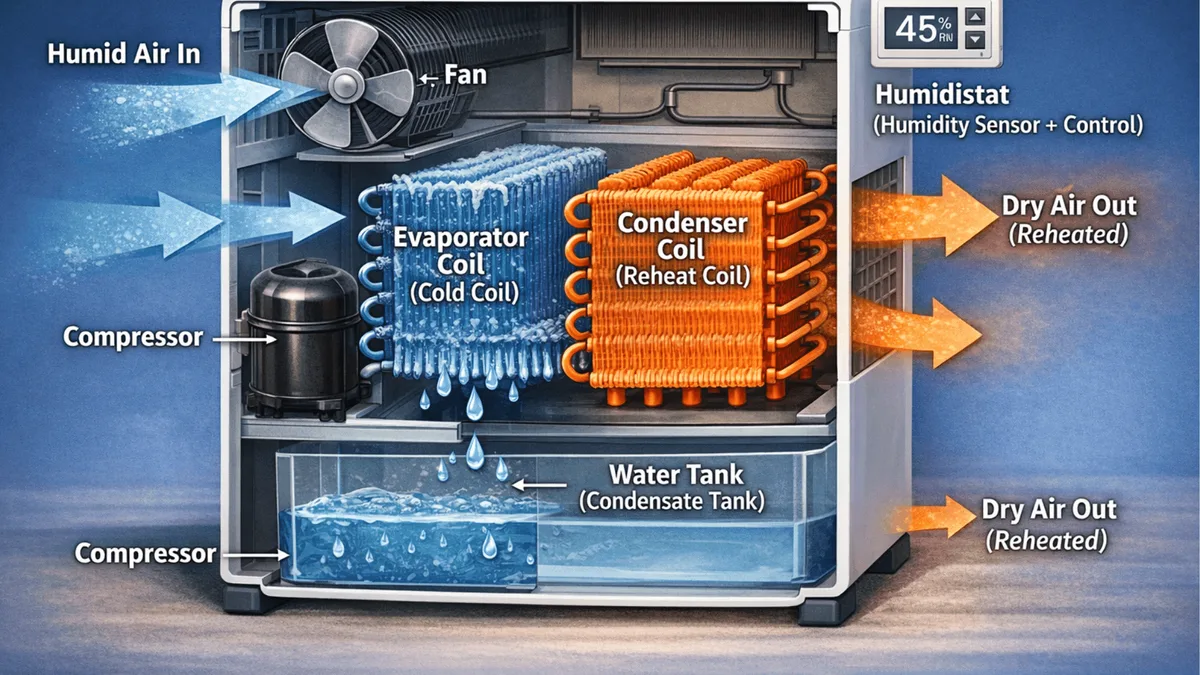
Image source: Bing (Web (fair-use with source credit))
The Decision Tree: What's Wrong Based on Your Situation
The fastest way to diagnose your problem is to match your specific conditions. Use this decision tree to find the right branch.
Branch 1: The Bucket Is Empty and the Unit Feels Normal
If the fan is blowing and the unit sounds normal, but the bucket is dry, start with the simplest check. Is the room humidity already below your setpoint? If the humidistat reads 45% and you set it to 50%, the unit will run but the compressor may cycle on and off.
It won't produce water because there's nothing to remove.
Check the bucket float switch next. If the float is stuck in the up position, the unit thinks the bucket is full. It will keep the fan running but shut off the compressor.
Tap the float gently to see if it drops. Also make sure the bucket is seated all the way back.
Branch 2: The Bucket Is Empty and the Unit Feels Warm or Cold
Put your hand near the exhaust grille. If the air feels warm but not cold, the compressor may not be running. You'll hear the fan, but the refrigeration cycle isn't active.
This can happen if the compressor is overheating, the start capacitor has failed, or the defrost thermostat is stuck.
If the exhaust air feels cold, the unit is cooling but not condensing. This often means the room is too cold for a compressor model. Most compressor units stop working efficiently below 65°F.
At 60°F, many models produce almost no water at all.
Branch 3: The Bucket Is Empty and the Unit Has Ice on the Coils
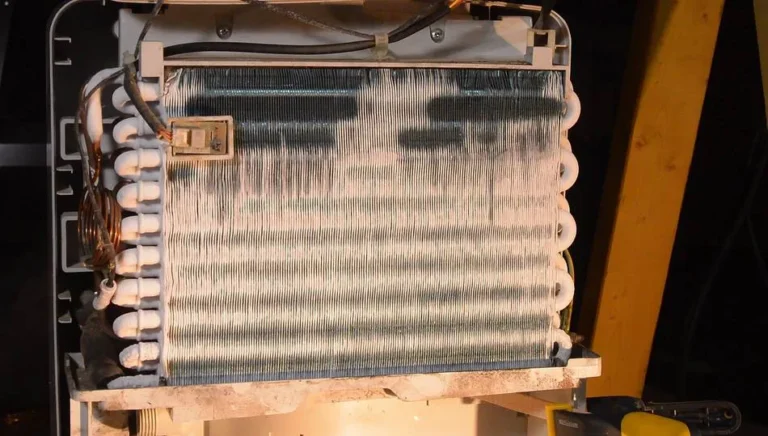
Frost or ice on the evaporator coils is a clear sign of trouble. Ice acts as an insulator. It prevents the cold coils from contacting the warm air.
The unit runs but can't pull any moisture out.
Ice usually forms because the room is too cold, the air filter is dirty, or the fan speed is too low. Turn the unit off and let the ice melt completely. Then clean the filter and move the unit to a warmer location if possible.
Branch 4: The Bucket Is Empty and the Room Feels Damp
This is the most confusing scenario. The room feels humid, but the dehumidifier isn't collecting water. The problem is usually airflow.
Check the air filter first. A clogged filter can cut airflow enough to stop condensation.
Also check the placement. The unit needs at least 12 inches of clearance on all sides. If it's shoved into a corner or against furniture, the air can't circulate.
Move it to the center of the room and retest.
Step-by-Step Troubleshooting Workflow
Follow these steps in order. Each one takes about five minutes. Stop when you find the problem.
Step 1: Verify the Humidity Level
Use a separate hygrometer or a smart thermostat to check the room's relative humidity. If it's below 50%, your dehumidifier has nothing to pull out. The fan runs but the compressor cycles off.
Lower the setpoint to 35% and see if the compressor kicks on.
Step 2: Check the Air Filter
Pull the filter out and hold it up to a light. If you can't see through it, the filter is clogged. Wash it with warm water and mild soap.
Let it dry completely before reinstalling. A clean filter is the single most common fix for this problem.
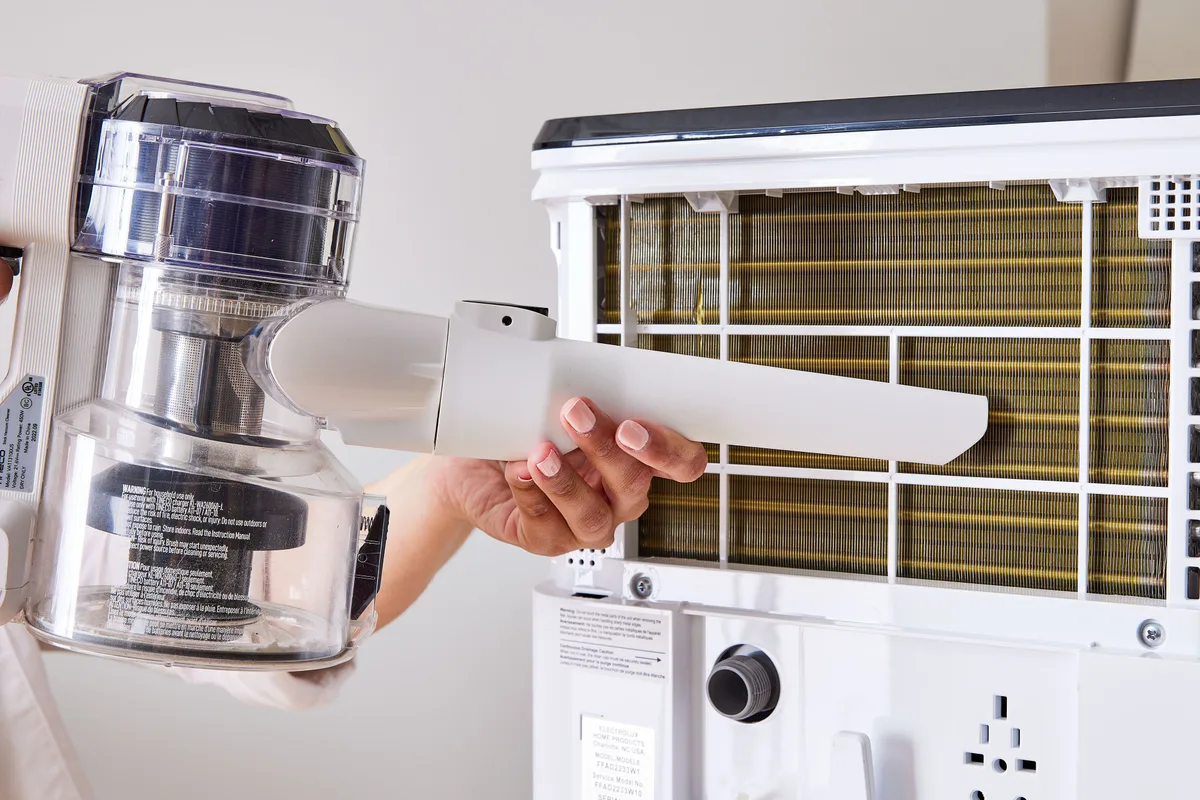
Image source: Bing (Web (fair-use with source credit))
Step 3: Inspect the Bucket and Float Switch
Remove the bucket and look at the float mechanism. It should move freely up and down. If it's stuck, clean any debris around the pivot point.
Also check the bucket for cracks or damage. Even a small crack can prevent the unit from knowing the bucket is in place.
Step 4: Check the Continuous Drain Hose
If you're using a continuous drain hose, make sure it's not kinked or blocked. The hose must slope downward from the unit to the drain. If the hose end is higher than the unit's drain port, water can't flow out.
Water backs up and triggers the float switch, stopping collection.
Step 5: Measure the Room Temperature
If the room is below 65°F, your compressor dehumidifier will struggle. The coils won't get cold enough to condense water. Move the unit to a warmer space or switch to a desiccant model.
If moving it isn't an option, accept that a compressor unit won't produce much water below 60°F.
Step 6: Clean the Coils
Over time, dust and grime can coat the evaporator coils. This layer acts like insulation. Use a soft brush or compressed air to clean the coils.
Don't use a vacuum cleaner directly on the coils. You can bend the thin metal fins. For stubborn buildup, use a coil cleaning spray and rinse according to the manufacturer's instructions.
Common Mistakes Most People Make First
After sorting through dozens of owner reports, a few mistakes keep coming up. Here are the ones that waste the most time.
Mistake 1: Assuming the Unit Is Broken
The most common error is assuming the dehumidifier is defective. Most "broken" units are actually suffering from one of the issues listed above. The compressor is fine.
The fan is fine. The problem is something simple like a stuck float or a cold room. Don't return the unit until you've run through the checklist.
Mistake 2: Ignoring the Room Temperature
Many people place a compressor dehumidifier in an unheated basement and expect it to work. Compressor units need warm air to function. If your basement is 58°F, the unit will run but produce almost nothing.
A desiccant unit is the right tool for that job. Check the operating temperature range printed on the unit's specification label.
Mistake 3: Setting the Humidity Too High
If you set the humidistat to 60%, the unit will only run when the room exceeds that level. In many homes, the humidity already sits around 50 to 55%. The unit runs but the compressor never engages.
Lower the setpoint to 40% and see if the compressor kicks in within a few minutes. For mold prevention, the EPA's mold guidance recommends keeping indoor humidity between 30% and 60%.
Mistake 4: Forgetting About the Continuous Drain
A continuous drain hose is great until it's not. If the hose is kinked under a cabinet or the end is above the drain port, water can't flow. The unit fills the drain line, backs up, and triggers the float switch.
The fan keeps running, but the compressor shuts off. Check the hose path thoroughly.
Mistake 5: Overlooking the Defrost Cycle
Some dehumidifiers run a defrost cycle every 20 to 45 minutes when the coils get too cold. During defrost, the compressor stops and the fan runs alone. You may think the unit is working but not collecting water.
In reality, it's melting ice that formed during the previous cycle. Let the unit run for at least 24 hours before judging its performance.
When to Try a Different Type of Dehumidifier
If you've worked through every step and the room still feels damp, the unit itself may be undersized or the wrong type. Compressor models work best above 65°F. Desiccant models handle cold spaces down to 32°F but use more electricity.
As of 2026, Energy Star's website is a good place to compare certified models, and our guide to the best dehumidifier for basement can help you match capacity to room size.
Here's a quick comparison of the two main types:
| Feature | Compressor Dehumidifier | Desiccant Dehumidifier |
|---|---|---|
| Best temperature range | Above 65°F | 32°F to 68°F |
| Performance in cold rooms | Poor | Good |
| Energy use | Lower in warm rooms | Lower in cold rooms |
| Best for | Basements, laundry rooms | Garages, crawl spaces, cold basements |
If your basement regularly sits below 65°F, a desiccant model will actually remove water. That's the bigger fix than any cleaning step. If the room is warm but the unit still collects nothing, it's probably undersized for the square footage.
A larger unit with a higher pint rating is the long-term solution.
Frequently Asked Questions
How long should a dehumidifier take to collect water?
A properly working dehumidifier should show visible water within a few hours. In a room at 80°F and 60% humidity, a 50-pint unit can fill its bucket in 8 to 12 hours. If you see nothing after 24 hours, something is wrong.
Why is my dehumidifier running but not collecting water in winter?
Cold rooms are the main reason in winter. Compressor dehumidifiers struggle below 65°F because the coils can't get cold enough. Ice can also form on the coils, which blocks condensation.
Move the unit to a warmer space or switch to a desiccant model.
Can a dirty filter stop a dehumidifier from collecting water?
Yes. A clogged filter restricts airflow across the coils. Without enough airflow, the coils get too cold, ice forms, and water production stops.
Clean the filter every two to four weeks. That's the simplest fix for most performance issues.
Why does my dehumidifier run but the bucket stays empty when using a hose?
The hose may be kinked, blocked, or installed too high. Water can't flow uphill, so the drain line must slope downward from the unit. If the hose end is even slightly above the drain port, water backs up and the float switch stops the compressor.
Should a dehumidifier run all the time?
No. A correctly sized unit should cycle on and off as it maintains your target humidity. It's normal for the fan to keep running briefly after the compressor stops.
If the unit runs constantly and collects nothing, check the humidity setpoint and the room temperature first.