Should Bedroom Doors Be Open When Using a Dehumidifier
Should bedroom doors be open when using a dehumidifier? The honest answer depends on your goal, room size, and unit capacity. This is a decision tree with three clear branches, not a one-size-fits-all rule.
A typical bedroom covers 100 to 300 square feet. A 20-pint dehumidifier handles roughly that range. As of 2026, the EPA still recommends keeping indoor relative humidity between 30 and 50 percent.
Close the door and the unit only sees one room's air. Open it and you're drying the whole area. Let's walk through when each position works.
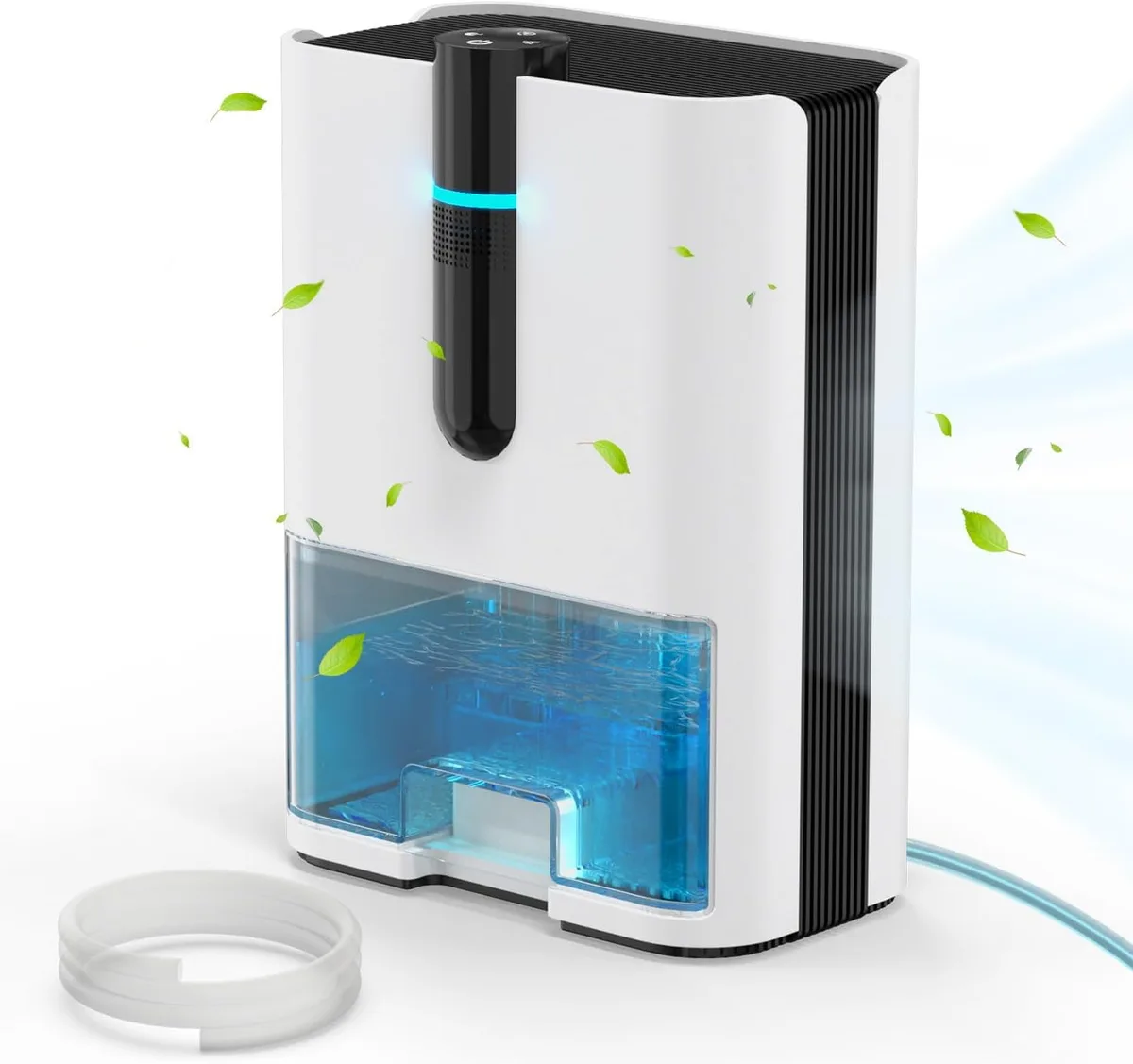
Image source: Bing (Web (fair-use with source credit))
Quick Answer
Keep the door open for whole-home drying. Close it when you're targeting a single room. Watch the humidistat reading, not your instinct.
Aim for 30 to 50 percent relative humidity.
The Core Problem: Why Door Position Actually Matters
Door position changes what air your dehumidifier actually sees. A closed door turns your bedroom into a sealed zone. An open door lets it pull moisture from the entire house.
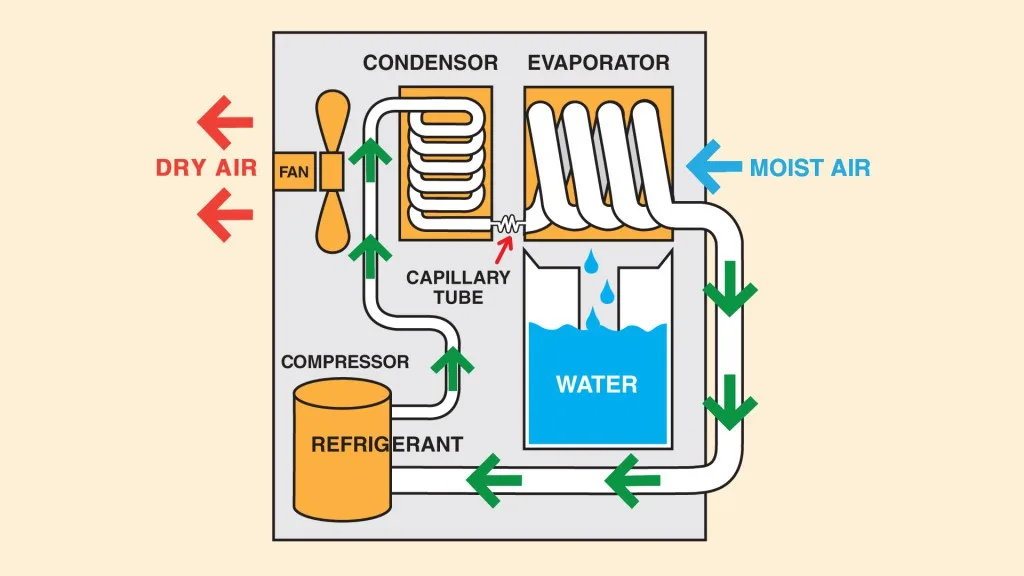
Image source: Bing (Web (fair-use with source credit))
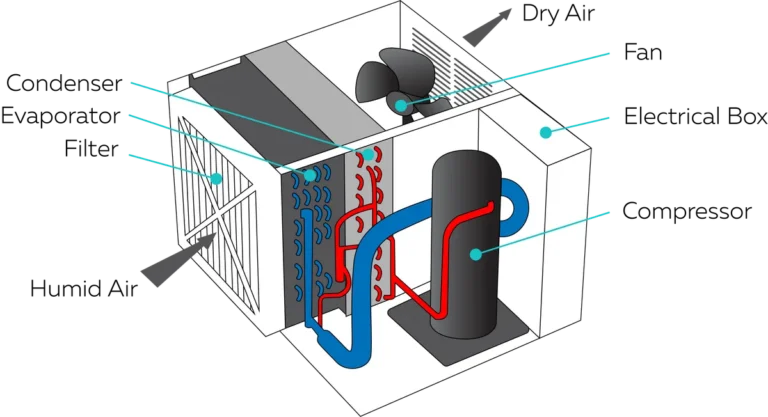
Most people assume a dehumidifier works wherever you place it. That's only half true. The unit draws air from its intake, removes moisture, and blows it back out.
With the door closed, that air recirculates in the same space. With the door open, fresh humid air from other rooms keeps feeding the appliance. So the door position determines whether the machine helps or hurts.
A closed bedroom door also creates a dead air pocket around the humidistat. The sensor can read lower humidity near the unit while the rest of the room stays damp. That causes the compressor to cycle off early and leaves the room feeling sticky.
This matters more when your room is larger than the unit's rated coverage area. A 20-pint model covers roughly 300 square feet. A master bedroom with an ensuite bathroom can spike the moisture load quickly.
Bigger spaces need bigger machines. That shifts the door answer entirely.
The 3 Key Variables That Change the Answer
Before you pick open or closed, answer three questions. Each one nudges your decision in a different direction.
| Variable | How It Shifts the Answer | Quick Test |
|---|---|---|
| Goal | Whole-home drying wants open, single-room drying wants closed | Ask: "Am I fixing the whole house or just this bedroom?" |
| Unit capacity | Bigger units handle open-door airflow, small ones will struggle | Check pint rating versus square footage |
| Room layout | Ensuite bathroom or drafty windows change the moisture load | Notice where condensation appears |
If your goal is to lower humidity for the whole floor, keep the door open. That lets the unit recirculate air from hallways and bathrooms. One machine pulls the whole area down.
If your goal is to protect a specific bedroom, close the door and dial in that one space. Only do this if the unit is properly sized. A small unit fighting an open-house load will run nonstop and fill its tank in a few hours.
The 3 Decision Branches: Open, Closed, or Something in Between
Once you know your variables, choose a branch.
Branch 1: Open door. Do this if you want whole-home drying. Place the unit in a hallway or landing. It pulls air from multiple rooms.
Best for homes with a stubborn damp bathroom nearby.
Branch 2: Closed door. Do this if you're targeting one room and the unit is sized correctly. You'll get faster results and keep noise contained. Best for bedrooms where you sleep with the door shut anyway.
Branch 3: Cracked or partially open. This is the overlooked middle ground. A few inches lets some airflow through without flooding the unit with the whole house's humidity. It works well for master bedrooms with ensuite bathrooms.
A cracked door is not a compromise. It's a strategy. It lets the room pressurize slightly.
The dehumidifier draws in drier air from the hallway while exhausting moist air from the bathroom.
Your choice also depends on when you run the unit. During the day, open doors are usually safer for air circulation. At night, a closed door contains the machine's noise.
How to Test and Adjust Your Setup (Step-by-Step)
Stop guessing and start measuring. A simple hygrometer costs less than a fan. It tells you exactly what the room is doing.
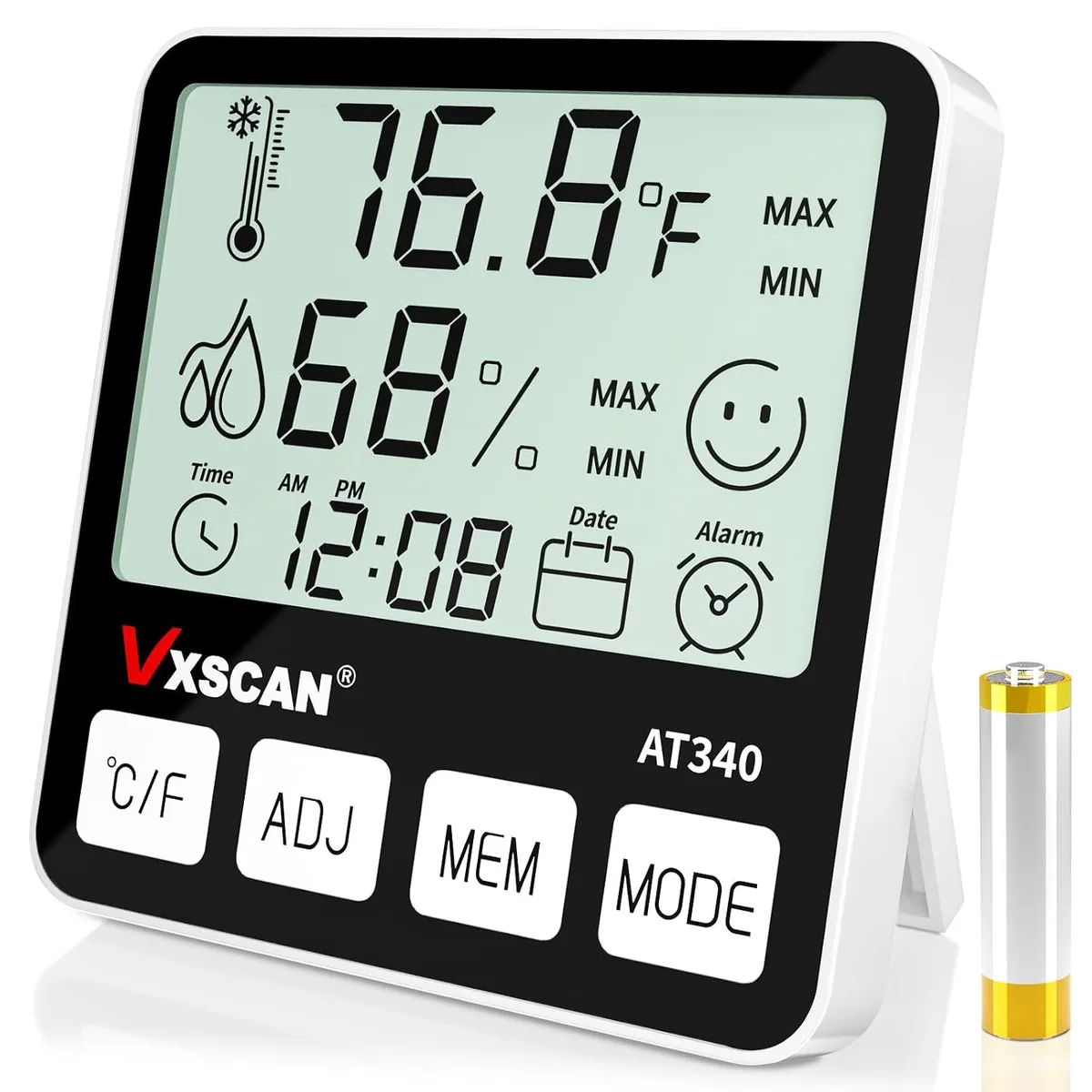
Image source: Bing (Web (fair-use with source credit))
- Run the dehumidifier with the door open for 24 hours. Note the steady-state humidity reading.
- Close the door and run it another 24 hours. Record the difference.
- Watch how often the unit cycles. If it turns on and off every few minutes, the sensor is happy but the room is not. The position is wrong.
- Crack the door 2 or 3 inches and test again. Many bedrooms land here.
- Track the water tank output. More water means more moisture removed. It does not always mean a better setup.
Per the EPA's indoor air quality guidance, indoor humidity should stay between 30 and 50 percent. You want a door position that holds that range without making the unit short-cycle.
Keep the dehumidifier away from walls, curtains, and furniture. It needs breathing room on both intake and exhaust. If you're running a budget-friendly model, the fan is smaller and easier to choke.
Give it space.
Common Mistakes That Ruin Dehumidifier Performance
Most dehumidifier complaints trace back to one of these six errors. Avoid them and your door decision becomes far easier.
- Leaving the door wide open with a tiny unit. You're asking a 20-pint machine to dry a 2,000-square-foot house.
- Closing the door in a room bigger than the unit's rating. The machine works overtime and still loses the battle.
- Trusting the built-in humidistat. Built-in sensors can be unreliable. Use a separate hygrometer for accuracy.
- Putting the unit in a corner behind furniture. Blocked air intake kills performance regardless of door position.
- Emptying the tank once a day and giving up. A dehumidifier only works when it runs consistently.
- Closing the door and also sealing the windows. You need some air exchange, even if it's through a crack.
The fix is straightforward. Size the unit to the space. Give it clearance.
Test your door position instead of assuming one rule works forever. For continuous operation, look for a model with a drain hose option. That setup removes the tank-watching factor and lets the door test run clean.
Safety & Warnings: What to Watch Out For
Electrical safety comes first. A dehumidifier draws serious current, especially when the compressor kicks in. Plug it directly into a grounded wall outlet.
Never use an extension cord or power strip.
Placement matters for fire safety. The unit vents hot air from the exhaust grate. It needs clearance on all sides.
Manufacturer specs typically call for at least 12 inches on the intake and 6 inches on the exhaust. Blocked airflow stresses the motor and can cause overheating.
Water is another hazard. A full tank can tip or leak, especially on hardwood floors. Use the continuous drain hose if your model supports it.
Check the tank level before bed. Units with automatic shut-off help, but they do not prevent sloshing during a long run cycle.
The U.S. Department of Energy recommends sizing your unit to the space. An oversized unit cycles more often.
That draws more startup current and wears the relay faster. If you run the machine unattended for days, that is a real concern.
Watch for musty smells. That is often a sign of mold inside the tank or on the filter. Clean the filter every two weeks.
Wipe down the tank with vinegar monthly. Stagnant water becomes a breeding ground for bacteria if the unit sits unused.
Frequently Asked Questions
Should I close the bedroom door when using a dehumidifier at night?
Yes, if you're targeting just that room. A closed door contains the drying power and keeps the noise down. Crack it a few inches if you want to pull moisture from the hallway.
Test both ways with a hygrometer to see what holds 40 to 50 percent RH.
Does running a dehumidifier with the door open waste energy?
It depends on the unit size. A properly sized unit with an open door runs longer, pulling moisture from multiple rooms. That is not wasted energy if you want whole-home drying.
It is wasted energy if the machine is too small and never reaches your target.
Where should I place a dehumidifier in a bedroom?
Set it near the dampest spot. That is usually a window, closet, or ensuite door. Keep it 6 to 12 inches away from walls and furniture.
Avoid corners where airflow stalls. Do not point the exhaust directly at bedding, curtains, or electronics.
What humidity should a bedroom be in winter?
The EPA recommends 30 to 50 percent RH. In winter, aim for the lower end around 30 to 40 percent. That prevents condensation on cold windows without making the air feel dry and uncomfortable.
Quick Decision Guide: Which Door Position Is Right for You?
Here is the condensed decision tree. These rules cover most bedrooms.
- Open the door for whole-home drying. Do this when the unit is oversized for the room. Do it when a nearby bathroom keeps pushing humidity back.
- Close the door when you're targeting a single bedroom. Do this when the unit matches the room size. Do it when noise is your main concern at night.
- Crack it 2 to 3 inches for a master bedroom with an ensuite. Do this when your room is slightly larger than the unit's rated coverage.
For most people, the cracked-door approach wins. It balances airflow with moisture removal. It prevents the short-cycling that wastes energy.
If your bedroom still reads above 50 percent RH after a week of testing, step up to a bigger machine instead of overworking a small one.
The real trick is consistency. A dehumidifier only works while it's running. Find a position that lets it hit your target RH and hold there.
Leave it alone. Adjust seasonally, because winter air holds less moisture and summer air pushes the opposite direction.
If you're still on the fence, run a simple overnight test. Place the unit with the door open one night. Close it the next.
Check the water tank each morning. The setup that collects more water and holds a steady RH is the one for your bedroom.