How Long Does a Dehumidifier Take to Dry Clothes
If you're wondering how long does a dehumidifier take to dry clothes, the honest answer is: it depends. Maybe you've hung a load on a rack, switched on your unit, and hoped for the best. One time your clothes are dry in four hours.
The next, they're still damp after eight. This guide will help you predict your drying time based on the conditions you're working with.
A standard 50-pint dehumidifier can pull about 2 pints of water per hour under ideal conditions, according to manufacturer spec sheets. But your room temperature, humidity level, and airflow change that number a lot. Per [U.S.
Department of Energy guidance](https://www.energy.gov), dehumidifier capacity is rated under specific test conditions. Let's break down the variables so you can predict your own drying time.
Quick Answer
A dehumidifier dries clothes in 3 to 8 hours depending on the setup. A 50-pint compressor model in a warm room takes about 4 hours. A smaller 20-pint unit in a cold basement can take 8 hours or more.
As of 2026, compressor dehumidifiers are the most common choice for home laundry drying.
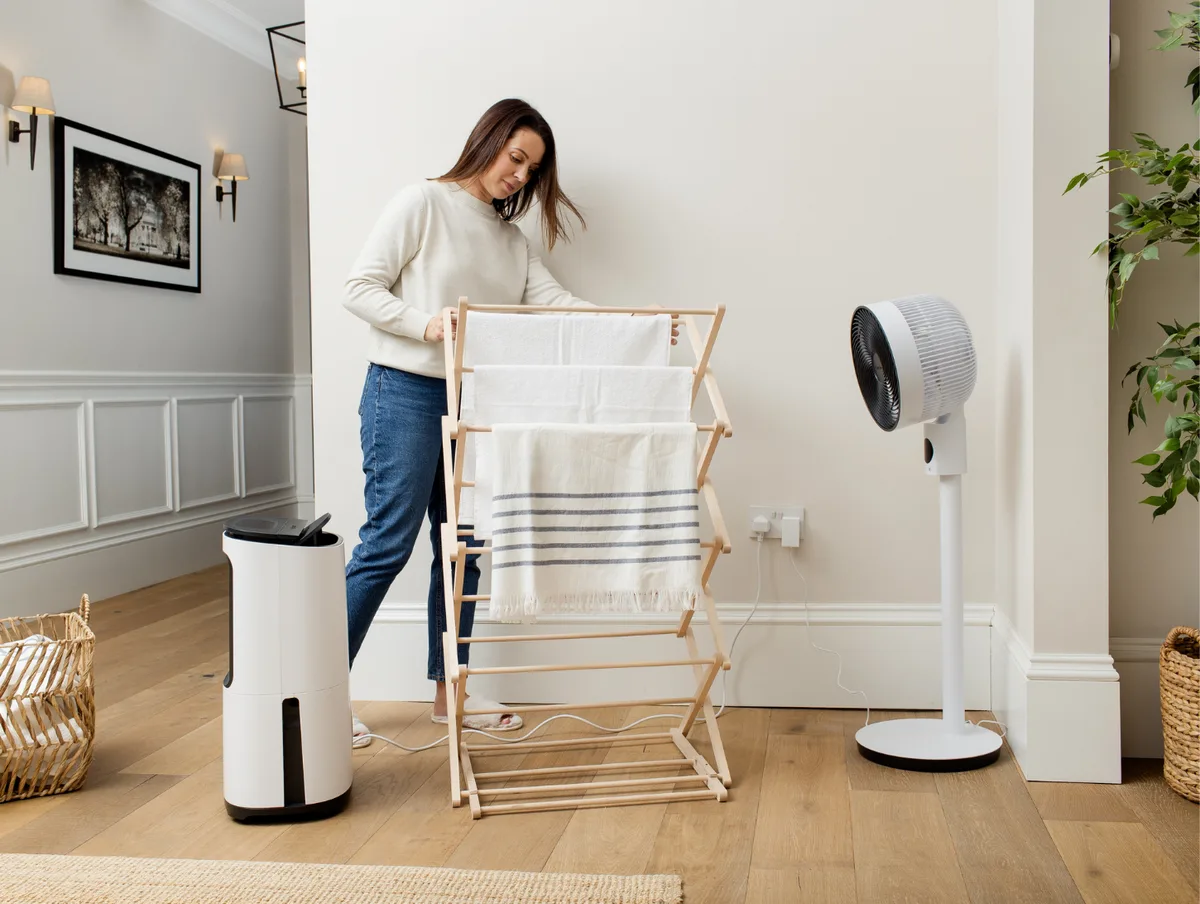
Image source: Bing (Web (fair-use with source credit))
The 4 Big Factors That Control Your Drying Time
Drying time isn't random. It comes down to four main variables. Change any one of them, and your results shift by hours.
1. Dehumidifier Type and Size
You have two main types of dehumidifiers: compressor (refrigerant) and desiccant. They behave very differently when drying clothes.
Compressor units work best in rooms above 15°C (59°F). Below that, the cooling coils can ice up, and moisture extraction drops sharply. Desiccant units use a moisture-absorbing rotor.
They handle cold rooms much better, which is why they're popular in unheated utility spaces.
Size also matters. A 20-pint model pulls less water per hour than a 50-pint unit. It's simple physics.
If you're drying laundry regularly, a properly sized 35-pint or 50-pint model makes a real difference. Check out our picks for a dependable 50-pint unit if you're shopping around.
Here's a side-by-side look at the two types:
| Factor | Compressor (Refrigerant) | Desiccant |
|---|---|---|
| Best room temperature | Above 15°C (59°F) | Any temperature, excels in cold |
| Drying speed in warm room | Fast | Moderate |
| Drying speed in cold room | Slow | Fast |
| Energy use | Lower | Higher |
| Upfront cost | Usually lower | Usually higher |
2. Room Temperature
Temperature is the silent killer of drying time. A compressor dehumidifier in a cold room struggles to pull moisture from the air. The clothes stay damp longer while the unit runs for hours without making progress.
When the room is warm, say above 20°C (68°F), both types work better. Warm air holds more moisture, so the dehumidifier has more to extract. The clothes dry faster because the air itself acts like a sponge.
3. Starting Humidity Level
Your starting humidity sets the baseline. If the room is already at 70% relative humidity, the dehumidifier works hard just to bring the air down to 50%. That's before it even starts drying your clothes effectively.
If the room is at 50% or lower, the unit can focus on the moisture coming off the laundry. That's a much faster process. Run the dehumidifier for 30 minutes before hanging clothes to make this happen.
4. Airflow and Air Circulation
A dehumidifier pulls air in and blows dry air out. If that dry air never reaches the clothes, you're wasting time. Place the unit close to the drying rack, about 2 to 3 feet away.
Point the outlet toward the clothes if you can.
A small fan aimed at the clothes can cut drying time by 30 to 50 percent. It's a cheap trick that works. Moving air carries moisture away from fabric faster than a dehumidifier can pull it on its own.
Quick Decision Guide: What Your Setup Means for Time
Let's make this practical. Here's what you can expect based on your setup. Use the table as a rough guide.
| Your Setup | Estimated Drying Time | Notes |
|---|---|---|
| Small room, 20-pint compressor, cold | 8 to 10 hours | Very slow. Consider upgrading |
| Small room, 20-pint desiccant, cold | 5 to 7 hours | Better option for cold spaces |
| Medium room, 35-pint compressor, warm | 4 to 6 hours | Typical for most homes |
| Medium room, 35-pint desiccant, warm | 5 to 7 hours | Slightly slower than compressor in warmth |
| Large room, 50-pint compressor, warm | 3 to 5 hours | Optimal setup for laundry |
| Large room, 50-pint desiccant, warm | 4 to 6 hours | Good but less efficient in warm rooms |
| Very large room, 70-pint compressor, warm | 2 to 4 hours | Fastest option. Overkill for small loads |
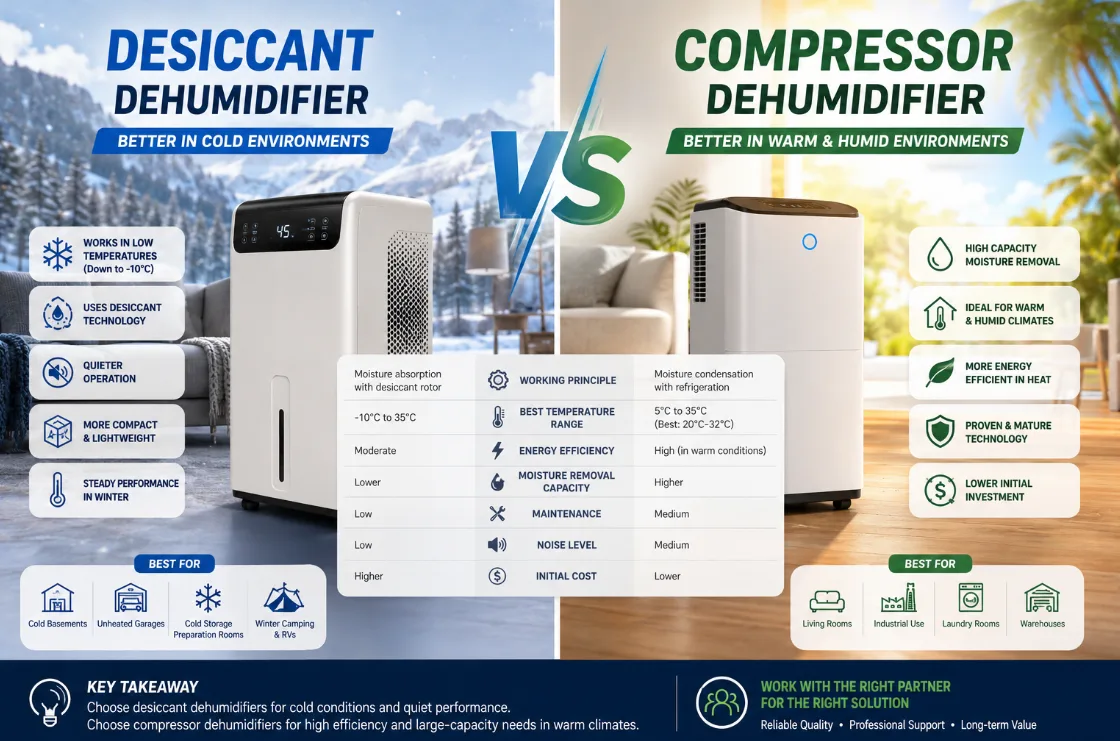
Image source: Bing (Web (fair-use with source credit))
Notice the pattern. Warm room plus bigger unit equals faster drying. If your space is large, high-capacity models can handle the extra air volume.
We've covered the best 70-pint dehumidifier options for 2026 if you need that level of power.
The key takeaway: your room temperature and unit capacity are the two biggest levers. Warm the room or use a desiccant unit in cold conditions, and you'll save hours.
How to Set Up Your Dehumidifier for Faster Drying
Setup matters as much as the machine itself. Follow these steps to get the fastest results.
Step 1: Spin Your Clothes Thoroughly
Run an extra spin cycle on your washing machine. The higher the spin speed, the less water stays in the fabric. A 1400 RPM spin removes more water than a 1000 RPM spin.
That alone can cut drying time by 30 minutes to an hour.
Step 2: Hang Clothes with Space Between Them
Don't cram everything onto the rack. Overlapping clothes trap moisture. Leave at least 2 to 3 inches between items.
Thicker pieces like jeans and towels need even more room. Treat it like a crowded elevator versus an empty room.
Step 3: Place the Dehumidifier Close to the Rack
Put the unit within 2 to 3 feet of the drying rack. The closer it is, the more direct airflow reaches the clothes. If your model has a continuous drain hose, use it.
That way the tank won't fill up while you're away.
Step 4: Close the Room and Seal It
Shut the door and close the windows. You want the dehumidifier working in a contained space. An open window lets in humid outside air, which undoes your progress.
A closed room lets the humidity drop steadily. ASHRAE guidelines for indoor comfort recommend keeping relative humidity between 30% and 60%.
Step 5: Set the Humidity Target
Most dehumidifiers let you set a target humidity level. Set it to 50% relative humidity. That's the sweet spot for drying clothes without over-drying the air.
If you have a more affordable model, you may need to run it manually because some budget units don't offer fine-tuned settings. We've rounded up budget-friendly units for 2026 to help you find one that does.
Step 6: Add a Fan for Extra Airflow
Place a small fan near the clothes. It doesn't need to be powerful. Even a desk fan on low speed will move air across the fabric.
This alone can reduce drying time by 30 to 50 percent.
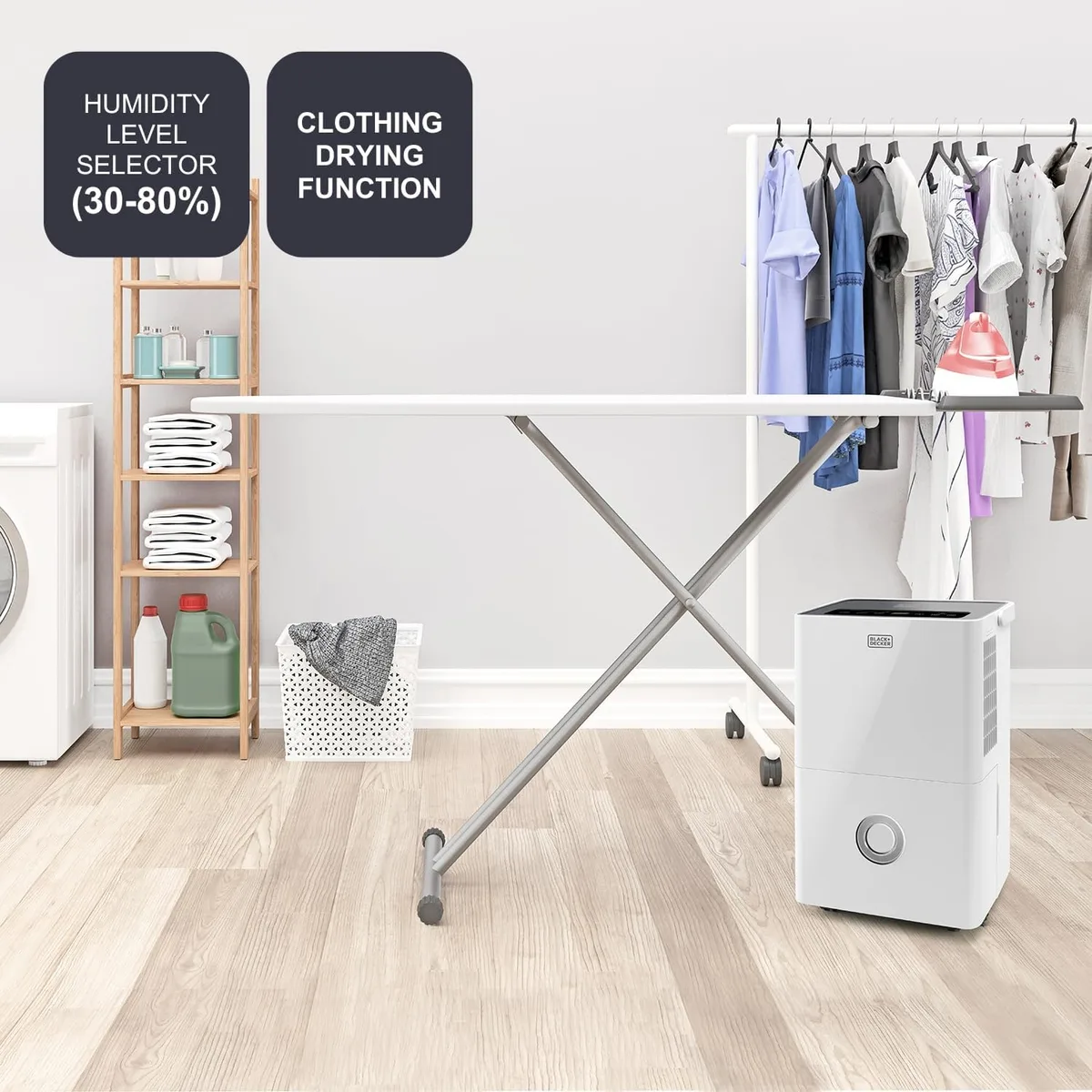
Image source: Bing (Web (fair-use with source credit))
If you're using a smaller unit, compact options for small spaces can still do a solid job. A 20-pint dehumidifier for a bedroom is a good example.
Common Mistakes That Slow Things Down
Even with the right setup, people make errors that cost them hours. Here are the most common ones.
Mistake 1: Overcrowding the Drying Rack
You want to fit as much laundry as possible. We get it. But cramming everything together creates a moisture sandwich.
The inner layers stay wet while the outer layers dry. A half-full rack dries faster than a full one.
Mistake 2: Running the Unit in a Drafty Room
An open window or a drafty hallway lets in humid air. The dehumidifier then works twice as hard. Close the room and seal gaps under the door with a towel.
You need a contained environment.
Mistake 3: Not Emptying the Water Tank
Most units have an auto-shutoff when the tank is full. If you leave the room, the dehumidifier stops after a few hours. You come back to a full tank and damp clothes.
Use a continuous drain hose if you can. Otherwise, check the tank every 2 to 3 hours.
Mistake 4: Using a Compressor Unit in a Cold Room
This is the biggest mistake we see. A compressor dehumidifier in a cold basement or garage barely works. The coils freeze and extraction drops close to zero.
If your drying area is cold, switch to a desiccant unit. It's designed for those conditions.
Mistake 5: Placing the Dehumidifier Too Far Away
Distance matters. If the unit is across the room, dry air disperses before reaching the clothes. Keep it within 2 to 3 feet.
Point the outlet toward the rack. The air needs to hit the fabric directly.
Mistake 6: Setting the Humidity Target Too High
If you set the target to 60% or 70%, the dehumidifier shuts off too early. The clothes stay damp because the air is still humid. Set it to 50% for best results.
If your unit can't hit that number, run it manually until the clothes feel dry.
If your current machine is struggling, mid-range performers like a solid 35-pint dehumidifier are worth considering. They strike a good balance between speed and energy use.
Frequently Asked Questions
Can a dehumidifier dry clothes overnight?
Yes, in most cases. A 50-pint compressor model in a warm room should finish a load in 4 to 6 hours. A smaller unit in a cold room may need 8 to 10 hours.
As long as the tank has room, leaving it running overnight is safe.
Should I use a dehumidifier or a tumble dryer?
A tumble dryer is faster and more convenient. A dehumidifier is gentler on fabrics and cheaper to run for regular loads. If you have delicate items or want to avoid heat damage, a dehumidifier and drying rack is a solid choice.
Why are my clothes still damp after 8 hours?
Check the room temperature first. Then check for airflow and overcrowding. A compressor unit below 15°C (59°F) won't perform well.
Also verify the tank didn't fill up and shut the machine off. Fixing these usually solves the problem.
Does a dehumidifier use a lot of electricity?
No, not compared to a tumble dryer. A typical 50-pint compressor unit draws about 500 to 600 watts. A tumble dryer can draw 2000 to 3000 watts.
For a 4-hour drying session, a dehumidifier costs far less.
Can I dry clothes in a tiny room with a dehumidifier?
Yes, and a small room can actually dry faster because the air volume is smaller. Just keep the door closed to contain the moisture. A compact 20-pint unit is often enough for a single load in a small bedroom.
The Bottom Line: Is a Dehumidifier Worth It for Drying Clothes?
Yes, if you don't have a tumble dryer or you want a gentler method. A dehumidifier takes longer than a dryer, but it protects fabrics and lowers indoor humidity at the same time. That's a real bonus during damp winters.
For the best results, match the unit to your room size and climate. Use a compressor model in warm rooms and a desiccant model in cold spaces. Keep the rack spaced out, keep the room closed, and add a fan for extra airflow.
Do that, and you'll get consistent drying times in the 3 to 6 hour range.