Where Should You Put a Dehumidifier to Dry Clothes
You're hanging wet clothes on a rack, the room feels damp, and you're wondering exactly where should you put a dehumidifier to dry clothes. That machine works well, but only if the air it pulls actually moves across your laundry. Stick it in the wrong spot, and you'll wait 12 hours for towels that should take 5.
Manufacturer specs and user reports agree on the basics. A typical 12L/day model needs to sit roughly 30 to 50 cm from the wall, with the air intake facing your clothes. In our research as of 2026, that simple distance rule made more difference than size, brand, or price.
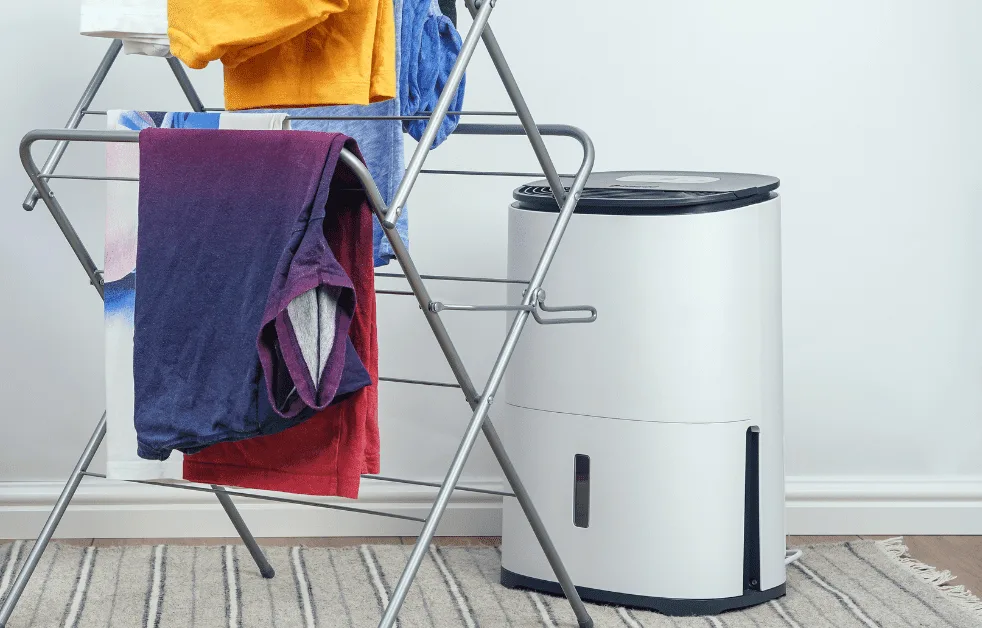
Image source: Bing (Web (fair-use with source credit))
Why Placement Matters More Than the Dehumidifier Itself
A dehumidifier doesn't just pull water from the air. It pulls room air through a cold coil, condenses the moisture, and pushes drier air back out. That airflow is the key.
Your wet clothes only dry when humid air around them gets replaced with dry air repeatedly.
If the unit sits in a corner behind a sofa, it will dehumidify the room, but your t-shirts won't see much change. The moisture has to travel from the fabric to the machine. Still air won't move anywhere fast.
Our research on placement across manufacturer manuals and buyer reports keeps coming back to the same point. The dehumidifier should sit in the same room as the drying rack, close enough to create a steady loop of air. That's the difference between a 5-hour dry and a 12-hour one.
This also matters for protecting your home. Poorly positioned units leave clothes damp too long, which raises humidity and risks mould. Per EPA guidance, sustained humidity above 60% encourages mould growth.
The Quick Answer: Where to Put It (and Where Not To)
Put it in the same room as your wet laundry. Keep it 30 to 50 cm from the wall. Aim the intake toward the clothes.
Close the door and window. Expect 4 to 8 hours for a full load.
That's the core answer. The rest is fine-tuning based on your space.
- Best: a spare bedroom, home office, or anywhere the rack can sit near the machine.
- Best: a bathroom with the extractor fan off and the door closed.
- Not ideal: an open-plan living area. The air spreads out, so drying slows down.
- Not ideal: a corner behind furniture. Air can't reach the rack.
If the room is large, move the dehumidifier closer to the clothes than to the centre of the room. That single tweak is what most people miss.
The Decision Tree: What to Do Based on Your Room and Setup
First, identify your room type and dehumidifier type. The right spot follows logically from there.
Branch 1: You Have a Small Room (Spare Bedroom, Bathroom)
If the room is under 15 m², place the rack in the middle or against one wall. Put the dehumidifier near the foot of the rack, not directly underneath the clothes. Water drips can hit the unit, and the intake will only catch whatever is directly above it.
Aim the airflow upward and across the fabric.
Branch 2: You Have a Large or Open-Plan Space
If the room is bigger than 20 m², keep the dehumidifier within 1 to 1.5 metres of the drying rack. Don't put it in the centre of the room. It will dry the whole space slowly instead of focusing on the laundry.
A 50-pint unit can handle a larger area, but it still works best closer to the wet clothes.
Branch 3: You're Using a Compressor Dehumidifier in a Cold Room
If the room is below 15°C, a compressor dehumidifier's extraction rate drops sharply. Put it in the warmest room of the house, not the garage or an unheated spare room. Or move the clothes to a warmer space entirely.
Let the unit run in a small, closed-off room to maximise the heat it generates.
Branch 4: You Have a Desiccant Dehumidifier
If you have a desiccant dehumidifier, cold rooms aren't a problem. Position it 30 cm from the wall and 30 cm from the clothes. It can sit on a table or shelf and aim downward at the rack, which works nicely for a small load.
Remember, setting the humidity target too high is a common trap. For laundry duty, aim for 45% rather than 60%.
The Right Placement: Distance, Direction, and Airflow
Distance and direction are the two levers that actually move the needle. Get these right, and the machine does the heavy lifting.
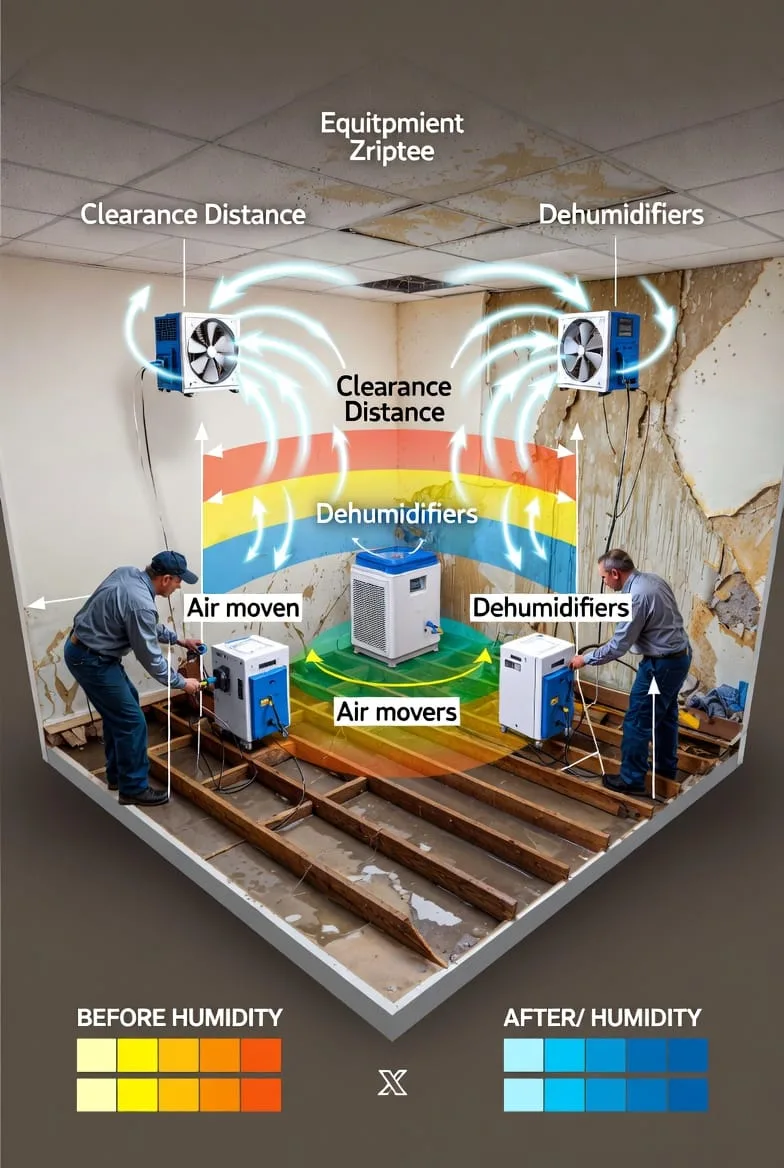
Image source: Bing (Web (fair-use with source credit))
| Target area | Distance from wall | Distance from wet clothes |
|---|---|---|
| Small room (under 15 m²) | 30 cm | 0.5 to 1 m |
| Large room (over 20 m²) | 40 to 50 cm | 1 to 1.5 m |
| Hallway or landing | 30 cm | as close as possible |
The intake side matters too. Most dehumidifiers pull air from the front or side and blow it out the top. Face the intake toward the clothes, not the wall.
If the machine has a grill on the back, keep that gap clear as well. Airflow needs a loop: through the unit, out the top, across the room, and back in.
Don't put the dehumidifier under the rack. Drips can fall into the electronics. Use a slight offset, 40 to 60 cm to one side, so the air sweeps across the fabric at an angle.
A fan can double the speed, but only if the dehumidifier is already well placed.
If space is tight, a compact unit fits neatly beside a laundry rack without blocking walkways.
The Classic Mistakes That Ruin Drying Time
Most slow-drying problems aren't the machine's fault. They're positioning mistakes that strangle airflow. Here are the ones we see over and over.
- Blocked intake: Pushing the unit flush against a wall stops the fan from pulling air. Leave 30 cm minimum.
- Placing it under the rack: Drips hit the case, and the airflow hits only one layer of fabric. Offset it instead.
- Leaving the door open: Humidity keeps spilling into the room, so the dehumidifier cycles forever. Close the door unless the space is tiny.
- Running a compressor unit in a cold room: Extraction drops below 15°C, and the machine may frost up. Move the laundry to a warm bedroom.
- Forgetting the tank: A full tank stops the unit dead. Set a reminder if you're drying a large load.
- Setting the humidistat too high: If the target is 60%, the machine stops before the clothes are dry. Drop it to 45% for laundry duty.
Owner reviews show these six mistakes account for most complaints. Fix the position first, and you'll likely find the machine was fine all along.
The Pro Setup: How to Combine Placement with Settings for Maximum Speed
Position is half the job. Settings are the other half. You can cut drying time by another hour or two with a few simple tweaks.
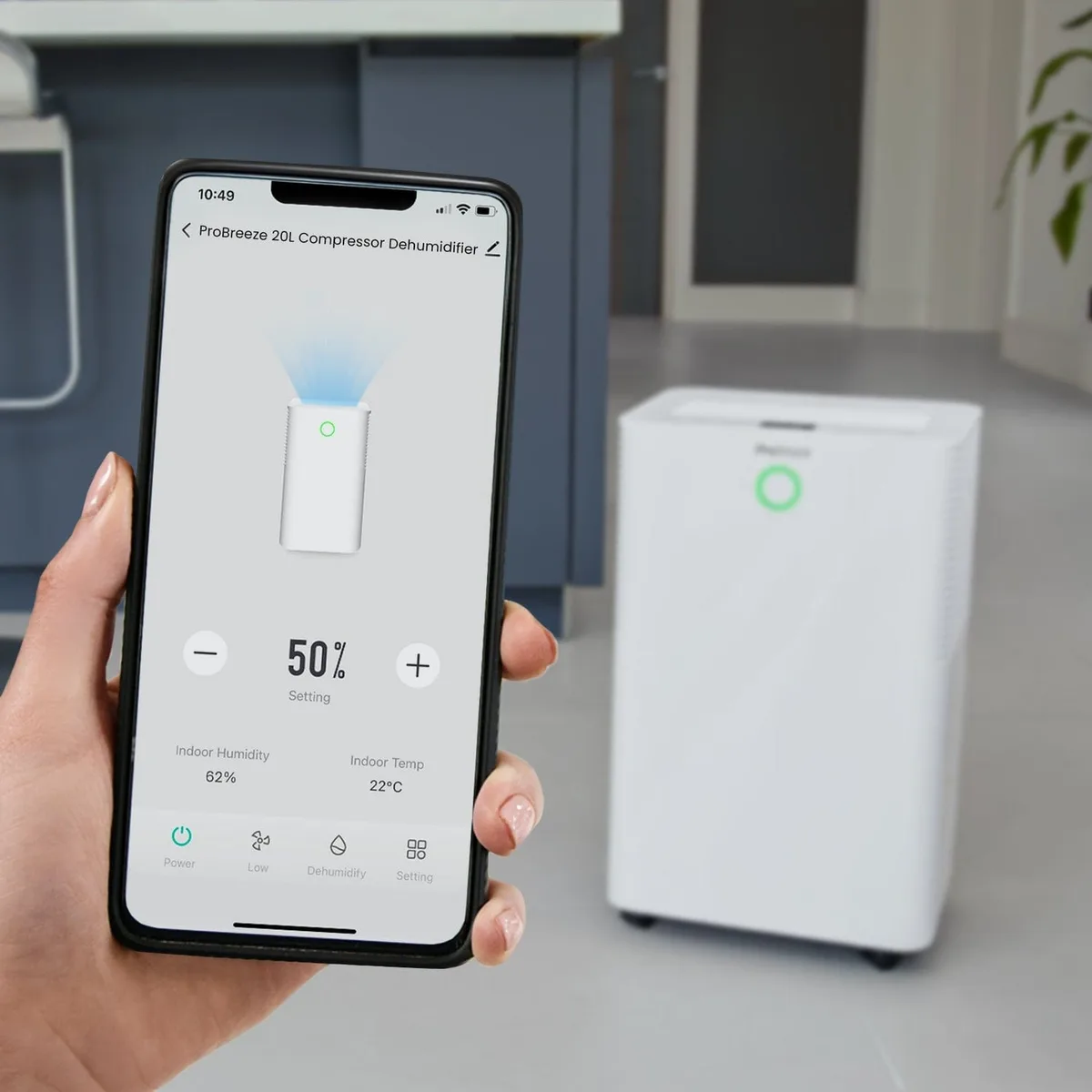
Image source: Bing (Web (fair-use with source credit))
Use laundry mode if your machine has one. Many modern dehumidifiers include a dedicated laundry setting. It runs the fan at maximum speed and ignores the humidistat until the clothes are dry. Our research shows this setting alone can shave 20 to 30 percent off drying time.
Set the target humidity to 45 percent. At 60 percent, the machine cycles off while the clothes are still damp. At 45 percent, it keeps pulling moisture until the fabric is truly dry. Use a separate hygrometer if your unit doesn't show the current humidity reading.
Run continuous drainage if you can. A full tank stops the unit dead. Connect a hose to the continuous drain port and route it to a floor drain or sink. This lets the machine run for 8 to 12 hours without interruption.
Turn off the timer. If you set a timer for 4 hours, the machine stops even if the clothes are still wet. Let it run until the tank stops filling or the humidity drops below 45 percent.
Add a fan for extra circulation. A small oscillating fan aimed at the drying rack can double the rate of evaporation. The dehumidifier pulls the moisture from the air, and the fan keeps fresh air moving across the fabric. It's a cheap upgrade that works.
Dry heavier fabrics separately. Towels, jeans, and thick hoodies take longer. If you split the load into two batches, each one dries faster. The machine can handle the smaller load more efficiently.
For even faster drying, consider a larger unit with a higher extraction rate.
Frequently Asked Questions
Can I put the dehumidifier in a closed room with the door shut?
Yes. In fact, you should. Closing the door traps the humid air in one space, so the machine cycles through it faster.
Open doors let moisture escape and slow the whole process.
How long does it take to dry clothes with a dehumidifier?
Expect 4 to 8 hours for a typical 6 to 8 kg load. Towels and heavy fabrics sit at the longer end. Light cottons and synthetics dry faster.
Room size, temperature, and starting humidity all affect the timeline.
Should I put the dehumidifier above or below the clothes?
Neither. Put it to the side, about 30 to 50 cm away. Placing it directly under the rack risks water dripping into the unit.
Placing it above means the intake misses the airflow from the wet fabric.
Is it cheaper to dry clothes with a dehumidifier or a tumble dryer?
A dehumidifier costs roughly 30 to 60 pence per load in electricity, depending on the model and local rates. A tumble dryer can cost 80 pence to £1.50 per load. The dehumidifier is gentler on clothes and also dries the room.
Can I use a dehumidifier and a heated airer together?
Yes, and it works well. The heated airer warms the fabric directly, speeding evaporation. The dehumidifier pulls the released moisture from the air.
Just keep the dehumidifier offset from the airer, not directly underneath it.
Do I need to empty the tank every few hours?
It depends on the tank size and the load. A 4 litre tank might fill once during a full drying cycle. A 2 litre tank could fill twice.
Check the tank level after 3 hours if you're drying a large load. For unattended operation, choose a model with continuous drainage.
Final Verdict: The One Rule That Beats Everything Else
After all that, one rule stands above the rest. Put the dehumidifier close to the clothes, with the intake facing the fabric, and close the door.
That single change fixes more drying problems than any other adjustment. It works for compressor units and desiccant units. It works in small rooms and large rooms.
It works whether you have a cheap machine or a premium one.
Everything else in this article is a refinement of that one rule. The distance, the direction, the target humidity level, and the drainage setup all matter. But they matter only if the machine is already in the right room, pointed at the right thing.
If you remember nothing else, remember this. The machine pulls moisture from the air, but it only pulls what reaches its intake. Put the intake in the path of the wet clothes.
The rest takes care of itself.
For persistent humidity problems or bigger spaces, you might need a larger unit. A higher capacity model handles larger rooms and faster drying cycles. And if you're working in a basement or a damp area, a dedicated unit can manage both the drying and the general humidity control.