Can a Dehumidifier Prevent Crawl Space Mold
You've noticed that musty smell drifting up from the crawl space. Maybe you've spotted a patch of fuzzy growth on a floor joist. The question is straightforward: can a dehumidifier prevent crawl space mold?
The short answer is yes, but only when you address the whole moisture picture.
The EPA recommends keeping indoor relative humidity between 30% and 50% to discourage mold growth. A dehumidifier is a powerful tool, but it's not a standalone fix. Let's walk through what actually works.

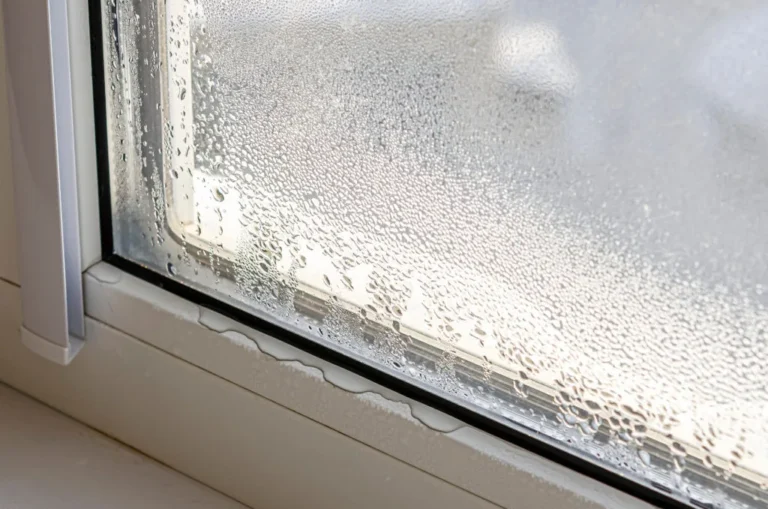
Image source: Bing (Web (fair-use with source credit))
Quick Answer
Yes, a dehumidifier can prevent crawl space mold. But it must be the right size. It needs a sealed, dry space.
It cannot fix active leaks. Start with moisture control first.
Core Facts: Why Mold Grows in Crawl Spaces (And What Stops It)
Mold needs three things: moisture, food (wood, paper, dust), and temperatures above about 40°F. Crawl spaces offer all three. Dirt floors release ground moisture.
Open vents pull in humid outdoor air. Condensation forms on cold ductwork and pipes. Once relative humidity stays above 60% for more than 48 hours, spores begin germinating.
A dehumidifier stops mold by removing that moisture. It pulls humid air across cold coils, condenses the water, and drains it away. The result is drier air that cannot support fungal growth.
But here's the catch: the dehumidifier has to work against the total moisture load. A dirt floor without a vapor barrier can release 5 to 10 gallons of water per day into the crawl space. A 50-pint unit running 24 hours removes about 4 gallons.
Do the math.
That's why the right sized unit can handle a sealed crawl space but not an open, dirt-floor one. You need to reduce the moisture load first.
| Condition | Mold Risk | Dehumidifier Effectiveness |
|---|---|---|
| Sealed crawl, vapor barrier, proper drainage | Low | Very effective |
| Open vents, dirt floor, no barrier | High | Only helps a little |
| Existing active leak or standing water | Very high | Will not fix it alone |
The EPA's mold and moisture page confirms that controlling humidity is the primary prevention strategy. But controlling humidity means stopping water at its source, not just running a machine.
Risk Factors: When a Dehumidifier Works — and When It Won't
A dehumidifier is not a magic wand. It works well under specific conditions. It fails when those conditions are missing.
It works when:
- The crawl space has a vapor barrier covering the entire dirt floor.
- Foundation vents are closed (or mostly closed) during humid months.
- There are no active leaks from plumbing, gutters, or grading.
- The unit is sized correctly for the square footage.
- Temperatures stay above 40°F (or the unit has a low-temperature defrost feature).
It fails when:
- Water is actively seeping through the foundation. A dehumidifier cannot dry wet soil.
- The crawl space is open to the outside. You are trying to dehumidify the whole neighborhood.
- The unit is too small. A 30-pint unit in a 2,000-square-foot crawl space is a waste of electricity.
- Drainage is blocked. The water pump fails or the hose kinks. The unit shuts off, and humidity climbs back up.

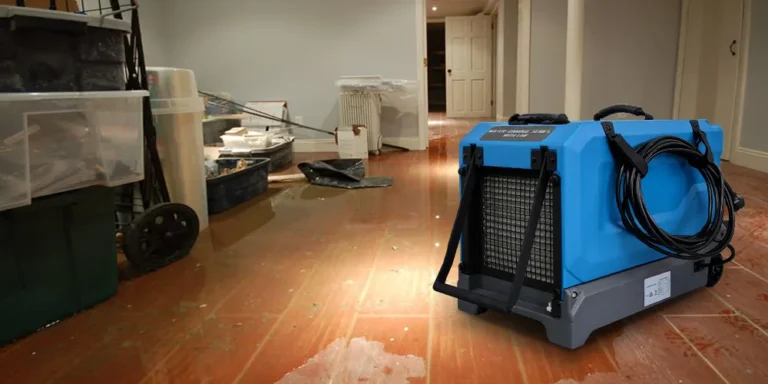
Image source: Bing (Web (fair-use with source credit))
If you already see mold like the picture above, the dehumidifier can dry the space and prevent further growth. But it will not kill existing mold. You need to remove it first.
That means scrubbing with a mold cleaner or hiring a remediation company.
The bottom line: a dehumidifier is a maintenance tool, not a cure-all. It keeps a dry crawl space dry. It does not fix a wet one.
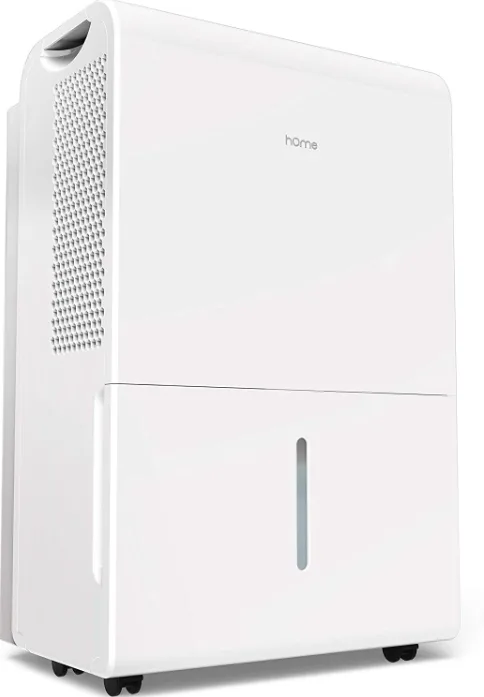
For a sealed crawl space, a reliable 70-pint unit is often the sweet spot for coverage and energy use.
Safe Setup: How to Install and Run a Crawl Space Dehumidifier
Setting up a dehumidifier in a crawl space is different from putting one in a basement. You need to think about drainage, access, and safety.
Step 1: Start with a sealed space.
Before you bring the dehumidifier in, install a 6-mil (or thicker) vapor barrier over the entire dirt floor. Overlap seams by 12 inches and seal them with tape. Run the barrier up the walls at least 12 inches.
This stops ground moisture from entering the air.
Step 2: Close foundation vents.
If your crawl space has vents, close them during humid months. Open vents let humid outdoor air in, making the dehumidifier work much harder. In winter, you may want to open them briefly to release trapped moisture, but during summer, keep them shut.
Step 3: Choose a location for the unit.
Place it in the center of the crawl space, on a flat, level surface. You want good airflow around the intake and exhaust. Do not put it directly against a wall or under a low beam.
Step 4: Set up drainage.
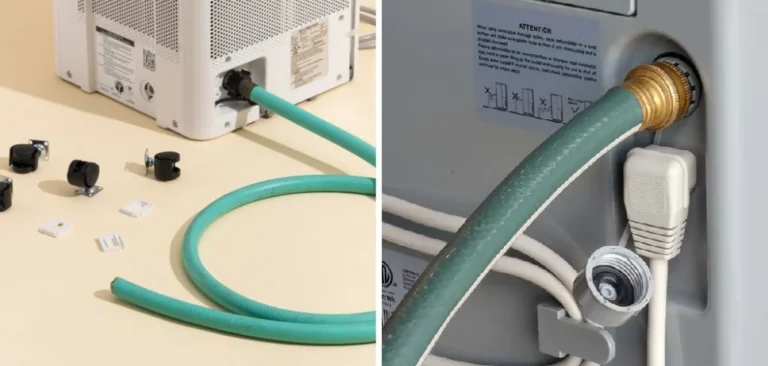
A crawl space dehumidifier must drain continuously. The easiest way is to run a hose to a sump pump basin or a floor drain. If there is no drain, you need a unit with a built-in condensate pump that can push water up and out through a window or exterior wall.
Do not rely on the bucket. You will not want to crawl under there every day to empty it.
Step 5: Plug into a GFCI outlet.
The National Electrical Code requires GFCI protection in crawl spaces. If your outlet is not GFCI, install one or use a GFCI extension cord. Water and electricity do not mix.
For a deeper dive on sizing and features, look at a good value dehumidifier that balances performance with cost.
Step-by-Step: Drying Out a Problem Crawl Space Before It's Too Late
If you already have high humidity or visible mold, you need to act fast. Here is a sequence that works, based on contractor best practices.
Step 1: Inspect and fix the source.
Walk around the outside of the house. Check gutters and downspouts. Are they clogged?
Do downspouts dump water right next to the foundation? Fix that first. No dehumidifier can keep up with a downspout pouring water against the foundation wall.
Step 2: Remove existing mold.
You cannot prevent mold that is already there. Scrub affected wood with a mold cleaner or a diluted bleach solution (1 part bleach to 10 parts water). Wear a respirator, gloves, and goggles.
For large areas (over 10 square feet), call a professional.
Step 3: Dry the space aggressively.
Run a heavy-duty dehumidifier 24/7 for the first week. If temperatures are above 50°F, also run a fan to circulate air. This speeds up drying of wood, insulation, and soil.
Measure humidity with a digital hygrometer.
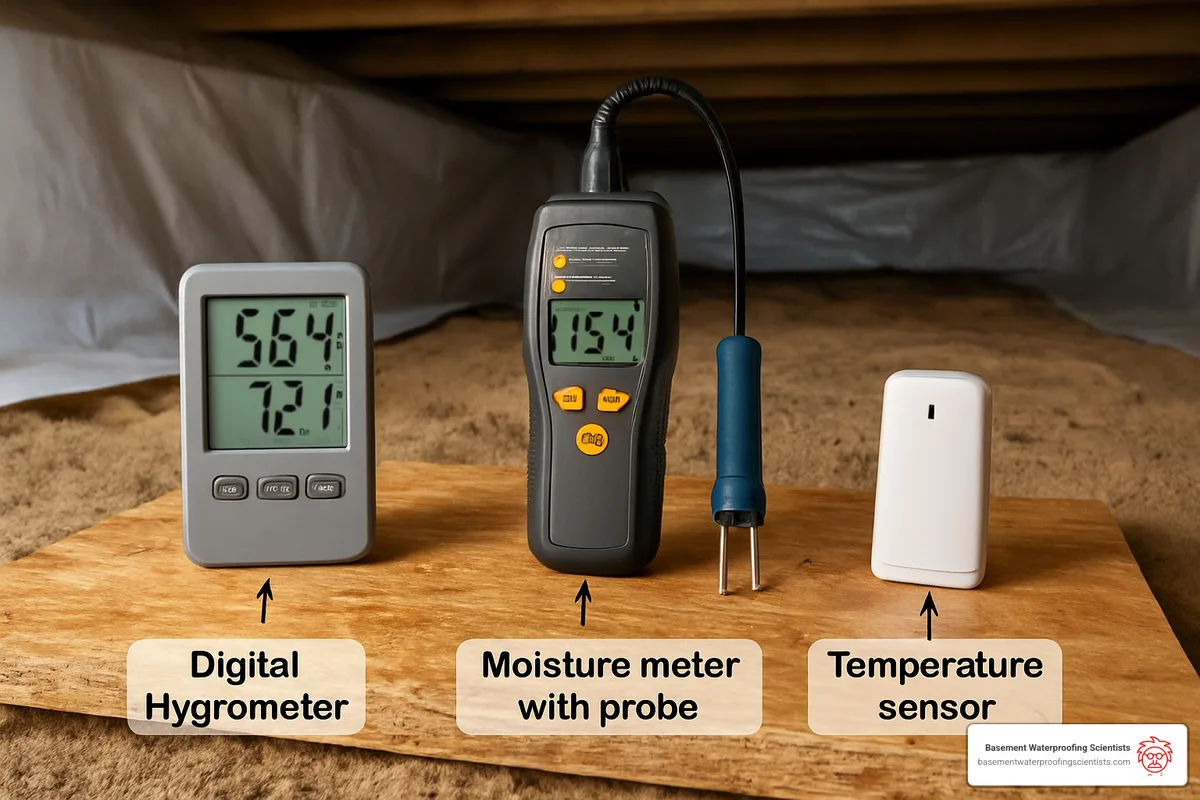
Image source: Bing (Web (fair-use with source credit))
Step 4: Install vapor barrier if not present.
Once the space is dry, lay down the vapor barrier. This is the single most important step. Without it, ground moisture will keep coming back.
Step 5: Monitor and maintain.
After the initial drying period, set the dehumidifier to 50% relative humidity. Check the filter monthly. Clean the drain line quarterly.
If you notice the unit running constantly or the humidity creeping up, recheck for leaks or a damaged vapor barrier.
| Step | Action | Timeline |
|---|---|---|
| 1 | Fix exterior drainage | 1 day |
| 2 | Remove existing mold | 1–3 days |
| 3 | Run dehumidifier + fan | 7 days continuous |
| 4 | Install vapor barrier | 1–2 days |
| 5 | Set and monitor | Ongoing |
For a year-round solution, a dehumidifier designed for continuous use will handle the load without wearing out.
Costs, Sizing, and Maintenance: What to Expect in the Real World
Sizing a dehumidifier for a crawl space comes down to square footage and moisture load. A sealed crawl space needs roughly 50 to 70 pints per day for every 1,000 to 1,500 square feet. An open, dirt-floor crawl space needs double that capacity, which often makes the machine useless without first installing a vapor barrier.
Energy costs are real. A 70-pint unit draws about 600 to 800 watts. Running it 24/7 adds roughly $30 to $60 per month to your electric bill, depending on your local rate.
That is the price of prevention. Compare it to mold remediation, which averages $1,500 to $5,000 for a crawl space, and a dehumidifier pays for itself quickly.
Maintenance is simple but non-negotiable. Clean the washable filter every month. Check the drain hose for kinks or clogs quarterly.
Inspect the condensate pump annually and clear any debris from the intake vents. A neglected unit loses efficiency and eventually shuts down on a full bucket or frozen coil.
If you are buying new, a budget-friendly 50-pint model covers most sealed crawl spaces without breaking the bank. For larger areas, a 70-pint unit gives you more headroom.
When to Call a Professional: Safety, Code, and Structural Red Flags
A dehumidifier is a tool, not a license to ignore bigger problems. Some situations require a licensed contractor before you spend a dollar on equipment.
Call a professional if you see any of these:
- Standing water that returns after you remove it. That means a drainage or groundwater problem.
- Sagging floor joists or soft, spongy subfloor. That is structural damage, not just humidity.
- Mold covering more than 10 square feet. The EPA recommends professional remediation at that scale.
- Electrical wiring that is frayed, exposed, or not up to code. Crawl spaces are wet environments, and codes require GFCI protection.
Safety rules for working in a crawl space:
- Wear a respirator rated for mold spores, not a dust mask.
- Use a headlamp and check for rodents, snakes, or insects before crawling in.
- Bring a partner. Tell someone you are going under the house.
- Never run a dehumidifier on a standard outlet without GFCI protection.
There is no shame in calling for help. A crawl space is one of the most dangerous areas of a home to work in. Low clearance, sharp fasteners, and poor air quality make it a job best left to pros when conditions are bad.
Frequently Asked Questions
How long does a dehumidifier take to dry out a crawl space?
Most sealed crawl spaces drop to safe humidity levels within 3 to 7 days of continuous operation. You should see relative humidity fall below 60% in that window. If it does not, you have an unresolved moisture source.
Can I use a regular basement dehumidifier in my crawl space?
Yes, if it has a low-temperature defrost feature. Standard units ice up in the chilly, damp conditions under a house. Look for a model rated for operation down to about 40°F.
Do I need a dehumidifier if I have a vapor barrier?
Not always, but often. A vapor barrier stops ground moisture. It does not remove humidity from the air that enters through vents or building gaps.
In humid climates, a dehumidifier is still necessary.
Should I keep crawl space vents open or closed?
Close them during humid months. Open vents pull in muggy outdoor air. The dehumidifier works much harder and may never catch up.
Keep them closed unless you have a moisture problem in winter.
How do I know if my crawl space is too humid?
Use a digital hygrometer. Place it about 12 inches above the floor. If relative humidity stays above 60% for more than two days, mold growth becomes likely.
Below 50% is ideal.
What size dehumidifier do I need for a crawl space?
Measure the square footage of the crawl space floor. For a sealed space, choose 50 to 70 pints per day capacity. For an open space, you need at least 90 pints, but you should really seal it first.
A compact 35-pint unit works for very small, already-sealed spaces.