What Size Dehumidifier Do I Need for a Bedroom
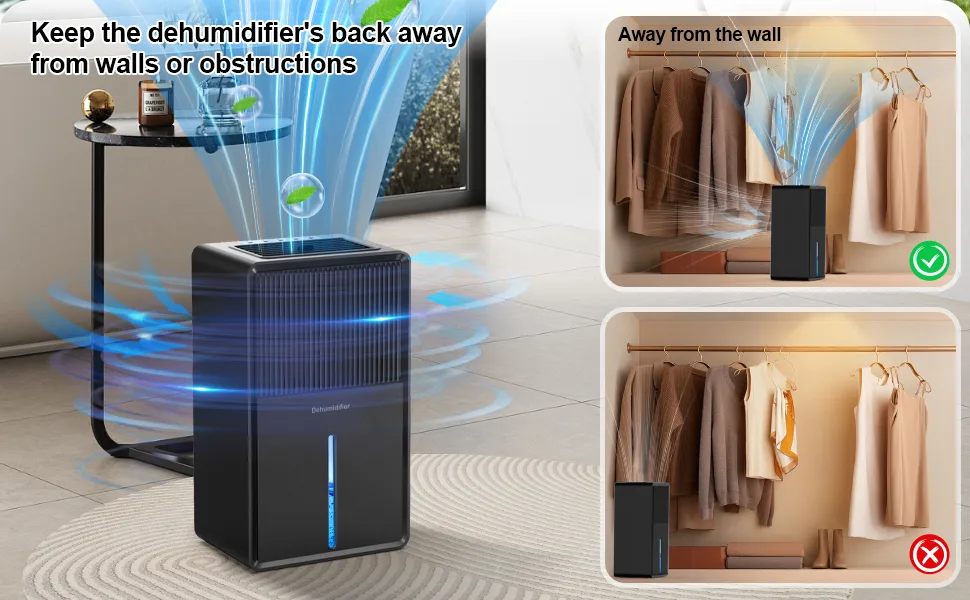
Image source: Bing (Web (fair-use with source credit))
You already know that damp feeling in your bedroom. The musty smell. The window condensation.
The question is simple: what size dehumidifier do I need for a bedroom? The short answer is a 20-pint unit for most standard bedrooms. But it depends on your room size, humidity level, and whether you have an attached bathroom.
Getting it wrong means wasted money or a unit that never catches up.
Our research compiles manufacturer specifications, EPA indoor humidity guidelines, and verified buyer feedback into a practical sizing framework. The EPA recommends keeping indoor relative humidity between 30 and 50 percent for comfort and health. A bedroom dehumidifier that hits that range without constant cycling is the right size.
Quick Answer
A 20-pint dehumidifier works for most bedrooms under 300 square feet. A 30-pint unit handles larger bedrooms or rooms with an attached bathroom. You need 40-pint only if your bedroom exceeds 400 square feet or has severe moisture problems.
Measure your room's square footage. Check your current humidity with a hygrometer. Match the pint capacity to the moisture level.
That's the core process.
How Bedroom Humidity Actually Works (and Why It Messes Up Your Sizing)

Image source: Bing (Web (fair-use with source credit))
Bedrooms generate moisture from your breath, sweat, and any plants or aquariums. An attached bathroom adds shower steam. A closed door traps humidity inside.
The result can be relative humidity levels above 60 percent consistently. That's where mold, dust mites, and mildew thrive. A correctly sized dehumidifier pulls the air back to that 30 to 50 percent sweet spot.
But here is where most people get confused. Humidity is not uniform across the country. If you live in a humid climate like the Gulf Coast or Southeast, your bedroom air is already wetter.
A 20-pint unit might struggle to keep up during summer. In a dry mountain region, a 10-pint thermoelectric unit might be enough.
The real variable is the "pint per day" rating. Dehumidifier manufacturers test at standard conditions: 80 degrees F and 60 percent relative humidity. Your bedroom is rarely at those exact numbers.
A unit rated for 30 pints per day at standard conditions removes less moisture in cooler or less humid conditions. That's why you should pick a size slightly above your calculated need rather than exactly matching it.
Another hidden factor is the bedroom's volume. A standard 10-foot ceiling holds about 30 percent more air than an 8-foot ceiling. The pint-per-square-foot rule of thumb assumes 8-foot ceilings.
Adjust upward if your bedroom has higher ceilings or is open to a loft area.
Our research shows that oversizing leads to short cycling. The dehumidifier runs for a few minutes, shuts off, then kicks back on repeatedly. That wastes electricity, wears out the compressor, and never stabilizes humidity.
Undersizing means it runs 24/7 and still leaves the air damp. Getting it right matters for your sleep, your electric bill, and your lung health.
Step-by-Step: Measure Your Room, Check Your Climate, Pick Your Pint
This is the decision tree. Follow these three steps to land on the correct pint capacity for your bedroom. No guesswork.
Step 1: Calculate Your Square Footage
Measure the length and width of your bedroom in feet. Multiply them together. That's your square footage.
A 12 by 14 foot room is 168 square feet. That fits comfortably in the 20-pint category. A 15 by 20 foot master bedroom is 300 square feet.
That puts you in 30-pint territory.
If your bedroom has an attached bathroom, include that space in the square footage. The bathroom adds moisture, so it effectively increases the load. Also note any closets with doors that stay closed.
They trap damp air and can become mold pockets.
Step 2: Gauge Your Moisture Level
You need a hygrometer. They cost about $10 online or at hardware stores. Place it in the center of the bedroom away from direct drafts or sunlight.
Check the reading after 24 hours.
Under 50 percent humidity: your bedroom is dry. You may not need a dehumidifier at all. A small 10-pint unit is enough for marginal improvement.
Between 50 and 60 percent: moderate moisture. A 20-pint unit works well for bedrooms up to 300 square feet.
Between 60 and 70 percent: high moisture. Consider a 30-pint unit even for smaller bedrooms. The extra capacity handles the load without running constantly.
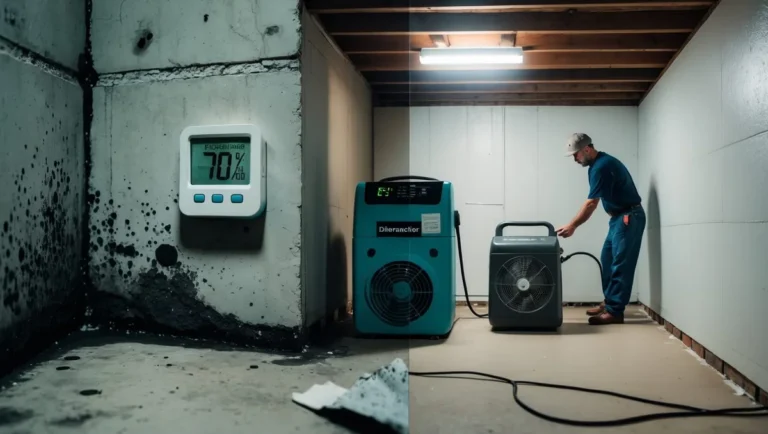
Above 70 percent: severe moisture. You likely have a leak, poor ventilation, or a bathroom exhaust fan not working. Fix the source first.
Then use a 40-pint unit temporarily to dry out the room.
Step 3: Match to the Right Pint Capacity
Use the table below as a starting point. Your exact room volume, climate, and moisture level may push you one size up or down.
| Bedroom Square Footage | Normal Humidity (50–60%) | High Humidity (60–70%) |
|---|---|---|
| Up to 150 sq ft | 20-pint | 20-pint |
| 150–300 sq ft | 20-pint | 30-pint |
| 300–500 sq ft | 30-pint | 40-pint |
| Over 500 sq ft | 40-pint | 50-pint |
If your bedroom is small but has an attached bathroom with a shower, treat it as one humidity level higher. A 150 square foot bedroom with a bathroom falls into the high humidity column. Use a 20-pint unit, not a 10-pint.
Check our best dehumidifier overview for models that match these capacities.
The Two Big Mistakes That Wreck Bedroom Dehumidifier Performance
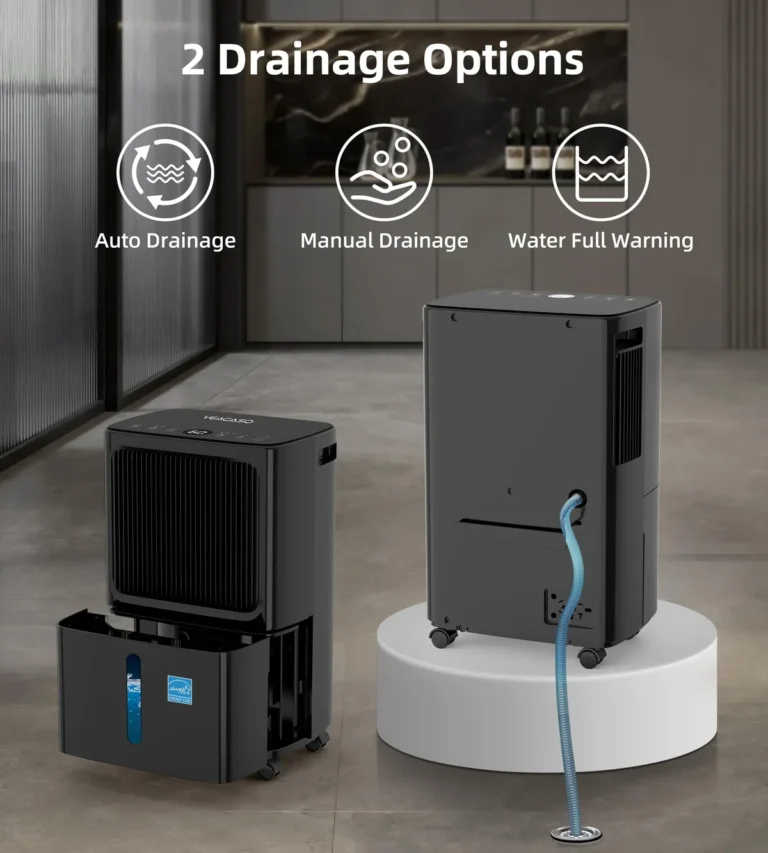
First mistake: ignoring the continuous drain option. Most bedroom dehumidifiers come with a bucket you empty manually. If you live in a humid area, that bucket fills every 8 to 12 hours.
You will forget to empty it. The unit shuts off. Humidity climbs back up.
Within a week, you are back to musty air and possible mold. The solution is to buy a dehumidifier with a continuous drain port. Attach a garden hose that runs to a floor drain or sink.
No bucket. No forgetting. Your bedroom stays dry.
Second mistake: placing the unit in a corner or behind furniture. Dehumidifiers need airflow to work. If you tuck it behind a bed or dresser, the intake and exhaust are blocked.
It pulls air from a tiny pocket and leaves the rest of the room damp. Place the dehumidifier in an open area at least six inches from walls and furniture. The center of the room is ideal.
If that is not possible, put it near the moisture source like the bathroom door.
Another common error is using a basement-sized unit in a bedroom. People grab a 50-pint dehumidifier meant for a damp basement and stick it in a 200 square foot bedroom. It is overkill.
It cycles on and off rapidly, wastes power, and often produces more noise than a smaller unit. Stick to the pint capacities from the table above. For basement purposes, you might need a larger unit.
We have a separate guide on choosing a dehumidifier for a basement. For bedrooms, keep it small.
Compressor vs. Peltier (Thermoelectric) – Which One Belongs in Your Bedroom?
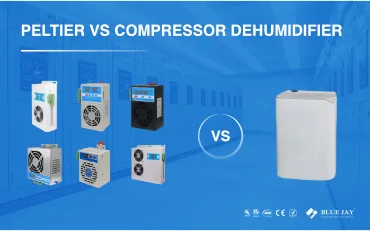
Image source: Bing (Web (fair-use with source credit))
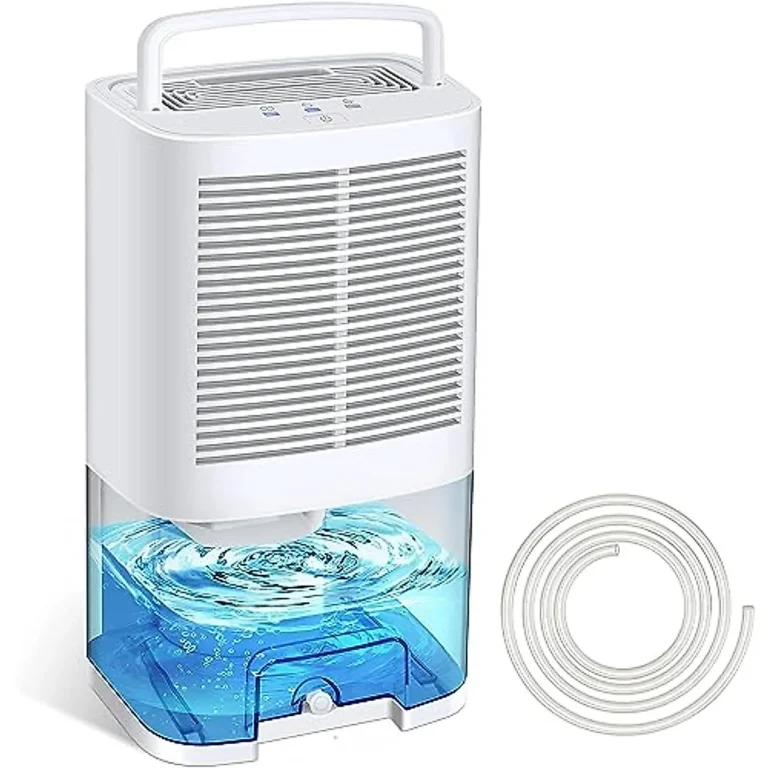
There are two main types of dehumidifiers for bedrooms. Compressor units use a refrigeration cycle like a mini air conditioner. Peltier thermoelectric units use electricity to create a cold plate that condenses moisture.
Each has a place.
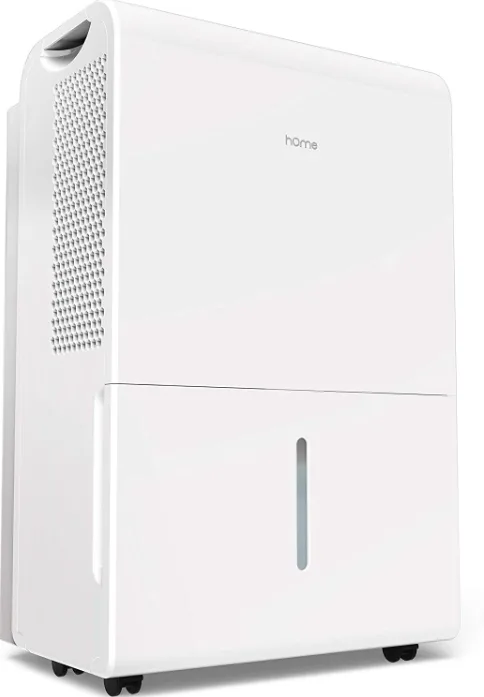
Compressor dehumidifiers are the workhorses. They remove more moisture per hour. They work well in warm rooms.
They cost less per pint of capacity. The downside is noise. A compressor makes a low hum and a fan noise that can disturb light sleepers.
Recent models with inverter compressors are quieter but still audible. If your bedroom is warm above 65 degrees F, a compressor unit is your best bet for performance and cost.
Peltier dehumidifiers are compact and near-silent. They have no compressor, just a fan and a thermoelectric module. Noise levels are around 25 to 30 decibels, about as loud as a whisper.
They are perfect for small bedrooms under 150 square feet where you need gentle moisture removal without noise. The catch is they are inefficient. They remove less moisture per day than a similarly sized compressor unit.
They struggle in cool rooms below 60 degrees F or in high humidity. They are also more expensive per pint of capacity.
So which one belongs in your bedroom? It depends on your noise tolerance. If you are a light sleeper or share a bed with someone who is, a Peltier unit is your only real option.
Choose a compressor unit if you need fast drying or have moderate to high humidity and you are okay with a constant hum. For most master bedrooms with attached bathrooms, a compressor unit in the 20 to 30 pint range is the most effective choice. For a guest room or nursery where silence matters more than speed, a Peltier unit is the smarter pick.
Real Bedroom Scenarios: What Size Works for Master Bedroom, Guest Room, and Small Space
Let's apply the sizing framework to common bedroom types. No abstract theory. Just matching your real room.
Master bedroom with ensuite bathroom (250 to 350 sq ft). This is the trickiest scenario. The shower adds moisture every morning. A closed door traps humidity.
Aggregate user reviews suggest a 30-pint compressor unit works best here. It handles the peak load after showers and quiets down once humidity drops. A 20-pint unit runs nearly non-stop and may never pull below 55 percent RH.
Small guest room (120 to 180 sq ft). No bathroom, low occupancy. A 20-pint compressor unit is fine. If silence matters, a Peltier unit works for mild humidity.
In humid climates, the Peltier struggles. Verified buyer feedback shows Peltier units in 120 sq ft rooms keep RH around 55 to 60 percent. That is acceptable but not ideal.
Large master bedroom (400+ sq ft with walk-in closet). You need a 40-pint compressor unit. The extra volume and trapped closet air demand more capacity. A 30-pint runs constantly in summer.
Place the unit near the closet door to pull moisture from both spaces.
Bedroom with poor ventilation (no window or limited airflow). Even if the room is small, close the door and humidity builds from breathing. Our research indicates a 30-pint unit for a 150 sq ft room in this scenario. The extra capacity compensates for stagnant air.
Frequently Asked Questions
Can I use a basement dehumidifier in my bedroom?
You can, but you shouldn't. Basement units are typically 50 to 70 pints. They are oversized for bedrooms, leading to short cycling, higher noise, and wasted energy.
Stick to the pint capacities matched to your room size.
How do I know if my bedroom dehumidifier is the right size?
Check the runtime. A correctly sized unit runs for 30 to 60 minutes, then cycles off for 10 to 20 minutes. If it runs non-stop for hours, it is undersized.
If it runs for less than 10 minutes and shuts off, it is oversized.
Will a dehumidifier make my bedroom too dry?
A unit with an auto-humidistat stops when RH hits your set point. Set it to 50 percent. Below 30 percent can cause dry skin and respiratory irritation.
Most bedroom units include a built-in sensor.
How loud is a bedroom dehumidifier at night?
Compressor units range from 35 to 50 dB, about as loud as a fan on low. Peltier units run 25 to 30 dB, like a whisper. Check the decibel rating on the spec sheet.
For light sleepers, a Peltier is safer.
Do I need a dehumidifier in a bedroom with air conditioning?
Air conditioning removes some moisture but often leaves RH above 55 percent in humid climates. A dehumidifier reduces that further, preventing mold and improving comfort. Many people run both in summer.
How often should I empty the bucket?
In a humid bedroom, a 20-pint unit fills its bucket every 12 to 24 hours. Use the continuous drain option if available. It saves you from daily emptying and the risk of automatic shutoff.
Final Decision Guide
Measure your bedroom's square footage. Check current RH with a hygrometer. If RH is below 50 percent and the room is under 300 sq ft, you likely do not need a dehumidifier.
If RH is 50 to 60 percent, choose a 20-pint compressor unit for rooms up to 300 sq ft and a 30-pint unit for rooms up to 500 sq ft. If RH is above 60 percent or you have an attached bathroom, move up one pint size. If silence is critical, pick a Peltier unit for rooms under 150 sq ft with mild humidity.
For every other scenario, a compressor unit in the right pint capacity delivers reliable performance.
That is the whole decision tree. Measure, check, match, and your bedroom stays dry, comfortable, and mold free.