Can a Dehumidifier Pump Water Uphill
So you’ve got a dehumidifier in the basement, and the only drain is a utility sink that sits three feet higher than the unit. Or maybe you’re trying to run the hose out a basement window, which means the water has to climb a few feet before it can fall away. Either way, you’re asking the same question: can a dehumidifier pump water uphill?
The short answer is yes, but only if your dehumidifier has a built-in condensate pump or you add an external one. A standard gravity-drain model relies on the hose being lower than the unit, so it can’t push water upward at all. Per manufacturer specifications as of 2026, most built-in pumps can handle a vertical lift of 15 to 20 feet, which is plenty for a typical basement window or sink setup.
Let’s walk through the specifics so you know exactly what works for your situation.
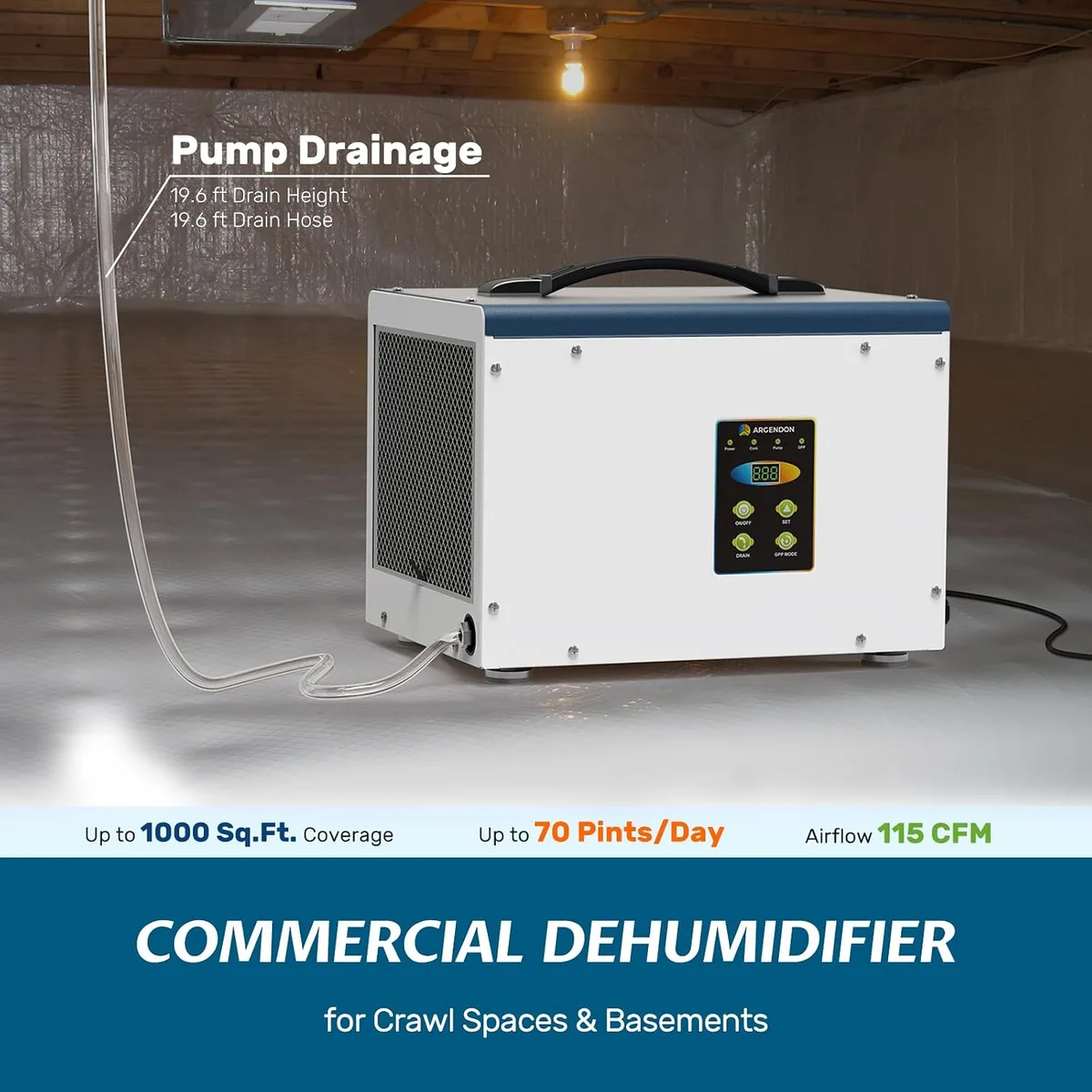
Image source: Bing (Web (fair-use with source credit))
Quick Answer
Yes, a dehumidifier can pump water uphill. But only if it has a condensate pump or you add one. Gravity-drain models cannot push water up.
Built-in pumps handle 15 to 20 feet of vertical lift. External pumps can push even higher. Check your unit’s specs before you buy hose or start routing.
How a Dehumidifier Pump Actually Works: Lift Height vs. Gravity Drain
Most dehumidifiers come in two drainage configurations: gravity drain and pump-equipped. The difference is simple but critical.
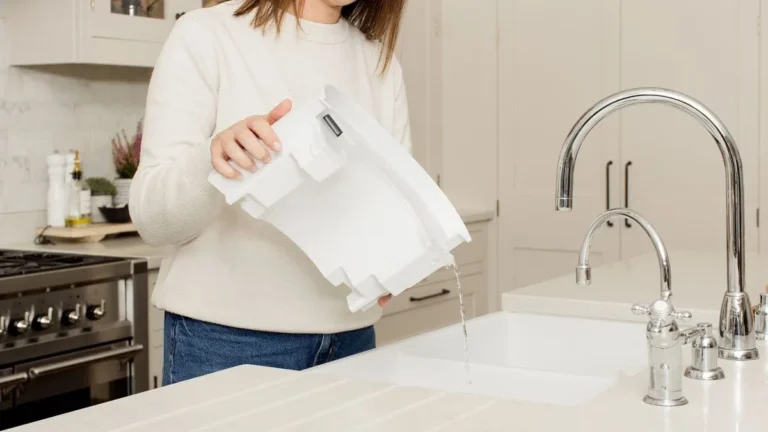
A gravity-drain model has a hose outlet at the bottom of the unit. Water flows out passively, like water draining from a bucket with a hole near the bottom. The hose must slope downward continuously.
If the hose ever rises above the outlet, water stops flowing. If it rises and then drops, you get an air lock. The unit will either shut off on its full bucket sensor or leak.
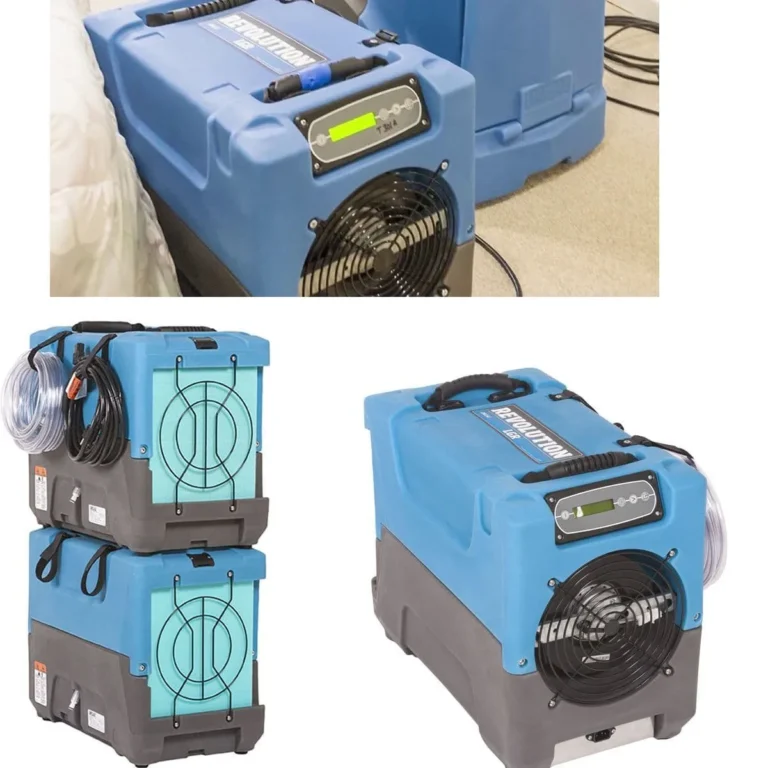
A pump-equipped dehumidifier has a small motorized pump inside the unit. It collects condensate in a small internal reservoir, then activates periodically to push the water through the discharge hose. The pump creates enough pressure to lift water vertically.
You can run the hose up a wall, across a ceiling joist, and down into a sink. The pump handles the lift.
The key spec is the pump’s maximum lift height. Most residential dehumidifiers with integrated pumps list a vertical lift of 15 to 20 feet. Some commercial or industrial units go higher.
The lift height is measured from the dehumidifier’s pump outlet to the highest point the hose reaches, not the drain point itself. If the hose goes up 10 feet, then runs horizontally 20 feet, and then drops into a drain, the pump only has to lift 10 feet.
Horizontal distance also matters. Pump specs usually list a maximum horizontal run separately. Gravity plays almost no role in horizontal movement once the pump is pushing.
Friction and hose diameter are the limiting factors. A typical 1/4-inch or 3/8-inch hose can run 25 to 50 feet horizontally before flow drops off noticeably.
If you’re still deciding which type to buy, our best dehumidifier guide breaks down which models include a built-in pump.
The Decision Tree: Does Your Setup Need to Go Uphill?
This is where you figure out which category you fall into. Read each branch and see which one matches your situation.
Branch 1: You Have a Floor Drain Below the Unit
If you have a floor drain, a sump pit, or any drain that sits lower than the dehumidifier, you don’t need a pump at all. A gravity drain is the simplest, cheapest, and most reliable option. Just run a hose from the unit’s drain outlet to the floor drain with a consistent downward slope.
No pump, no electricity, no moving parts to fail.
But if that floor drain is across the room and the hose would have to go up over a door threshold or a step, then you’re back in pump territory. Gravity only works if the hose never has to rise.
Branch 2: You Want to Drain Into a Sink or Tub Above the Unit
This is the most common scenario for people asking about uphill pumping. The dehumidifier is in the basement. The nearest drain is a laundry sink, a utility tub, or a floor drain that’s actually higher than the unit.
You need a pump. Either your dehumidifier has one built in, or you buy an external condensate pump. Measure the vertical distance from the dehumidifier’s pump outlet to the rim of the sink or tub.
That’s your lift height. If it’s under 15 feet, most built-in pumps will handle it. If it’s more than 15 feet, or if you’re unsure, an external pump is the safer bet.
Branch 3: You Have No Drain Nearby at All
If you’re in a finished basement with no floor drain, no sink, and no window that opens, you have two options: run a hose up to the nearest drain (which means uphill pumping) or keep using the bucket. The bucket is simple but tedious. You’ll be emptying it every day during humid months.
For uphill routing, you’ll need to identify the closest drain. It could be a bathroom sink on the first floor, a washing machine standpipe, or even a toilet vent pipe (though that’s a more advanced installation). Measure the vertical distance from the dehumidifier to that drain.
Also measure the horizontal distance. Then check the pump specs to make sure both fall within the unit’s capacity. For basement-specific advice, see our best dehumidifier for basement guide.
Step-by-Step: Setting Up Uphill Drainage Without Leaks
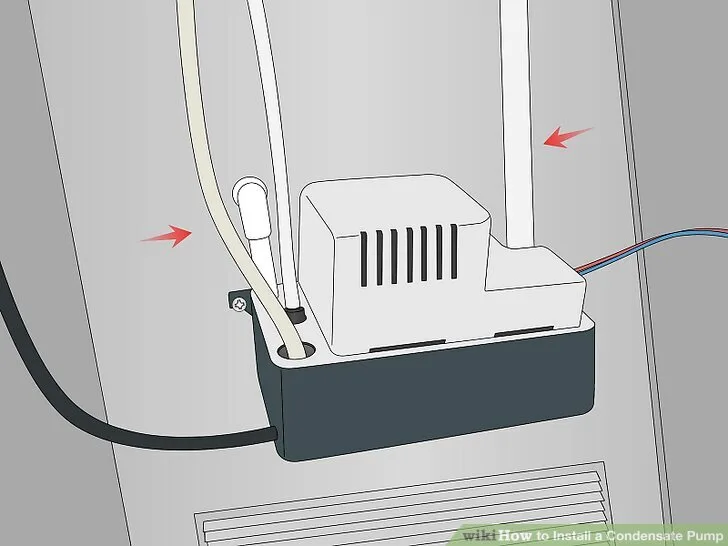
Image source: Bing (Web (fair-use with source credit))
Once you’ve confirmed your pump can handle the lift, setting it up is straightforward. Here’s the process.
Measure everything first. You need three numbers: the vertical rise from the pump outlet to the highest point of the hose, the horizontal distance from the unit to the drain, and the total hose length. Buy hose that’s slightly longer than the total route so you have slack for adjustments.
Choose the right hose. Most dehumidifiers use 1/4-inch or 3/8-inch ID tubing. Check your unit’s manual. If you’re adding an external pump, it will specify the hose size.
Vinyl or polyethylene tubing is standard. Clear tubing lets you see if water is flowing, which is helpful for troubleshooting.
Route the hose upward. Secure the hose so it doesn’t sag. Sagging sections create low points where water can pool and eventually block the flow. Use cable clips, adhesive hooks, or zip ties to hold the hose against the wall or ceiling joists.
Keep the path as straight as possible. Every bend adds friction.
Install a check valve if your pump doesn’t have one built in. A check valve allows water to flow only one direction: away from the pump. Without it, water in the hose can drain back into the unit when the pump shuts off, causing the pump to cycle on and off repeatedly. Most built-in pumps include a check valve.
External pump kits usually include one.
Test the system before you walk away. Fill the dehumidifier’s bucket with water manually or let the unit run for a few hours. Watch the pump cycle on and off. Listen for unusual noises.
Check for leaks at every connection. If the pump runs continuously or doesn’t seem to push water, you may have an air lock or a clog.
Common Mistakes That Cause Pump Failures and Water Backups

Image source: Bing (Web (fair-use with source credit))
Even with the right pump, things can go wrong. Here are the most common issues and how to avoid them.
Exceeding the pump’s lift height. This is the number one mistake. People assume a pump can push water as high as they need, but every pump has a limit. If the vertical rise exceeds the spec, the pump will run but move very little water.
It may overheat, cycle on and off rapidly, or fail entirely. Measure before you install.
Kinked or crushed hose. A sharp bend or a hose pinched behind a piece of furniture will block flow. The pump works against a closed loop, which can burn it out. Use a hose with a thicker wall if you’re routing it in tight spaces.
Avoid running the hose under heavy objects.
No check valve. As mentioned earlier, a missing check valve allows backflow. The pump empties the hose, shuts off, and then water flows back into the unit. The pump runs again.
This cycle wastes energy and wears out the pump quickly. Install a check valve if your system doesn’t have one.
Clogged discharge line. Condensate water is distilled but not sterile. Dust, mold, and algae can grow inside the hose over time, especially in warm, humid conditions. Flush the line with a diluted vinegar solution every few months.
A clogged line can cause the pump to run continuously or fail to trip the float switch.
Pump air lock. Air gets trapped in the pump chamber or the discharge line, and the pump can’t build pressure. This often happens after the unit has been drained completely or after a power outage. Priming the pump by pouring a small amount of water into the reservoir usually clears the air lock.
Overlooking the float switch. The float switch tells the pump when to turn on and off. If the float gets stuck (often due to dust or debris), the pump may run dry or never turn on. Clean the float mechanism according to the manufacturer’s instructions.
Real Scenarios: Finished Basements, Crawl Spaces, and Utility Rooms
Every home is different. But the same three setups keep showing up in installation reports. Here is how uphill pumping works in each one.
Finished basement with a bathroom above. This is the most common request. The dehumidifier sits in the basement. The nearest drain is a bathroom sink on the first floor.
The vertical rise is usually 8 to 12 feet. A built-in pump handles it easily. Run the hose up through a small hole in the floor behind the vanity.
Secure it with a grommet to prevent wear. Connect to the sink drain tailpiece with a standard adapter. Aggregate user feedback shows this setup works reliably for years with minimal maintenance.
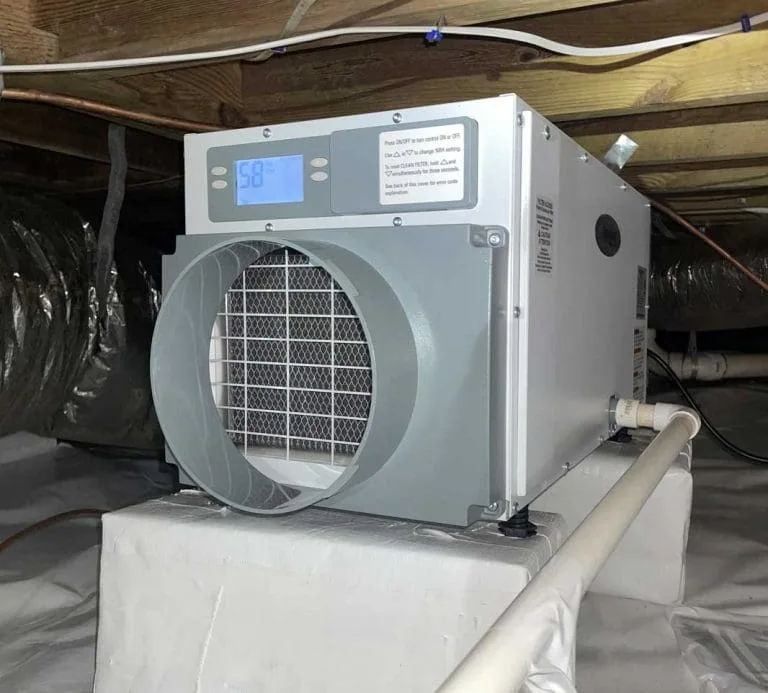
Crawl space draining to outside grade. Crawl spaces are tight. You cannot use a gravity drain if the ground slopes toward the house. A pump lets you run the discharge hose up through a crawl space vent and out to the yard.
Keep the hose end at least 10 feet from the foundation. Make sure the outlet is lower than the pump can push. Most external condensate pumps handle this easily.
The bigger challenge is keeping the hose from freezing in winter. Insulate it or disconnect it during cold months.
Utility room with no floor drain. Many utility rooms have a washing machine standpipe. That standpipe is a perfect drain target. The dehumidifier hose can tie into the washing machine drain line with a Y fitting.
The vertical rise to the standpipe inlet is usually 3 to 4 feet. That is well within any pump spec. Just install a check valve so wash water does not flow back into the dehumidifier.
Verified buyer reports indicate this is one of the simplest pump installations.
What about a basement window drain? This works well if the window is above ground level. The hose goes up to the window sill, exits through a small gap, and drops down the outside wall. Make sure the outdoor end is below the sill.
A high outdoor outlet can cause siphoning issues. Use a screened vent cap to keep insects out of the hose.
Check your local energy efficiency guidance for dehumidifier sizing and usage. The U.S. Department of Energy has a solid overview of dehumidifier basics.
Frequently Asked Questions
Can any dehumidifier pump water uphill?
No. Only dehumidifiers with a built-in condensate pump can push water uphill. Gravity-drain models require the hose to slope downward continuously.
Check your unit’s manual. If it lists a maximum lift height in feet, you have a pump. If it only mentions a drain hose connection, you do not.
How high can a dehumidifier pump water?
Most residential dehumidifiers with integrated pumps handle 15 to 20 feet of vertical lift. External condensate pumps can push 20 to 30 feet. The exact number is printed in the spec sheet.
Measure from the pump outlet to the highest point the hose reaches. That is your lift height.
What happens if the pump has to lift more than its rating?
The pump will run but move very little water. It may cycle on and off rapidly. Over time, the motor can overheat and fail.
The float switch may keep the pump running continuously. Always stay within the manufacturer’s rated lift height. If you need more height, buy an external pump with a higher rating.
Can I add an external pump to a gravity-drain dehumidifier?
Yes. You can place an external condensate pump next to the dehumidifier. Run the gravity drain hose into the external pump’s reservoir.
Then run the pump’s discharge hose to your uphill drain. This is a common solution for older units or for situations where the built-in pump is not strong enough.
Do I need a special hose for uphill drainage?
Standard 1/4-inch or 3/8-inch vinyl tubing works for most installations. Use a thicker wall if you are routing through tight spaces or near sharp edges. Do not use garden hose.
Garden hose has a larger diameter that reduces pump pressure and can cause air locks.
How often should I clean the pump and discharge line?
Clean the pump inlet filter every month during heavy use. Flush the discharge line with a diluted vinegar solution every three months. Algae and mold can build up inside the hose.
A clogged line is the most common cause of pump failure in humid climates.