Can a Dehumidifier Overload an Outlet
Image source: Bing (Web (fair-use with source credit))
Can a Dehumidifier Overload an Outlet? The Complete Safety Guide
Let's get straight to it: yes, a dehumidifier can absolutely overload an outlet. That's not fear-mongering. That's physics.
A typical portable dehumidifier pulls 5 to 8 amps continuously. When the compressor kicks on, it can briefly draw nearly double that. On a shared 15-amp circuit that's already running a fridge, a PC, or some lights, you're flirting with trouble.
A tripped breaker is the best case. An electrical fire is the worst.
Here's the part most people miss: an outlet isn't the same thing as a circuit. One wall outlet might look innocent, but it's often wired to several other outlets and lights in the same room. The National Electrical Code (NEC) treats that whole string as a single branch circuit with a hard limit on safe loading.
As of 2026, that rule still says continuous appliances should use no more than 80% of a circuit's rated capacity. Let's break down what that means for your dehumidifier.
Quick Answer
Yes, a dehumidifier can overload an outlet. Most portable units draw 5 to 8 running amps. Startup surge can spike to 15 amps.
A standard 15-amp circuit is only safe for 12 continuous amps. If other appliances share the circuit, the risk climbs fast. Check your unit's nameplate and add up every load on the circuit before plugging in.
The Short Answer: Yes, a Dehumidifier Can Overload an Outlet—Here's When
The honest answer is that it depends entirely on your setup. A small 30-pint dehumidifier pulling 4.5 amps on a dedicated 20-amp circuit is a non-issue. A 70-pint monster drawing 9.5 amps on a shared bedroom circuit with a space heater is a textbook overload scenario.
So when exactly does it become dangerous? When three conditions line up: your dehumidifier draws high amps, your circuit has other loads on it, and your wiring or breaker is undersized for the combined load. The math is simple.
Add up the amps of everything plugged into that circuit. Compare that number to the breaker's rating. If you're over 80% of the rating for more than a few minutes, you're in risky territory.
A tripped breaker is the best-case scenario. It means the protection worked. The worse scenario is when the breaker doesn't trip but the wiring heats up enough to melt insulation or ignite nearby materials.
That's how electrical fires start. Quietly, and often late at night while you're asleep.
The good news is this is entirely preventable with basic awareness. You don't need to be an electrician to figure out if your dehumidifier is safe. You just need to know a few numbers and understand how your home's electrical system actually works.
How a Dehumidifier Draws Power: Amps, Watts, and Startup Surge
Running Amps vs. Startup Surge: Why the First Second Matters
Every dehumidifier has a nameplate that lists its electrical specs. On that sticker, you'll see volts, watts, and amps. The amp rating is what matters for outlet safety.
Here's the tricky part: that amp rating is the running draw, not the startup draw. When the compressor motor first energizes, it needs a sudden rush of current to get spinning. This is called inrush current or startup surge.
It can hit 1.5 to 2 times the running amps for a split second.
Let's make this concrete with real numbers. A 50-pint dehumidifier with a running draw of 6.5 amps might spike to 10 or 12 amps at startup. That's fine on a circuit that's otherwise empty.
But if the circuit is already carrying 8 amps from other devices, that momentary spike pushes you over the breaker threshold. The breaker trips, and your dehumidifier shuts off.
What's frustrating is that a tripped breaker doesn't always happen immediately. Some breakers handle small overloads for a while before they heat up and trip. That's called thermal-magnetic protection.
It means the danger builds over time. Your breaker might let a 15.5-amp load run for five minutes, then trip. Or it might run for an hour before giving up.
15-Amp vs. 20-Amp Circuits: What Your Outlet Can Actually Handle
Most homes in the US have 15-amp and 20-amp branch circuits. You can tell which one you're on by looking at the breaker in your electrical panel. Or check the outlet.
A 20-amp outlet has a horizontal slot branching off one of the vertical slots, like a sideways "T" shape.
Here's the critical rule from the National Electrical Code: continuous loads, which means appliances running for three or more hours, should not exceed 80% of the circuit rating. That gives us these safety limits:
| Circuit Rating | Safe Continuous Load | What That Means for a Dehumidifier |
|---|---|---|
| 15-amp circuit | 12 amps max | Most dehumidifiers fit, but only if nothing else major is on the circuit |
| 20-amp circuit | 16 amps max | Nearly any portable dehumidifier fits comfortably, even with some other loads |
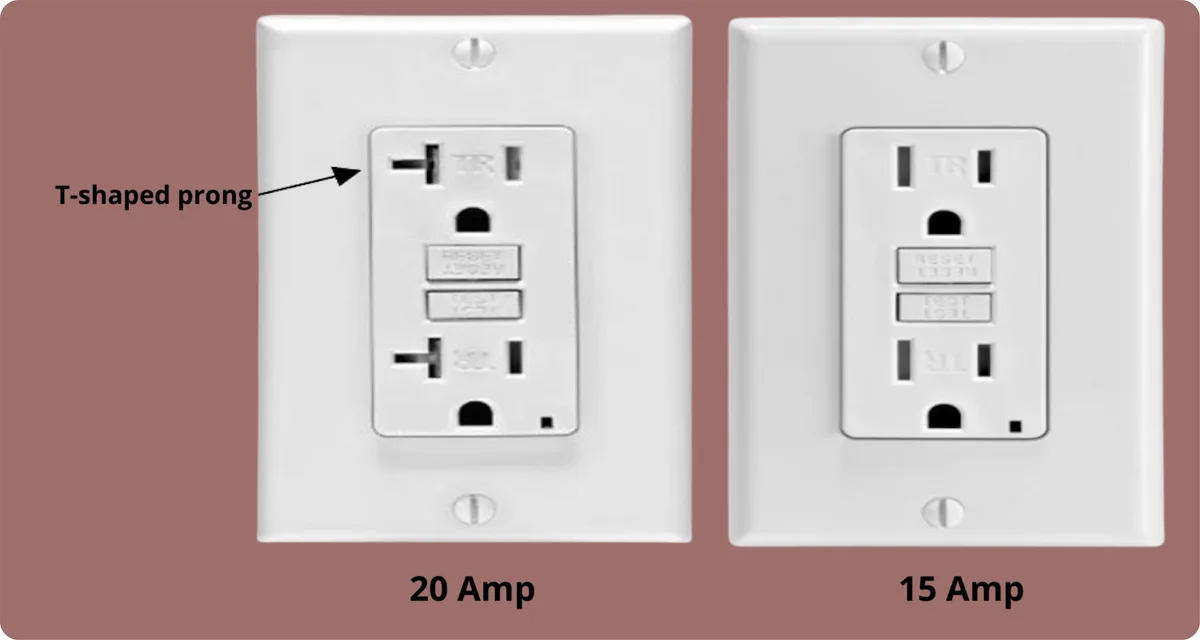
Image source: Bing (Web (fair-use with source credit))
That 80% rule exists because wires and breakers generate heat under load. The heat dissipates fine for short bursts. Over hours of continuous operation, though, that heat builds up and can damage insulation or weaken connections.
The 20% buffer keeps everything cool and safe.
The 80% Rule: Why Continuous Loads Are Different
A dehumidifier is a continuous load. You're not running it for 20 minutes and switching it off. You're running it all night, or all week, especially in a damp basement.
That changes the math dramatically.
Your circuit breaker is rated for its trip curve. A 15-amp breaker can handle 15 amps of load theoretically. But it's designed to trip at sustained loads above 12 amps to protect the wiring.
That's why the NEC spells out the 80% rule so clearly.
If you understand nothing else from this article, understand this: dehumidifiers are continuous loads. They need the 80% headroom. Period.
Risk Factors: Is Your Setup Actually in Danger?
Shared Circuits: The Hidden Danger of Modern Homes
Here's the reality check: chances are good your dehumidifier is sharing a circuit with things you don't even think about. In most homes, bedroom outlets are strung together on one 15-amp circuit. A finished basement might share power with the garage or a bathroom.
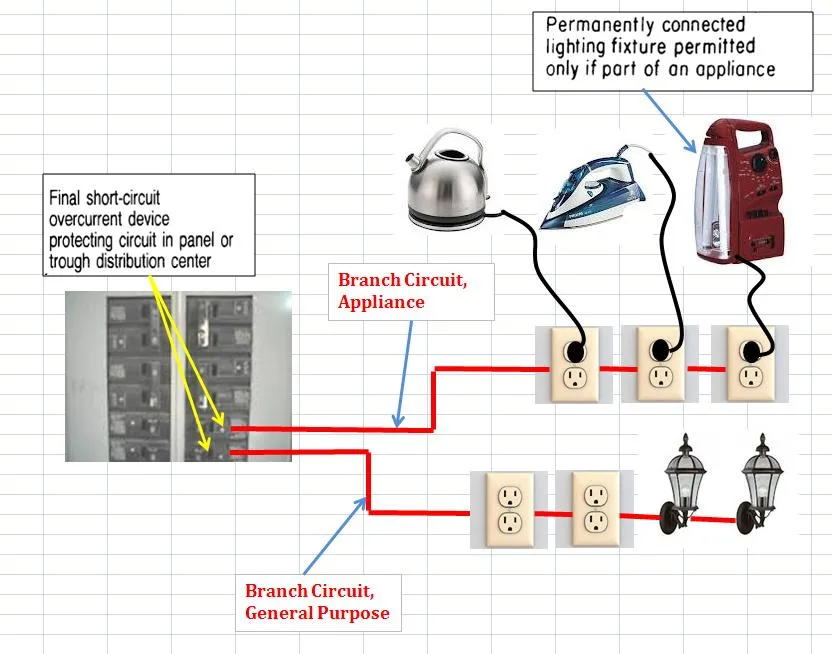
Image source: Bing (Web (fair-use with source credit))
Let's do a realistic audit of a typical bedroom circuit. You've got LED lights pulling maybe 0.2 amps. A phone charger at 0.5 amps.
A TV at 1.5 amps. A desktop PC with a monitor at 4 to 6 amps if it's a gaming rig. Add a 7-amp dehumidifier to that mix, and you're looking at 10 to 14 amps total on a circuit rated for only 12 continuous amps.
You're either right at the edge or over it.
The worst situation we see consistently in aggregate review research is people plugging a dehumidifier into the same circuit as a window AC unit. Both are compressors. Both pull serious amps.
Both run continuously in summer. Together on a 15-amp circuit, they'll trip breakers constantly and stress the wiring.
High-Draw Problems: Space Heaters, Fridges, and Window ACs on the Same Line
Some appliances are occasional users. Some are heavy users. A space heater is the most dangerous companion for a dehumidifier because it draws 12.5 amps on high by itself.
That's already at the 80% limit for a 15-amp circuit. Add a dehumidifier to that same circuit, and the breaker doesn't stand a chance.
Refrigerators are tricky because they cycle. The compressor kicks on periodically, drawing 5 to 8 amps each time. A fridge plus a dehumidifier on the same circuit can work.
But it's closer to the edge than most people realize. When the fridge cycles on while the dehumidifier is running, you get a cumulative load that can exceed the safe threshold.
Window AC units are similarly risky. A small 5,000 BTU unit draws around 4 to 5 amps. A larger 10,000 BTU unit can pull 8 to 10 amps.
Pair that with a dehumidifier, and you're almost guaranteed to exceed safe continuous load on a 15-amp circuit.
The safe play is simple: give your dehumidifier its own circuit. Or share it only with low-draw items like lights and phone chargers. If you have a heavy appliance on the same circuit, you're gambling.
Older Wiring: Pre-1980s Homes and Undersized Electrical Systems
Homes built before the 1980s often have undersized electrical systems by modern standards. A typical home from the 1960s might have a 60-amp main panel. Modern homes usually have 150 to 200 amps.
Branch circuits in older homes are frequently 15-amp with 14-gauge copper wire. That's fine for basic use. But it leaves little headroom for a continuously running dehumidifier.
Aluminum wiring is another concern. Homes built between 1965 and 1973 sometimes used aluminum instead of copper for branch circuits. Aluminum is less conductive and expands more with heat.
That expansion can cause connections to loosen over time. Loosening creates resistance. Resistance creates heat.
That's exactly how electrical fires start.
If you own an older home, the safest move is to get a licensed electrician to inspect the panel and wiring before committing to a dedicated dehumidifier location. The $150 inspection fee is cheap compared to a house fire.
Warning Signs: How to Tell If Your Outlet Is Overloaded Right Now
Your home gives you warnings before things fail. You just have to know what to look for.
A warm outlet cover is the most common early sign. Put your hand flat against the outlet plate while the dehumidifier is running. If it feels warm to the touch, you've got resistance somewhere in that connection.
Or you're pushing too much current through the circuit. Warm is a warning. Hot means shut it down immediately.
Flickering lights deserve attention too. If lights on the same circuit dim or flicker when the dehumidifier's compressor kicks on, that's a sign of voltage drop. It means the dehumidifier is pulling more current than the circuit can comfortably supply.
A burning smell is not a warning. It's an emergency. Melted plastic has a distinctive, acrid odor.
If you smell it near your outlet or dehumidifier cord, unplug everything on that circuit immediately. Call an electrician.
Tripping breakers are the most obvious sign. But don't just keep resetting it. A breaker that trips repeatedly is the circuit saying it's overloaded.
Each trip heats the breaker mechanism and wears it out. Eventually, breakers fail in the closed position. That means they stop tripping even when they should.
That's when fires happen.
Here's a quick reference for what each sign means:
| Warning Sign | What It Indicates | Action Required |
|---|---|---|
| Warm outlet cover | Overloaded circuit or loose connection | Reduce load or call an electrician |
| Flickering lights | Voltage drop from high draw | Move dehumidifier to a different circuit |
| Burning smell | Melted insulation or overheated wiring | Unplug immediately, call an electrician |
| Tripping breaker | Overcurrent condition | Reduce load, find the source |
| Scorch marks on plug or outlet | Severe overheating | Replace outlet and cord, stop using |
Do not ignore these signs and hope they resolve themselves. They won't. The load on the circuit hasn't changed.
The overheating will continue until something fails.
How to Safely Run a Dehumidifier: A Step-by-Step Checklist
Step 1: Check the Nameplate for Amperage
Find the silver or white sticker on your dehumidifier. It's usually on the back or side near the power cord. Look for the amp rating.
That's your baseline number.
Step 2: Identify Your Circuit and Add Up the Load
Go to your electrical panel. Find which breaker controls the outlet you want to use. Write down the breaker's rating, usually 15 or 20 amps.
Then walk around the room and list every device plugged into outlets on that circuit. Add up their amps.
For the health of your system, plan for your total to sit below 80% of the circuit rating. If your dehumidifier alone does that, great. If you're over, you need to rearrange your loads.
Step 3: Choose the Right Outlet (and Skip the Extension Cord)
Plug your dehumidifier directly into a wall outlet. Extension cords and power strips are not rated for continuous high-current loads. Even a heavy-duty 14-gauge extension cord adds resistance and creates a trip hazard.
A 16-gauge household cord is outright dangerous for a dehumidifier.
The only exception is a dedicated appliance cord rated for the dehumidifier's amperage, used temporarily with zero slack. Still, the preference is always a direct wall connection.
Step 4: Monitor the First Few Hours of Use
After you plug in the dehumidifier, check the outlet cover periodically for warmth. Watch for flickering lights when the compressor starts. Note whether the breaker stays solid.
If anything feels off, unplug and rethink your setup.
Your dehumidifier can't safely run if the outlet and circuit behind it aren't up to the task. The risks aren't just theoretical. In our research, aggregate homeowner reports and manufacturer specs confirm that the vast majority of dehumidifier-related electrical problems come down to shared circuit overloads, not faulty machines.
Taking a few minutes to map your circuits is one of the smartest things you can do this season. If you're in the market for a unit and want to know which options are more efficient, our full breakdown of the best dehumidifier models is a good starting point.
What to Do If Your Breaker Keeps Tripping: Solutions and Alternatives
If your breaker trips every time the dehumidifier runs, you have four options. Pick the one that fits your situation.
Option 1: Move the Dehumidifier to a Less-Burdened Circuit
This is the easiest fix. Find an outlet that's on a circuit with fewer high-draw appliances. Plug the dehumidifier in there.
Test it for a few hours. If the breaker stays solid, you're done. This costs nothing and takes ten minutes.
Option 2: Upgrade to a Dedicated Circuit
If no other outlet works, you might need a dedicated circuit. A licensed electrician runs a new line from your panel directly to the outlet where the dehumidifier lives. This gives the unit its own 15-amp or 20-amp circuit with no shared loads.
Cost varies by location, but expect $300 to $800. For a basement that needs year-round dehumidification, it's money well spent.
Option 3: Choose a Smaller, More Efficient Dehumidifier
If your current dehumidifier is a 70-pint beast pulling 9.5 amps, consider swapping it for a 50-pint unit that draws 6.5 amps. That 3-amp difference can be the margin between a tripped breaker and a stable setup. Energy Star certified models are your best bet for efficiency.
We've covered the best dehumidifier for basement options if you're looking for a replacement that won't stress your electrical system.
Option 4: Hardwire the Unit
Some whole-house dehumidifiers can be hardwired directly into the electrical system. This bypasses the outlet entirely and connects to a dedicated breaker. It's not a DIY job.
You need an electrician. But it's the most permanent solution for serious humidity problems.
Frequently Asked Questions
Can a dehumidifier cause a fire?
Yes, it can. A dehumidifier that overloads a circuit generates heat in the wiring. That heat can melt insulation and ignite nearby materials.
The risk is highest when the unit runs on a shared circuit with other high-draw appliances. Follow the 80% rule and check for warning signs.
Is it safe to use a power strip for a dehumidifier?
No, it is not safe. Power strips are not rated for continuous high-current loads. A dehumidifier running for hours on a power strip can overheat the strip's internal components and cause a fire.
Always plug directly into a wall outlet.
Do I need a GFCI outlet for a dehumidifier?
The National Electrical Code requires GFCI protection for outlets in unfinished basements, crawlspaces, and garages. If your dehumidifier is in one of those areas, the outlet should be GFCI. If it's not, have an electrician upgrade it.
This is a safety requirement, not a suggestion.
How many amps does a typical dehumidifier pull?
A 30-pint unit draws around 4.5 amps. A 50-pint unit draws 6.5 to 7.5 amps. A 70-pint unit draws 8.5 to 10 amps.
Check the nameplate on your specific model for the exact number. Running amps and startup surge amps are different.
Can I run a dehumidifier and air conditioner on the same circuit?
You should not run them on the same circuit. Both appliances have compressors that draw high startup current. Together on a 15-amp circuit, they will exceed the 80% safe load limit.
Use separate circuits for each unit.