Can a Hygrometer Detect Moisture
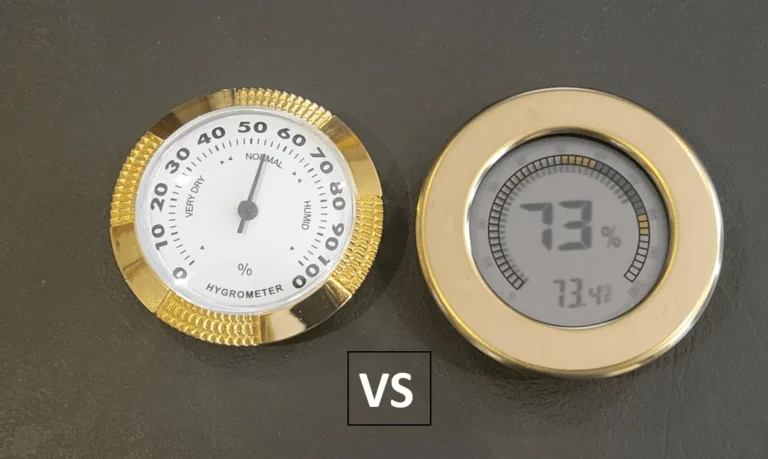
Can a hygrometer detect moisture? Yes, but only moisture in the air. It measures relative humidity, not water trapped inside a wall, floor, or ceiling.
That mix-up is where most of the confusion starts.
The EPA recommends keeping indoor relative humidity between 30 and 50 percent to prevent mold growth and structural damage. A hygrometer tells you if your air is in that safe zone. But if you are chasing a leak behind drywall or checking if lumber is dry enough to stain, you need a different tool entirely.
Let us sort out which situation you are in.
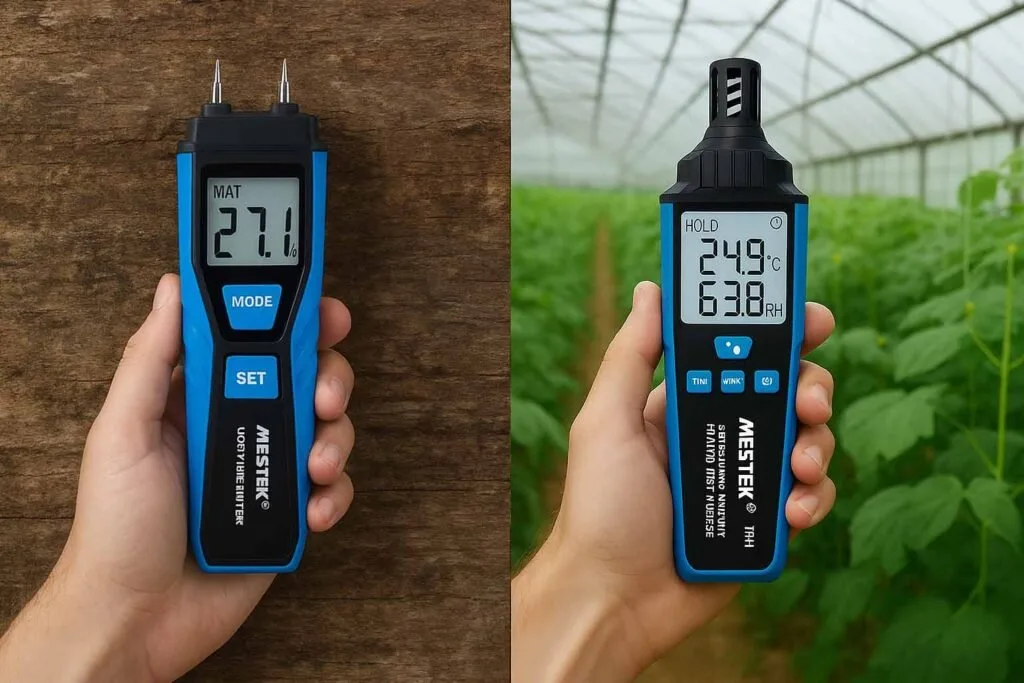
Image source: Bing (Web (fair-use with source credit))
Quick Answer
Yes, a hygrometer detects moisture in the air. It measures relative humidity, not liquid water. It cannot find water inside walls or wood.
For that, you need a moisture meter.
How a Hygrometer Actually Works (and What It Can't Do)
Here is the simple science. A hygrometer senses the amount of water vapor floating in the air. It does not touch the water itself.
It never makes contact with the damp spot behind your baseboard. It just reads the humidity of the air that passes over its sensor.
Most digital hygrometers use a capacitive sensor. Manufacturer specs show these sensors are small, accurate to about ±2-3 percent relative humidity, and respond within seconds to a few minutes. They work by measuring how the electrical capacitance of a thin polymer film changes as it absorbs or releases water vapor.
The sensor translates that change into a percentage reading on the display.
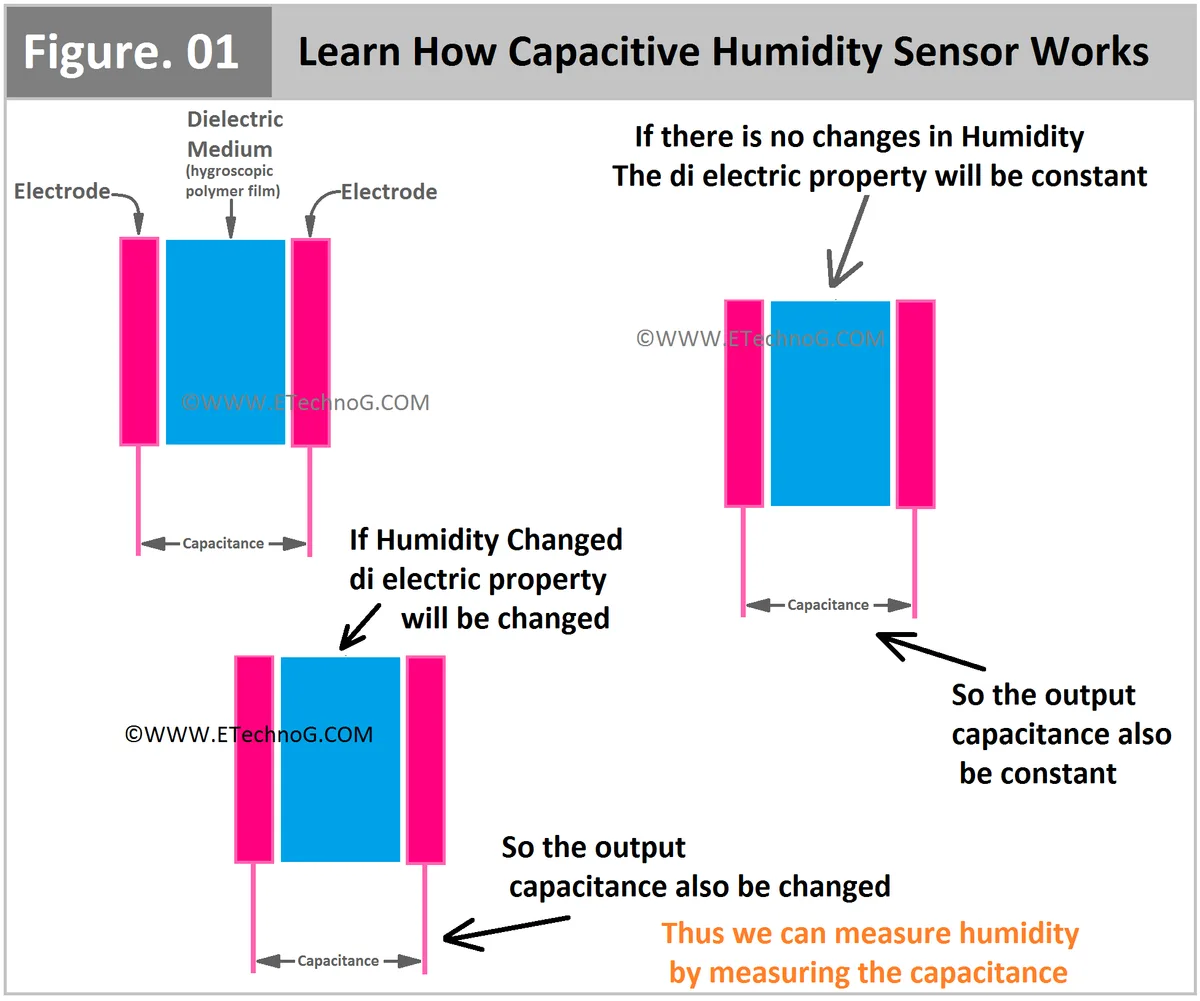
There are also resistive sensors and older mechanical hair-tension types. But capacitive sensors dominate the market as of 2026. They are cheap, reliable, and found in everything from $10 indoor monitors to professional HVAC diagnostic tools.
What a hygrometer cannot do:
- Detect liquid water inside a wall cavity
- Measure the moisture content of wood, concrete, or drywall
- Find a leak behind tile or under a floor
- Tell you if a surface is wet to the touch
That last point is critical. Aggregate reviews report that many homeowners buy a hygrometer because they see condensation on a window or feel dampness in a basement. They assume a high humidity reading confirms a wall leak.
It does not. It only confirms the air is humid. The source of that humidity could be a leak.
It could also be poor ventilation, a wet crawlspace, or simply a rainy week.
The table below summarizes the two most common sensor types:
| Sensor Type | How It Works | Typical Accuracy | Response Time | Best For |
|---|---|---|---|---|
| Capacitive | Polymer film changes capacitance with humidity | ±2-3% RH | 5-30 seconds | General indoor monitoring, HVAC |
| Resistive | Conductivity of a salt or ceramic element changes with humidity | ±3-5% RH | 30-60 seconds | Budget monitors, basic humidity checks |
The bottom line: use a hygrometer when you want to know about the air. Use it to track trends over time. Use it to decide if you need a dehumidifier or humidifier.
But do not use it as a leak detector. It simply is not built for that.
The Branching Question: What Kind of "Moisture" Are You Chasing?
This is where the decision tree kicks in. The right answer depends entirely on what you are actually trying to find. Let us walk through the three most common scenarios.
Branch 1: You're Checking Indoor Air Quality (Humidity)
You are in this branch if you want to know if your home feels too dry or too damp. Maybe you are getting nosebleeds in winter. Maybe you see condensation on windows in summer.
Maybe you are trying to keep a guitar or cigar humidor at the right level.
Use a hygrometer. This is exactly what it is for. Place it at room height, away from direct sunlight, vents, and exterior doors. Wait 15-30 minutes for a stable reading.
Compare it to the EPA-recommended range of 30-50 percent relative humidity. If it is consistently above 60 percent, you are in mold-friendly territory. If it is below 30 percent, the air is too dry for comfort and can damage wooden furniture and instruments.
What to do next:
- Above 60% RH: add ventilation, run a dehumidifier, or fix moisture sources
- Below 30% RH: use a humidifier, especially in bedrooms and living areas
- Between 30-50%: you are fine. Monitor seasonally.
Branch 2: You Think There's Water Inside a Wall, Floor, or Ceiling
You are in this branch if you saw a water stain on the ceiling, noticed a musty smell near a wall, or suspect a pipe leak behind drywall. Your instinct might be to grab a hygrometer and hold it near the discolored spot. Do not.
It will not tell you what you need to know.
A hygrometer is the wrong tool here. The air in the room might be dry even while water is actively soaking the insulation inside the wall. A high RH reading near the stain could be a clue, but it is not proof. Aggregate reviews of home inspection equipment show that pros use a pin-type moisture meter for this job.
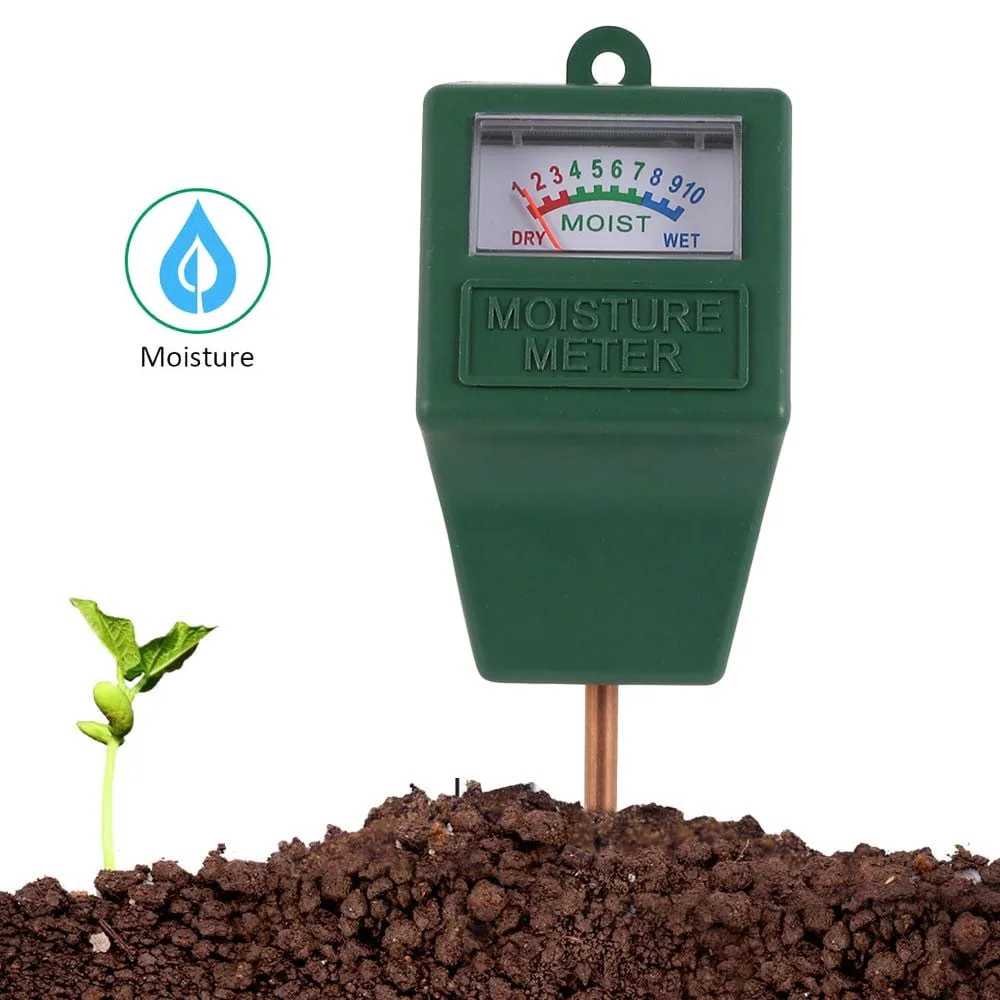
It drives two small probes into the drywall and measures the electrical resistance between them. Wet material conducts electricity better than dry material. The meter gives you a numerical reading that tells you if the wall is damp.
What to do next:
- If you have a hygrometer and it shows high RH near the stain, use a moisture meter to confirm
- If you do not have a moisture meter, look for other signs: peeling paint, soft drywall, a musty smell that intensifies when the room is closed up
- When in doubt, call a professional with a moisture meter and thermal imaging camera
Branch 3: You're Trying to Measure Moisture in Wood or Concrete
You are in this branch if you are a woodworker checking lumber before a project. Or a flooring contractor verifying that a concrete slab is dry enough for installation. Or a homeowner trying to figure out why deck boards are warping.
Again, a hygrometer will not help you. It measures the humidity of the air around the wood, not the moisture inside the wood fibers. The wood moisture content (MC) can be 15 percent even when the air RH is 40 percent. You need a moisture meter designed for the specific material.
Pin-type meters for wood and concrete. Pinless meters for scanning larger surfaces.
What to do next:
- For wood: use a pin-type meter calibrated for the species you are checking
- For concrete: use a pinless meter or a concrete moisture meter with a deep scanning mode
- For drywall or plaster: a pin-type meter with adjustable depth settings
The table below summarizes which tool fits each situation:
| Your Goal | Right Tool | Wrong Tool |
|---|---|---|
| Check indoor air comfort | Hygrometer | Moisture meter |
| Find a leak behind drywall | Pin-type moisture meter | Hygrometer |
| Test lumber before woodworking | Wood moisture meter | Hygrometer |
| Verify concrete slab dryness | Concrete moisture meter | Hygrometer |
| Monitor cigar humidor | Hygrometer | Moisture meter |
The Most Common Mistake and How to Catch It
The single biggest error people make is treating a hygrometer like a leak detector. They see a damp spot on the ceiling, walk over with a hygrometer, and breathe a sigh of relief when the reading is 45 percent. They think that means the wall is dry.
It does not. It means the air three feet away from the leak is dry. The water could still be sitting inside the ceiling cavity, slowly rotting the wood.
Here is the exact scenario that plays out in thousands of homes every year. A homeowner notices a small brown stain on the bathroom ceiling. They buy a digital hygrometer, hold it near the stain, and get a reading of 48 percent RH.
They think they are fine. Two months later, the stain is larger and the drywall is soft. The actual moisture content of the drywall was 20 percent or higher the whole time.
The hygrometer never caught it because it was measuring air, not material.
How to catch this mistake before it costs you:
- If you suspect a leak, do not rely on a hygrometer alone
- Hold a moisture meter against the surface. If the reading is above 12-15 percent for drywall, you have a problem
- Check the dew point. If the surface temperature of the wall is at or below the dew point, condensation will form even if the room RH seems normal. ASHRAE provides guidelines for balancing surface temperature and humidity to avoid condensation in buildings
- Use a hygrometer to track the room RH over time, but only as a supporting data point, not the primary diagnosis
A quick real-world example. A homeowner in a humid coastal climate ran a dehumidifier in the basement for three weeks. The hygrometer showed 52 percent RH. They thought the basement was dry.
But the carpet was still damp to the touch. A pin-type moisture meter showed the carpet pad at 30 percent moisture content. The hygrometer was measuring the air near the ceiling, well above the damp carpet.
The air was dry, but the materials were not. The homeowner needed to move the dehumidifier lower and run it longer.
The rule of thumb is simple: let the hygrometer tell you about the air. Let the moisture meter tell you about the materials. Never swap the two roles.
When to Use a Hygrometer vs. a Moisture Meter (Quick Decision Guide)
By now, you probably have a clear picture of how these tools differ. But let us make it dead simple so you can decide in about 15 seconds.
Use a hygrometer when:
- You want to know if the air in your home is too dry or too humid
- You are monitoring humidity in a greenhouse, grow room, or wine cellar
- You are trying to keep a musical instrument, antique furniture, or cigar collection in a stable environment
- You are checking if your HVAC system is maintaining proper humidity levels
- You are deciding whether to run a humidifier or dehumidifier
Use a moisture meter when:
- You see a water stain, blistering paint, or soft drywall
- You are renovating and need to know if a wall or floor is dry before painting or installing flooring
- You are a woodworker checking lumber for proper moisture content
- You are a flooring contractor verifying a concrete slab is ready for installation
- You are investigating a musty smell or suspected mold growth behind a wall
Use neither when:
- You have a visible pipe burst or standing water. Call a plumber and a remediation company immediately
- You suspect a hidden leak but have no visible signs. A thermal imaging camera is more effective than either tool for finding cold spots caused by evaporative cooling from a wet surface
The quickest decision branch of all: if you are asking "is the air wet", use a hygrometer. If you are asking "is the material wet", use a moisture meter. If you are asking both, use both.
They are complementary tools, not competitors.
Frequently Asked Questions
Can a hygrometer detect water in walls?
No. A hygrometer measures water vapor in the air, not liquid water inside building materials. If you suspect a leak behind drywall, use a pin-type moisture meter instead.
It drives probes into the surface and reads electrical resistance. Wet material conducts electricity better than dry material.
What is the difference between a hygrometer and a moisture meter?
A hygrometer measures relative humidity in the air. A moisture meter measures the moisture content of solid materials like wood, drywall, or concrete. They serve different purposes.
Use a hygrometer for air quality checks. Use a moisture meter for leak detection or material testing.
Can a hygrometer help find mold?
Indirectly. A hygrometer can tell you if your indoor humidity is consistently above 60 percent. That is the threshold where mold growth becomes likely.
But it cannot detect mold itself or find the specific damp spot where mold is growing. You still need a moisture meter for that.
How accurate are digital hygrometers?
Manufacturer specs indicate most digital hygrometers are accurate to within ±2-3 percent relative humidity. Higher-end models with capacitive sensors are more precise. Cheaper analog models can be off by ±5 percent or more.
You can test accuracy with a simple salt test at home.
Can I use a hygrometer to check if wood is dry?
No. A hygrometer measures the air around the wood, not the moisture inside the wood fibers. Wood moisture content can be 15 percent even when the air is at 40 percent RH.
Use a wood moisture meter with calibrated settings for the species you are checking.