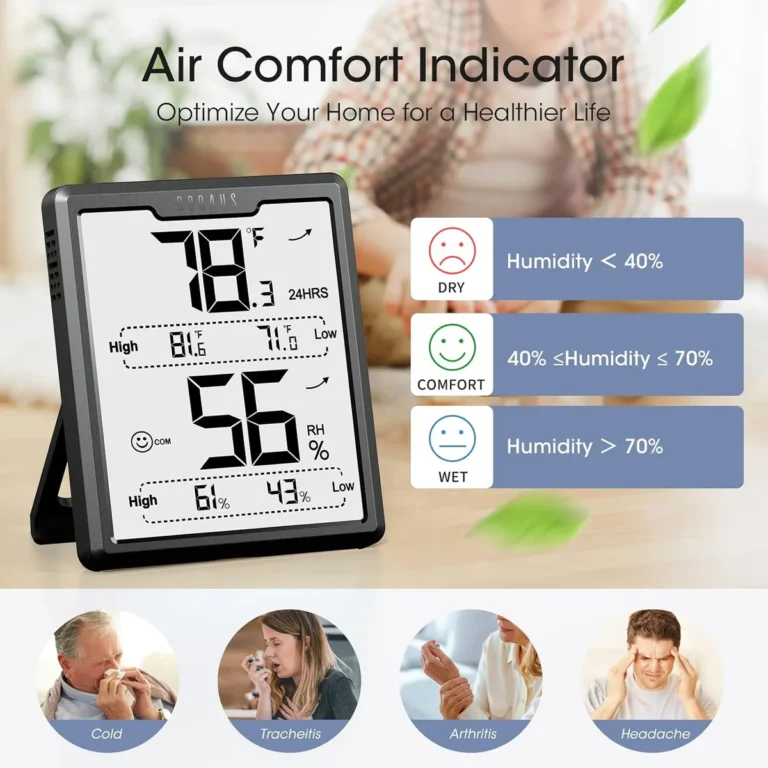
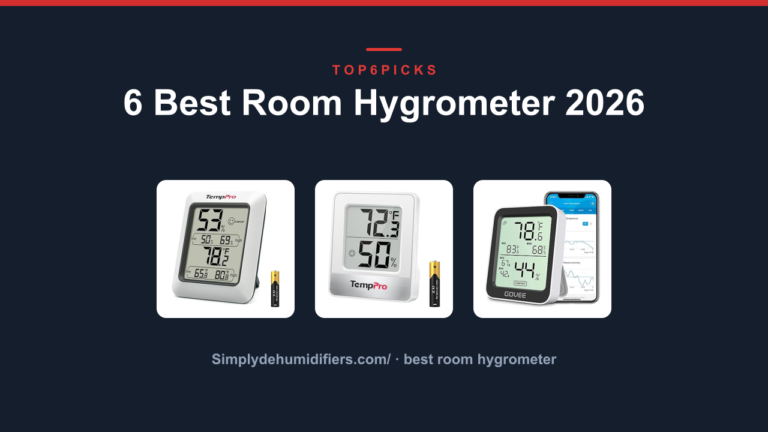
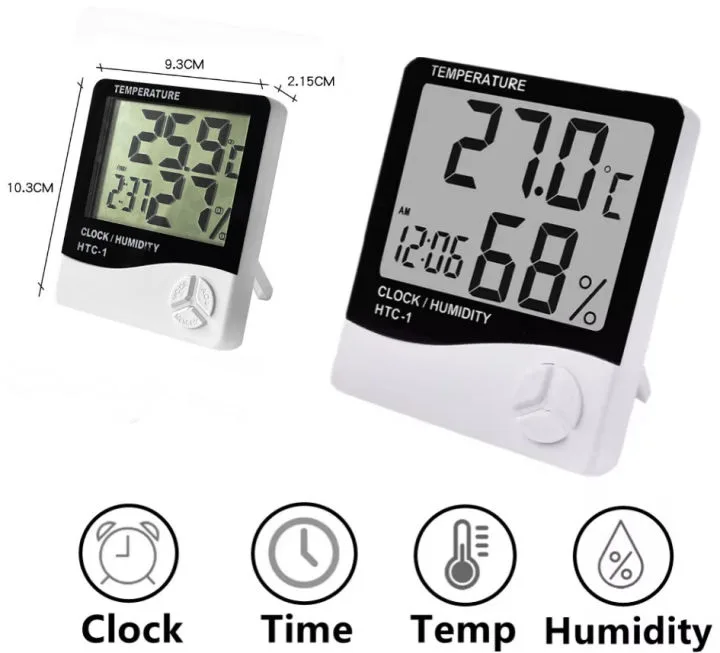
How Many Hygrometers Do You Need in a House
How many hygrometers do you need in a house? The honest answer is: it depends on your house, not your room count. A single sensor tells you about one corner of one room.
Your home's distinct climate zones are what really determine the number.
The EPA recommends keeping indoor relative humidity in the 30 to 50 percent range for comfort and to limit mold and dust mites. That target matters because indoor humidity isn't uniform. A finished basement, a second-floor bedroom, and a bathroom right after a hot shower can easily differ by 10 to 15 percentage points.
So before you buy a single sensor, let's map the zones that matter.

Image source: Bing (Web (fair-use with source credit))
Quick Answer: It Depends on Your House (Not Your Room Count)
How many hygrometers do you need in a house? Most homes need one to three, not one per room. Start with one per distinct climate zone: basement, main living area, and bedroom.
Add sensors for problem spots like a bathroom or attic if humidity swings there. Multi-story homes typically need one per floor.
Why One Hygrometer Is Never Enough: The Zone Problem
A single hygrometer gives you one data point. The air in your living room isn't the same as the air in your basement. It's not even the same as the air across the hall.
Humidity shifts with temperature, air movement, vents, and moisture sources like showers, cooking, and laundry.
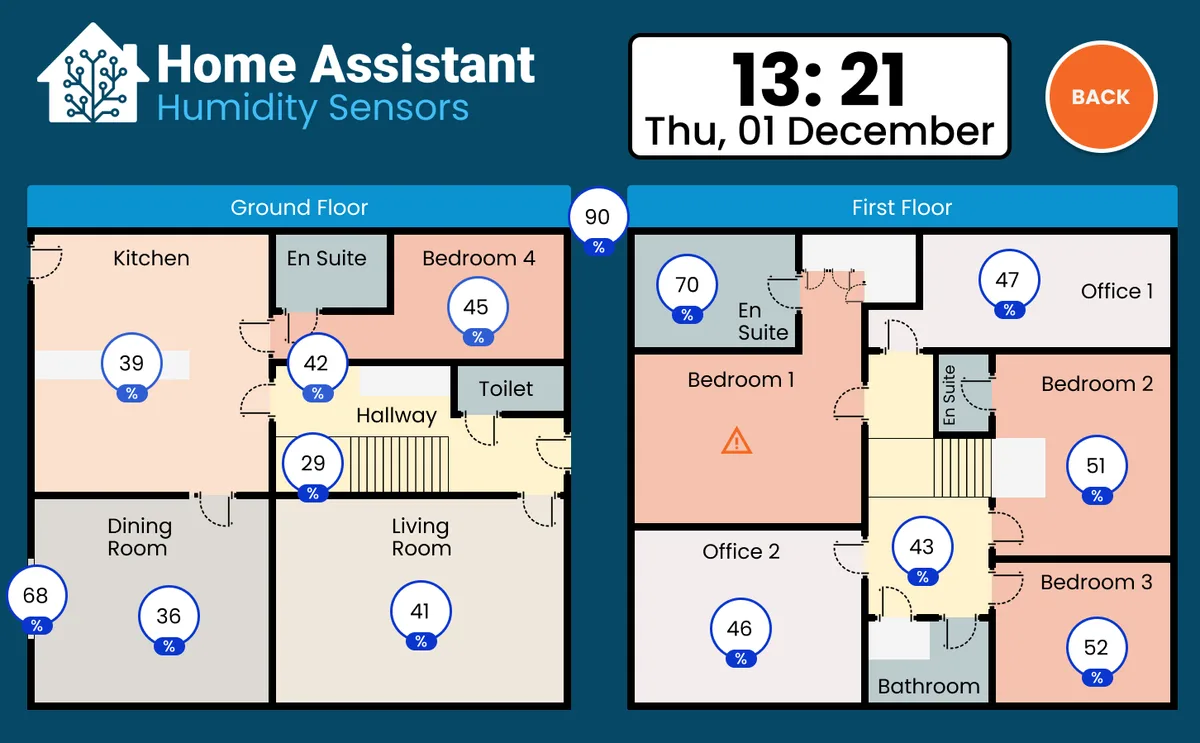
Image source: Bing (Web (fair-use with source credit))
In our research, we found that two rooms in the same house can easily sit 10 to 15 percentage points apart. That's the gap between comfortable and mold-prone. If you track only one spot, you're guessing about all the others.
Think in zones, not rooms. A zone is any area that's thermally or physically separated from the rest of the house. That includes separate floors, a below-grade basement, a finished attic, and rooms with their own HVAC runs.
If you can close a door between two spaces, treat them as separate zones.
The if/then logic goes like this. If you have a finished basement, expect it to run more humid than the main floor in summer. If you have an upstairs bedroom, warm air rising makes it drier in winter.
That's the stack effect, and it gets stronger in cold climates.
If you have a bathroom, every shower spikes humidity hard, then fades. If you have open-plan living, one sensor can reasonably cover it because the air mixes freely.
A thermostat's built-in sensor won't save you. It reads air returning to the HVAC unit, which is a blend from everywhere. That's an average, not a zone-by-zone picture.
As of 2026, even smart thermostats only sample one return-air point, so they miss the same microclimates.
The real problem is unseen damage. Mold, musty odors, warping wood, and condensation on windows all start in spot humidity, not average humidity. Per the EPA, keeping relative humidity below 60 percent indoors is critical to preventing mold growth.
That guidance only works if you're actually measuring where the mold is forming.
How to Map Your Home's Climate Zones (Step-by-Step Decision Tree)
Mapping your home's zones takes 10 minutes. No tools needed, just a notepad or your phone. Walk through each room and ask three questions: Is it on a different floor?
Does it have a moisture source? Does it have a separate air path?
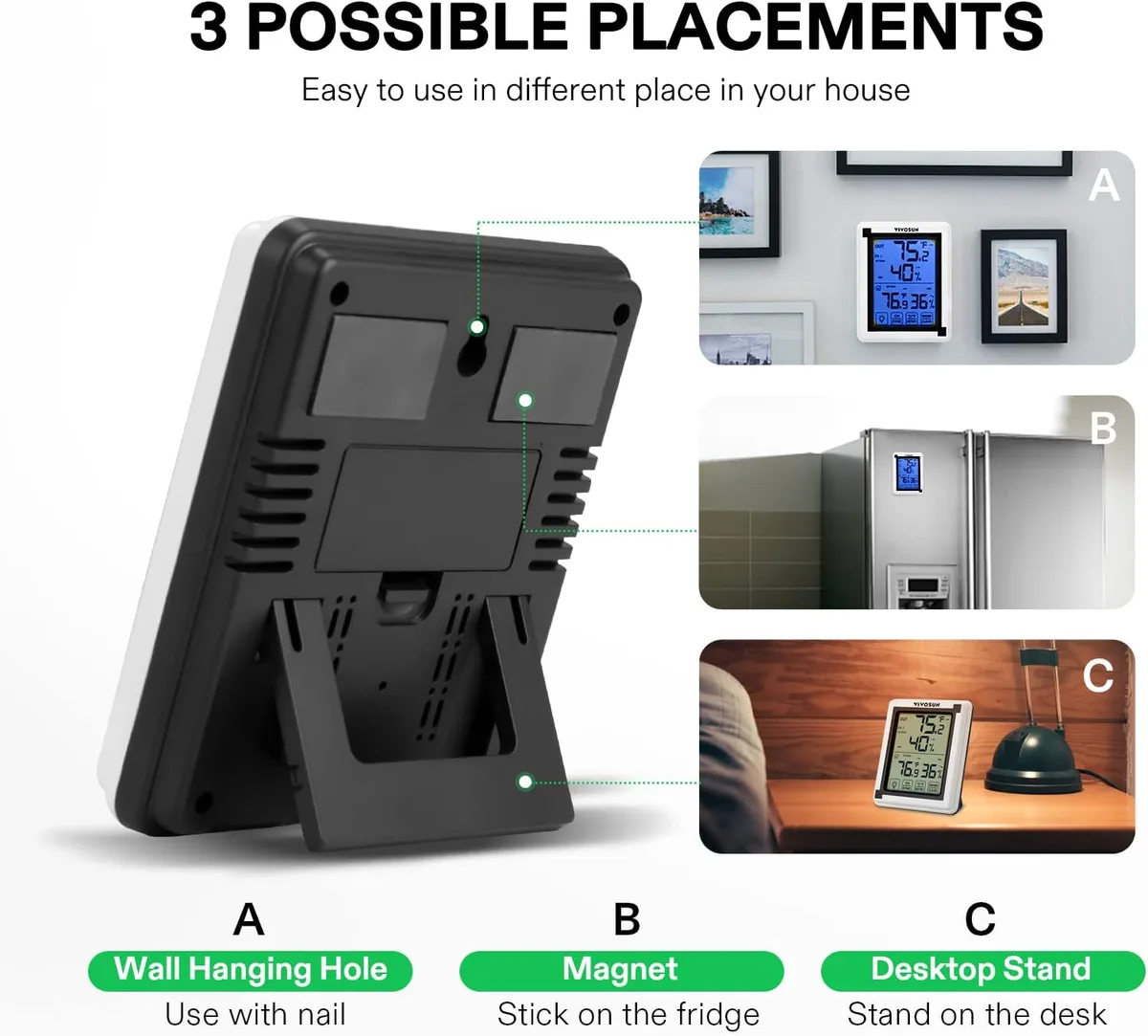
Image source: Bing (Web (fair-use with source credit))
Step 1: Identify Your Distinct Zones
Start with the obvious splits. Basement, main floor, upper floor, finished attic. Then add spaces with moisture sources: bathrooms, kitchen, laundry room, plant rooms, anywhere with an aquarium or humidifier.
Finally, note thermal separations like a door that stays closed, a hallway with no airflow, or a long corridor between rooms.
If the list feels long, that's normal. A typical house ends up with three to six zones.
Step 2: Decide Based on Floor Plan, HVAC, and Problem Areas
This is where the if/then part kicks in.
If you have an open floor plan, one hygrometer can cover the main living area, as long as no door separates the kitchen from the living room.
If you have a multi-story home, add one per floor. The temperature difference between upstairs and downstairs alone justifies it.
If your HVAC has multiple zones with separate thermostats, mirror that setup. One sensor per HVAC zone catches imbalances.
If you've seen condensation on windows, a musty smell, or warped wood, add a sensor there before anywhere else. That's a problem site, and it needs its own data. For reference, ASHRAE Standard 55 suggests keeping indoor humidity between 30 and 60 percent for occupant comfort.
Step 3: Place Each Hygrometer Correctly
Placement makes or breaks the reading. Get it wrong and a great hygrometer will lie to you all day.
Rule of thumb: five feet off the floor, on an interior wall, away from direct sunlight, vents, doors, and windows. Don't put one in a corner where air sits still. Don't mount it above a radiator, a fish tank, or a stove.
And don't put it inside a bathroom where steam hits the sensor directly. Just outside the door works better.
If you're using a digital hygrometer, check the manual for calibration instructions. Some units need a simple salt test every six months. Most smart hygrometers self-report accuracy issues in the app, so keep an eye on notifications.
Common Mistakes That Ruin Your Readings
Hanging a hygrometer too close to a supply vent. When the HVAC kicks on, you're measuring air blown out of a duct, not the room. You'll see wildly skewed readings and chase problems that don't exist.
Picking the hallway outside the bathroom. Steam drifts out after every shower, so the sensor reads a mini climate that lasts minutes. Better spot: the bedroom or living room.
Using a cheap analog hygrometer. Many inexpensive dial-type units drift by 10 percent or more within a year. That's useless when you're trying to stay in a 30 to 50 percent band.
If you go analog, plan on a salt-calibration test every two to three months.
Trusting the thermostat again. It samples return air, which is a mix from the whole house. It can't tell you that the basement is damp or the nursery is dry.
Ignoring seasonal swings. Winter air is naturally drier, summer air naturally more humid. If you set one target and forget it, you'll run a humidifier all summer and a dehumidifier all winter.
Re-assess readings every few months instead.
Moving sensors around. If you're tracking trends, the hygrometer needs to stay in one place for at least a few days, ideally weeks. A sensor that travels between rooms never builds a baseline.
Checking a single moment, not a trend. One reading at noon tells you almost nothing. Humidity swings through the day, especially around cooking and showers.
Look at 24-hour patterns from your app or logbook before making decisions.
Forgetting the dead zone. Rooms you rarely visit still get monitored, or they don't, and that's how mold starts. If you have a spare bedroom, a hobby room, or an attic, don't skip it.
Real Scenarios: How Many for Your House Type?
To make the decision concrete, here's how the math works out for common home layouts.
| Home Type | Recommended Sensors | Why |
|---|---|---|
| Open-plan apartment, under 1,200 sq ft | 1 to 2 | One for the main living area, one for the bedroom. |
| Two-story house, ~2,000 sq ft | 3 | Main floor, upstairs landing, and one for the basement if you have one. |
| Three-story house or split-level | 4 | One per floor, plus one for a problem room like a bathroom or laundry. |
| Ranch or single-story with basement | 2 to 3 | Main living area, bedroom, and basement. |
| House with finished attic or bonus room | Add 1 | Attics and bonus rooms run hotter and more humid than the rest of the house. |
| Seasonal or vacation home | 2 to 3, plus remote monitoring | You want to watch it from away, so pick smart sensors with app alerts. |
| Multi-generational house with in-law suite | Add 1 per unit | A separate suite with its own entrance is its own climate zone. |
When in doubt, start with one sensor per floor. Live in the data for a week. If the readings across two zones sit within about 5 percent of each other, move one sensor elsewhere.
If they swing more, keep the sensor where it is.
Square footage matters less than separated zones. A 1,800-square-foot open loft can get away with one sensor. An 1,100-square-foot bungalow with a cellar, crawlspace, and sunroom might need three or four.
If you're using sensors to control a humidifier or dehumidifier, place one in the room the equipment serves. That gives the device a reference point close to where you actually want the condition.
Skip the attached garage unless it's a workshop. Temperature swings and car exhaust make readings unreliable. And if you have a smart home hub, one sensor per room works well, just remember more sensors means more batteries to swap.
Frequently Asked Questions
Do I need a hygrometer in every room?
No. One per distinct climate zone is plenty. Open-plan spaces share the same air, so a single sensor covers them.
Add separate units only for floors, closed-off rooms, basements, or spots with known moisture problems.
Where should I place a hygrometer in my house?
Five feet off the floor, on an interior wall, away from sunlight, vents, doors, and windows. Keep it out of corners where air sits still. Avoid placing it directly outside a bathroom or above a heat source.
Why do my hygrometers show different readings?
Different readings are normal. Humidity varies by floor, airflow, and moisture sources. A spread of 10 to 15 percent between zones is common and expected.
If two sensors in the same room disagree wildly, one may need calibration.
Do smart hygrometers need calibration?
Most factory-calibrated digital hygrometers don't need immediate calibration, but drift happens over time. Check the manual for calibration instructions. If you're unsure, run a salt test every six months.
That's a sealed container with a damp salt slurry. It should read about 75 percent relative humidity.
Can I rely on my thermostat's humidity sensor?
Not for zone-level decisions. A thermostat reads return air, which is a whole-house blend. It misses basement dampness, dry upstairs bedrooms, and bathroom spikes.
Use it for a rough average, but keep dedicated hygrometers where you actually need control.