What Humidity Should a Dehumidifier Be Set At
You've probably stared at the little dial or digital screen on your dehumidifier and wondered what number to punch in. What humidity should a dehumidifier be set at? It sounds like a simple question.
Get it wrong, though, and you'll end up with a musty basement or a bedroom that feels like a desert.
The truth is that one number doesn't fit every room, season, or home. ASHRAE standards still recommend 30% to 60% indoor relative humidity as of 2026, but most homes need a tighter target. In our research, the sweet spot for almost every situation sits around 50%.
That's your starting point.
Quick Answer
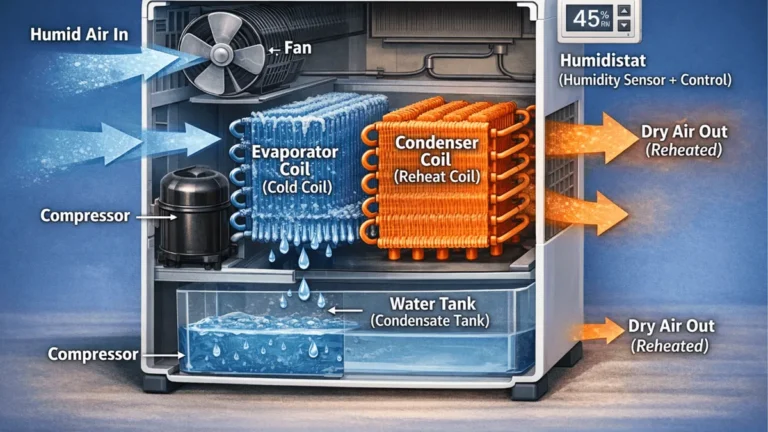
Set your dehumidifier to 50% relative humidity. It's the safest all-around target. It prevents mold and mildew growth.
It keeps dust mites in check. Adjust by 5% increments based on your room and season.

Image source: Bing (Web (fair-use with source credit))
Why the One-Size-Fits-All Humidity Setting Fails Most Homes
Most people think there's a magic number printed on the box. Forty-five percent. Fifty percent.
Fifty-five. Pick one, set it, and forget it. That's not how it works in real homes.
Your basement isn't your bedroom. Summer isn't winter. A house with poor insulation handles moisture differently than a modern, tightly sealed build.
One-size-fits-all fails because it ignores three variables: the room's purpose, the season, and the actual moisture load. A setting that keeps stored boxes dry in the basement might leave you waking up with a scratchy throat in the bedroom.
The most common mistake people make is setting the dial as low as it goes, hoping the room dries faster. It doesn't. It just makes the unit run harder, cycle more often, and sometimes freeze up the coils.
The EPA's mold guidance says relative humidity below 60% is the baseline for mold prevention. But the ideal target depends on your specific home conditions.
Think about what you're trying to achieve. In a basement, you're fighting musty smells and mold on stored items. In a bedroom, you want to sleep without a dry throat.
In a living room, you might just want to take the edge off summer humidity.
Each goal calls for a slightly different setting. And if your dehumidifier isn't sized right for the space, you won't hit your target no matter what number you choose. A unit that's too small runs nonstop and still can't keep up.
That's why choosing the right capacity matters the first time, like a properly sized basement unit for a large rec room.
One more thing. The humidity sensor built into most dehumidifiers isn't always accurate. We've seen units read 10% higher or lower than the actual room humidity.
So you might set the dial to 50% while the room is really at 40% or 60%. A separate hygrometer gives you a much clearer picture.
The Quick Baseline: Start at 50% Relative Humidity
Fifty percent relative humidity is the goldilocks number for most homes. It's high enough to keep your skin, sinuses, and wood furniture from drying out. Low enough to stop mold, mildew, and dust mites from settling in.
The EPA helps back this up. Their guidance recommends keeping indoor relative humidity between 30% and 50% to inhibit mold growth. Fifty percent sits right in the middle of that range.
You get a safe buffer on both sides.
Here's what happens at different humidity levels:
- Below 30%: Dry air problems. Static shocks, cracked wood, irritated sinuses, peeling wallpaper.
- 30% to 50%: The ideal zone. Comfortable, safe, energy-efficient.
- 50% to 60%: The warning zone. Dust mites thrive here. Mold starts to become a risk in cooler spots.
- Above 60%: Active mold growth. Condensation on windows. Musty smells. High risk for structural damage.
Starting at 50% gives you room to move either direction. See condensation on windows in winter? Drop to 45% or 40%.
Feel like the air is too dry? Bump up to 55%. But 50% is where you should begin.
Setting the target is straightforward. On most units, you press a button or turn a dial until the display reads 50. Some show a number.
Others use a series of lights or a low-medium-high scale. If yours doesn't show a percentage, set it to the midpoint. That's usually close to 50%.
If the display reads 50 but the room still feels damp, check the readout against a separate hygrometer. If your unit's sensor is off, you're not actually hitting your target. That's a good reason to add a standalone sensor, especially if you rely on a compact bedroom-friendly model where small rooms mean small margins for error.
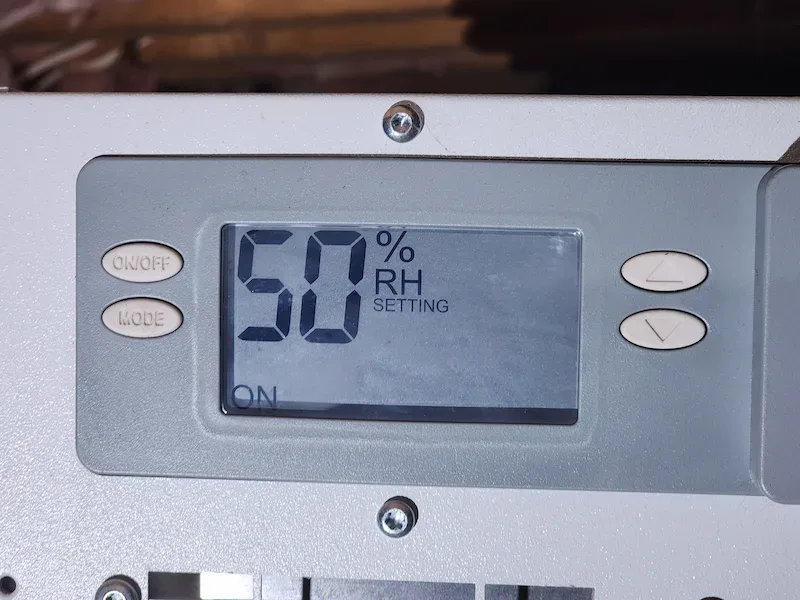
Image source: Bing (Web (fair-use with source credit))
What Different Humidity Levels Actually Do to Your Home and Health
Humidity isn't just a number on a screen. It's a force that affects your body, your furniture, and the structure of your home. Understanding what each level does helps you make smarter decisions.
Below 30%: The Danger Zone
This is too dry for most people. Your skin cracks. Your sinuses get irritated.
You're more likely to catch a cold or flu because dry air helps viruses survive longer. Wood floors shrink and crack. Static electricity builds up.
If you need a humidifier to fix this, you've overshot your dehumidifier setting.
30% to 50%: The Sweet Spot
This is where you want to be. Dust mites can't survive below 50%. Mold and mildew stop growing.
The air feels fresh without being sticky. Your wooden furniture stays stable. Allergy and asthma symptoms tend to improve in this range.
Most people find this zone comfortable year-round.
50% to 60%: The Warning Zone
Dust mites thrive here. They can't survive below 50%, so this range gives them a home. Mold starts to grow in cooler spots, especially on exterior walls and corners.
You might notice a faint musty smell. This is the borderline where you should start lowering your setting.
Above 60%: The Danger Zone
This is where mold and mildew become active. The CDC warns that damp environments above 60% promote allergens and pathogens. Condensation appears on windows.
Musty smells become noticeable. Over time, this damages drywall, wood, and insulation. If your home is consistently above 60%, you need a dehumidifier.
Period.
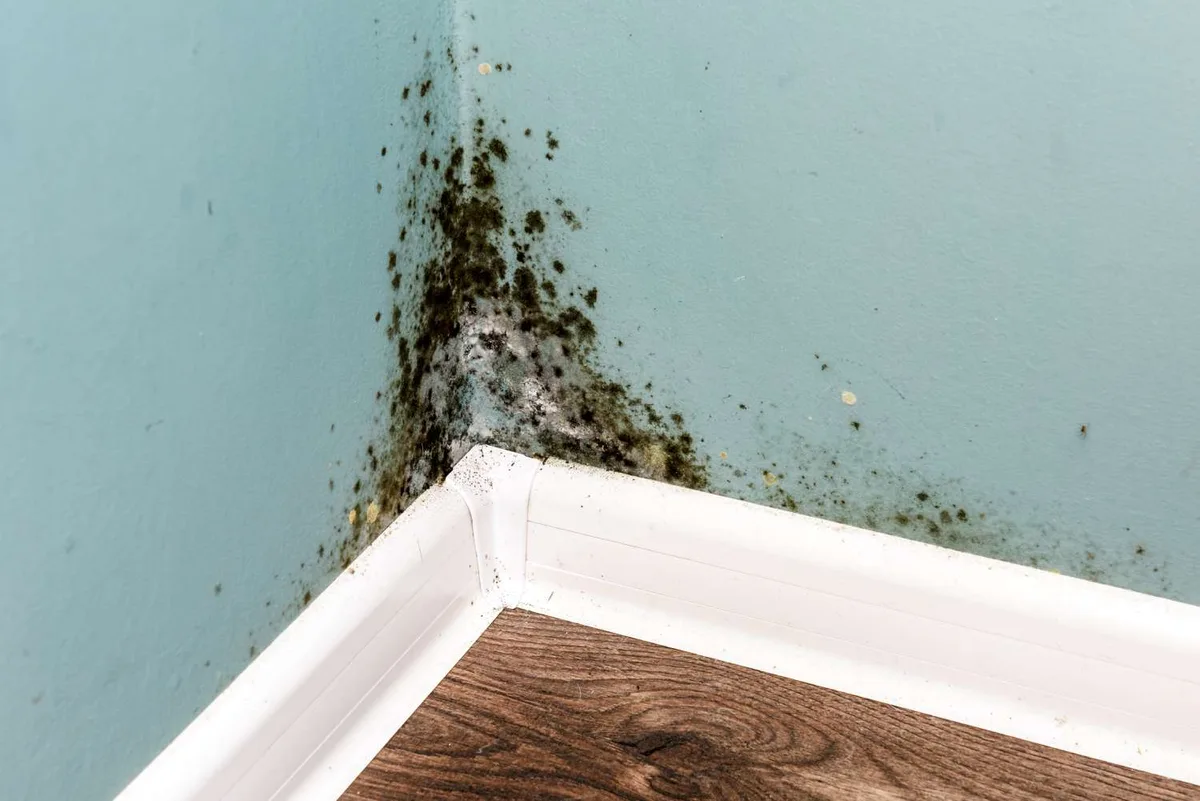
Image source: Web (Bing) / southernliving.com (Web image (fair-use with source credit))
Humidity also affects how you sleep. High humidity makes the air feel warmer than it is, which can disrupt your sleep cycle. Low humidity dries out your throat and nasal passages, leading to snoring and waking up with a dry mouth.
The sweet spot of 40-50% is ideal for restful sleep.
If you're trying to improve your sleep quality, setting your bedroom dehumidifier to 45% or 50% is a good start. The benefits of getting this right go beyond preventing mold. They touch every part of your daily life.
How to Find Your Ideal Dehumidifier Setting: A Simple Decision Workflow
Here's a simple decision workflow. It takes the guesswork out of finding your ideal setting. It's a process, not a one-time fix.
Step 1: Start at 50%
Set your dehumidifier to 50% relative humidity. Let it run for 24 hours. Do not adjust it during this time.
The room needs time to stabilize.
Step 2: Assess the results
After 24 hours, check these three things:
- Do you see condensation on windows or cold surfaces?
- Does the room smell musty or damp?
- Does the air feel comfortable or too dry?
Step 3: Adjust based on what you find
- If you see condensation or smell mustiness: Lower the setting by 5% to 45%. Wait another 24 hours and check again.
- If the air feels too dry, like with dry skin, static shock, or a scratchy throat: Raise the setting by 5% to 55%. Wait 24 hours and check again.
- If everything feels comfortable and you see no condensation: You've found your setting. Leave it there.
Step 4: Repeat if needed
Each adjustment takes 24 hours to stabilize. If you're still not happy, make another 5% adjustment. Do not make big jumps.
The room needs time to respond.
Here's a quick reference table:
| If You Notice | What To Do | New Setting |
|---|---|---|
| Condensation on windows | Lower by 5% | 45% |
| Musty smell | Lower by 5% | 45% |
| Dry skin, static shock | Raise by 5% | 55% |
| Comfortable, no issues | Leave it | 50% |
| Basement, no living space | Start lower | 40-45% |
If your unit isn't powerful enough for the space, you might not be able to reach your target setting. That's a sign you need a larger capacity unit. A mid-capacity unit covers most living areas, while larger-capacity machines handle open layouts and damp basements.
This workflow works for any room, any season, any dehumidifier. The key is patience. Give each setting time to work before you change it.
The Right Humidity Setting for Basements, Bedrooms, and Every Room in Between
Different rooms have different humidity needs. Here's what works best for each space based on aggregate user feedback and manufacturer specifications.
Basements: 40-45%
Basements are the most common place for dehumidifiers. They're cooler, darker, and more prone to moisture. Set your basement dehumidifier to 40-45% relative humidity.
This is low enough to prevent mold and mildew on stored items, but not so low that it wastes energy. If you're using a unit sized for the space, you should be able to maintain this range easily.
Bedrooms: 45-50%
For sleeping, balance comfort and health. Set your bedroom dehumidifier to 45-50%. This keeps dust mites at bay and prevents that sticky feeling, but it's not so dry that you wake up with a scratchy throat.
If you have allergies, lean toward 45%. If you just want comfort, 50% is fine.
Living Rooms: 50-55%
Living rooms are usually the most comfortable part of the house. They're used during the day, so you don't need to go as low. Set your living room dehumidifier to 50-55%.
This keeps the air feeling fresh without being too dry.
Crawl Spaces: 35-45%
Crawl spaces need the lowest setting. They're completely enclosed and prone to moisture buildup. Set your crawl space dehumidifier to 35-45%.
This prevents rot, mold, and structural damage. If you're using a unit in a crawl space, make sure it's designed for low-temperature operation.
Storage Rooms: 40-45%
Storage rooms where you keep boxes, documents, or valuables need a lower setting. Set to 40-45% to protect your belongings from moisture damage.
Seasonal Adjustments:
- Summer: Set to 50% as a baseline. Move to 55% if you're comfortable.
- Winter: Set to 40% to prevent condensation on cold windows.
- Spring and Fall: Set to 45-50% depending on how damp your home feels.
If you live in a consistently humid climate like the Gulf Coast or Southeast, you might keep your settings lower year-round. In drier climates, you might only need a dehumidifier during summer. The key is to adjust based on what your home actually needs.
If you want a unit that handles every season without constant tweaking, look for a year-round workhorse with a built-in humidistat.
The Most Common Mistakes People Make When Setting Their Dehumidifier
Plenty of people set their dehumidifier once and then wonder why it isn't working. Usually, it comes down to one of these mistakes.
Setting it too low. Cranking the dial to 30% or 35% doesn't dry the room faster. It makes the unit run constantly, wastes energy, and dries out your skin. It can also cause the coils to ice up in cooler rooms.
Trusting the built-in hygrometer. Most dehumidifier sensors are fine for a rough idea. They're not precision instruments. Off by 5-10% is common.
That could mean your 50% setting is actually keeping the room at 58%, which is borderline for mold. A separate hygrometer costs about $10 and takes the guesswork out.
Putting the unit against a wall. Dehumidifiers need airflow around the sides and back. A unit shoved into a corner pulls air from only one direction. It can't circulate properly.
Keep it 6-12 inches away from walls and furniture.
Leaving doors and windows open. A dehumidifier works on the room it's in. Opening a window pulls in humid outdoor air. Leaving doors open to a damp hallway lets moisture flood back in.
Close off the space you're trying to dry.
Ignoring the filter. A clogged filter restricts airflow, and restricted airflow means less moisture removal. Clean the filter every 2-4 weeks. A quick rinse or vacuum is all it takes.
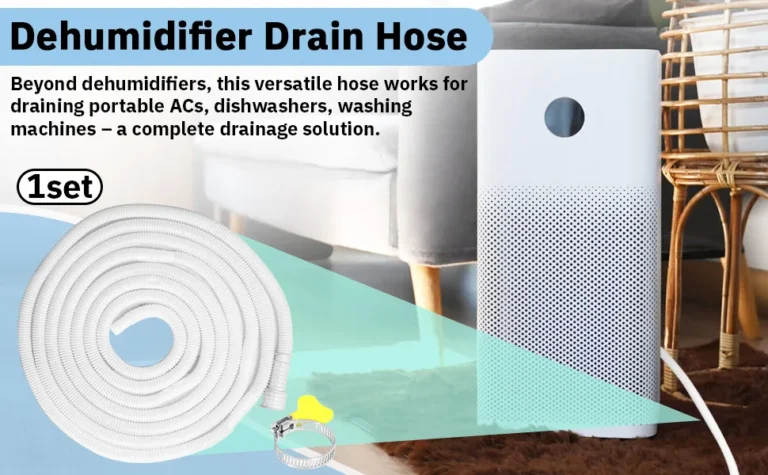
Emptying the bucket late. When the bucket fills up, the unit shuts off. That means your room sits at whatever humidity it was when the bucket filled. If you're not checking daily, attach a continuous drain hose and let it run into a floor drain or sink.
If you're constantly emptying the bucket, consider a unit with a larger reservoir, or look for the best value for your situation.
Skipping seasonal changes. The setting that works in July won't work in January. Winter air is naturally drier, so you might not need the unit at all. Or you might need to drop the setting to 35-40% to stop window condensation.
Review your settings as the seasons change.
Frequently Asked Questions
What should I set my dehumidifier to in the summer?
Set it to 50% relative humidity. In humid summer months, this keeps mold and dust mites under control without over-drying the air. If you notice condensation or musty smells, lower it to 45%.
Let the unit run for 24 hours between adjustments so the room can stabilize.
What is the best humidity level for a basement dehumidifier?
Aim for 40-45% relative humidity in a basement. Basements are cooler and more prone to moisture, so a lower setting helps prevent mold on stored items and structural damage. If the basement is a living space, 45-50% is comfortable.
Is 60% humidity too high for a bedroom?
Yes, 60% is too high for a bedroom. At that level, dust mites thrive and mold starts to grow in cooler spots. Set your bedroom dehumidifier to 45-50%.
This keeps allergens down and helps you sleep more comfortably.
How long should a dehumidifier run each day?
A dehumidifier should run until it reaches the target humidity, then cycle on and off to maintain it. Most units run 6-12 hours a day in humid conditions. If it runs constantly without reaching its set point, the unit might be too small for the room.
Should I run a dehumidifier in winter?
Only if your home's humidity stays above 50% in winter. In colder climates, indoor air often gets too dry in winter, not too humid. If you see condensation on windows, running a dehumidifier at 35-40% can help.
Otherwise, skip it and monitor your humidity levels.