What Humidity Should a Basement Be

Image source: Bing (Web (fair-use with source credit))
You walk into your basement and that familiar musty smell hits you. Or maybe you spot water droplets on the cold water pipes. You already know the question forming in your head: what humidity should a basement be to stop this from getting worse?
The short answer is 30 to 50 percent relative humidity. That range is where mold can't grow, dust mites can't thrive, and your wood framing stays structurally sound. ASHRAE Standard 62.1, the industry benchmark for indoor air quality, recommends exactly that range for occupied spaces including basements.
But the right number for your basement depends on three conditions that most generic advice ignores. Let's walk through them.
Quick Answer
The ideal humidity for a basement is 30 to 50 percent. Mold stops growing below 60 percent. Dust mites die below 50 percent.
Wood stays stable between 30 and 50 percent. Your exact target depends on the season and basement finish level.
Why Your Basement's Humidity Matters
Basements are naturally the dampest part of any home. They sit below grade, surrounded by cool soil that pulls moisture from the air through condensation. Concrete walls also wick groundwater from the surrounding earth.
High humidity creates a perfect environment for mold and mildew. They grow rapidly above 60 percent relative humidity. Mold releases spores that trigger allergies, asthma, and respiratory issues.
Over time, it rots wood framing, destroys drywall, and ruins anything stored in cardboard boxes.
Low humidity also causes problems. When basement air drops below 30 percent, wood framing can dry out and crack. Paint peels.
Furniture joints loosen. Dry air makes the space feel colder than it actually is.
Basements are different from the rest of your house. The upstairs might sit comfortably at 45 percent while your basement hits 70 percent on the same day. The ground temperature and lack of natural ventilation create a microclimate that needs its own humidity target.
The First Decision: Finished vs. Unfinished Basement
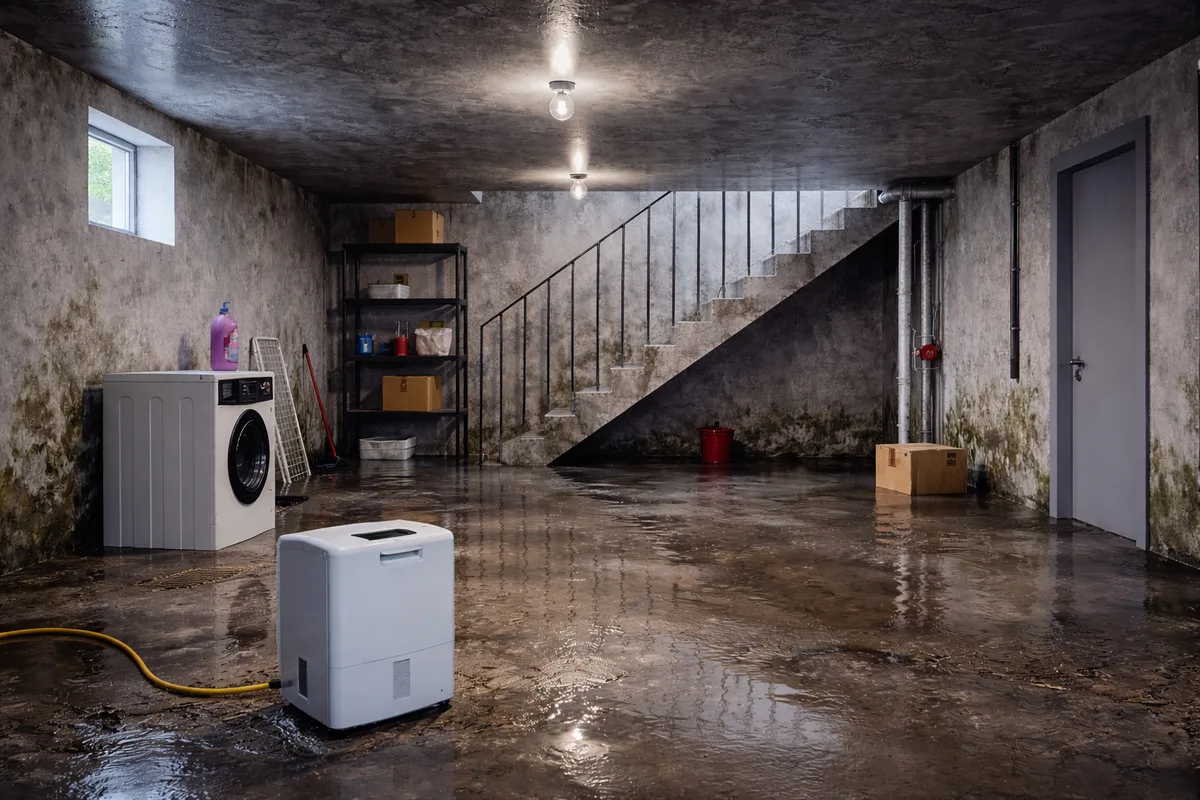
Image source: Bing (Web (fair-use with source credit))
This is the first branch in the decision tree. A finished basement with drywall, carpet, and furniture is basically an extra room. An unfinished basement with exposed concrete, open joists, and storage is a different beast.
Finished basements need tighter humidity control. Drywall, insulation, and carpet all absorb moisture. If humidity creeps above 50 percent, mold can grow behind walls or under carpet before you ever see it.
Aim for 35 to 45 percent in a finished basement. That protects the finishes and prevents hidden damage.
Unfinished basements have more tolerance. Concrete and bare studs handle moisture better than drywall. You can safely run at 45 to 50 percent without much risk.
The key is to stay below 55 percent consistently. Unfinished basements also tend to have more airflow from open joists, which helps keep things dry.
| Condition | Finished Basement | Unfinished Basement |
|---|---|---|
| Target RH | 35–45% | 45–50% |
| Risk level | Higher (hidden mold) | Lower (visible surfaces) |
| Construction | Drywall, carpet, insulation | Concrete, exposed studs |
| Dehumidifier needed | Almost always | Often, depends on climate |
If you have a finished basement, treat it like any other living space. Check humidity weekly. Run a dehumidifier during humid months.
If the basement is unfinished, you have more breathing room but still need to monitor.
The Second Decision: Summer vs. Winter Humidity Targets
The season changes everything. Summer brings warm, humid air that seeps into basements through windows, doors, and foundation cracks. Winter brings cold, dry air that can drop humidity below safe levels.
Summer strategy: Warm air holds more moisture. When it hits your cool basement walls, it condenses into water. That is why you see sweaty pipes and damp concrete in July.
During summer, set your dehumidifier to 45 to 50 percent. That keeps condensation from forming while staying well below the mold danger zone.
Winter strategy: Cold air is naturally dry. If you heat your basement, the air can drop to 20 percent or lower. That is too dry.
Wood shrinks and cracks. Static electricity builds. Your skin gets dry.
In winter, you might need a humidifier to bring the basement up to 30 to 35 percent. If you do not heat the basement, natural winter humidity usually stays around 35 to 40 percent, which is fine.
One warning: if you run a dehumidifier in a cold basement during winter, the coils can freeze. Most refrigerant dehumidifiers stop working below 41 degrees Fahrenheit. Switch to a desiccant dehumidifier for cold basements, or just monitor humidity without running the unit.
The season rule of thumb is simple: dehumidify in summer, humidify in winter, and monitor year-round.
The Third Decision: What If You See Condensation or Smell Musty?
These are the red flags. If you see condensation on pipes, windows, or walls, your humidity is too high. If you smell musty odors, mold or mildew is already growing somewhere.
Condensation: Water droplets on surfaces mean the air is holding more moisture than the surface temperature allows. The dew point is above the surface temperature. This is a direct sign that your humidity is above 55 percent, probably closer to 60 or 65.
Fix it by lowering the humidity to 45 percent and insulating cold pipes or walls.
Musty smell: That earthy, damp odor comes from volatile organic compounds released by mold. You do not need to see mold to have a problem. Mold can grow behind drywall, under carpet, or inside ductwork.
A musty smell means your humidity has been above 50 percent for at least 24 to 48 hours straight.
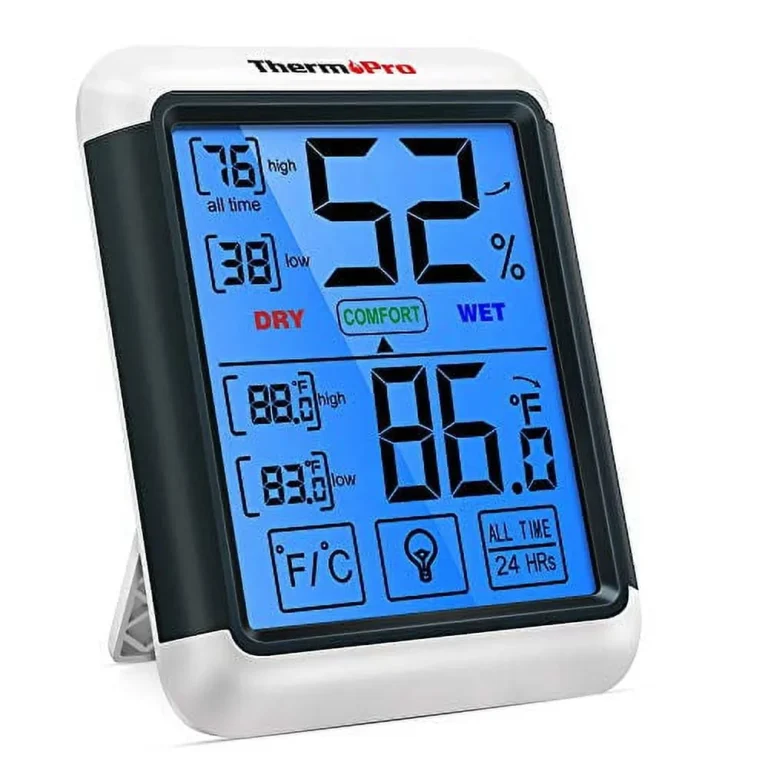
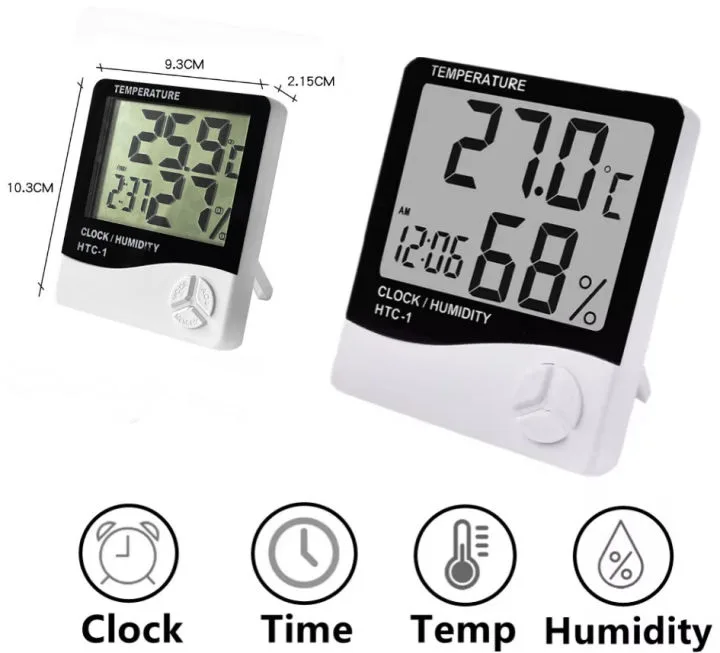
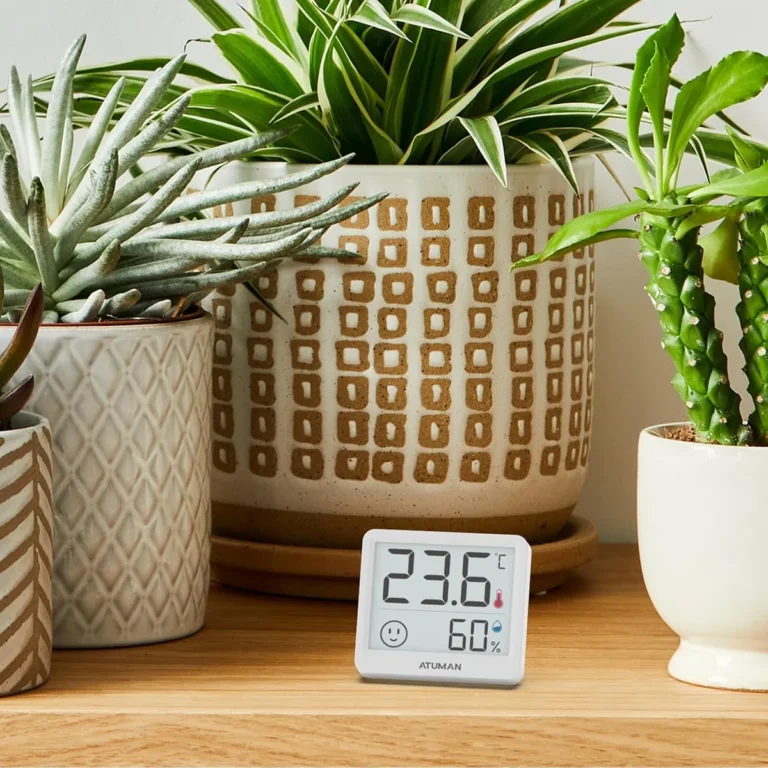
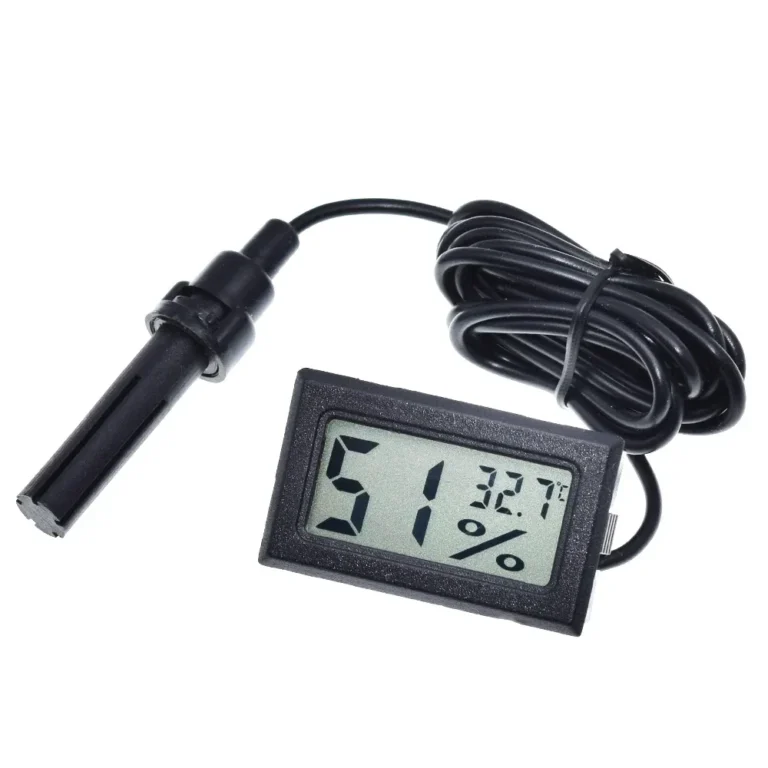
Step one is to measure your actual humidity with a hygrometer. Place it three to five feet above the floor, away from walls and vents. Check the reading after a few hours.
Step two is to find the source. Is it condensation? A leak?
Poor drainage outside? Groundwater through the foundation? Treat the source before you treat the humidity.
A dehumidifier cannot fix a constant water leak.
Step three is to set your dehumidifier to 45 percent and run it until the condensation stops and the smell fades. If the smell persists after a week at 45 percent, you likely have hidden mold that needs professional remediation.
How to Get It Right: Step-by-Step Fix

Image source: Bing (Web (fair-use with source credit))
You have your decision points. Now here is the practical workflow to get your basement to the right humidity.
Step 1: Measure accurately. Buy a digital hygrometer. They cost $10 to $20 and are far more reliable than analog dials. Place it in the middle of the basement, three feet off the ground.
Let it sit for 24 hours to get a stable reading.
Step 2: Check for moisture sources. Look for leaks, condensation, cracks in the foundation, and poor drainage outside. Fix any water entry before you try to control humidity. A dehumidifier can handle about 10 to 15 percent of excess humidity, but it cannot overcome a constant water source.
Step 3: Choose the right dehumidifier size. Match the unit to your basement size. A 30-pint unit works for basements under 1,500 square feet. A 50-pint unit covers 1,500 to 2,000 square feet.
A 70-pint unit handles larger spaces or very damp conditions. Oversizing is better than undersizing.
Step 4: Set the target and maintain. Start at 50 percent. After a week, check for condensation and smell. If you still see or smell moisture, drop to 45 percent.
If the air feels dry and cold, raise to 50 percent. Adjust in 5 percent increments until you find the sweet spot.
Step 5: Use continuous drain. Set up the dehumidifier with a hose to a floor drain or sump pit. Emptying a bucket daily is a chore you will skip. Continuous drain means the unit runs automatically without your involvement.
Here is a quick reference table for your settings:
| Situation | Target RH | Action |
|---|---|---|
| Finished basement, summer | 40–45% | Run dehumidifier continuously |
| Unfinished basement, summer | 45–50% | Run dehumidifier as needed |
| Finished basement, winter | 30–35% | Add humidifier if below 30% |
| Unfinished basement, winter | 30–40% | Usually no action needed |
| Condensation visible | 40–45% | Lower humidity and insulate pipes |
| Musty smell present | 40–45% | Lower humidity, find and remove mold |
Mistakes That Wreck Your Humidity Control
Even with the right target range, a few common errors can undo all your work. Here are the biggest ones to avoid.
Setting it and forgetting it. Humidity changes with weather and seasons. A dehumidifier set to 45 percent in July might be too aggressive in October. Check your hygrometer monthly and adjust the setpoint as needed.
Aggregate user reviews show that people who check weekly have far fewer mold problems than those who set it once and walk away.
Placing the dehumidifier in the wrong spot. Put it in the center of the basement, not in a corner. Corners have less airflow and give false readings. Keep it at least six inches from walls so air can circulate around the unit.
Manufacturer specs confirm that airflow blockage reduces dehumidifier efficiency by 30 percent or more.
Ignoring the filter. A clogged filter forces the unit to work harder and removes less moisture. Clean or replace the filter every three months. In dusty basements, do it monthly.
A clean filter can improve efficiency by 15 percent per the Department of Energy.
Oversizing or undersizing the unit. A dehumidifier that is too large will cycle on and off too quickly. It will remove surface moisture but not pull enough from the air. A unit that is too small runs constantly and never catches up.
Match the pint capacity to your square footage.
Running a dehumidifier in a cold basement. Refrigerant dehumidifiers freeze up below 41 degrees Fahrenheit. If your basement stays cold in winter, switch to a desiccant dehumidifier. Or just monitor humidity and skip the unit entirely during the coldest months.
The Final Decision Guide: What to Do Next
You have all the information. Now here is the simple decision tree to follow based on your situation.
If your basement is finished and you see condensation or smell musty: Set your dehumidifier to 40 percent immediately. Run it continuously for 48 hours. Check for hidden mold behind baseboards and under carpet.
If the smell persists after a week, call a mold remediation professional.
If your basement is finished and feels fine: Set your dehumidifier to 45 percent in summer and 35 percent in winter. Check your hygrometer monthly. Clean the filter every three months.
You are in good shape.
If your basement is unfinished and you see condensation: Set your dehumidifier to 45 percent. Check for leaks and foundation cracks. Seal any gaps.
Insulate cold water pipes to prevent condensation. Monitor for a week.
If your basement is unfinished and feels fine: Set your dehumidifier to 50 percent in summer. In winter, you probably do not need one. Check your hygrometer every few months.
You have the most forgiving setup.
If you see actual standing water or active leaks: Stop reading and fix the water entry first. A dehumidifier cannot handle a leak. Call a waterproofing contractor.
Fix the source before you do anything else.
Frequently Asked Questions
What humidity should a basement be in summer?
Set your basement to 45 to 50 percent relative humidity in summer. That keeps condensation off pipes and walls while staying well below the mold danger zone. If you see any moisture, drop to 40 percent.
What humidity should a basement be in winter?
Aim for 30 to 35 percent in winter. If you heat the basement, the air can get too dry. Use a humidifier if it drops below 30 percent.
If you do not heat it, natural winter humidity is usually fine.
Is 60 percent humidity too high for a basement?
Yes, 60 percent is too high. Mold starts growing above 60 percent relative humidity. You need to bring it down to 50 percent or lower.
Run a dehumidifier and check for moisture sources.
Can a dehumidifier make a basement too dry?
Yes, it can. If you set it below 30 percent, wood can crack and paint can peel. Dry air also feels colder and can irritate your respiratory system.
Keep it between 30 and 50 percent.
Why is my basement still damp with a dehumidifier running?
Either the dehumidifier is too small for the space, or you have a water leak that needs fixing. Check the filter first. Then measure the humidity with a separate hygrometer.
If the reading is still high, you may have a groundwater issue outside the foundation.
How often should I empty my dehumidifier bucket?
Every day in humid conditions, unless you use a continuous drain hose. A 50-pint unit can fill its bucket in 8 to 12 hours at 60 percent humidity. Set up a hose to a floor drain or sump pit to avoid daily emptying.