Should You Leave a Dehumidifier on Overnight
Should you leave a dehumidifier on overnight? For most people, the answer is yes, but it depends on a few specific conditions. You can't just plug it in and hope for the best.
The decision comes down to your unit's features, the room you're running it in, and how you've set it up.
The EPA recommends keeping indoor relative humidity between 30% and 50%. Overnight is actually the best time to hit that target because humidity levels tend to spike while you sleep. Moisture from breathing, cooking, and even a leaky basement accumulates in the dark.
A dehumidifier running overnight prevents mold and dust mites from getting a foothold.
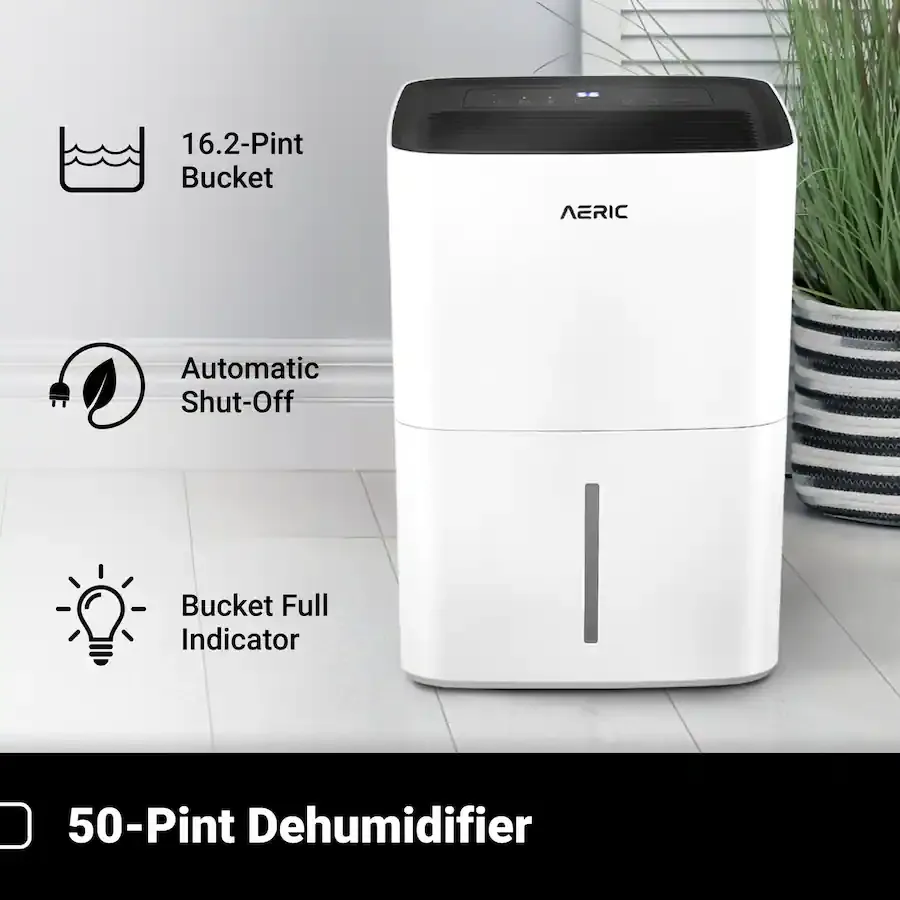
Image source: Bing (Web (fair-use with source credit))
Quick Answer
Yes, you can leave a dehumidifier on overnight. Most modern units are designed for unattended operation. The key is using the right setup.
You need a continuous drain, a humidistat, and a unit that fits your room. Without those, you risk noise, overflow, or over-drying.
Why This Isn't a Simple Yes or No
If you've searched this question, you've seen conflicting answers. That's because there's no universal "always safe" or "never do it." Your setup changes the math. A tiny thermoelectric unit in a bedroom is a different story from a 70-pint compressor model in a basement.
Manufacturer specifications indicate many units can run 24/7 without issue. But the caveat is always the same: the unit needs the right features and a proper setup. You also need to think about what you're trying to accomplish.
If you're battling a damp basement, leaving it on overnight is practically necessary. If you're just trying to make a bedroom more comfortable, you might prefer a scheduled run with a timer.
The four biggest decision points are unit type, humidity control, drainage, and noise. Get those right, and overnight use is a no-brainer. Get them wrong, and you'll wake up to a full tank, a frozen coil, or a room that feels like a desert.
Here's a quick look at how the decision usually plays out:
| Scenario | Likely Verdict |
|---|---|
| Basement, compressor unit, continuous drain, humidistat | Yes, run it all night |
| Bedroom, small tank, no timer, noisy unit | No, use a timer or move it |
| Garage, temps below 65°F, compressor unit | No, risk of ice buildup |
| Laundry room, desiccant unit, low noise | Yes, run until dry |
That's the shape of it. Now let's dig into each factor so you can make the call for your exact situation.
The Four Factors That Decide for You
Factor #1: Is Your Unit Built for Continuous Operation?
The type of dehumidifier you own is the biggest piece of the puzzle. Compressor-based models work by pulling air over cold coils. They're efficient and powerful, but they're also temperature sensitive.
If your room drops below about 65°F, the coils can freeze over. That's why auto-defrost is non-negotiable for overnight use. A unit with this feature will cycle off periodically to melt ice, then restart on its own.
Desiccant dehumidifiers are the quieter alternative. They use a moisture-absorbing rotor instead of coils. They work fine in cold rooms, which makes them a solid pick for garages and basements in the winter.
They do cost more per hour to run, but they're often the better choice for overnight bedroom use.
Factor #2: Can You Set a Target Humidity?
You don't want the unit running forever. You want it to run until the room hits a comfortable level, then shut off. That requires a built-in humidistat.
A quality unit with a humidistat will maintain a set point like 50% relative humidity. It cycles on and off all night without you touching a thing. A basic unit without a humidistat will just run until the tank is full.
That leads to over-drying, which can make your skin feel rough and your throat feel scratchy in the morning.
If you already own a dehumidifier without a humidistat, you can still use it overnight. You just need a separate hygrometer and a plug-in timer. Set the timer for four hours instead of eight.
Factor #3: How Will You Handle the Water?
This is the most practical issue. If you're relying on the internal bucket, you're gambling. Most buckets hold 1 to 2 gallons.
A 50-pint unit pulls about 2 pints per hour in average conditions. That means you've got roughly 6 to 8 hours before the tank tops out.
Will it wake you up with a "full tank" beep at 3 a.m.? Possibly. The better move is to use the continuous drainage option.
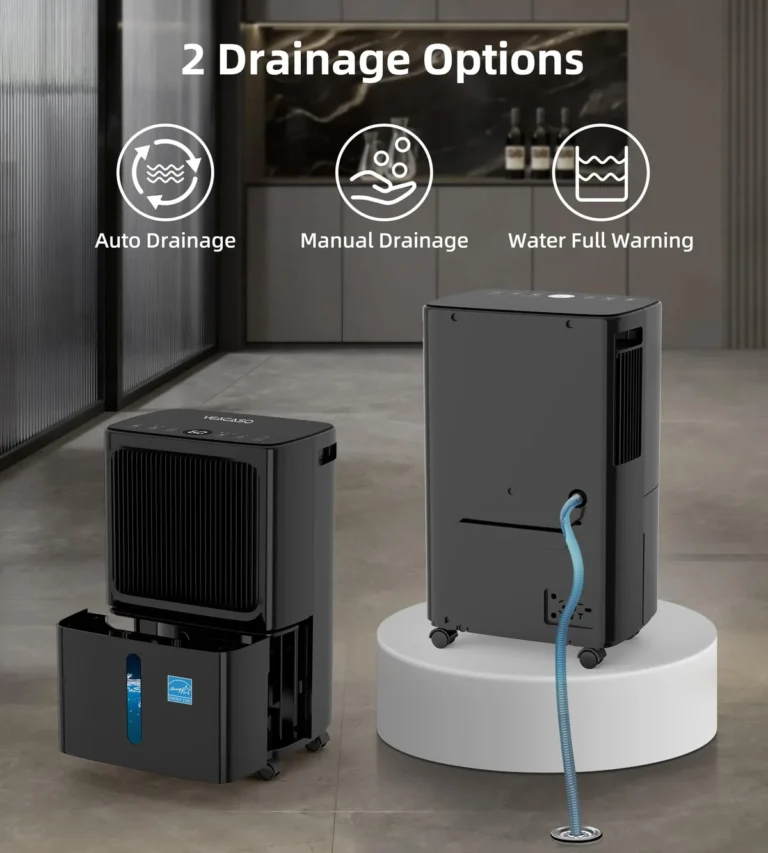
Most mid-range and premium units come with a threaded hose connection. You run a standard garden hose to a floor drain, a sump pump, or just a 5-gallon bucket that you check in the morning. If you want a worry-free night, continuous drainage is the key.
Many owners skip this step and regret it.
Factor #4: Can You Sleep Through the Noise?
A typical compressor dehumidifier runs around 45 to 55 dB. That's roughly the level of a running refrigerator or a quiet conversation. Some people fall asleep fine with that white noise.
Others want absolute silence.
Thermoelectric and desiccant units typically run quieter, closer to 40 dB. If you're a light sleeper, check the label before you buy. If you already have a loud unit, try elevating it on a rubber mat to absorb vibration or place it further from the bed.
A dehumidifier right next to your head is never a good idea.
Your Room-by-Room Decision Guide
Not every room has the same needs. Here's a straightforward breakdown of common overnight scenarios.
Bedroom
Yes, you can leave a dehumidifier on overnight in a bedroom, but only if the noise level works and you have a decent unit. A small 20-pint or 30-pint model with low fan speed is perfect. Set the target humidity between 45% and 50%, and use a timer if your unit doesn't have a humidistat.
Some of the best year-round options are designed specifically for quiet operation.
Basement
This is the most common place for overnight operation. Basements are cooler, damper, and more prone to mold growth. A 50-pint or 70-pint compressor unit with auto-defrost is ideal.
Leave it on all night with a continuous drain hose. If your basement dips below 65°F, consider a desiccant unit instead. We've reviewed several basement-specific models that handle this well.
Bathroom
This one is tricky. Bathrooms are small, and humidity spikes hard after a shower. Running a dehumidifier overnight here isn't usually necessary.
A good exhaust fan works faster and costs less. If you have a persistent moisture problem, run a small unit for an hour after your shower, not all night.
Laundry Room
Yes, leave it on overnight if you're drying clothes inside. Wet laundry releases a surprising amount of moisture into the air. A dehumidifier running overnight helps clothes dry faster and stops the whole room from smelling musty.
Just make sure the unit has a continuous drain or a generous bucket.
Garage or Crawl Space
Only if you have a desiccant model or a compressor unit with auto-defrost. Cold temperatures are the enemy of compressor coils. If you're in a cold climate, keep the unit running in the summer, but bring it inside during the winter.
Mid-sized options with low-temperature operation are worth considering here.
How to Set Up for Worry-Free Overnight Use
Once you've confirmed that overnight operation makes sense for your space, the setup is simple. Here's what you need to do before you hit the lights.
Step 1: Set Your Target Humidity
Never set the dehumidifier to "continuous" unless you're trying to dry out a recent flood. For normal overnight use, aim for 50%. If your room gets too dry, you'll notice static shocks, dry eyes, and cracked lips.
If you have a humidistat, set it and let the unit do its job.
Step 2: Connect a Continuous Drain Hose
This is the game-changer. The photo below shows how a standard hose attaches to the threaded drain port. Run that hose to a floor drain or a nearby sink.
If that's not possible, place the unit near a larger overflow bucket, like a 5-gallon utility bucket, and check it in the morning. Smaller bedroom-friendly units often come with adapters for this setup.
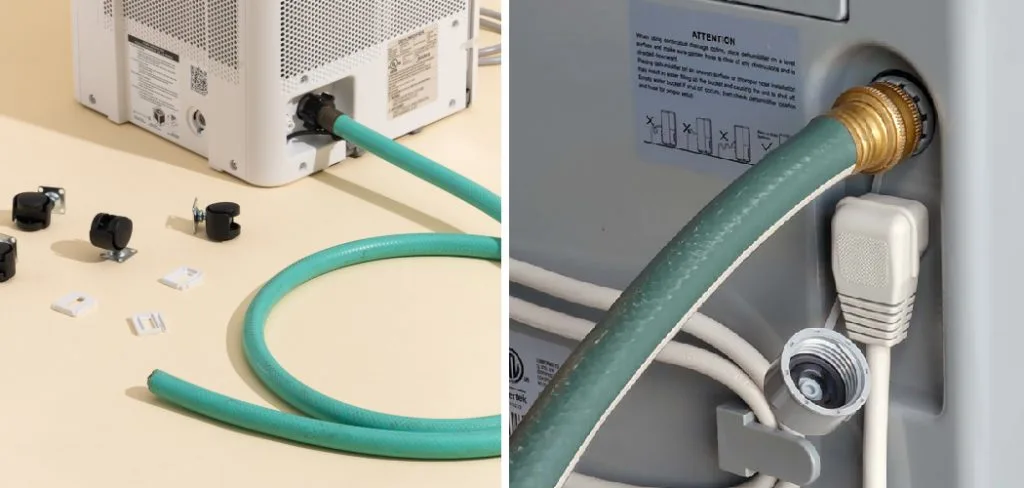
Image source: Bing (Web (fair-use with source credit))
Step 3: Check the Auto-Defrost Setting
If you have a compressor unit, verify that the auto-defrost light or switch is active. This prevents ice from building up on the coils overnight. In cold rooms, skip this step and you'll be greeted by a frozen brick instead of a working dehumidifier.
Step 4: Position the Unit Properly
Leave at least 12 inches of clearance on all sides. Air needs to flow freely through the intake and exhaust vents. Placing it flush against a wall restricts airflow and makes the unit work harder.
Also, make sure the unit is level. A tilted unit can trigger the tip-over switch and shut off in the middle of the night.
Step 5: Use a Smart Plug or Timer
You can't always rely on a unit's internal settings to run until full. A smart plug is a cheap way to get auto-off. Plug the dehumidifier into a smart outlet and program it to run for six hours.
This saves energy, reduces noise, and gives you peace of mind. Budget-friendly choices with timers are widely available.
Step 6: Set a Morning Reminder to Check
It takes two seconds. In the morning, glance at the bucket or the hose. Empty the tank if you didn't use a drain.
Clean the filter if it looks dusty. This daily habit keeps the unit running efficiently.
What Usually Goes Wrong
You've read the warnings. Now let's look at the reality of overnight operation. These are the most common problems based on user feedback and manufacturer support forums.
The Bucket Overflows or Stops the Unit
This is the number one complaint. The unit fills up and shuts off at 2 a.m., and your room returns to a damp state. The fix is simple: continuous drainage.
If you can't set up a hose, choose a unit with a bigger tank. Units with a 2-gallon bucket or larger are much easier to run overnight.
The Unit Freezes Up
A compressor dehumidifier stops extracting water when the coils freeze. Ice forms a barrier that blocks airflow. This happens most often in basements and garages where temperatures dip.
Check the temperature range listed in your unit's manual. If you're running it in a cold space, switch to a desiccant model.
The Air Gets Too Dry
Leaving the unit on "continuous" mode all night in a small room will absolutely over-dry the air. You'll wake up with a parched throat and cracked lips. The solution is to use the humidistat or a timer.
In a small bedroom, a 20-pint unit running for 6 hours is usually enough. Many top-rated picks for value include a solid humidistat.
The Noise Keeps You Up
Some units are just loud. If you can't return it, try placing it on a thick towel or a vibration-dampening pad. The physical contact with a hard floor amplifies the hum.
Raising it slightly off the floor will reduce resonance. If that doesn't work, run it only during the day and rely on an exhaust fan at night.
The Unit Becomes a Fire Hazard
This is rare, but it's worth mentioning. Dust buildup inside the unit can cause overheating, especially in desiccant models that use an internal heater. Clean the filter every two to four weeks and vacuum the vents.
Always plug the unit directly into a wall outlet, not an extension cord or power strip. Make sure your unit carries a UL or ETL certification. The Energy Star program also certifies units that meet strict safety and efficiency standards.
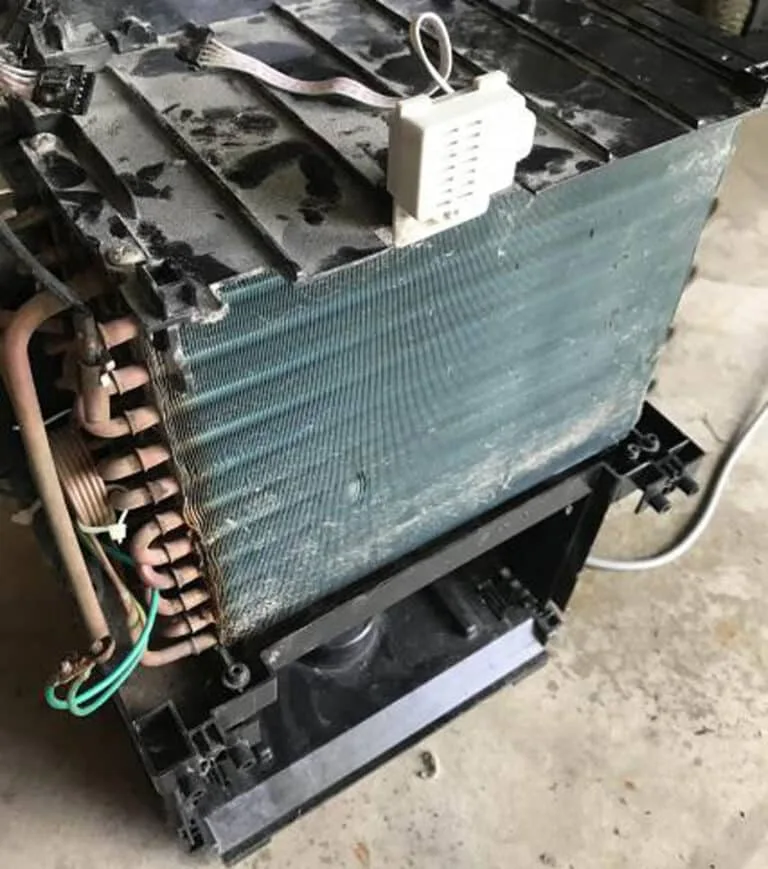
Image source: Bing (Web (fair-use with source credit))
The Power Bill Creeps Up
Running a dehumidifier overnight isn't free. A typical 50-pint unit draws about 500 to 600 watts. At average electricity rates, that's roughly $0.08 to $0.12 per hour.
Over eight hours, you're looking at about a dollar per night. That adds up, but it's cheaper than repairing mold damage. An Energy Star-certified unit can cut that cost significantly.
Frequently Asked Questions
Can I leave a dehumidifier on overnight in a bedroom?
Yes, if the unit is quiet enough and you have a continuous drain or a large enough bucket. Set the target humidity to 50% and use a timer if your unit lacks a humidistat. A small 20-pint model with low fan speed is ideal for bedrooms.
Is it safe to leave a dehumidifier running all night?
Modern dehumidifiers with UL or ETL certification are safe for unattended operation. Make sure the unit has auto-shutoff, a tip-over switch, and a clean filter. Never run it on an extension cord or power strip.
Will a dehumidifier dry out my room too much overnight?
It can if you leave it on continuous mode. Use the built-in humidistat to set a target of 45% to 50%. This prevents over-drying and keeps the air comfortable for sleeping.
How much electricity does a dehumidifier use overnight?
A typical 50-pint unit uses about 500 to 600 watts. At average U.S. electricity rates, that's roughly $0.08 to $0.12 per hour. Running it for eight hours costs about a dollar.
An Energy Star-certified unit uses less.
What happens if my dehumidifier runs out of water overnight?
The unit will shut off automatically when the bucket is full. The room will start to get humid again, but the unit will be fine. Set up a continuous drain hose to avoid this problem entirely.
The Final Verdict
Should you leave a dehumidifier on overnight? Yes, if you have the right setup. A unit with a humidistat, auto-defrost, and a continuous drain hose is safe to run all night.
The rooms that benefit most are basements, laundry rooms, and bedrooms with persistent dampness.
If you have a basic unit without these features, don't risk it. Use a timer to run it for a few hours instead. The goal is consistent humidity control, not endless runtime.
As long as you set it up right, overnight operation is both safe and effective.
The EPA indoor air quality guidelines confirm that keeping humidity between 30% and 50% is the sweet spot. Running your dehumidifier overnight is the most efficient way to get there. Just check the filter, empty the drain, and let the unit do the work while you sleep.