Is It Cheaper to Run a Dehumidifier at Night
If you've ever wondered whether it's cheaper to run a dehumidifier at night, the honest answer is: it depends. Your electricity plan, your local humidity, and even the type of dehumidifier you own all change the math. The good news?
Once you know how to check your own rates, the decision takes about five minutes.
Cost data from typical U.S. households shows off-peak rates can run 30% to 50% lower than peak rates on time-of-use plans, per ENERGY STAR. The catch? Most people aren't on those plans.
So let's walk through the variables, starting with the quick verdict.
Image source: Bing (Web (fair-use with source credit))
Quick Answer
Running a dehumidifier at night is cheaper only if your utility charges less off-peak. On a standard flat-rate plan, the price per kilowatt-hour is identical all day. In that case, running at night saves nothing on electricity.
It may still feel more comfortable, but the bill won't shrink.
Why Nighttime Changes How Your Dehumidifier Works
Your home's relative humidity naturally climbs after sunset. Cooking, showers, and even breathing add moisture to the air. As temperatures drop, the same water vapor becomes a higher relative humidity reading.
That's why damp basements feel the wettest overnight.
Higher humidity makes your machine run longer. A 50-pint dehumidifier pulls about 50 pints per day under standard conditions, but actual run time depends on the load. Colder nighttime air also hurts compressor models.
They start losing efficiency when the room drops below 65°F.
If you have a desiccant dehumidifier, cool air is less of a problem. Those units absorb moisture without relying on cold coils. The trade-off?
They use more electricity per hour while they work. So on a flat-rate plan, a desiccant machine running overnight can cost more for similar water removal.
One more thing: dehumidifiers blow warm, dry air. In a small bedroom, that can raise the temperature a couple of degrees. If you're already struggling to sleep in summer, that's worth factoring in.
For most homes, the night-time efficiency loss is small. The bigger question isn't temperature. It's what your utility charges after sunset.
The Real Cost Factor: Flat-Rate vs. Time-of-Use Electricity
Your electricity rate structure is the single biggest factor. Most households pay a flat rate per kilowatt-hour. That means a kWh at 3 a.m. costs the same as one at 3 p.m.
For those households, running at night is not cheaper.
Time-of-use plans change the picture. Utilities charge more during peak demand windows and less during off-peak hours. Off-peak windows usually run from around 9 p.m. to 7 a.m.
If you're on one, the night becomes the cheapest slice of your day.
As of 2026, more utilities are shifting to TOU pricing. That makes checking your bill worthwhile. Look for any mention of "peak," "off-peak," or "super-off-peak." Some regions even offer a weekend rate.
| Plan type | Night vs day rate | Night running cost | | Flat-rate | Same all day | No savings | | Time-of-use | Off-peak can be 30-50% lower | Real savings |
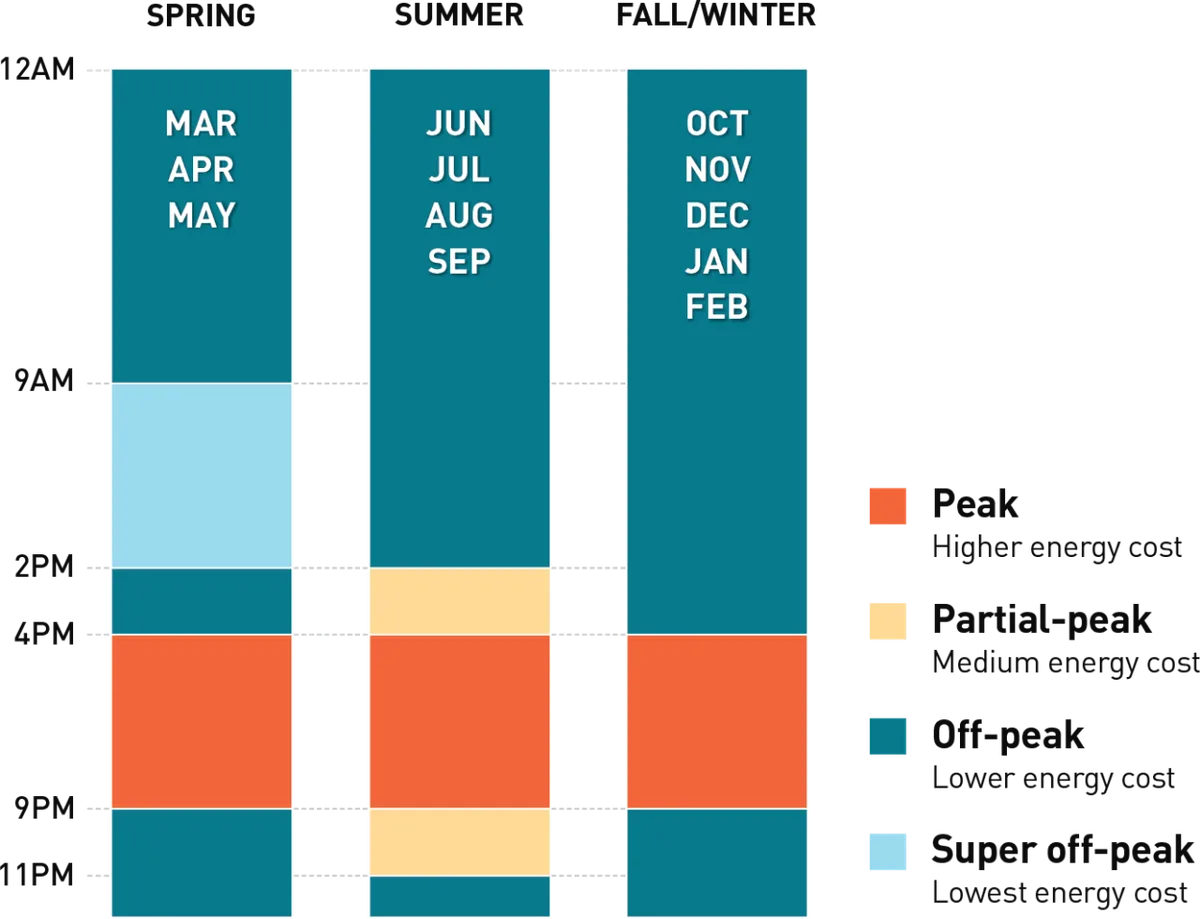
Image source: Bing (Web (fair-use with source credit))
If you're not sure which plan you have, call your utility company. Their customer service can tell you in two minutes. [The U.S.
Department of Energy](https://www.energy.gov) also explains how TOU rates help lower overall demand.
How to Calculate Your Dehumidifier's Cost Per Hour (and Per Pint)
Here's the formula you need: Cost per hour = wattage ÷ 1,000 × electricity rate. A 500-watt dehumidifier uses 0.5 kilowatt-hours every hour. At a flat $0.14 per kWh, that's $0.07 an hour, or $0.56 for eight hours.
Now add time-of-use. Say your off-peak rate drops to $0.07 per kWh. The same eight hours cost $0.28.
That's a real saving of $0.28 per night, or around $8.40 a month if you run it every night.
For per-pint cost, divide the hourly cost by pints removed per hour. If a unit pulls two pints per hour and costs $0.07 per hour, each pint costs $0.035. That's the number that matters when comparing models.
| Dehumidifier size | Typical wattage | Cost per hour at $0.14/kWh | | 30-pint | ~300W | $0.042 | | 50-pint | ~500W | $0.07 | | 70-pint | ~700W | $0.098 |
Look for the Energy Star label when comparing machines. Certified units remove more moisture per kilowatt-hour. If you're shopping, our best dehumidifier guide lists wattage and tested performance for popular models.
Building the Optimal Nighttime Schedule (Timers, Hygrometers, and Smart Plugs)
The best schedule follows humidity, not the clock. Start by measuring your space with a hygrometer. If the relative humidity is below 50%, you don't need to run the dehumidifier.
Above 60%, it's worth running.
If you're on a time-of-use plan, set the machine to run only during off-peak hours. Most dehumidifiers have a built-in timer. You can also plug yours into a smart plug with a schedule.
A simple overnight plan:
- Set the target humidity between 45% and 50%.
- Program the timer to start at the beginning of off-peak hours.
- Use the continuous drain hose if you can. That way, you're not waking up to a full bucket.
- Place the unit 6 to 12 inches away from walls for good airflow.
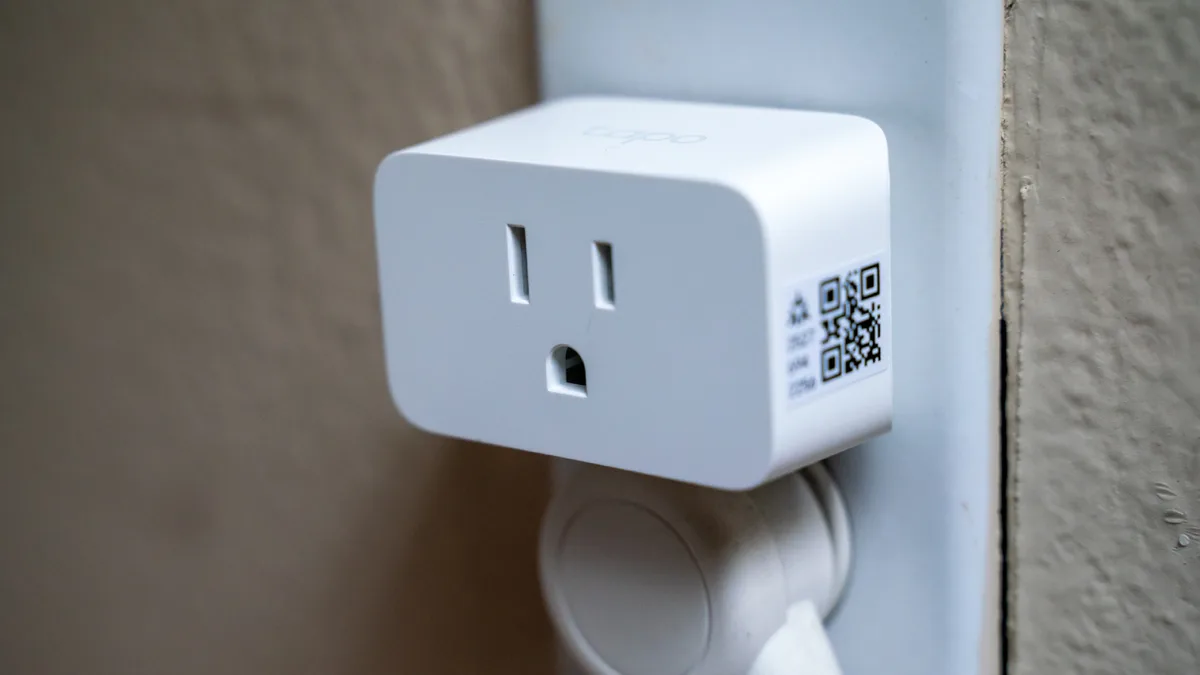
Image source: Bing (Web (fair-use with source credit))
If your basement sits at 55% humidity at 8 p.m., a night schedule works well. If it reads 45%, leave the machine off and save the electricity.
One caveat: don't set a timer that forces the unit to run when it's already dry. The machine will cycle on and off on its own once it reaches the humidity setpoint. A smart plug helps, but a built-in humidistat is the real brain.
If you're dealing with a damp basement, our best dehumidifier for basement guide covers units that handle cool, low-light spaces. Pair any of them with a hygrometer and you'll get the lowest cost per pint.
Common Nighttime Dehumidifier Mistakes to Avoid
Even with the right schedule, small errors can wipe out your savings. Let's cover the ones that trip up most people.
Running the unit when humidity is already low. If your space reads under 50%, the dehumidifier cycles on for no reason. It wastes electricity. Check the hygrometer before you set the timer.
Better yet, let the built-in humidistat decide when to kick on.
Forgetting the continuous drain. A full bucket stops the machine mid-cycle. That means you wake up to higher humidity and a longer run time the next day. Hook up a garden hose to the drain port if you can.
Gravity-drain models work best for basements.
Placing the unit in a corner or against a wall. Airflow matters. A dehumidifier needs a few inches of clearance on all sides to pull in moist air. Corner placement chokes it.
Move it to the center of the room for best results.
Using a timer on a flat-rate plan. As we covered earlier, a timer saves nothing if your electricity costs the same all day. Only use a timer if you're on time-of-use rates. Otherwise, let the humidistat control run time.
Skipping filter cleaning. A dirty filter makes the fan work harder. It pulls less moisture and uses more electricity. Clean the foam or mesh filter every two weeks during heavy use.
It takes about 30 seconds.
One more mistake: running the dehumidifier in a closed bedroom with no airflow. The machine dries the air, but carbon dioxide builds up in a sealed room. Crack a window or door for fresh air exchange.
FAQs About Running a Dehumidifier While You Sleep
Is it noisy to run a dehumidifier at night?
It depends on the model. Most portable units run between 40 and 55 decibels. That's about as loud as a quiet conversation or a window AC on low.
Look for units with a "sleep mode" that lowers fan speed.
Can I sleep with a dehumidifier on?
Yes, it's safe for most people. The dry air can actually help with allergies and congestion. Just keep the unit on a flat, stable surface and away from bedding.
Check that the bucket or drain line is secure.
Will a dehumidifier raise my electric bill a lot?
A 500-watt unit running eight hours a night costs about $0.56 at a flat rate of $0.14/kWh. That's around $17 a month. On a time-of-use plan, the cost drops to about $8 a month.
It's not nothing, but it's less than a typical air conditioner.
Should I run a dehumidifier in the basement at night?
Basements are naturally cooler and more humid. Nighttime is a good time to run one there, especially if the space is unoccupied. Just make sure the unit is rated for low temperatures.
Compressor models struggle below 65°F.
Does running a dehumidifier at night help with allergies?
It can. Lower humidity prevents mold and dust mites from thriving. That's a win for allergy sufferers.
Dry air also makes it harder for pollen to settle. Just keep the humidity between 40% and 50% for best results.
The Final Verdict: Is It Cheaper at Night for You?
Here's the decision tree. If you're on a time-of-use electricity plan, running your dehumidifier during off-peak hours is absolutely cheaper. The savings can reach 30% to 50% off your operating cost.
That adds up to real money over a humid summer.
If you're on a standard flat-rate plan, the time of day doesn't change the cost. Running at night costs the same as running during the day. In that case, the best schedule is the one that keeps your home comfortable and dry, not the one that saves on electricity.
One more factor: if you sleep better with drier air, run it at night regardless of the rate. Your comfort matters. Just don't expect a lower bill.
For most people, the answer comes down to two things. Check your electricity bill for time-of-use rates. And measure your actual humidity with a hygrometer.
Once you have those two numbers, you can build a schedule that saves money, keeps your home dry, and helps you sleep better.