Where Should a Dehumidifier Be Placed in a Crawl Space
If you're wondering where to put a dehumidifier in a crawl space, the short answer is: center of the space, elevated off the ground, and close to a drain. Get those three things right, and you'll avoid most of the common performance problems.
Per the International Residential Code and Building Science Corporation research, a properly placed dehumidifier can maintain relative humidity between 50 and 60 percent. That's the sweet spot where mold stops growing and wood rot slows down. The wrong location can turn a good unit into an expensive paperweight.
Let's walk through the rules so you get it right the first time.
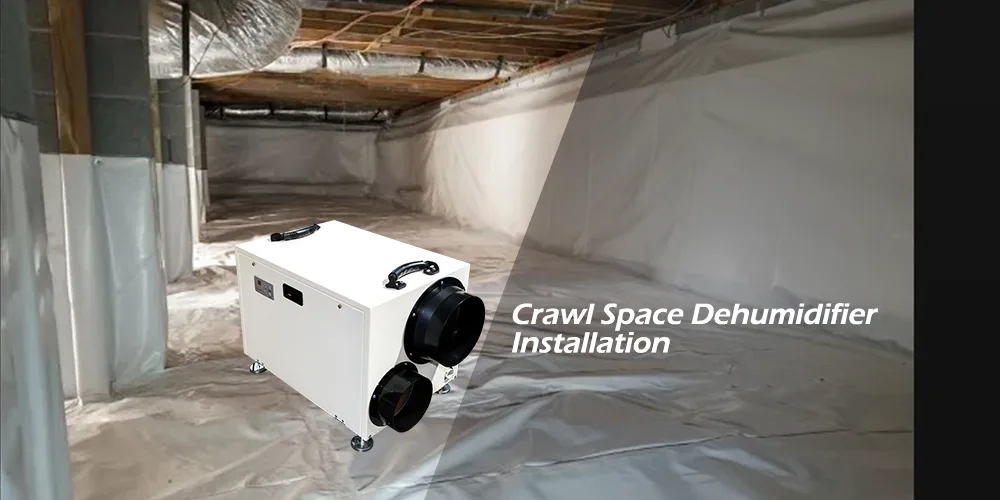
Image source: Bing (Web (fair-use with source credit))
Quick Answer
Place the dehumidifier in the center of the crawl space. Elevate it on a concrete block or plastic stand. Keep it at least 12 inches from any wall.
Route the drain hose downhill to a floor drain or sump pump. Never put it on dirt or gravel.
Why Placement Matters More Than the Dehumidifier Itself
You can buy the most expensive unit on the market. If you put it in the wrong spot, it will struggle to keep up. Humidity pockets will form in corners.
The unit will cycle on and off constantly, burning through electricity and wearing out the compressor.
Here's what happens when placement goes wrong:
- Airflow gets blocked. A unit shoved against a wall pulls in humid air from one side but can't circulate it. The space stays damp, and the unit works harder.
- Condensate backs up. If the drain hose runs uphill, water sits in the line. Algae grows. The line clogs. Water spills onto the crawl space floor.
- The unit freezes up. In cold crawl spaces, poor airflow around the coils causes ice to form. The unit shuts down on a safety cycle. Humidity rises.
The physics is simple. Dehumidifiers work by pulling air in, chilling it to condense moisture, and blowing dry air back out. That cycle only works if air can move freely.
Block the airflow, and you're just running a noisy, expensive fan.
Manufacturer specifications confirm that most units need at least 12 to 18 inches of clearance on all sides. Some models require more. Check the manual for your specific unit, but treat those numbers as a minimum.
The 4 Core Rules of Crawl Space Dehumidifier Placement
These four rules apply to every crawl space, every dehumidifier, and every climate. Skip one, and you're asking for trouble.
Keep the Unit Centered, Not Pressed Against Walls
Think of airflow like water. It follows the path of least resistance. If you put the dehumidifier in a corner, air movement stalls.
The unit ends up dehumidifying a small pocket while the rest of the crawl space stays damp.
The center of the crawl space gives the unit the best access to all four directions. It pulls moist air from every side and pushes dry air back out evenly. If your crawl space has an odd shape, aim for the middle of the largest open area.
Elevate It Above Dirt, Gravel, or Standing Water
Putting a dehumidifier directly on dirt or gravel is a disaster waiting to happen. Here's why:
- Moisture wicks up. Dirt and gravel hold moisture. The unit sits in a damp microclimate, which makes it work harder.
- Debris gets sucked in. Dust, spider webs, and small rocks get pulled into the intake. The filter clogs fast.
- Water damage. If the crawl space floods, even a quarter inch of water, the unit is ruined.
Set the unit on a concrete block, a plastic stand, or a wall-mounted bracket. The goal is to get it at least 6 to 12 inches off the ground. Concrete blocks are cheap and work well.
Just make sure the surface is level so the condensate pump or drain pan works correctly.
Leave 12 to 18 Inches of Clearance for Airflow
This is the rule people ignore most often. Crawl spaces are tight. It's tempting to wedge the unit into a corner to stay out of the way.
Don't do it.
The intake is usually on the front or side. The exhaust is on the top or back. If you block either, the unit can't breathe.
The compressor overheats. The coils ice up. The unit shuts down.
Measure before you buy. If your crawl space has clearance of 24 inches between the floor and the joists, you need a unit that's less than 12 inches tall. Some crawl space models are designed to sit sideways or mount to the wall.
Choose accordingly.
Put the Drain Line Where Gravity Does the Work
Gravity is your best friend for condensate drainage. If you can run the drain hose downhill to a floor drain, sump pump basin, or exterior outlet, do it. No pump.
No electricity. No moving parts to fail.
If the drain point is above the unit, you need a condensate pump. These are small pumps that lift water vertically. They work, but they add a failure point.
When the pump fails, the unit shuts off or overflows.
Here's a quick comparison of your drainage options:
| Drainage Method | Best For | Failure Risk | Maintenance |
|---|---|---|---|
| Gravity drain to floor drain | Crawl spaces with a drain below the unit | Low | Clean hose annually |
| Gravity drain to sump pit | Homes with an active sump pump | Low | Ensure sump pump works |
| Condensate pump to exterior | Crawl spaces with no lower drain point | Moderate | Clean pump inlet, check float switch |
| Bucket (manual drain) | Temporary use only | High | Empty daily |
Step-by-Step: Installing a Dehumidifier in a Crawl Space
Follow these steps in order. Rushing any of them will cause problems later.
Prep the Space: Vapor Barrier and Sealing Foundation Vents
Before you bring the unit into the crawl space, address the moisture sources. A dehumidifier is not a cure-all. It's a tool.
And it works best when the space is sealed.
Start with a vapor barrier. Building science experts recommend a minimum 6 mil polyethylene sheet, but 10 or 20 mil is better. Lay it over the entire dirt floor.
Overlap the seams by at least 12 inches and tape them with vapor barrier tape. Run the barrier up the foundation walls a few inches and secure it with furring strips or masonry nails.
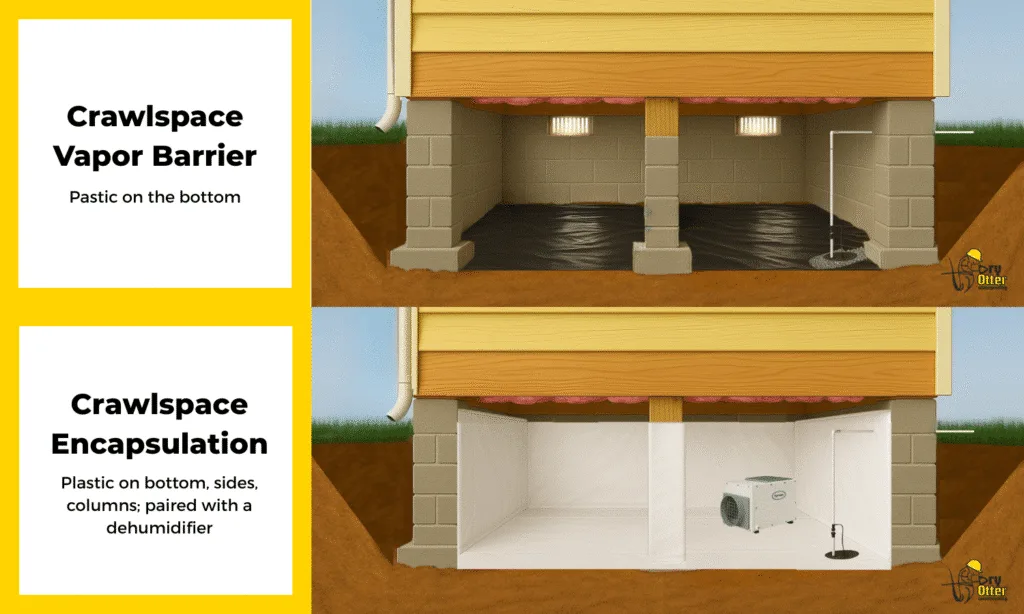
Image source: Bing (Web (fair-use with source credit))
Next, seal the foundation vents. In a vented crawl space, outside air brings in humidity. That makes the dehumidifier run constantly.
Seal the vents with foam board insulation or spray foam. Some local building codes still require a minimum amount of ventilation, so check your local regulations before sealing everything.
Pick the Right Spot: Near Power, Drainage, and Access
You want the unit within reach of a GFCI-protected outlet. Extension cords are not allowed in crawl spaces per the National Electrical Code. They're a fire hazard.
If you don't have an outlet nearby, hire an electrician to install one.
You also need the unit somewhere you can access for maintenance. Crawl spaces are not fun. But you'll need to change the filter every 1 to 2 months and clean the condensate pump inlet.
If you bury the unit in the back corner, you'll skip maintenance. And your unit will fail.
Set the Unit on a Stable, Level Surface
Use a concrete block, a plastic equipment stand, or a wall-mounted bracket. The surface must be level. If the unit tilts, the condensate pan won't drain properly.
Water will pool inside the unit. That leads to mold growth inside the machine.
If you're mounting to a wall, use a bracket rated for the weight of the unit. A 70-pint dehumidifier can weigh 50 to 60 pounds when full of water. Don't trust a flimsy shelf.
Connect the Drain Hose or Condensate Pump
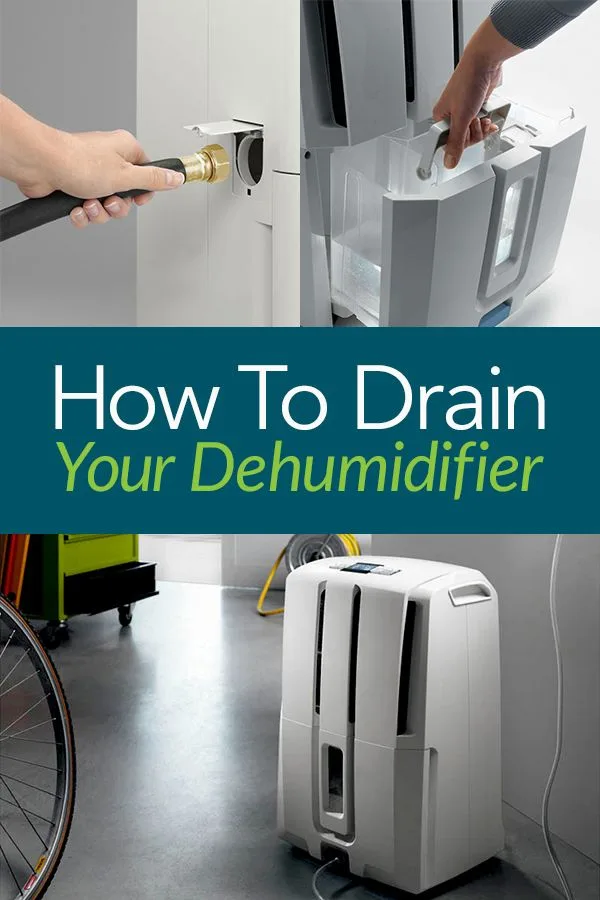
If you're using gravity drainage, run a standard garden hose from the drain port to the floor drain or sump pit. Make sure the hose runs downhill with no dips or loops. A dip in the hose acts like a trap.
Water sits there, algae grows, and the line clogs.
If you need a condensate pump, install it according to the manufacturer's instructions. The pump should sit on a level surface. The discharge tube should run to the drain point.
Most pumps have a check valve to prevent backflow. Make sure it's installed correctly.
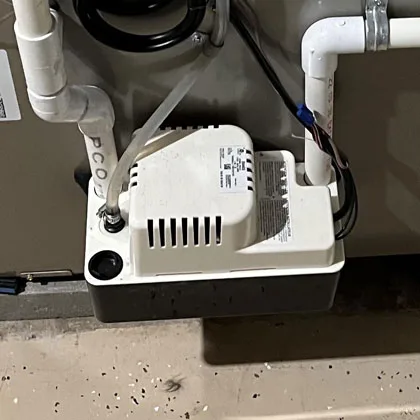
Image source: Bing (Web (fair-use with source credit))
Set the Humidity Target and Test the System
Set the dehumidifier to 50 to 60 percent relative humidity. That's the range recommended by the EPA for mold prevention. Anything below 50 percent is overkill and wastes energy.
Anything above 60 percent risks mold growth.
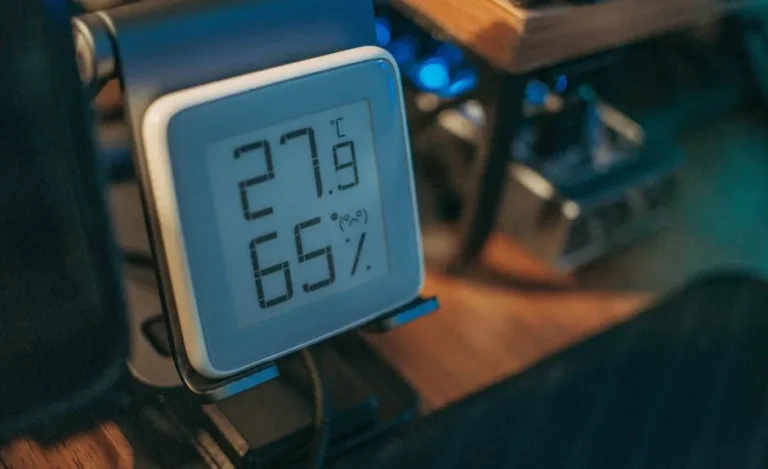
Let the unit run for 24 hours. Check the humidity level with a separate hygrometer. Don't trust the unit's built-in sensor.
They can be off by 5 to 10 percent. If the reading is above 60 percent, lower the target by 5 percent and check again.
7 Placement Mistakes That Wreck Performance
Even experienced homeowners make these mistakes. Here's what to avoid.
1. Putting the unit on dirt or gravel.
Dirt holds moisture. The unit sits in a damp microclimate. It works harder and fails faster.
2. Shoving the unit against a wall.
Airflow is everything. Give the unit room to breathe. At least 12 inches on all sides.
3. Running the drain hose uphill.
Water doesn't flow uphill. If the drain point is above the unit, use a condensate pump. Don't try to force gravity.
4. Using an extension cord.
Extension cords are a fire hazard and a code violation. Use a GFCI outlet within reach of the unit's cord.
5. Placing the unit near the sump pump.
Sump pumps are a source of moisture. The pit itself is open water. Placing the dehumidifier nearby means it's fighting a constant source of humidity.
Move it away.
6. Ignoring the filter.
A dirty filter blocks airflow. The unit freezes up or runs continuously. Set a reminder to check the filter every month.
7. Forgetting about access for maintenance.
If you can't reach the unit, you won't maintain it. An unmaintained dehumidifier is a ticking time bomb. Put it where you can get to it.
GFCI Outlets, Electrical Safety, and Building Codes
Dehumidifiers need electricity. Crawl spaces hold moisture. That combination demands respect.
The National Electrical Code, published by the National Fire Protection Association, requires ground fault circuit interrupter protection on all crawl space outlets as of the 2023 edition. The GFCI kills power in milliseconds if it detects a ground fault. That protects you from electrocution.
Extension cords are illegal in crawl spaces. They're also a common source of fires. If the unit's cord doesn't reach, call a licensed electrician to install a new GFCI outlet.
This is one area where you should never cut corners.
Watch the electrical load. A high-capacity unit can draw 700 to 1,000 watts. Run it on a dedicated 15-amp circuit if possible.
If it shares a circuit with a freezer or washing machine, you'll trip breakers and shorten the unit's lifespan.
Place the outlet at least 12 inches above the crawl space floor. That keeps it above minor flooding. It also protects the plug from moisture.
Test the GFCI monthly. Press the test button, confirm the power cuts, then push reset. It takes two seconds and confirms the protection still works.
Check the cord for cracks or frayed ends before each use. Damaged cords in a damp space are a shock hazard. Replace the unit or have it serviced.
Don't wrap it in tape.
When to Call a Professional vs. DIY
Some crawl space work is easy. Some is genuinely dangerous. Know the difference before you go under there.
You can handle these tasks yourself: laying a vapor barrier, placing the dehumidifier, connecting a gravity drain hose, and setting the humidity. If you can kneel and move around, an afternoon will do it.
Call a professional for any electrical wiring, floor grading, or foundation water issues. Also call if you see visible mold growth. The EPA recommends professional remediation when mold covers more than 10 square feet.
Disturbing large colonies can release spores into your living space.
If water pools on the vapor barrier after heavy rain, your problem is drainage, not humidity. Fix the grading or install a perimeter drain before relying on a dehumidifier. Otherwise, you're running a machine that fights a leak.
| Task | DIY or Pro? |
|---|---|
| Install vapor barrier | DIY, if dry |
| Add electrical outlet | Pro (licensed electrician) |
| Treat mold over 10 sq ft | Pro (remediation company) |
| Place unit and connect drain | DIY |
| Fix standing water | Pro (drainage contractor) |
Frequently Asked Questions
What humidity level should I set my crawl space dehumidifier to?
Set it to 50 to 60 percent relative humidity. That range prevents mold and wood rot without wasting energy. Above 60 percent, mold grows.
Below 50 percent, you're just paying more. Use a separate hygrometer to verify the reading.
Can I run the drain hose to the outside?
Yes, if the outlet is below the unit and the hose runs downhill. Dips trap water, grow algae, and clog the line. Many local plumbing codes require draining into a floor drain or sump pit.
Check your local rules first.
Will a dehumidifier work in a cold crawl space?
Standard compressor models stop working below about 65°F. Ice forms on the coils, and the unit shuts off. A desiccant dehumidifier handles cold conditions much better.
Low-temperature compressor models also exist, but desiccant units are the reliable winter choice.
How often do I need to empty the bucket?
Every day in damp seasons if you skip the drain hose. A 50-pint unit can pull several pints per hour. The bucket fills fast.
For permanent setups, use a gravity drain or condensate pump instead.
Should I run the dehumidifier year-round?
In humid climates, yes. The space can still reach 60 percent relative humidity in winter, especially sealed crawl spaces. Use the built-in hygrometer or a smart plug to automate operation.
If the space stays below 50 percent, you can turn it off.