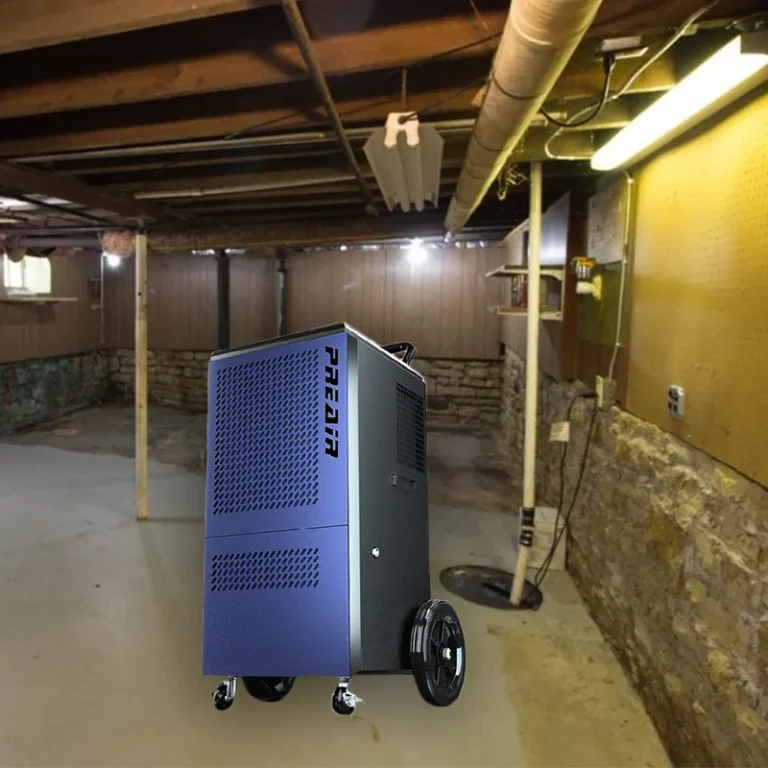
How to Choose the Right Dehumidifier Size
Walking into a damp basement or a sticky bedroom makes you wonder one thing: how to choose the right dehumidifier size. Get it wrong and you'll either waste money on a unit that runs constantly without fixing the problem, or overspend on one that cycles on and off like a light switch. Neither option feels good.
The good news is that sizing follows a clear standard. The Association of Home Appliance Manufacturers (AHAM) tests every unit at 80°F and 60% relative humidity, assigning a pint rating that tells you exactly how much moisture it removes in 24 hours. That number is your starting point.
Let's walk through what it actually means.
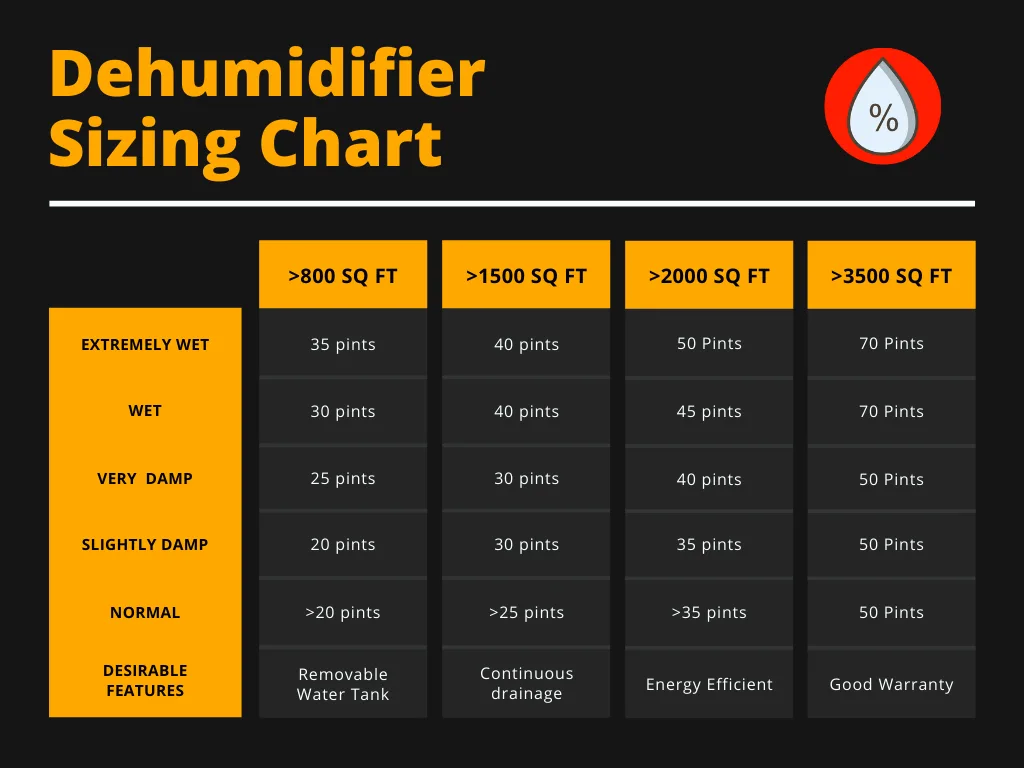
Image source: Bing (Web (fair-use with source credit))
Quick Answer
Match your room's square footage and moisture level to AHAM's pint ratings. Measure length times width. Check your current humidity.
Average rooms need 20 to 30 pints. Damp basements often need 50 to 70 pints. That's the short version.
The details below will get you exact.
Why Dehumidifier Size Matters
Picking the wrong size costs you money and comfort every single day.
An undersized unit runs nonstop. It never pulls the room below 60% humidity. Mold spores keep growing.
Musty smells stick around. The compressor burns out faster because it never gets a break. You end up buying a second unit anyway.
An oversized unit is sneakier. It yanks the humidity down so fast that it shuts off after 10 minutes. The room feels dry for a moment, but moisture seeps right back in.
The constant on-off cycling wastes electricity and wears out the compressor. Plus, a big unit costs more upfront.
The sweet spot is a unit that runs for 10 to 15 minutes, then rests for 10 to 15 minutes during peak humidity. That steady rhythm tells you the size is right. As of 2026, the AHAM certification label on the box is the most reliable shortcut to that sweet spot.
The AHAM Standard: What "Pints" Really Mean
Every portable dehumidifier has two numbers on the box. The bigger one is the "maximum pints" rating. The smaller one is the "AHAM pints" rating.
Ignore the bigger number. It is based on conditions you will never have inside your home.
The AHAM rating is the real one. It measures how much water the unit removes in 24 hours at 80°F and 60% relative humidity. Those are typical indoor conditions during a humid summer.
The manufacturer's "maximum" rating uses 90°F and 90% humidity, which is basically a steam room. Every unit looks impressive in a steam room.
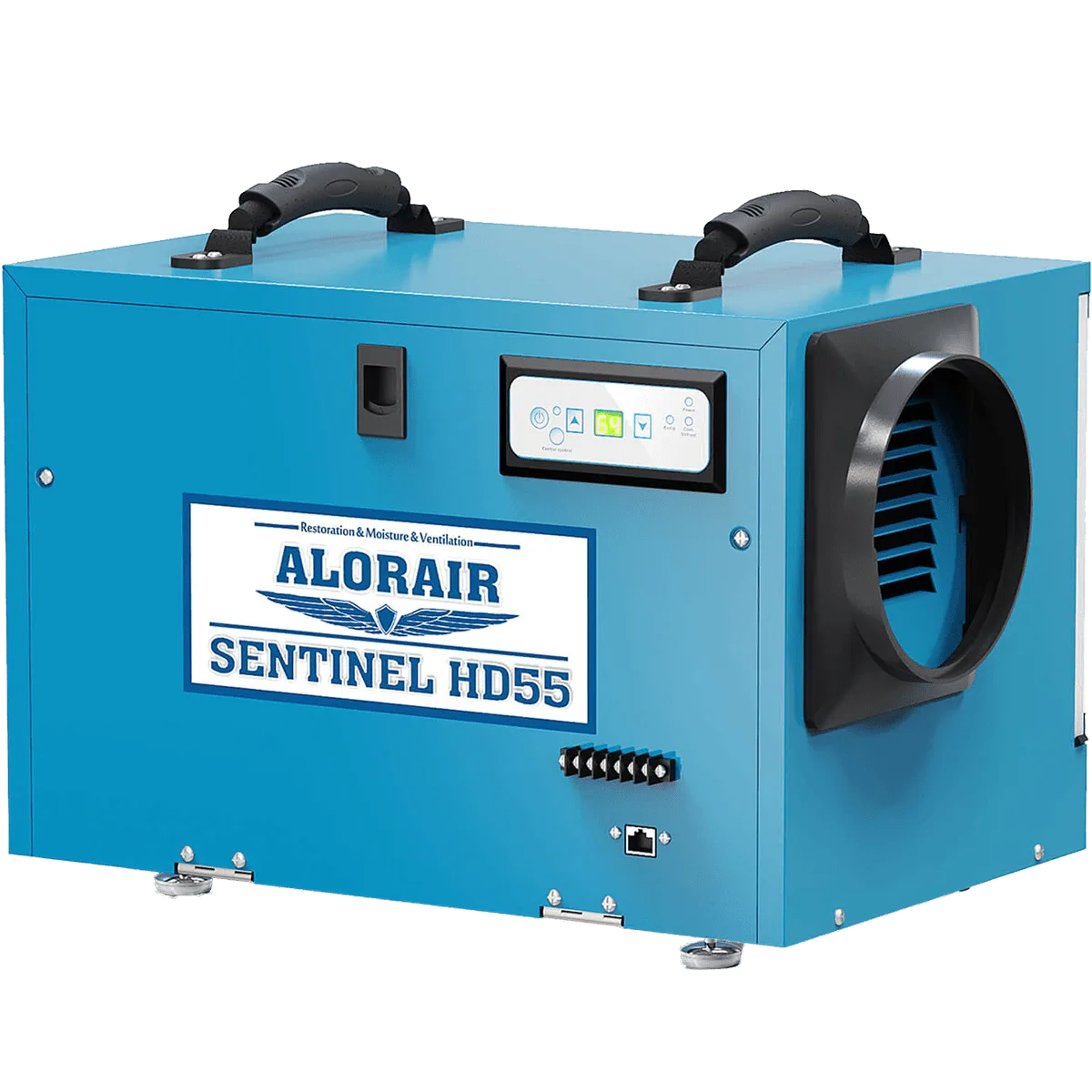
Image source: Bing (Web (fair-use with source credit))
Here is what that means for you. A dehumidifier might say "70 pints" on the front of the box in big letters. But the fine print or the AHAM seal says "50 pints." That 50-pint number is what the unit will actually do in your living room or basement.
Shop by the AHAM number, not the marketing number.
The Energy Star program also uses AHAM ratings. If the unit has Energy Star certification, you can trust that the pint rating is accurate and the energy use is reasonable. Per Energy Star testing, certified units are about 15% more efficient than standard models.
The Three Questions That Decide Your Size
You only need three pieces of information to choose the right size. Write them down before you start shopping.
Question 1: What is the square footage of the room? Measure length times width. For a basement, measure the whole open area, not just the finished part. For an open floor plan, measure the entire combined space.
Do not subtract for furniture. Air moves around furniture.
Question 2: What is the moisture level? This is where most people get it wrong. A living room in a dry climate is different from a basement with a sump pump. You need to know if the room is moderately damp, very damp, or wet.
A standalone hygrometer costs about $10 and gives you the exact relative humidity reading. If the number is above 60%, you need a dehumidifier.
Question 3: What is your target humidity? The standard recommendation from the EPA and most health organizations is 30% to 50% relative humidity. If you live in a hot, humid climate, aim for 50% to 55% to avoid overworking the unit. If you are drying out a basement after a flood, you might run it at 40% for a few days.
These three questions map directly to the AHAM sizing table. The next section gives you the numbers.
Use This Size Lookup Table First
The table below is based on the AHAM standard and verified against manufacturer specifications. It is the same logic that HVAC contractors use when sizing dehumidifiers for basements and whole homes.
| Room Size (sq ft) | Moderately Damp (60-70% RH) | Very Damp (70-80% RH) | Wet (80%+ RH or water damage) |
|---|---|---|---|
| Up to 500 | 20 pints | 30 pints | 35 pints |
| 500 to 1,000 | 30 pints | 40 pints | 50 pints |
| 1,000 to 1,500 | 40 pints | 50 pints | 60 pints |
| 1,500 to 2,000 | 50 pints | 60 pints | 70 pints |
| 2,000 to 2,500 | 60 pints | 70 pints | 90 pints |
Moderately damp means the room feels stuffy but you do not see condensation on windows. Very damp means you can feel moisture on the walls or smell a musty odor. Wet means standing water, visible mold, or a recent flood.
If your room falls between two rows, go up to the larger size. It is better to have a unit that runs slightly less often than one that runs all day. For basements with open staircases or unfinished areas, add 5 to 10 pints to the recommendation.
Then Factor In These Extra Conditions
The table above is a starting point. Real homes have quirks that change the calculation.
Basements are almost always damp. Even if the concrete looks dry, moisture seeps through the walls and floor. Plan for one size larger than the table suggests. A 1,000-square-foot basement that feels moderately damp actually needs a 50-pint unit, not a 30-pint.
For a deep dive on basement-specific models, check out our guide to the best dehumidifier for basement setups.
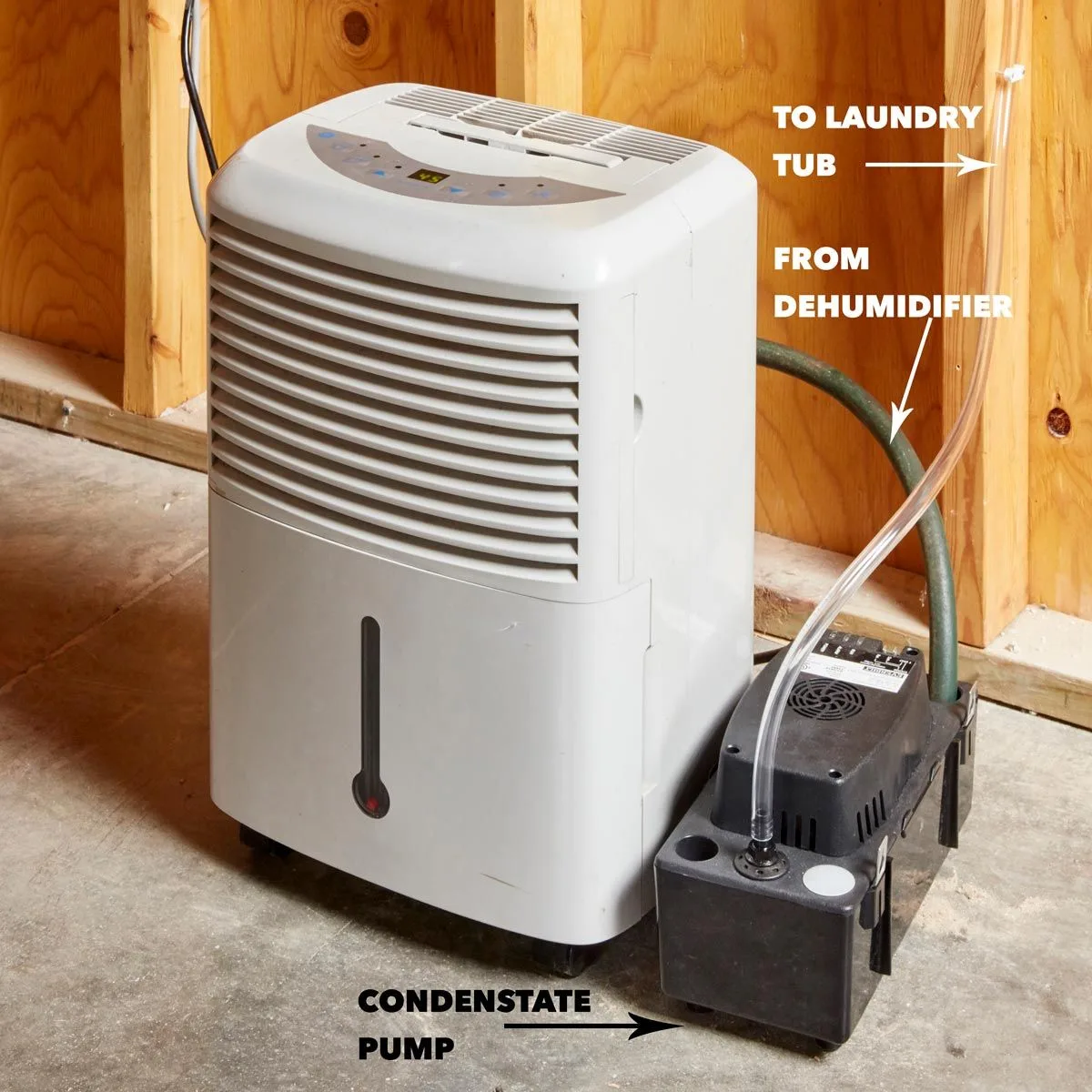
Image source: Bing (Web (fair-use with source credit))
Open floor plans need more capacity. Air moves freely between the kitchen, living room, and dining area. Measure the total square footage of all connected rooms, not just the one where you plan to place the unit. A 1,500-square-foot open plan with high ceilings may need a 70-pint unit even if the table says 50.
Continuous drainage changes everything. If you can run a hose to a floor drain or a sink, you never have to empty the tank. That means you can buy a larger unit without worrying about carrying water. Larger units with continuous drain hoses are the most common choice for finished basements.
Built-in pumps add flexibility. Some dehumidifiers have a pump that pushes water up to a drain or a sink. If your basement has no floor drain, a pump model lets you route the hose to a utility sink or a window well. This is worth the extra cost for anyone who does not want to haul buckets.
High ceilings hold more moisture. A room with 10-foot ceilings has roughly 25% more air volume than a standard 8-foot room. The AHAM table assumes 8-foot ceilings. If yours are taller, bump up one size.
Common Sizing Mistakes
Oversizing when you think bigger is better. A larger unit sounds like a safe bet. It is not. An oversized dehumidifier pulls the room to your target humidity in 10 minutes, then shuts off.
Moisture from the walls and floor seeps back in before the compressor kicks on again. The result is high energy bills and poor average humidity. If your room is 800 square feet and moderately damp, a 30-pint unit works.
A 70-pint unit will short-cycle and waste power.
Undersizing because you want to save money. A cheap, undersized unit runs for hours without ever hitting 50% humidity. The compressor never rests. It burns out in a year or two.
You also get mold growth, musty smells, and higher electric bills from the constant runtime. The math is simple. A 20-pint unit in a 1,200-square-foot basement will run 24 hours a day.
A correctly sized 50-pint unit runs half that time.
Ignoring basement conditions. Basements are the most common mistake. People measure the square footage but forget that concrete walls and floors wick moisture constantly. An unfinished basement at 65% relative humidity is actually very damp.
Use the "very damp" column in the table, even if the air feels okay. Then add 5 to 10 pints for safety.
Forgetting to check ceiling height. Standard AHAM tables assume 8-foot ceilings. If your room has 9-foot or 10-foot ceilings, the air volume is 10 to 25% larger. A 1,000-square-foot room with 10-foot ceilings has the same volume as a 1,250-square-foot room with 8-foot ceilings.
Adjust your size up one row in the table.
Frequently Asked Questions
What happens if I get a dehumidifier that is too big?
The unit short-cycles, running in short bursts. It never runs long enough to pull moisture from walls and furniture. Humidity stays higher than expected, and energy use goes up because of the frequent restarting.
It also wears out the compressor faster.
What happens if I get a dehumidifier that is too small?
It runs continuously without reaching your target humidity. The room stays damp, mold and mildew thrive, and the compressor wears out quickly. You end up buying a second unit, spending more in total.
Do I need a dehumidifier with a pump?
A pump is useful if you have no floor drain and need to push water up to a sink or a window. For basements with a floor drain, a standard gravity drain works fine. Pumps add cost and noise, so only get one if you really need it.
How many pints do I need for a 1,500-square-foot basement?
For a moderately damp basement, 50 pints. For a very damp basement, 60 to 70 pints. For a wet basement with visible moisture, 70 pints.
Always lean larger for basements because of concrete moisture.
Can I use one dehumidifier for my whole house?
Portable units are designed for single rooms or open floor plans up to about 2,000 square feet. For a whole house, you need a built-in whole-house dehumidifier that ties into your HVAC system. Portable units cannot handle multiple closed rooms.
Final Verdict: Walk Through Your Choice
Here is a simple decision guide to lock in your size.
Step 1. Measure the room length and width. Multiply them. Write down the square footage.
Step 2. Check your current humidity with a $10 hygrometer. If it is above 60%, note whether the room feels moderately damp, very damp, or wet.
Step 3. Look up the AHAM recommendation in the table above. Use the column that matches your moisture level.
Step 4. Adjust for basement conditions, high ceilings, or open floor plans. Add 10 to 20 pints if any of those apply.
Step 5. Choose a model with the AHAM pint rating that matches your adjusted number. Ignore the higher "maximum" rating on the box.
Step 6. Confirm the unit has a continuous drain option and, if you need one, a built-in pump. For basement use, a unit with a pump saves you from hauling buckets.
That is it. You now have a dehumidifier that runs efficiently, hits your target humidity, and lasts for years. For more recommendations on specific models, see our guide to the best dehumidifier on the market.