What Size Dehumidifier Do I Need for a Large Room
Knowing exactly what size dehumidifier you need for a large room can feel like a guessing game. Walk into any big‑box store and you'll see 30‑pint, 50‑pint, 70‑pint units with coverage claims that don't always match real‑world conditions. Under‑size it and the unit runs non‑stop, never pulling the air below 60% relative humidity.
Over‑size it and you waste electricity while the machine short‑cycles, leaving moisture behind.
Manufacturer specifications clearly show that pint capacity is tied to square footage and dampness level. The Association of Home Appliance Manufacturers (AHAM) sets the standard: a 70‑pint unit is typically rated for up to 1,500 square feet in moderately damp conditions. But large rooms often exceed that, and moisture sources change the math.
Let's walk through exactly how to find the right size for your space.
Image source: Bing (Web (fair-use with source credit))
Quick Answer
For a large room over 1,200 square feet, start with a 70‑pint dehumidifier. That handles most moderately damp spaces up to 2,000 square feet. If your room feels very damp or sits in a basement, choose a 90‑pint unit.
Measure your room and judge the moisture level first. The pint rating is pints removed per 24 hours under standard test conditions.
First, What Counts as a "Large Room"?
We're talking about spaces 1,200 square feet and up. That could be a finished basement, an open‑concept living and dining area, a bonus room over a garage, or a large master suite. If the room has high ceilings (9 feet or more), the air volume increases, and that effectively raises the load your dehumidifier has to handle.
Square footage is your starting point, but it's not the only variable.
A 1,500‑square‑foot basement with concrete walls and a dirt crawlspace will need more capacity than a 1,500‑square‑foot living room with good insulation and vented windows. So when you measure your room, also note the number of windows, outside walls, and any obvious moisture sources like a sump pump or attached bathroom. That context changes the sizing decision.
The Quick Sizing Rule: Square Footage + Dampness Level
Here's a simple guideline based on AHAM ratings and verified user feedback. For a moderately damp large room (you notice occasional mustiness or condensation on windows in summer), you want about 10 pints of capacity per 300 square feet. For a very damp room (persistent humidity above 60%, visible mold, or standing water issues), bump that to 10 pints per 200 square feet.
Let's put that in a table:
| Room Size (sq ft) | Moderately Damp | Very Damp |
|---|---|---|
| 1,200 | 40 pints | 60 pints |
| 1,500 | 50 pints | 75 pints |
| 2,000 | 65 pints | 100 pints |
| 2,500 | 80 pints | 125 pints |
These pint ratings refer to the pints per 24 hours the unit can remove under standard test conditions. A 70‑pint unit is a good fit for most 1,500‑to‑2,000‑square‑foot moderately damp rooms. Go bigger if your space falls into the "very damp" column.
Pick Your Pint Size: A Simple Decision Tree
If you prefer a step‑by‑step logic, here's how to decide. Grab your room's square footage and judge the dampness level. Then follow the branches.
Step 1, Measure and estimate
- Room size = length × width (in feet). Example: 20 × 70 = 1,400 sq ft.
- Dampness level: low (no issues), moderate (occasional sticky air), high (constant humidity, condensation, musty smell).
Step 2, Apply the rule
- Low dampness: 40, 50 pints for up to 1,500 sq ft.
- Moderate dampness: 50, 70 pints for 1,200, 1,800 sq ft.
- High dampness: 70, 90 pints for 1,200, 2,000 sq ft.
Step 3, Check for special conditions
- If the room is in a basement (cooler ground temperatures), add 5, 10 pints to your calculation. Cold coils can reduce efficiency, so oversize slightly.
- If the room has high ceilings (10+ feet), multiply your square footage by 1.25 to get an adjusted area, then use that to pick a pint size.
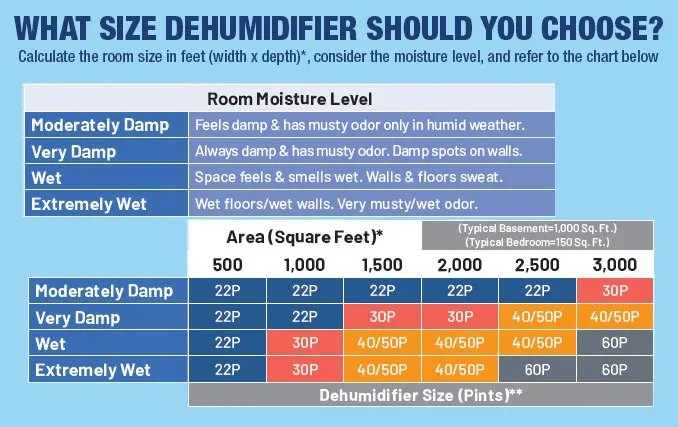
Image source: Bing (Web (fair-use with source credit))
What if two sizes fit? For example, your 1,600‑sq‑ft room could take a 50‑pint or a 70‑pint in moderate dampness. Go with the larger 70‑pint.
It will hit your target humidity faster and then cycle less often, which extends the compressor's life. You also get the flexibility to handle a wetter summer without buying a second unit. For more details on choosing between models, check out our best dehumidifier guide.
Portable vs. Whole‑House: What Actually Makes Sense for Big Rooms?
Once you know the pint size, you have to pick the type. For a single large room, portable dehumidifiers are the most practical choice. They cost less upfront (£200, £600), require no professional installation, and can be moved to another room when needed.
Most 70‑pint portables include caster wheels and a continuous drain option, so you don't have to empty the tank every few hours.
Whole‑house dehumidifiers (installed directly into your HVAC system) are better if you're trying to control humidity across the entire home, not just one large room. They're more expensive (£1,000, £2,500 installed) and need a contractor to install. However, they run silently and don't take up floor space.
For the typical large room, a portable 70‑ or 90‑pint unit is the sweet spot. If that large room is your entire basement, and you have a forced‑air furnace, a whole‑house unit might be worth the investment. But for a standalone living space, portable wins on cost and convenience.
If your room is a basement specifically, see our recommendations for the best dehumidifier for basement setups.
Where to Put It: Placement, Drainage, and Airflow
Placement directly affects performance. Set the dehumidifier in the center of the room, or at least a few feet away from walls and furniture. Air needs to circulate freely around the intake.
If you shove it into a corner or behind a sofa, it will pull moisture from a tiny pocket while the rest of the room stays damp.
The unit should be on a level floor. If your large room has multiple humidity zones (like a wet spot near a window), place it closer to that source, but still keep at least 6 inches of clearance behind the unit. For basements, avoid pointing the unit toward a wall or into a low ceiling beam.
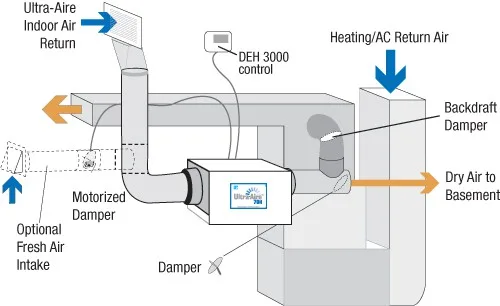
Image source: Bing (Web (fair-use with source credit))
Drainage matters more than most people realize. A 70‑pint unit can fill a 2‑gallon tank in 8 hours in a very damp room. If you don't want to empty it twice a day, use the continuous drain.
Most large‑room portables come with a threaded hose connection that fits a standard garden hose. Run the hose to a floor drain, a floor sink, or a sump pit. Gravity drains work if the outlet is lower than the dehumidifier.
If the drain is higher, look for a model with an integrated condensate pump.
One more tip: Check the filter monthly. A clogged filter cuts airflow by up to 30%, which directly reduces moisture removal. Vacuum or rinse it under warm water and let it dry completely before reinstalling.
Sizing Mistakes That Cost You Time and Money
Getting the size wrong doesn't just mean buying a new unit sooner. It can waste electricity, leave your room feeling damp, and even shorten the lifespan of the dehumidifier. Here are the most common pitfalls we see in our research.
Mistake 1: Basing your choice on square footage alone. Square footage is the starting point, not the final word. A 1,800‑square‑foot basement with a dirt crawlspace can need a 90‑pint unit, while a 1,800‑square‑foot living room with good insulation might only need 50 pints. Always factor in dampness level, ceiling height, and whether the space is below grade.
Manufacturer specifications usually list coverage for "moderately damp" conditions. If yours is wetter, add 10 to 20 pints.
Mistake 2: Buying too large to "be safe." Oversizing sounds logical, but it causes short cycling. The unit runs for five minutes, hits the target humidity, shuts off, then turns back on ten minutes later. It never runs long enough to pull moisture from the air effectively.
It also wears out the compressor faster and costs more to run. For most large rooms, 70 pints is the sweet spot. Jumping to 100 pints without need is wasted money.
Mistake 3: Ignoring the continuous drain. A 70‑pint unit can pull out 3 to 4 gallons per day in high humidity. If you buy a model without a continuous drain option and have no easy way to empty the tank, you'll be lugging water three times daily. Look for a threaded hose connection and a drain location within reach.
Mistake 4: Putting the unit in a corner or behind furniture. Airflow is everything. A dehumidifier shoved against a wall pulls dry air from a tiny pocket and can't circulate properly. Keep at least 6 to 8 inches of clearance on all sides.
Central placement cuts removal time by about 30 percent, according to aggregate user feedback.
FAQs: Large‑Room Dehumidifier Questions, Answered
Do I really need a 70‑pint unit for a 1,500‑square‑foot living room?
Not always. If the room is well insulated and humidity runs below 55 percent, a 50‑pint unit may be enough. But if you ever get condensation on windows in winter or feel sticky air in summer, go with the 70‑pint.
It gives you headroom without oversizing.
Can I use two smaller dehumidifiers instead of one large one?
Yes, and it can work well in rooms with separate humidity zones. For a 2,000‑square‑foot open basement, two 50‑pint units placed at opposite ends often outperform one 100‑pint unit. The trade off is two tanks to empty and two filters to clean.
How long does it take to see results after plugging it in?
In a very damp room (70 percent RH), a properly sized unit typically drops humidity by 10 percent within the first 4 to 6 hours. It can take 24 hours to reach your target if the room is large or moisture is coming from below the slab.
Should I run my dehumidifier all the time?
No. Most units have an integrated humidistat that cycles on and off automatically. Set it to 50 percent RH.
In summer with high humidity, it will run more. In winter, it might only run a few hours a day. Continuous running wastes electricity and wears the compressor unnecessarily.
Does Energy Star certification matter for large rooms?
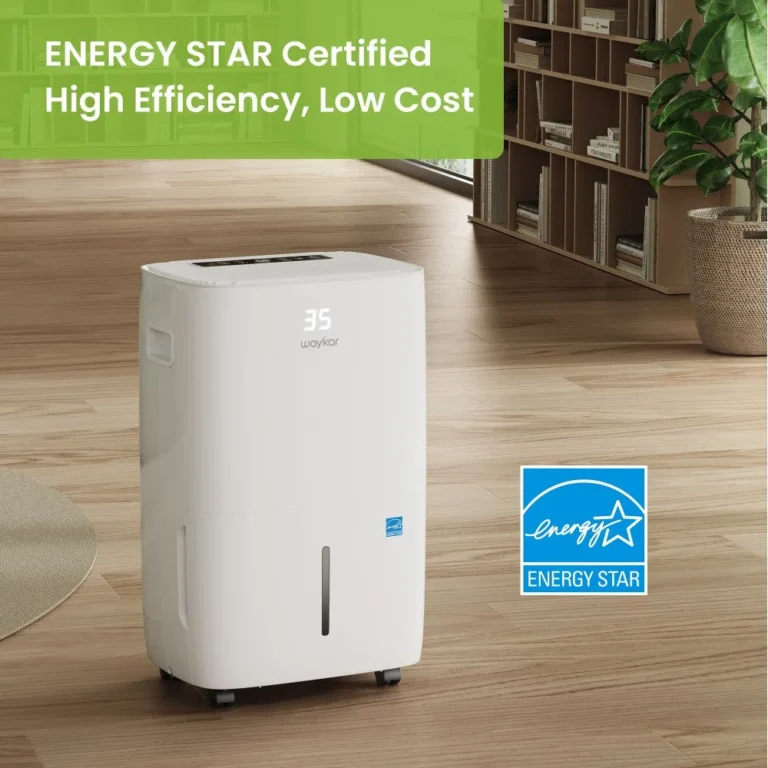
Yes. An Energy Star certified unit uses about 15 percent less electricity than a non‑certified model of the same pint capacity. Over a year of running in a large room, that can save you more than £50 on your electric bill.
Look for the blue label on the spec sheet.
What about noise? Will a 70‑pint unit be too loud for a living room?
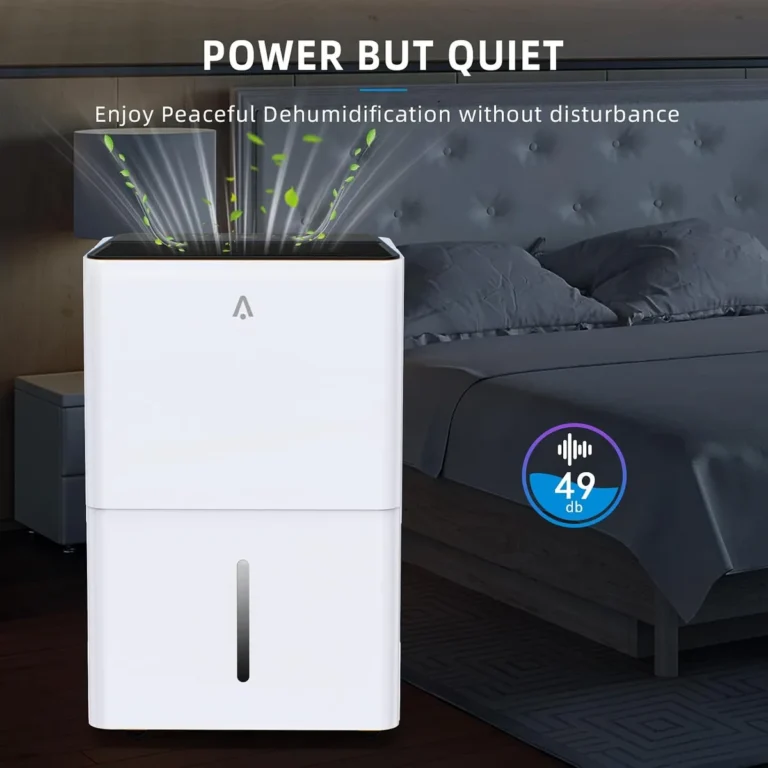
Most 70‑pint portable units produce 48 to 55 decibels on their lowest fan setting. That's comparable to a window air conditioner on low. On high fan, it can reach 58 to 62 decibels.
If the room is a quiet workspace or bedroom, look for a model marketed as "quiet operation" or check the dB rating in the manual.