How Much Does a Good Hygrometer Cost
How much does a good hygrometer cost? It's a simple question with a complicated answer. The truth is, a "good" hygrometer for your cigar humidor is very different from one for a professional greenhouse.
And the price tag reflects that gap.
Manufacturer specifications indicate that consumer-grade hygrometers range from $10 to $100, while professional units with NIST-traceable calibration can exceed $200. The key is knowing what you actually need before you spend a dime. Let's walk through the variables that determine the right price for you.
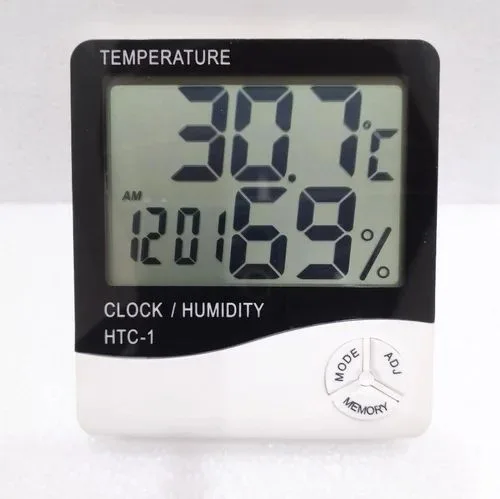
Image source: Bing (Web (fair-use with source credit))
Quick Answer
A good hygrometer costs $10 to $100 for most home users. Budget models under $10 often drift by ±5% or more. Mid-range units ($15 to $30) offer ±2 to 3% accuracy.
Premium models ($50 to $100) add WiFi logging and ±1% precision. Professional lab-grade units start at $150.
Why You Can't Just Google a Number (And What to Do Instead)
If you search for hygrometer prices, you'll see everything from $8 to $300. That's not helpful. It's like asking how much a car costs.
The answer depends entirely on what you need it to do.
The core problem is that "good" means different things in different situations. For a cigar humidor, you need consistent ±2% accuracy to protect your investment. For a basement monitor, you just need a rough trend indicator.
For a greenhouse, you might need remote alerts and data logging.
Here's what most people don't realize. Accuracy is the single biggest cost driver. Cheap sensors drift over time.
A $10 hygrometer might read perfectly for a month, then drift by 5% or more. That's useless for anything critical.
Cheap sensors use resistive or mechanical elements that are sensitive to contamination and aging. A capacitive sensor, found in most mid-range and premium units, is far more stable. That's why you see a direct correlation between price and long-term accuracy.
A $10 hygrometer might claim ±3% accuracy out of the box. But after six months, it could be off by 8% or more. A $50 unit with a capacitive sensor will hold its calibration much longer.
So instead of looking for a single number, think about what you're monitoring. That's the first branch in the decision tree. We'll walk through the key variables next.
Let's Walk Through the Key Variables: Accuracy, Features, and Connectivity
Three things determine how much you'll pay for a hygrometer. Those are accuracy, features, and connectivity. Here's a quick breakdown of each.
| Variable | What It Means | Price Impact |
|---|---|---|
| Accuracy | ±5% to ±1% relative humidity | ±5% models cost under $10. ±2% models cost $15 to $30. ±1% models cost $50 or more. |
| Features | Min/max recall, data logging, calibration | Basic models have none. Premium models log weeks of data. |
| Connectivity | Bluetooth, WiFi, or none | Wireless models add $10 to $30 over wired equivalents. |
Accuracy is the most important variable for critical uses. If you're protecting cigars, wood, or instruments, you need ±2% or better. If you're just checking general home comfort, ±5% is fine.
Features like data logging and remote alerts matter when you need trend data. A grower might want to track humidity over a week. A homeowner might not care.
Connectivity adds convenience. Smart hygrometers let you check readings from your phone. But they also drain batteries faster and cost more.
The key takeaway is simple. Don't pay for features you don't need. A simple $15 unit with good accuracy beats a $50 smart sensor that gives you the same reading.
What You're Actually Monitoring: Matching Your Use Case to a Price Tier
This is the most important section. Your use case determines your budget. Here's how the decision tree branches.
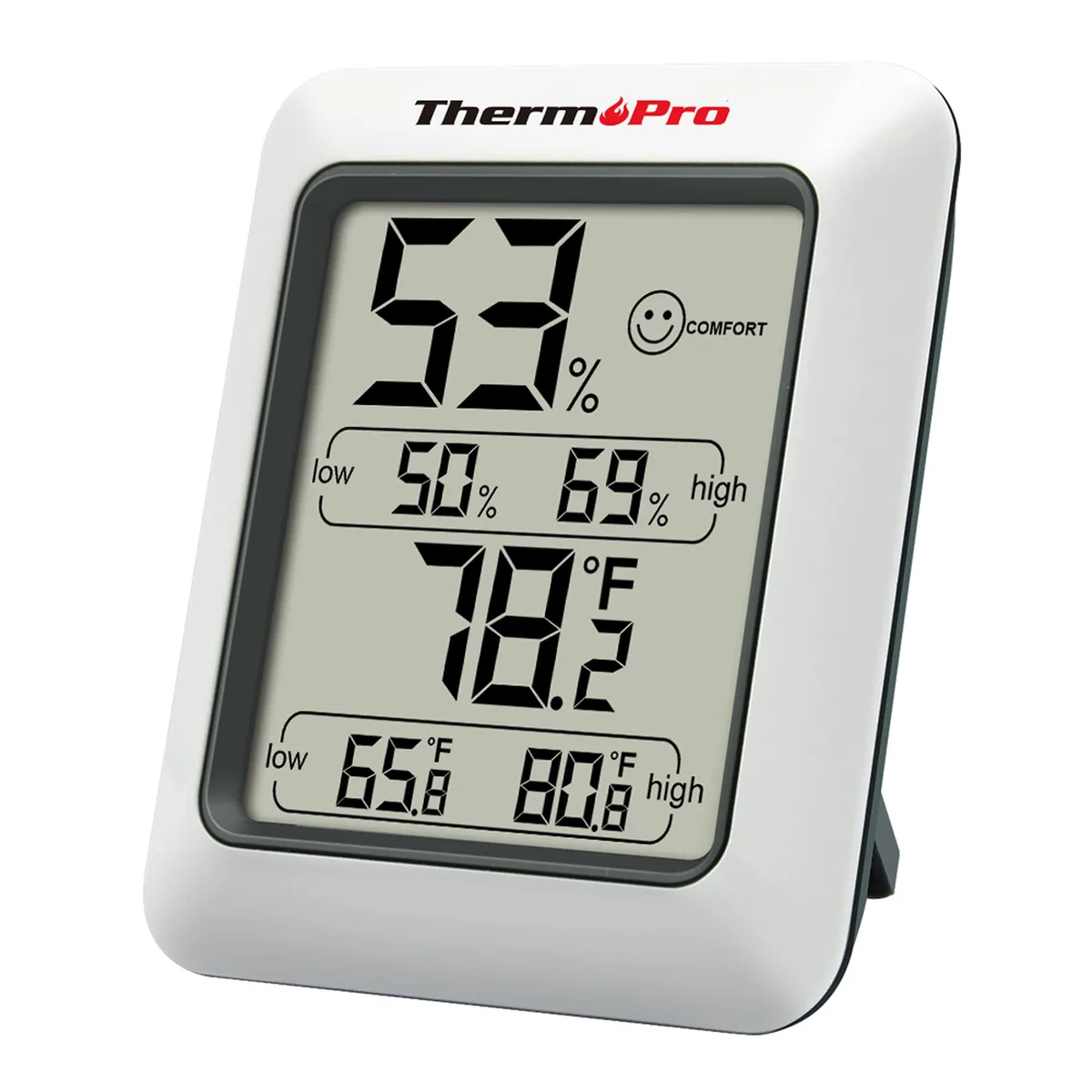
Image source: Bing (Web (fair-use with source credit))
Cigar Humidor or Wine Cabinet. You need ±2% accuracy or better. Cigars and wine are sensitive to humidity swings. A $20 to $30 hygrometer with a capacitive sensor works well.
Skip the $8 models. They'll drift and ruin your stash.
Home Grow Tent or Greenhouse. You need remote monitoring and data logging. A smart hygrometer with WiFi, around $30 to $50, lets you check conditions from your phone. Some models also control humidifiers or dehumidifiers.
Crawl Space, Basement, or Attic. You need a cheap, reliable trend indicator. A $10 to $15 model with a remote probe works fine. You don't need ±1% accuracy here.
You just need to know if it's getting too damp.
Guitar Case or Gun Safe. You need a small, accurate unit. A $15 to $20 hygrometer with a remote sensor fits inside a case. Accuracy around ±3% is fine.
General Home Comfort or HVAC Troubleshooting. A $15 to $25 thermo-hygrometer gives you both temperature and humidity. That's enough for most homeowners.
The Real Cost of a Cheap Hygrometer (And Why Accuracy Matters)
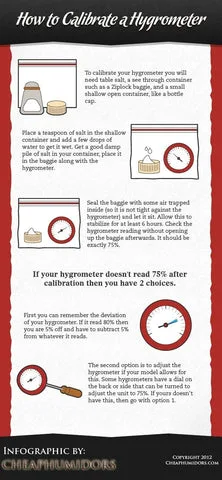
Image source: Bing (Web (fair-use with source credit))
A cheap hygrometer seems like a bargain at $8. But the real cost shows up when you trust a bad reading.
Consider this. A $10 hygrometer might claim ±3% accuracy out of the box. But after six months, drift can push it to ±8% or worse.
That's a 10% relative humidity error. For a cigar humidor, that's the difference between perfect storage and ruined cigars.
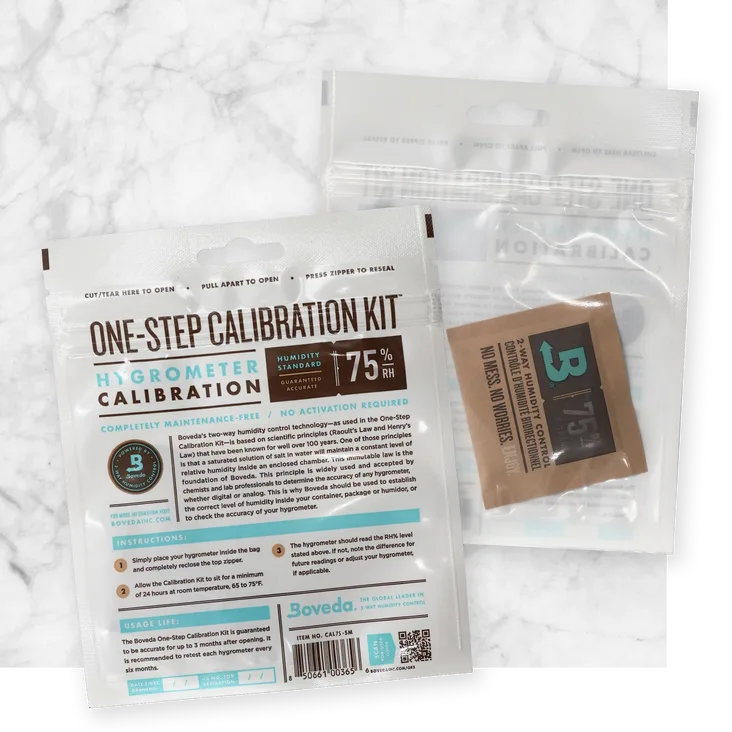
The salt test is a simple way to check calibration. You put the hygrometer in a sealed bag with a saturated salt solution. The salt creates a stable 75% RH environment.
If your hygrometer reads 75% after 24 hours, it's accurate. If not, you know the error.
Manufacturer specifications for consumer-grade hygrometers rarely guarantee long-term accuracy. Only NIST-traceable units, which cost $100 or more, come with a calibration certificate. For most home users, that's overkill.
The bottom line is this. A $20 hygrometer that you calibrate annually is more reliable than a $50 unit you never check. Budget for a calibration kit, which runs $10 to $15, if you're monitoring something critical.
The Three Most Common Mistakes People Make When Buying
Most people buy the wrong hygrometer because they don't understand the trade-offs. Here are the three biggest mistakes.
Mistake 1: Buying based on accuracy claims alone. A $10 hygrometer might claim ±3% accuracy. But that's usually at one temperature and humidity point. Real-world performance varies.
Look for units with good user reviews and a history of staying accurate over time. Manufacturer specs are ideal conditions, not real life.
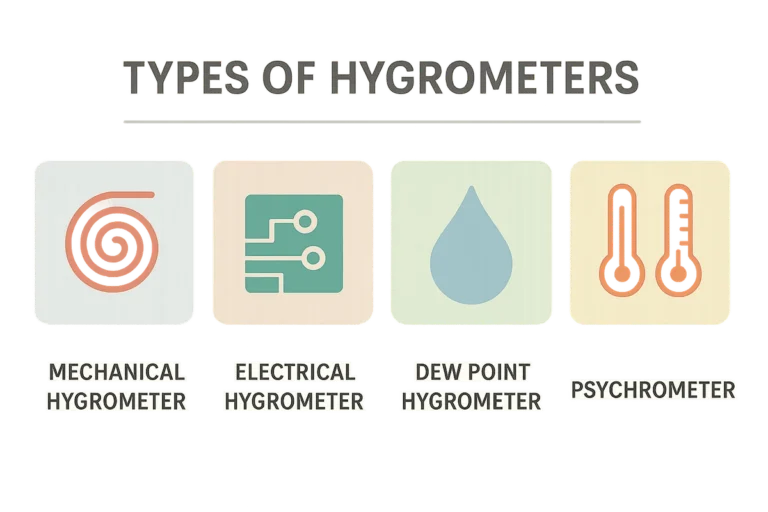
Mistake 2: Ignoring the sensor type. Resistive sensors are cheap and drift fast. Capacitive sensors are more stable and accurate. Mechanical sensors, found in analog hygrometers, are notoriously unreliable.
Always check the sensor type before buying.
Mistake 3: Forgetting about placement. Even a perfect hygrometer gives wrong readings if placed near a draft, in direct sunlight, or near a humidifier. Read the manual for placement guidelines. Most models need good airflow and a stable temperature.
A reading that's off because of placement isn't the device's fault.
Avoid these mistakes and you'll save money and frustration. The right hygrometer for your use case is the one that stays accurate where you actually put it.
A Simple Decision Guide: How to Spend Exactly What You Need
Here is a straightforward decision tree. Answer each question and follow the branch.
Question 1: Do you need to protect something valuable? Think cigars, wine, instruments, or firearms. If yes, spend $20 to $30 on a capacitive-sensor hygrometer with ±2% accuracy. If no, move to the next question.
Question 2: Do you need remote monitoring? Think greenhouses, crawl spaces, or vacation homes. If yes, spend $30 to $50 on a WiFi-enabled smart hygrometer. If no, a basic digital model will do.
Question 3: Do you need data logging for trends? Think growers, HVAC diagnostics, or research. If yes, spend $40 to $80 on a model with onboard memory or cloud storage. If no, a simple readout is fine.
Question 4: Do you need lab-grade accuracy? Think calibration labs, museums, or pharmaceutical storage. If yes, spend $150 or more on a NIST-traceable unit. If no, consumer-grade accuracy is sufficient.
Here is a quick reference table for the most common use cases.
| Use Case | Recommended Budget | Key Feature |
|---|---|---|
| Cigar humidor | $20 to $30 | ±2% accuracy, capacitive sensor |
| Home grow tent | $30 to $50 | WiFi, remote alerts |
| Basement or crawl space | $10 to $15 | Remote probe, basic trend |
| Guitar case or gun safe | $15 to $20 | Compact size, ±3% accuracy |
| General home comfort | $15 to $25 | Thermo-hygrometer, min/max recall |
| Professional or lab use | $150 or more | NIST-traceable calibration |
Frequently Asked Questions
What is the difference between ±2% and ±5% accuracy in practice?
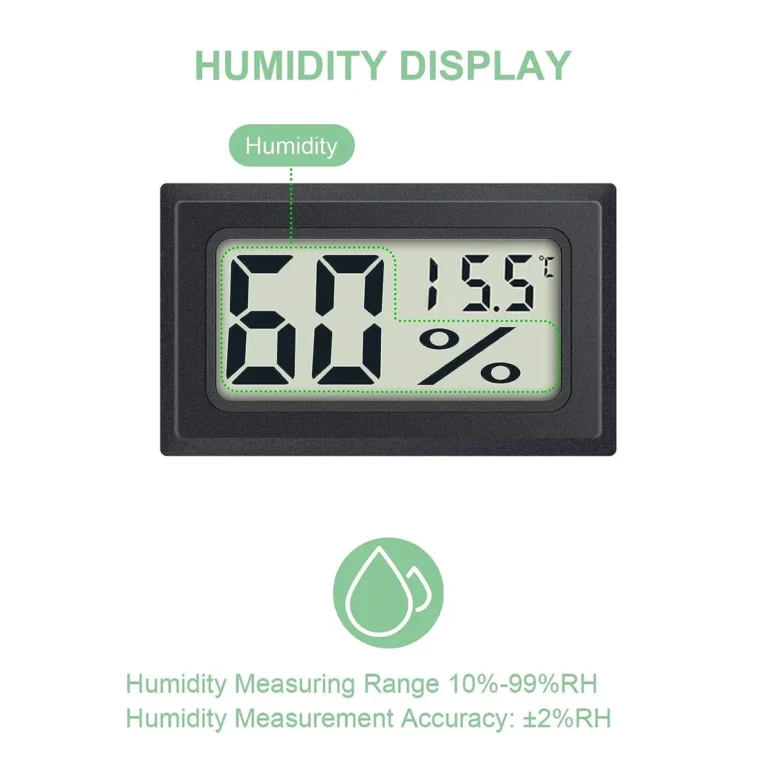
A ±2% hygrometer reads between 73% and 77% in a 75% RH environment. A ±5% unit reads between 70% and 80%. That 10% swing is the difference between safe cigar storage and mold risk.
For critical uses, ±2% is the minimum.
How often should I calibrate my hygrometer?
Calibrate every six months for critical uses like humidors or grow tents. For general home monitoring, once a year is enough. The salt test is simple and costs under $2.
A Boveda calibration kit runs about $10 and is even easier.
Can I use a cheap hygrometer if I calibrate it regularly?
Yes, but only if the sensor is stable enough to hold calibration. Many cheap resistive sensors drift continuously. You might calibrate it today and find it off by 5% next week.
Capacitive sensors hold calibration much longer and are worth the extra cost.
Do I need a hygrometer with WiFi or Bluetooth?
Only if you need remote monitoring. WiFi is better for long-distance access, like checking a greenhouse from home. Bluetooth works for nearby monitoring, like a humidor in the same room.
Both add $10 to $30 to the price and drain batteries faster.
What is the salt test for hygrometer calibration?
Mix table salt with a few drops of distilled water until it forms a thick paste. Put the paste and the hygrometer in a sealed plastic bag. Wait 24 hours.
The air inside should be exactly 75% RH. If your hygrometer reads 75%, it is accurate. If not, note the offset or replace the unit.
How long does a typical hygrometer last?
Cheap resistive models often drift noticeably within 6 to 12 months. Mid-range capacitive units last 3 to 5 years before drift becomes significant. Premium NIST-traceable units can last 10 years or more with regular recalibration.
The Final Verdict: How to Spend Exactly What You Need
The question "how much does a good hygrometer cost" does not have a single answer. But it does have a simple framework.
For most people, the sweet spot is $15 to $30. That range buys you a capacitive sensor, ±2 to 3% accuracy, and basic features like min/max recall. That is enough for cigars, instruments, home comfort, and most hobbyist uses.
If you need remote monitoring, step up to $30 to $50. If you need lab-grade accuracy, plan for $150 or more. If you just need a rough trend indicator, $10 to $15 works.
The most important takeaway is this. Spend more on accuracy than on features. A simple, accurate hygrometer that you calibrate regularly will serve you better than a fancy smart sensor that drifts.
And always test your unit with a salt check before trusting it with something valuable.