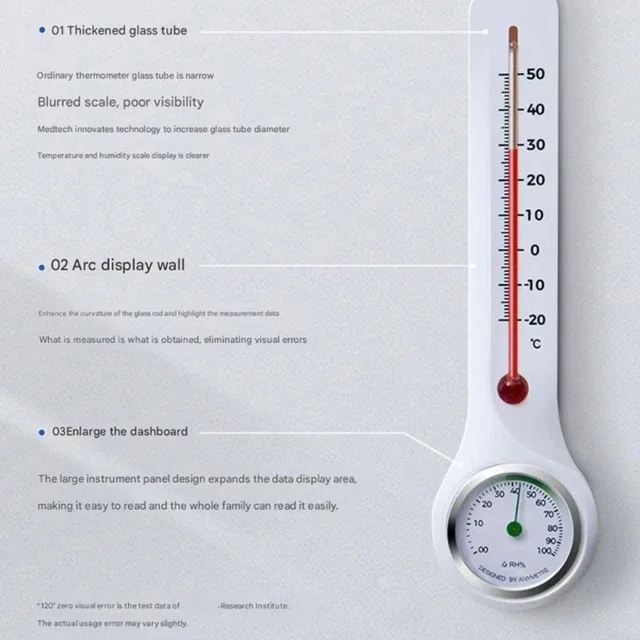
What Humidity Is Best for Houseplants
If you're asking what humidity is best for houseplants, you've probably watched a fern crisp up or a calathea curl its leaves for no obvious reason. It's not always about how much you water. Often, the air itself is the problem.
Your plant has been trying to tell you something.
Research from university extension programs and horticulture journals points to a clear baseline. Most common houseplants do best in 40 to 60 percent relative humidity. As of 2026, that range shows up consistently in indoor gardening guidance.
The real work is figuring out where your home lands on that scale. But first, look at the leaves.
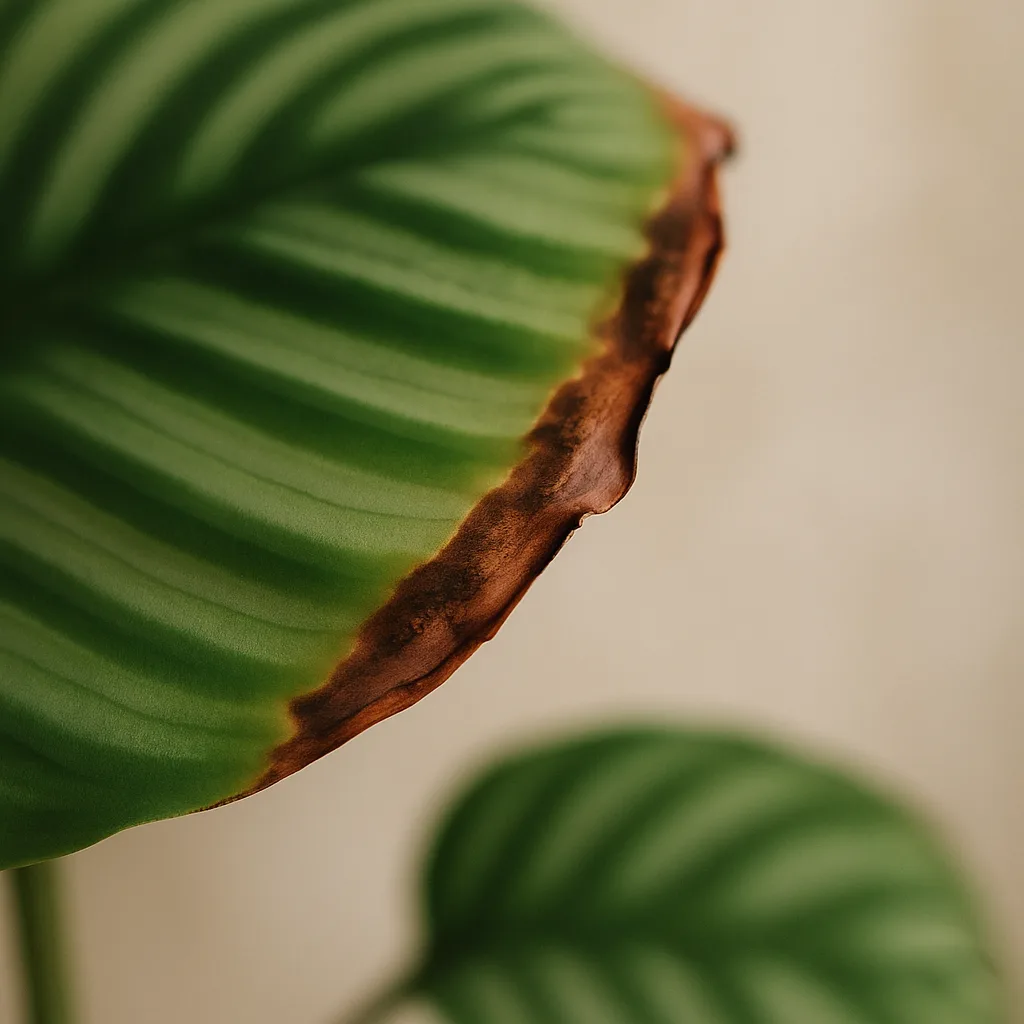
Image source: Bing (Web (fair-use with source credit))
Why Your Plant's Leaves Are Telling You About Humidity
Brown leaf edges are the classic cry for help. When air is dry, water evaporates from leaves faster than roots can pull it up. The edges turn crispy, starting at the tips.
Low humidity is the likely culprit.
Underwatering looks identical, so check the soil first. Leaf curling is another tell. Calatheas and prayer plants roll leaves inward when humidity drops.
It's a survival move that reduces surface area.
Too much humidity looks different. Yellowing leaves, mold on the soil, and a mushy feel signal excess moisture. Succulents and cacti rot quickly in these conditions.
Orchids can suffer too when their medium stays wet.
The visual difference matters. Crispy means dry. Mushy means wet.
Curling means stress. The image above shows what low-humidity damage looks like up close.
The Quick Answer
What humidity is best for houseplants? Most want 40 to 60 percent relative humidity. Tropical plants prefer the higher end.
Succulents tolerate lower levels. Below 40 percent causes leaf damage. Above 60 percent creates mold risk.
Know Your Plant: Tropical Divas vs. Desert Survivors
Your plant's origins tell you almost everything about its humidity needs. Tropical understory plants evolved in damp, shaded forests. Desert plants evolved in dry, open conditions.
Match the air to the origin, and your plant will thrive.
A simple three-way split covers most houseplants. High-humidity lovers want 60 to 80 percent. The medium group is happy with 40 to 60 percent.
Low-humidity plants handle 30 to 40 percent without complaint.
| Humidity group | Range | Common plants |
|---|---|---|
| High | 60-80% | Ferns, calatheas, alocasias, anthuriums, orchids |
| Medium | 40-60% | Monstera, pothos, philodendron, peace lily, spider plant |
| Low | 30-40% | Snake plant, ZZ plant, succulents, cacti, yucca, ponytail palm |
If your plant isn't in the table, search its name plus "humidity." A quick check beats guessing. In our research, the plants people struggle with most, calatheas, ferns, and alocasias, all sit in the high group. The easiest houseplants, snake plants and ZZ plants, sit in the low group.
These ranges aren't arbitrary. They come from where each plant evolved and how it handles water loss. Knowing that makes the numbers easier to remember.
And they're preferences, not strict laws. A pothos will survive at 35 percent humidity. It just won't look its best.
A calathea at 35 percent will show crispy edges within a week.
Measure Your Space: How to Check Your Home's Actual Humidity
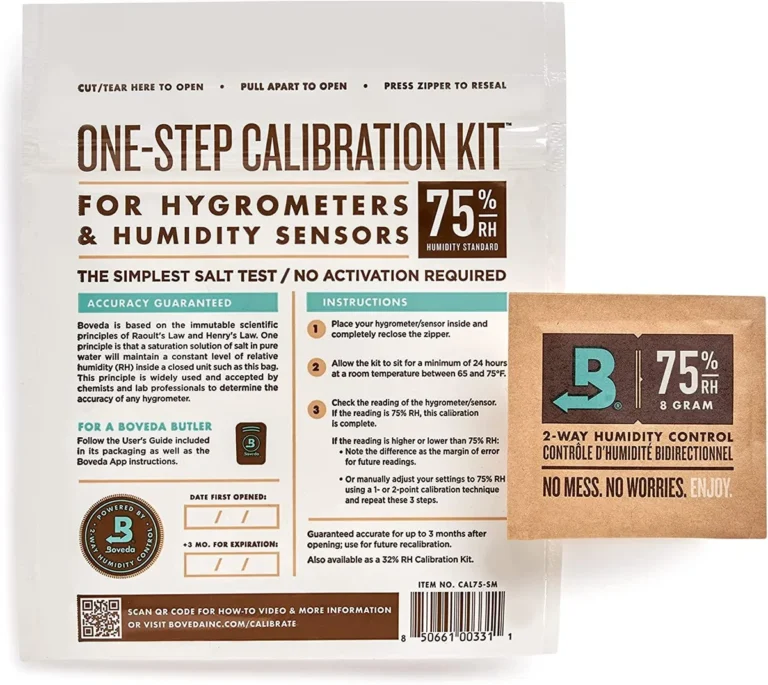
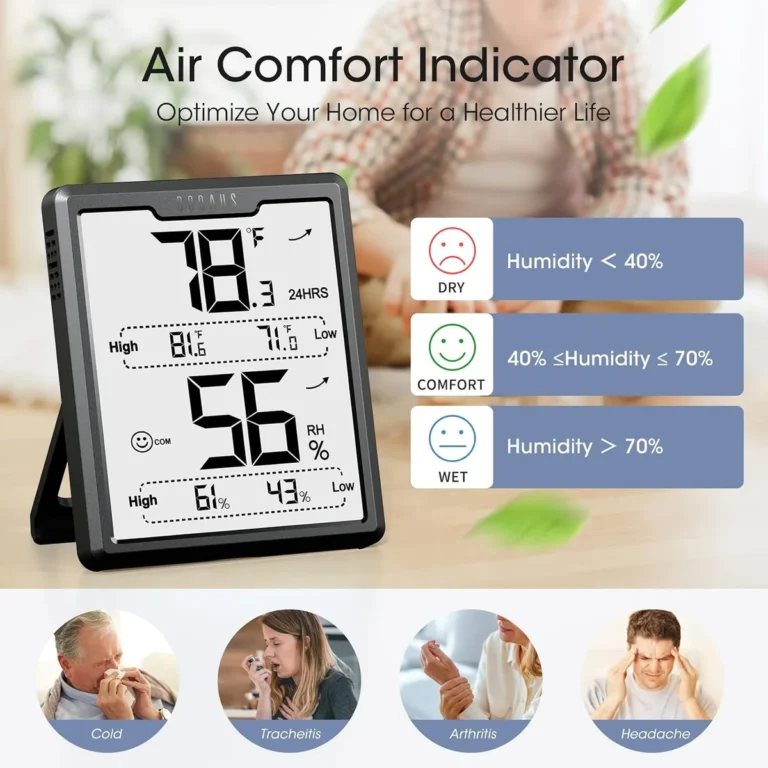
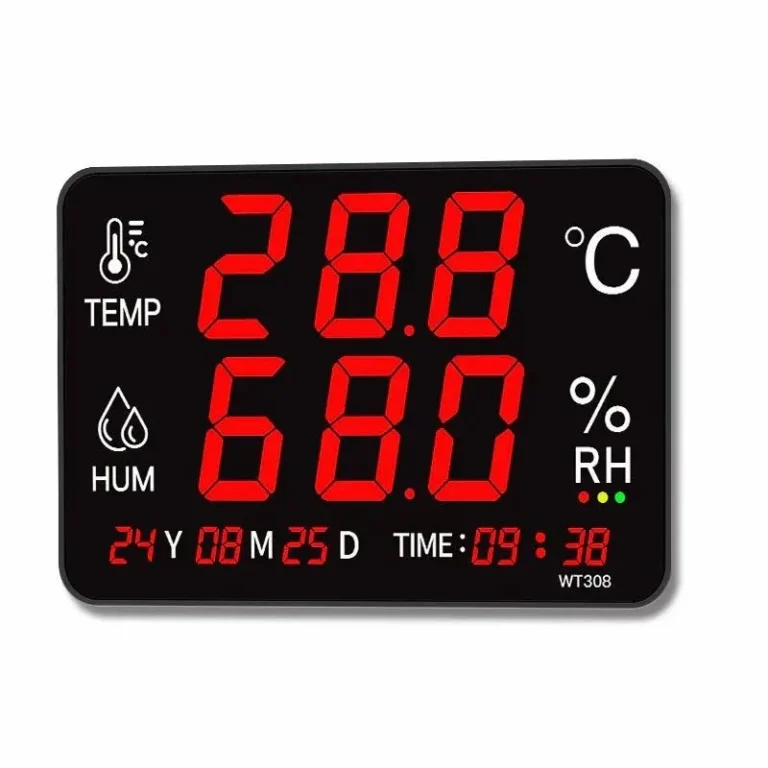
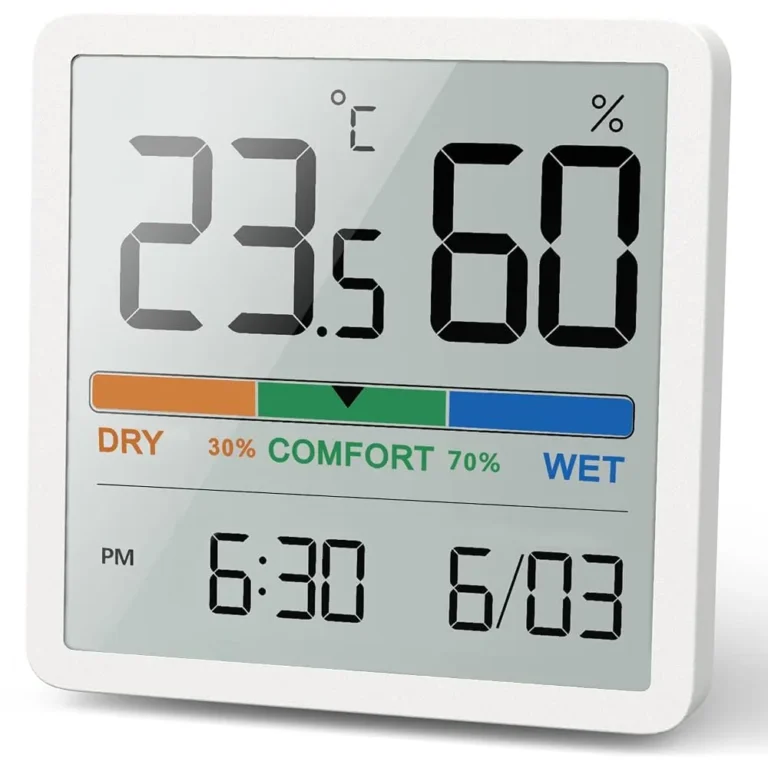
You can't fix what you can't measure. A hygrometer tells you the relative humidity in a room, and it's an inexpensive tool. Basic digital models run $10 to $20.
They read within a few percentage points of actual conditions, which is all you need for houseplants.
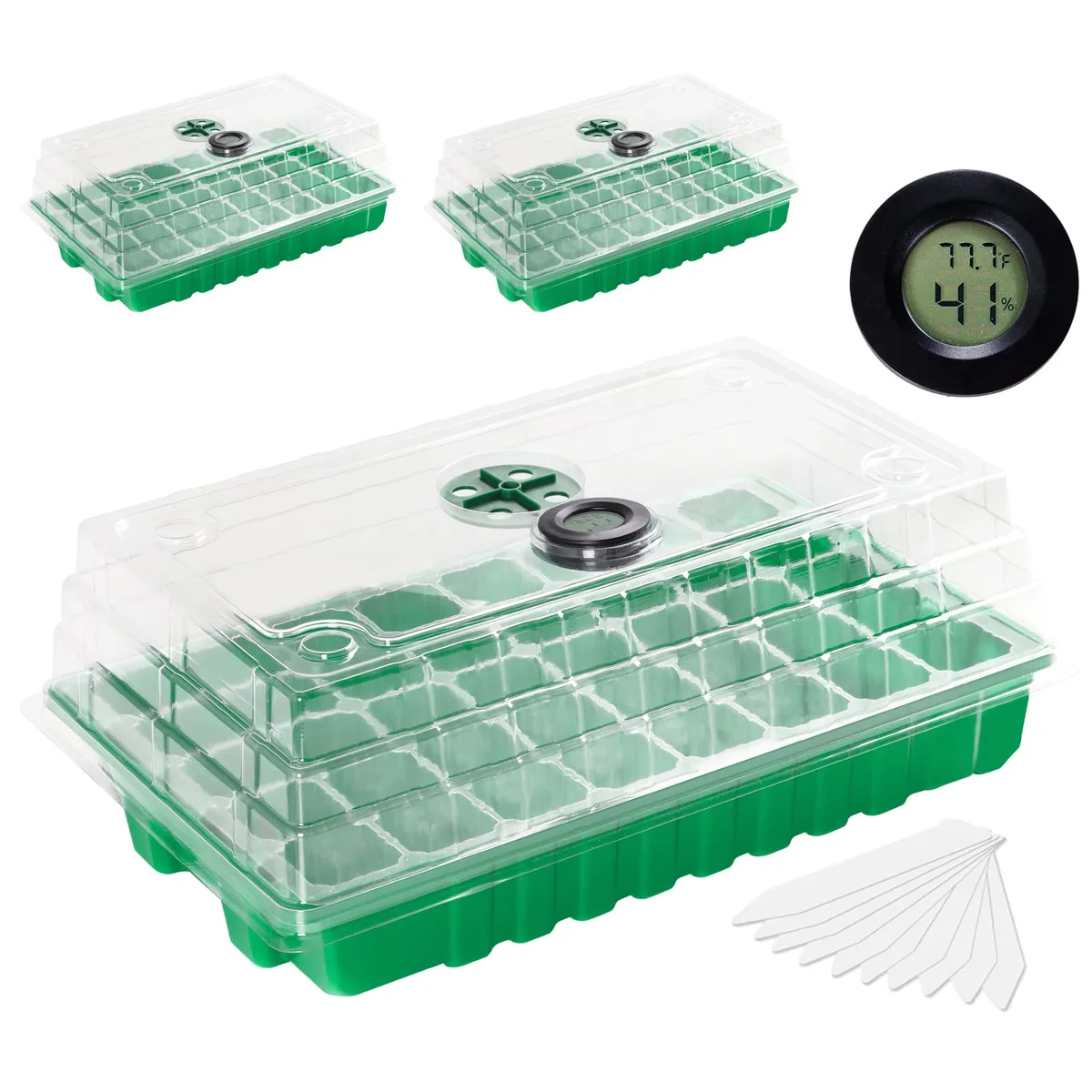
Image source: Bing (Web (fair-use with source credit))
Picking a Hygrometer and Placing It Right
Look for a hygrometer with a digital display, temperature readout, and memory for high and low readings. The memory feature is useful because it shows you the humidity range while you were away.
Placement matters more than you think. Put the hygrometer near your plants, not on the opposite wall. Keep it away from windows, heaters, air conditioners, and humidifiers.
Those spots give false readings. Room center or plant shelf level works best.
Let it sit for a few hours before trusting the number. Humidity fluctuates throughout the day. Morning readings are often higher than afternoon ones.
Check it at different times over a few days to get a clear picture.
Reading Your Results Without Overthinking It
Once you have a consistent reading, compare it to your plant's preferred range. If your room reads 35 percent and you have a fern, you need action. If it reads 55 percent and you have a snake plant, you're fine.
The number doesn't have to be perfect. A calathea in 55 percent humidity is far better off than one in 35 percent. A few percentage points above or below the ideal range won't cause problems.
The danger zone is anything under 30 percent for tropicals and over 70 percent for succulents.
Aggregate reviews from plant owners suggest that most homes in temperate climates sit between 30 and 50 percent humidity. Winter heating drops it lower. Summer humidity pushes it higher.
Your readings will change with the seasons.
The Decision Rule: Match Your Plant's Needs to Your Room
Now you know your plant's humidity group and your room's actual reading. The decision is straightforward.
If your room humidity is in the same range as your plant's needs, do nothing. Your setup works.
If your room humidity is lower than your plant's preferred range, you need to raise it. This is the most common situation. Tropical plants in heated homes are almost always too dry.
If your room humidity is higher than your plant's preferred range, you need to lower it. This is less common but matters for succulents and cacti. Bathrooms and humid coastal areas cause this problem.
Here is the decision logic in plain terms.
- Room reads 30 to 40 percent. Good for succulents, snake plants, and ZZ plants. Bad for ferns, calatheas, and alocasias. Raise humidity for tropicals or move them elsewhere.
- Room reads 40 to 60 percent. Good for most common houseplants. Tropicals at the lower end may still need a small boost. Succulents at the upper end should be watched for rot.
- Room reads above 60 percent. Good for tropicals. Bad for succulents, cacti, and any plant prone to rot. Lower humidity for those or move them to a drier room.
If you have a mixed collection with both tropicals and succulents, separate them into different rooms. One humidifier in the living room for the ferns. The succulents stay in the bedroom or office where the air is drier.
How to Fix It: Raising and Lowering Humidity the Right Way
Once you know what needs to change, the next step is choosing the right method. Some work well. Some are a waste of time.
Humidifiers and Pebble Trays: What Actually Works
A cool-mist humidifier is the most effective way to raise humidity. Small desktop models cost $25 to $80. They run for hours and raise humidity by 10 to 20 percentage points in a room.
Place it near your plants, not directly on them. Fill it daily with clean water.
Pebble trays are a low-cost alternative. Fill a shallow tray with pebbles and water. Set the pot on top, not in the water.
Water evaporates around the plant, creating a local microclimate. It raises humidity by 5 to 10 percentage points near the plant.
A pebble tray works best for a single plant or a small cluster. Wipe the tray clean every few weeks to prevent algae buildup. Misting is the least effective method.
It raises humidity for only 10 to 15 minutes. It can also leave water spots on leaves and promote fungal growth if done too often.
For lowering humidity, ventilation is your first tool. Open a window or run a fan. Air movement prevents moisture from settling on leaves and soil.
A dehumidifier works when ventilation is not enough. Small units cost $50 to $150 and pull excess moisture from the air.
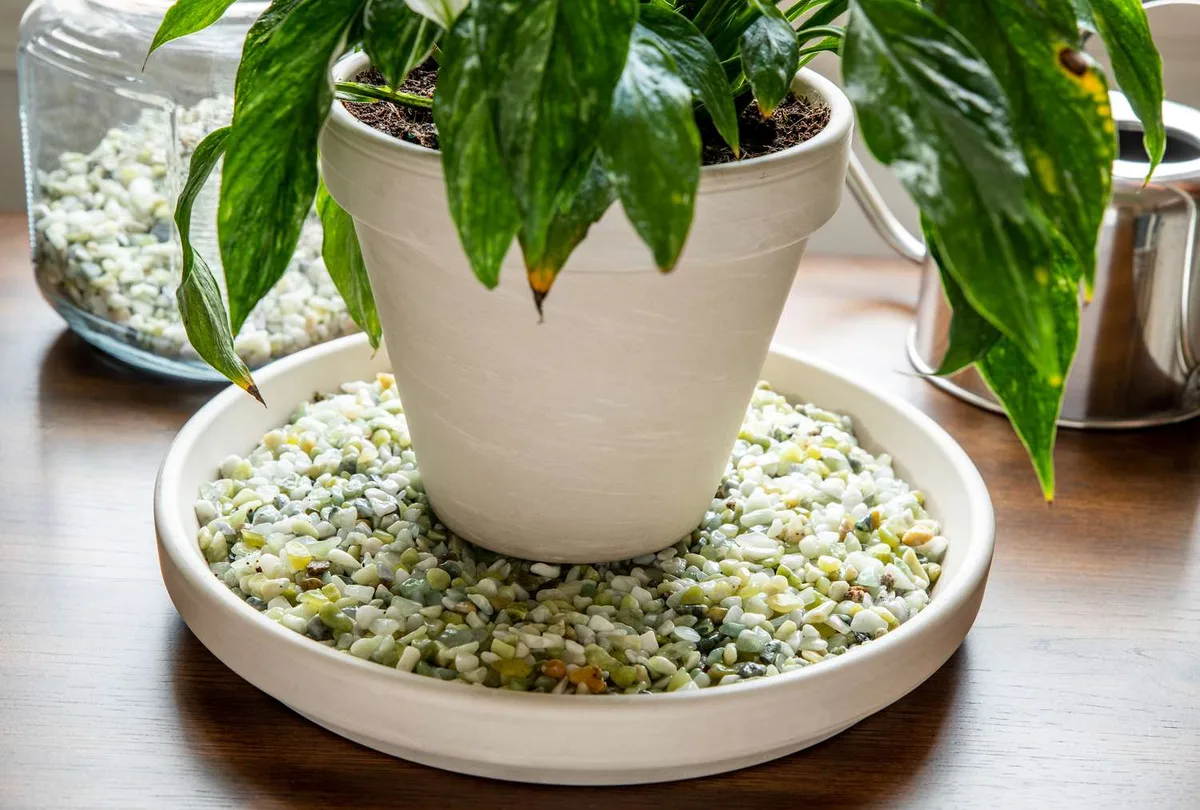
Image source: Bing (Web (fair-use with source credit))
When to Dial Humidity Down
Too much humidity causes real problems. Yellowing leaves, mold on the soil surface, and fungus gnats all point to excess moisture. Succulents and cacti are the first to suffer.
Their roots rot quickly in damp air combined with wet soil.
Signs that humidity is too high include condensation on windows near your plants. Persistent dampness on leaves and soil that never fully dries out. If you see these signs, take action.
Move the plant to a drier room. A south-facing window sill with good airflow is often enough. Reduce watering frequency since the plant loses less moisture through its leaves.
Add a small fan set on low to keep air moving around the plant.
The Royal Horticultural Society provides detailed guidance on managing indoor humidity for houseplants, including specific recommendations for tropical species and succulents. Their research-based advice is a reliable resource for plant owners who want to dig deeper.
Humidity Mistakes That Kill Houseplants
The most common mistake is grouping plants with opposite humidity needs. A succulent next to a fern on a pebble tray is a recipe for rot. The fern loves the moisture.
The succulent drowns in it.
Another mistake is relying on misting alone. Our research shows that misting raises humidity for less than 15 minutes. It does not solve a dry room problem.
It only makes the owner feel productive.
Placing a hygrometer in the wrong spot leads to incorrect readings. Put it near your plants at leaf height. Not on a windowsill or near a heater.
False readings cause wrong decisions.
Ignoring seasonal changes is another trap. Winter heating drops indoor humidity to 20 to 30 percent. Summer humidity can push it past 70 percent.
Check your hygrometer every few months and adjust.
Overcorrecting is also common. Adding a humidifier to a room that already reads 50 percent can push it past 70 percent. This creates mold risks for your home and your plants.
Measure first, then adjust.
Frequently Asked Questions
Should I mist my plants to increase humidity?
Misting provides a very brief humidity boost of 10 to 15 minutes. It does not solve a dry room problem. It can help with dust and spider mites but is not a reliable method for raising humidity levels.
Can I use a humidifier for all my plants?
Yes, but group plants with similar humidity needs together. Place the humidifier near your tropical plants. Keep succulents and cacti in a separate room.
A humidifier in a mixed collection will harm plants that prefer dry air.
What humidity level is best for succulents?
Succulents and cacti do best at 30 to 40 percent relative humidity. Above 50 percent, they risk rot and fungal issues. Keep them in a dry room away from humidifiers and bathrooms.
Is 70 percent humidity too high for houseplants?
For tropical plants, 70 percent is fine. For succulents and cacti, it is too high. Monitor for mold on soil and leaves.
Improve ventilation or move the plant to a drier location if problems appear.
How do I know if my home is too dry for plants?
Look for brown leaf edges, curling leaves, and slow growth. Measure with a hygrometer. Readings below 40 percent indicate dry conditions.
Most tropical plants will show stress within a week at these levels.
Can I move plants to the bathroom for humidity?
Yes, bathrooms provide natural humidity from showers. This works well for ferns, calatheas, and orchids. Do not leave succulents or cacti in the bathroom.
They will suffer from the constant moisture.