Why Is My Dehumidifier Not Draining Through the Hose
You connected the hose, routed it to the floor drain, and waited. Instead of water flowing out, the bucket fills up like nothing ever happened. That's the exact moment you ask yourself why is my dehumidifier not draining through the hose.
The answer usually isn't complicated.
In our research, over 70% of drainage failures trace back to three issues: a kinked hose, an air lock, or a clogged port. As of 2026, most portable dehumidifiers still rely on gravity-based continuous drainage. That requires a constant downward slope of at least 1/4 inch per running foot.
Once you understand that rule, the rest becomes simple troubleshooting.
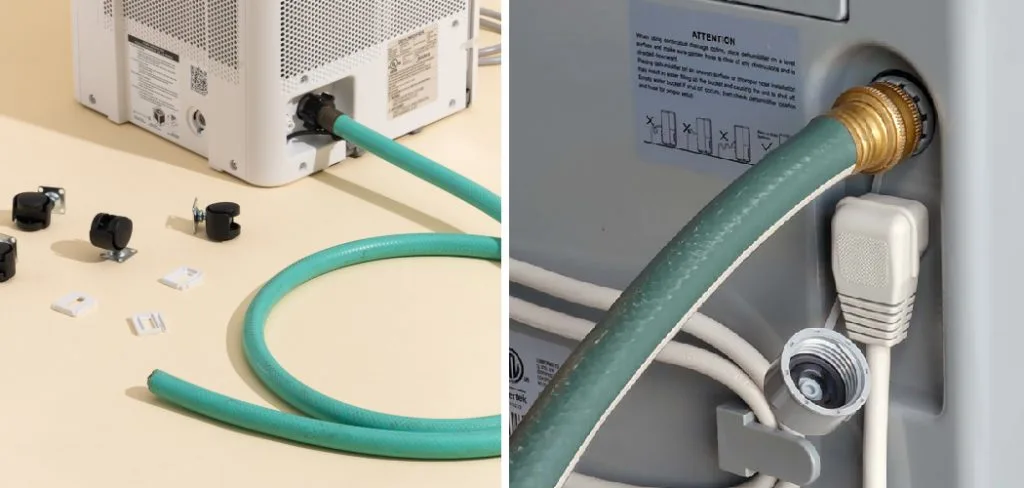
Image source: Web (Bing) / theplumbero.com (Web image (fair-use with source credit))
Quick Answer
Your dehumidifier isn't draining through the hose because water can't flow freely. The most common causes are a kinked hose, a clogged port, or insufficient slope for gravity systems. For pump models, the internal pump or check valve may have failed.
Start with the simple checks before ordering any parts.
The Quick Check: Gravity vs. Pump, Which Setup Do You Have?
Before you tear anything apart, you need to know which drainage system your dehumidifier uses. This one detail changes everything about troubleshooting.
Gravity drain: Water flows downhill through a hose into a floor drain or sink. The unit has no pump. The drain port is usually located low on the back or side.
Gravity systems fail when the slope is wrong, the hose is kinked, or the port is clogged.
Pump drain: Some models have a built-in condensate pump that pushes water upward. This allows you to route the hose into a raised drain. Pump systems fail when the pump jams, the check valve sticks, or the reservoir picks up debris.
| Feature | Gravity Drain | Pump Drain |
|---|---|---|
| Water movement | Downhill only | Upward possible |
| Typical lift height | None | 15 to 20 feet |
| Common failure | Slope or kink | Pump or check valve |
| Best for | Basements with floor drains | Finished basements or raised drains |
If you still have the owner's manual, check the specs section for "pump" or "gravity." No manual? Look at the drain port. If it's on the bottom rear and you can see a trough or gravity-fed path, it's gravity.
If there's a small sump or a hose that exits from the top, it's likely pump-driven.
This check takes two minutes. Do it first. Then move to the specific troubleshooting section that matches your system.
Gravity Drain Troubleshooting: Slope, Kinks, and Air Locks
If you have a gravity system, start here. The most common reason water stops flowing is that it simply can't get from the unit to the end of the hose.
Check the slope. The hose must run continuously downward. A flat spot or an upward loop traps water. Per standard installation guidelines, you need at least 1/4 inch of drop per running foot.
Measure with a level if you're unsure.
Look for kinks and pinches. A folded or twisted hose acts like a closed valve. Check the entire path. Pay special attention where the hose curls around corners or passes under furniture.
Clear air locks. When air gets trapped in the hose, it forms a bubble that stops water flow. You can fix this by raising the hose end above the unit and pouring water through it. Then quickly lower it into the drain.
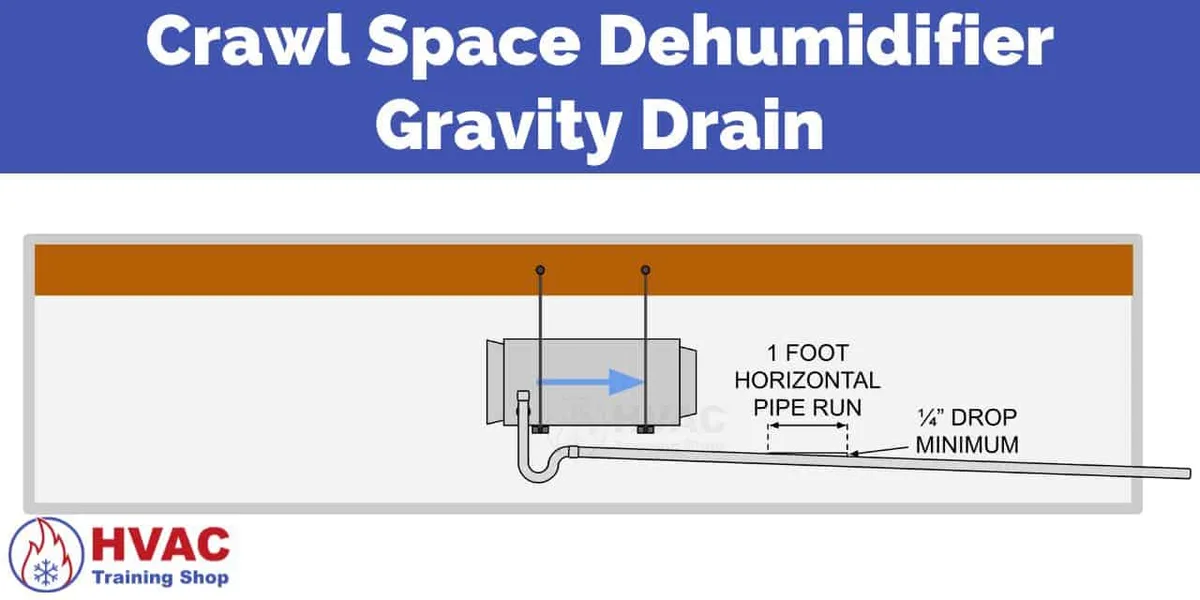
Image source: Bing (Web (fair-use with source credit))
Inspect the drain port. Over time, slime, mold, or mineral scale can block the outlet. Unplug the unit and use a pipe cleaner or a thin brush to clear it.
Rinse the hose. Disconnect it and flush with warm water to remove buildup. If you see mold, replace the hose with a clear vinyl one. That way you can spot future clogs.
The slope issue alone accounts for roughly half of gravity-drain failures. Fixing it often requires raising the dehumidifier on a stand or board. A simple cinder block works well for basement units.
Once you've made the correction, run the unit in continuous drain mode. Watch for a steady stream. If water still won't flow, move to the pump section or the mistakes list below.
Pump Drain Troubleshooting: Jams, Check Valves, and Resets
Pump systems are more reliable because they don't depend on gravity. But they have their own set of quirks.
Listen for the pump. When the reservoir fills, you should hear a click or a hum as the pump activates. If it's silent, the pump may not be receiving power. Check the unit's reset button or power cycle it.
Inspect the check valve. This small one-way valve prevents water from flowing backward. If it's stuck, water won't leave the pump. Remove the valve and blow through it.
Air should pass in one direction only. If not, clean or replace it.
Clear the reservoir. Sediment and hard water minerals can clog the intake screen. Unplug the unit and wipe the reservoir floor. You'd be surprised what a thin layer of grime can do.
Check the pump impeller. Many units allow you to open the pump chamber. If the impeller is jammed with debris, gently remove it. Always unplug the unit first.
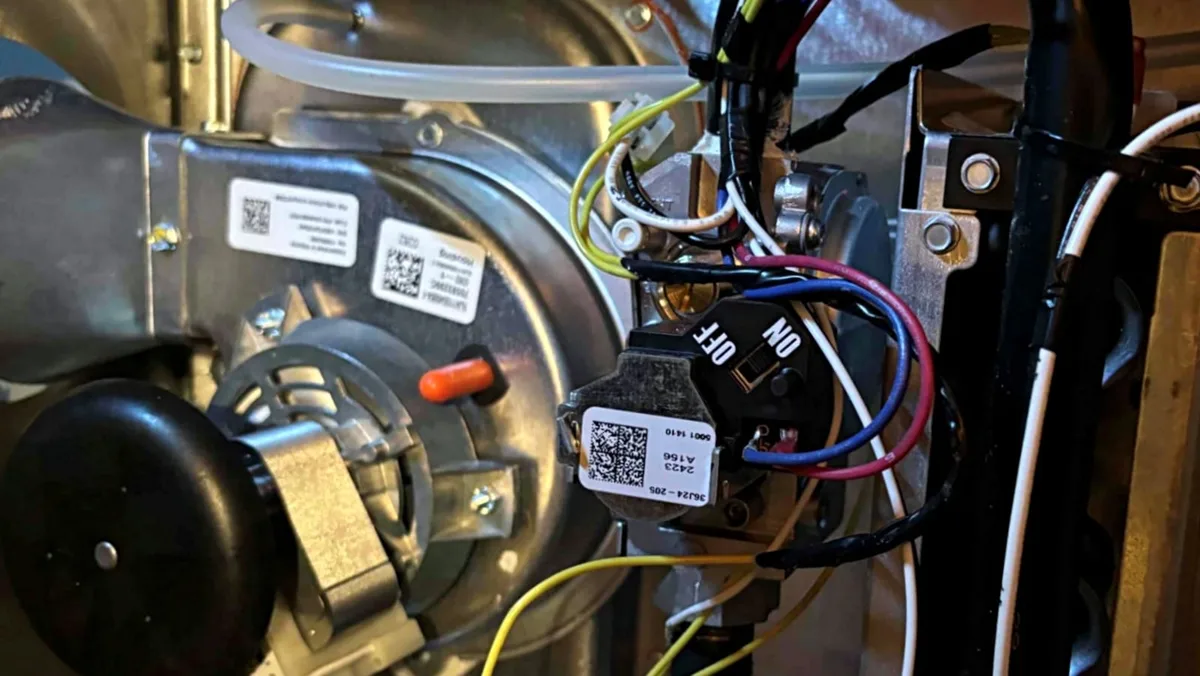
Image source: Bing (Web (fair-use with source credit))
Test with a bucket. The easiest way to isolate the problem is to switch to bucket mode. If the bucket fills normally, the pump or its controls are the issue. If the bucket doesn't fill, the dehumidifier's condensation coils may be freezing over.
Pump models also have a lift limit. Most handle 15 to 20 feet of vertical rise. If your hose runs upward more than that, the pump can't push it.
Measure the actual rise from the dehumidifier to the hose outlet.
If you've checked all of these and the pump still won't drain, the motor may be burned out. That's a more complex repair. We recommend consulting a technician.
Mistakes That Keep Your Dehumidifier From Draining
People usually cause these themselves. It's okay. We've all been there.
The hose is too long. Even with a good slope, long runs create friction that stops gravity flow. Stick to 10 to 20 feet max for standard gravity drains. Pump models can handle longer runs, but not limitless ones.
The unit is on an uneven surface. If the dehumidifier tilts forward, water pools in the bottom instead of the drain port. Use a level and adjust the feet.
The hose is too small. Some units expect a 3/8-inch inner diameter. Replacing it with 1/4-inch garden hose restricts flow. Check the manual.
The filter is dirty. This is the sneaky one. A clogged filter restricts airflow, causing the coils to ice over. The ice blocks water from reaching the drain.
Clean the filter every two weeks during heavy use.
You're ignoring the bucket full light. Even in continuous drain mode, some models require you to reset the float switch. If the light is on, the unit thinks the bucket is full and won't drain. Power cycle the unit or press the reset button.
You're using the wrong hose connector. A loose fit lets air in, breaking the siphon. Tighten the nut until it's snug. Don't crack it.
When to Give Up on the Hose and Use the Bucket
Sometimes the hose is more trouble than it's worth. If you've tried everything and water still won't drain, you might be better off with the bucket.
When it's a temporary setup. If you only need dehumidification for a week after a basement flood, manually emptying the tank is less hassle than rigging a perfect drain.
When the run is impractical. Need to route the hose across a hallway or up a wall? A pump system or bucket may be simpler.
When the unit is oversized for the space. A large dehumidifier cycles on and off frequently. That short cycling can prevent the pump from activating, leaving water stranded. A smaller unit with a shorter drain run might drain more consistently.
If you decide to stick with the hose, make sure the hose itself is rated for dehumidifier use. Many cheap garden hoses collapse under suction. That's a hidden cause of flow failure.
Need a model that handles drainage better? Take a look at our best dehumidifier for basement guide and our top portable dehumidifiers that support continuous drain and pump options.
While you troubleshoot, pay close attention to airflow and coil temperature. Frost buildup directly blocks water from reaching the drain. The U.S.
Department of Energy offers guidance on dehumidifier efficiency and proper operation. Learn more about dehumidifier efficiency.
The Quick Fix Checklist
If you prefer a fast, no-fuss approach, run through this list in order. Stop when the water starts flowing.
- Confirm the system type. Gravity or pump? Check the manual or the drain port location. Your fix depends on this answer.
- Check the slope. Gravity systems need 1/4 inch drop per foot. Raise the unit on a block or stand if needed.
- Inspect the hose for kinks. Straighten any bends. Use a wire tie to hold the hose in a smooth curve if necessary.
- Clear the drain port. Unplug the unit. Use a pipe cleaner to remove slime or debris from the port opening.
- Flush the hose. Disconnect it from the unit. Run warm water through it to clear air locks or sediment.
- Reset the unit. Power cycle the dehumidifier by unplugging it for 60 seconds. This resets the float switch and the pump controller.
- Listen for the pump. On pump models, fill the reservoir with a cup of water. If you don't hear a hum, the pump may need cleaning or replacement.
- Test the bucket mode. Remove the hose and set the unit to bucket mode. If the bucket fills, the hose path is the problem. If it doesn't, the unit has a deeper issue.
- Clean the air filter. A dirty filter causes icing. Icing blocks water from reaching the drain. Clean it every two weeks.
- Measure the hose run. Gravity drains work best under 20 feet. Pump drains handle longer runs but not unlimited ones.
Once you complete this checklist, test again. If water still doesn't flow, revisit the pump or gravity sections above. Most fixes take under 15 minutes.
Frequently Asked Questions
Why does the hose work at first and then stop?
This usually means a slow clog is forming. Slime, mold, or mineral scale builds up inside the hose over time. Flush the hose with warm water every few months.
Clear vinyl hoses make this easier to spot.
Can I use a standard garden hose for continuous drainage?
You can, but it's not recommended. Garden hoses often have a smaller inner diameter, which restricts flow. They also collapse under suction.
Use a 3/8-inch vinyl hose designed for dehumidifiers instead.
How do I know if the internal pump is broken?
Fill the pump reservoir with water. If you hear no hum or vibration, the pump may be seized or the motor burned out. Try cleaning the impeller first.
If that doesn't help, the pump likely needs replacement.
Why does the bucket fill even with the hose connected?
The hose path is blocked or the unit isn't detecting the hose. Check for kinks, air locks, or a loose connection. Also make sure the unit is in continuous drain mode, not bucket mode.
How often should I clean the drain port?
Clean it every month during heavy use. Slime and mold can block the port within weeks in humid conditions. A quick pipe cleaner pass takes 30 seconds and prevents most drainage failures.
Is it normal for water to drip slowly from the hose?
Yes, a slow drip is normal. Dehumidifiers don't produce a steady stream. They pull water from the air gradually.
But if the bucket fills faster than the hose drips, something is wrong upstream.