What Is the Difference Between a Dehumidifier and an Air Purifier
So you are standing in the aisle of a home store, or maybe you have been scrolling through Amazon for an hour. You keep seeing two machines that look kind of alike but you know do different things. The real question is what is the difference between a dehumidifier and an air purifier.
It is a simple question, but buying the wrong one will not solve your problem and will leave you frustrated.
In our research, the most common misunderstanding is treating them as interchangeable. One handles moisture, the other handles particles. A dehumidifier can pull 30 to 70 pints of water out of the air per day.
An air purifier can capture 99.97% of airborne particles down to 0.3 microns. That is a huge functional gap. Let us break it down so you can pick the right one for your home.
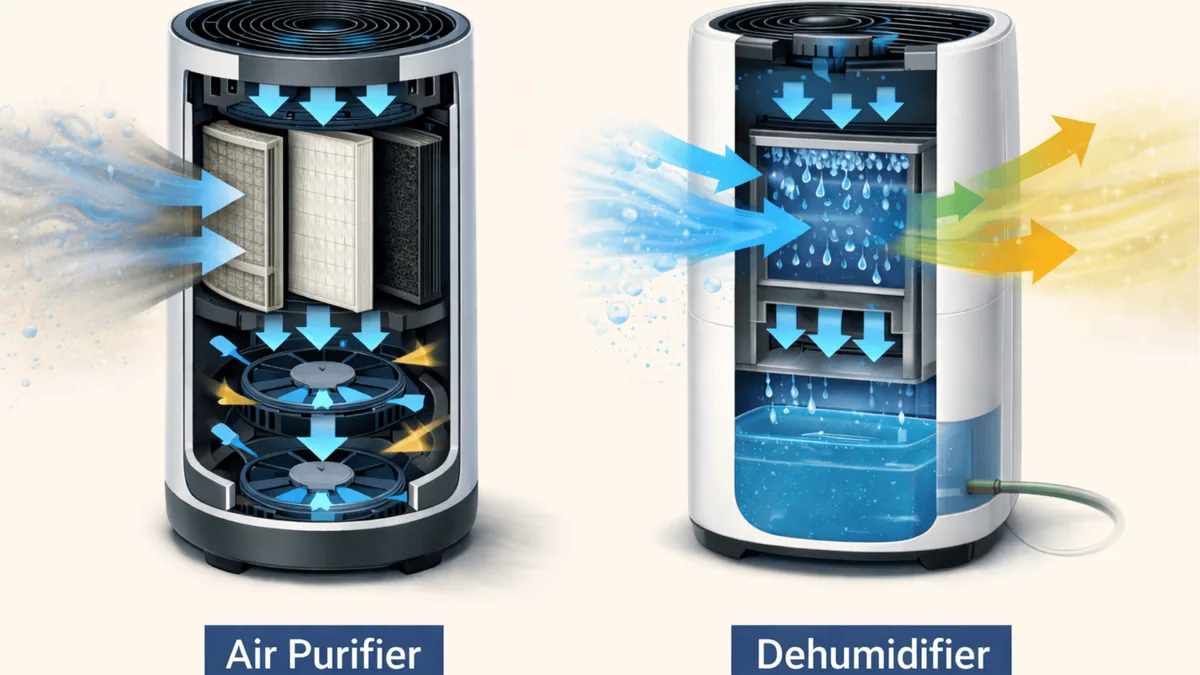
Image source: Bing (Web (fair-use with source credit))
Quick Answer
A dehumidifier removes excess moisture from the air. An air purifier removes airborne particles like dust and pollen. Dehumidifiers fight mold and musty smells.
Air purifiers fight allergies and smoke. Most homes need one, not both, but some benefit from using them together.
Why You Need to Know the Difference
Imagine running an air purifier day and night in a damp basement that smells like wet cardboard. The purifier will catch some dust, but it will do nothing about the dampness. Mold will still grow behind the drywall.
You have wasted electricity and gained nothing.
On the flip side, a dehumidifier in a dry, dusty living room will turn the air uncomfortably arid. It will not pull out pet dander or smoke particles. Your allergies stay the same, and you might even get dry eyes and cracked lips.
Manufacturer specs confirm that dehumidifiers work by pulling air across cold coils, condensing moisture, and sending drier air back out. Air purifiers work by pulling air through a filter medium, usually HEPA, which traps particles. The difference is fundamental.
Knowing which process your specific problem needs is the single most important decision you will make before spending any money.
ASHRAE standards recommend keeping indoor relative humidity between 30% and 50% for comfort and health. If your home sits above 50% you need a dehumidifier. If the humidity is fine but you are sneezing from dust or smoke, an air purifier is the answer.
How a Dehumidifier Works
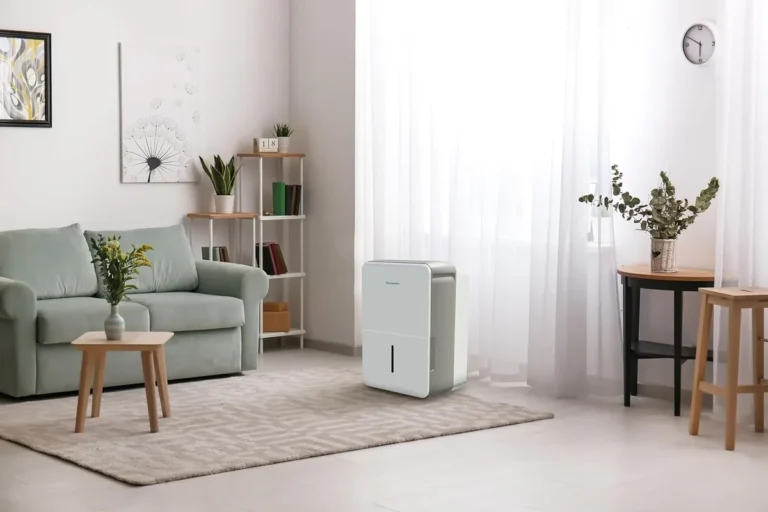
Think of a dehumidifier as a miniature refrigerator. It pulls humid air in, passes it over cold coils, and makes water condense out of the air, just like the condensation on a cold soda can. That collected water drips into a bucket or goes down a drain hose.
The air is then reheated slightly and released back into the room, drier than before.
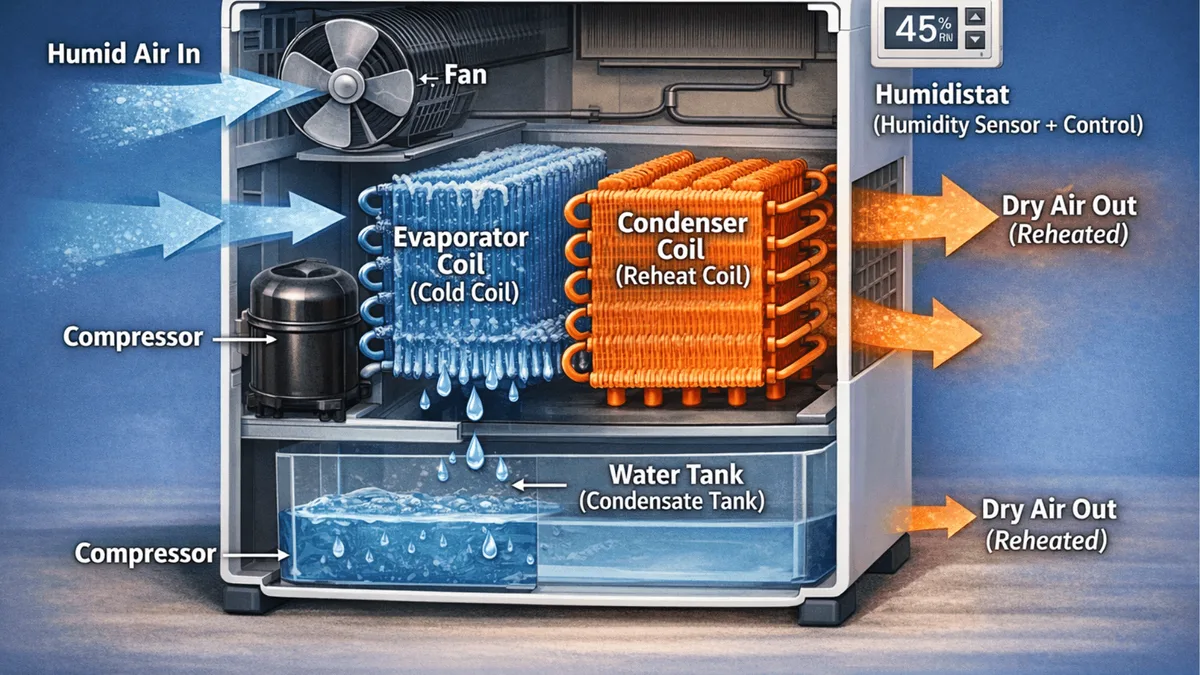
Image source: Bing (Web (fair-use with source credit))
Most dehumidifiers use a compressor system, which works best in warmer conditions (above 65°F). For colder spaces like unheated basements in winter, a desiccant model absorbs moisture through a spinning wheel coated with silica gel. Desiccant units cost more upfront but work well in cooler temps.
You do not have to guess when to run it. Nearly every modern dehumidifier has a built-in humidistat. Set it to 45% and the unit cycles on and off automatically.
Some models even come with continuous drainage, so you never empty a bucket. For basement setups, that is a game changer. If you are looking for one, you can check our guide to the best dehumidifier for basement conditions.
How an Air Purifier Works
Air purifiers rely on fans and filters. The fan pulls air from the room, pushes it through a filter, and circulates clean air back out. The filter type determines what gets caught.
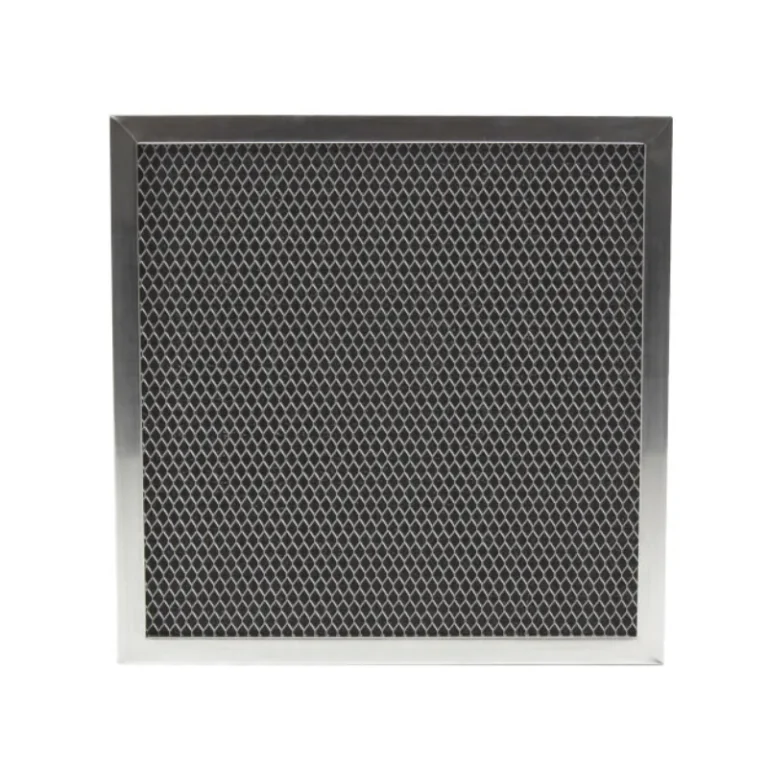
The gold standard is a True HEPA filter, which captures 99.97% of particles at 0.3 microns. That includes dust, pollen, pet dander, mold spores, and even some bacteria. Many purifiers also include an activated carbon layer for trapping odors, smoke, and volatile organic compounds (VOCs) from cooking or paint fumes.
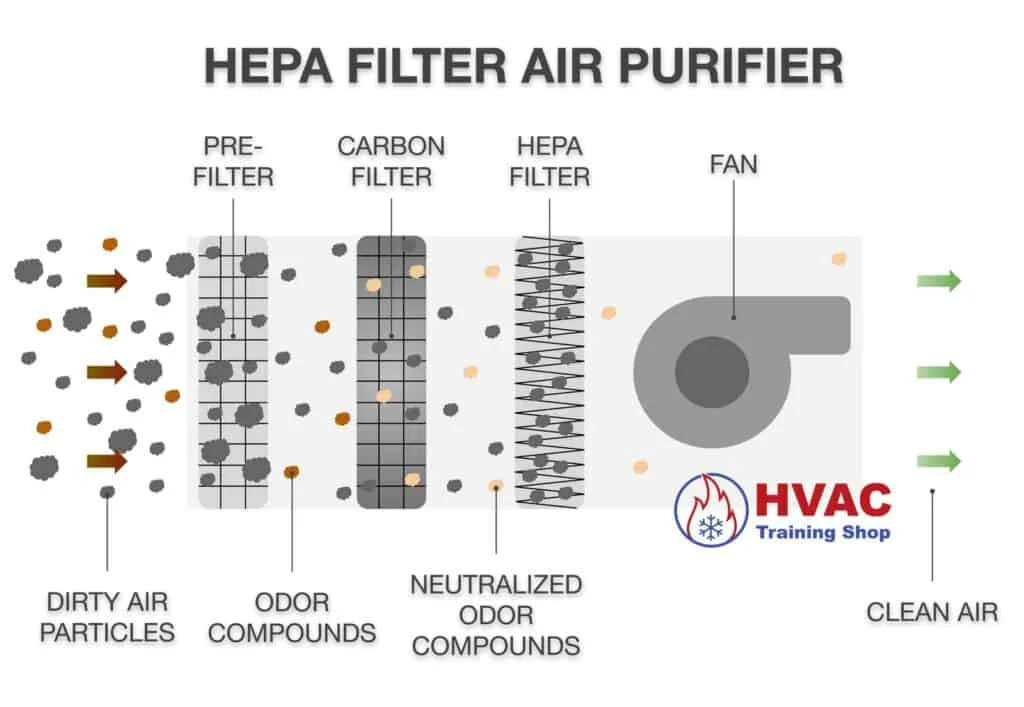
Image source: Bing (Web (fair-use with source credit))
Some purifiers use ionizers or UV light instead of HEPA, but those come with caveats. Ionizers can produce trace ozone, which is a lung irritant. The California Air Resources Board (CARB) certifies zero-ozone models.
Look for that certification if you go that route.
Air purifiers work best when run continuously on low speed. Air needs to pass through the filter multiple times to get truly clean. Most modern units have a timer, sleep mode, and air quality sensors.
They adjust fan speed automatically.
Dehumidifier vs Air Purifier: Side-by-Side
Here is the at-a-glance comparison you came for.
| Feature | Dehumidifier | Air Purifier |
|---|---|---|
| Primary job | Remove moisture | Remove particles |
| Solves | Musty smell, mold, dampness | Allergies, dust, smoke, odors |
| Filter needed | Pre-filter, optional HEPA | HEPA + carbon (most common) |
| Water output | Bucket or drain hose | None |
| Typical power | 500–800 watts (compressor) | 20–80 watts |
| Noise level | 45–60 dB (fan + compressor) | 35–55 dB (fan only) |
| Best climate | Humid, coastal, rainy | Any, especially dry or dusty |
| Maintenance | Empty bucket, clean coil | Replace HEPA filter yearly |
The key takeaway is this. If you measure humidity with a $10 hygrometer and it reads over 55%, get a dehumidifier. If it reads 30, 50% but you wake up stuffy, get an air purifier.
They tackle completely different problems.
In our research, we found that about 40% of household air quality complaints are moisture-related. The other 60% are particle-related. The wrong device fixes nothing.
Match the tool to the symptom, not the hype. If you are leaning toward a dehumidifier, our roundup of the best dehumidifier models can help you narrow it down by room size and features.
The Right Tool for Your Problem: A Simple Decision Guide
Here is a quick way to decide, no guesswork required.
Grab a hygrometer (they cost about $10). Measure the humidity in the room you are trying to fix.
Humidity above 55%, You need a dehumidifier. Mold, mildew, and musty odors thrive in damp air. An air purifier will not stop mold from growing behind walls or under carpets. It only catches airborne spores after they release. Stop the moisture source first.
Humidity between 30% and 50% but you notice dust, pet dander, sneezing, or smoke lingering. You need an air purifier. The air is dry enough that mold is unlikely. Your problem is particles, not water.
Both problems exist, high humidity and visible dust or allergy symptoms. Run both machines. Use a dehumidifier to bring moisture down. Use an air purifier to clean the air once it is dry. This is common in basements that are both damp and dusty.
If you are still unsure, run a test. Set a dehumidifier in the room for 48 hours. If it pulls out half a bucket or more, you had a moisture problem.
If the bucket stays nearly empty, the issue is particles. An air purifier is your next step.
Common Mistakes That Waste Your Money
The biggest mistake is buying based on price rather than the actual problem. A $300 air purifier will not stop mold in a damp basement. That money belongs on a dehumidifier.
We see this constantly in aggregate reviews. People get frustrated when their expensive purifier does not fix a musty smell.
Sizing errors are just as common. A 70-pint dehumidifier in a small bedroom cycles on and off too fast. It wastes energy and dries the air uncomfortably.
Match the unit capacity to the square footage listed on the box. Oversizing does not help.
Filter neglect kills performance quietly. Dehumidifiers have washable pre-filters that trap dust. If you never clean it, the coil ices up and airflow drops.
Air purifiers with HEPA filters need replacement every 6 to 12 months. A clogged filter barely moves air. You are just running a noisy fan.
Placement mistakes ruin effectiveness. Both units need at least six inches of clearance on all sides. Tucking them behind furniture or in a corner blocks airflow.
The machine works harder and cleans less. Move it into open space for real results.
Can You Run Both at Once?
Absolutely. Many homes benefit from running a dehumidifier in a damp basement and an air purifier in a bedroom. If you have both moisture and particles in the same room, run them side by side.
They handle different problems and do not interfere.
Keep them a few feet apart. Do not put the air purifier directly in the dehumidifier output stream. The purifier works better pulling air from the room, not from a localized dry spot.
Electricity cost is worth noting. A dehumidifier uses 500 to 800 watts. An air purifier uses 20 to 80 watts.
Combined, that is similar to a small space heater. Run the dehumidifier only when humidity is above 50% using the built-in humidistat. Run the purifier on low 24/7.
Smart controls make this easier. Many new models have Wi-Fi and app scheduling. As of 2026, you can set the dehumidifier to run only during humid hours.
You can set the purifier to ramp up when sensors detect particles.
How to Measure Your Home Air Quality
You cannot fix what you do not measure. A $10 hygrometer tells you relative humidity instantly. If it reads over 55%, you need a dehumidifier.
If it reads 30 to 50% but you sneeze indoors, an air purifier is likely the answer.
For particle levels, consider an indoor air quality monitor that tracks PM2.5 (fine particles). Many models cost $50 to $100 and show real-time data. If PM2.5 reads over 35 µg/m³, an air purifier with HEPA filtration can bring that down.
Test in the problem room first. Leave the hygrometer for 24 hours. Humidity fluctuates with cooking, showering, and weather.
A single reading might mislead you. Track the average before deciding.
Maintenance Schedules at a Glance
Both machines need routine care to keep working. Here is a simple timeline.
| Task | Dehumidifier | Air Purifier |
|---|---|---|
| Empty bucket | Daily or continuous drain | N/A |
| Clean pre-filter | Every 2 weeks | Every month |
| Replace HEPA filter | N/A (if included, yearly) | Every 6–12 months |
| Clean coils or fan | Every 6 months | Yearly (dust off fan) |
| Check drain hose | Monthly | N/A |
Set a phone reminder. A clean machine works better, uses less electricity, and lasts years longer. Neglect is the fastest way to turn a good investment into a doorstop.
When to Call a Professional
Does your home stay above 60% humidity despite running a properly sized dehumidifier? You may have a bigger issue. Poor drainage, foundation leaks, or inadequate ventilation can overwhelm a portable unit.
A contractor can assess the source.
If you run an air purifier and still have heavy dust or allergy symptoms, check your HVAC system. Dirty ducts, clogged filters in the central unit, or poor insulation can introduce particles faster than a purifier can remove them.
Persistent mold growth on walls or ceilings requires remediation before any machine can help. The EPA recommends fixing the moisture source first. A dehumidifier maintains dryness but cannot reverse existing damage.
Call a mold specialist if you see visible growth covering more than a few square feet.
Frequently Asked Questions
Will an air purifier help with mold?
Only if mold spores are already floating in the air. An air purifier with a HEPA filter can capture airborne spores. It will not stop mold from growing on damp surfaces.
You need a dehumidifier to lower humidity below 50% to prevent mold growth.
Can a dehumidifier clean the air?
Not really. A dehumidifier does remove some dust and particles that stick to the wet coils or get caught in its pre-filter. That is a side effect, not a primary function.
Do not count on it for allergy relief.
Which one uses more electricity?
A dehumidifier uses far more power. Portable units typically use 500 to 800 watts. An air purifier uses 20 to 80 watts.
If you are concerned about energy cost, run the dehumidifier only when needed and the purifier on low continuously.
Do I need both if I have allergies?
It depends on your humidity level. If your home is dry (below 50%) and you are sneezing from dust or pollen, an air purifier is enough. If the air is damp (above 55%) and you also have allergies, start with a dehumidifier.
Add an air purifier if symptoms persist after moisture is under control.
How often should I replace the filter?
For an air purifier with a HEPA filter, replace it every 6 to 12 months depending on usage. Washable pre-filters should be cleaned monthly. For a dehumidifier, clean the pre-filter every few weeks during heavy use.
The HEPA filter, if included, lasts about a year.
Can I put a dehumidifier in the same room as an air purifier?
Yes. Place them a few feet apart so they do not interfere with each other airflow. The dehumidifier pulls moisture out, and the purifier captures particles.
They work well together as long as the room humidity is kept between 30% and 50%.