Can a Dehumidifier Dry Out a Bedroom
The short answer is yes, but the real question is should you. Waking up in a sticky, clammy bedroom is miserable. Damp sheets, musty pillows, and poor sleep are a bad combination.
So can a dehumidifier dry out a bedroom? It absolutely can. But only if you match the machine to your specific situation.
The trick is that "dry out" means different things to different people. ASHRAE, the standard for indoor air quality, recommends keeping relative humidity between 30 and 60 percent. A dehumidifier pulls excess moisture out of the air until it hits your target.
But use the wrong one, or use it wrong, and you will trade clammy sheets for dry sinuses, cracked furniture, and static shocks. Let us walk through exactly when it works, when it backfires, and how to get it right.

Image source: Bing (Web (fair-use with source credit))
Quick Answer
Yes, a dehumidifier can dry out a bedroom. It pulls moisture from the air. It lowers the relative humidity.
It helps with musty smells and damp sheets. But it only works if you pick the right size for your room. It also works best when you set the humidity between 40 and 50 percent.
Anything below 30 percent causes problems.
Is Your Bedroom Actually Too Humid?
Before you buy anything, check what you are dealing with. A hygrometer is a cheap tool that tells you the exact relative humidity in your room. You can pick one up for under ten dollars.
Place it in the middle of the room, away from windows and vents. Let it sit for an hour.
If the reading is above 60 percent, you have a moisture problem. If it sits above 70 percent, you are in the danger zone for mold growth. Dust mites thrive above 50 percent.
So the real question is not "can a dehumidifier dry out a bedroom" but rather "does your bedroom actually need drying?"
Here are quick signs that your bedroom is too humid:
- Condensation on windows in the morning
- Musty or stale smell when you walk in
- Sheets feel damp or clammy to the touch
- Mold or mildew spots on walls or around windows
- Waking up with a stuffy nose or coughing
- Wood furniture feels sticky or warped
If you have one or two of these, a dehumidifier can help. If you have none, you probably do not need one. The problem might be poor ventilation or a leak instead.
How a Dehumidifier Actually Removes Moisture (and Where It Can Go Wrong)

Image source: Bing (Web (fair-use with source credit))
A dehumidifier works like an air conditioner in reverse. It pulls warm, humid air into the unit. It passes that air over cold coils.
The moisture condenses into water. That water drips into a collection tank. The drier air gets blown back into the room.
There are two main types you will see for bedroom use. Compressor units are the most common. They work great in warm rooms above 60 degrees Fahrenheit.
They are also the most efficient per pint of water removed. Desiccant units use a rotating wheel that absorbs moisture. They work better in colder rooms, like a basement bedroom in winter.
But they use more electricity.
The mistake people make is expecting a dehumidifier to dry out a bedroom in a few hours. It takes time. A typical 30-pint unit can remove about one pint of water per hour in a small bedroom.
If your room is very humid, it might take a full day to pull the humidity down to a comfortable level.
Also, the unit must be placed correctly. You need airflow around it. Push it against a wall or tuck it behind furniture, and it will suck in its own exhaust.
That means it recirculates damp air. Leave at least six inches of clearance on all sides.
What Kind of Bedroom Do You Have?
This is where the decision tree really kicks in. The answer to "can a dehumidifier dry out a bedroom" depends heavily on your specific room. Let us run through the main variables.
Room Size
A small bedroom under 200 square feet needs a 20-pint or 30-pint unit. A medium bedroom between 200 and 400 square feet needs a 30-pint or 50-pint unit. A large bedroom over 400 square feet needs a 50-pint or 70-pint unit.
Oversizing a small room causes short cycling. The unit runs for a few minutes, shuts off, and never actually removes much moisture. It also wastes electricity.
If you are looking at a compact unit for a small space, we have covered the best 20-pint dehumidifier for bedroom options in our research. For larger rooms, a 50-pint model for large rooms is usually the sweet spot.
Climate and Season
If you live in a humid climate like the Gulf Coast or the Southeast, a dehumidifier will run most of the year. If you live in a dry climate, you might only need it for a few weeks in summer. Compressor units struggle below 60 degrees.
If your bedroom is cold, especially in winter, a desiccant unit is the better choice.
Basement vs. Upstairs
Basement bedrooms are almost always more humid. They sit below ground level. They have less ventilation.
They are also colder, which makes compressor units less efficient. If your bedroom is in a finished basement, you need a unit designed for low-temperature operation. A 50-pint dehumidifier for basement use is a common choice for this scenario.
Windows and Ventilation
A bedroom with good cross-ventilation might not need a dehumidifier at all. Open windows on opposite sides of the room can often clear out humidity for free. But if you sleep with windows closed, or if you live in an apartment with sealed windows, a dehumidifier becomes more useful.
Your Actual Goal
Are you trying to dry out a room after a leak? That is a different job than maintaining comfort. Post-water damage drying requires a much larger unit, often a 70-pint or commercial model, running continuously for days.
For normal comfort, a smaller unit on a timer or humidistat is fine.
How to Dry Out a Bedroom the Right Way
Once you have confirmed your bedroom is too humid and you have the right size unit, follow these steps.
Step 1: Measure the Starting Humidity
Use your hygrometer to get a baseline reading. Write it down. This tells you how far you need to go.
Step 2: Set the Target Humidity
For a bedroom, the sweet spot is between 40 and 50 percent relative humidity. This is low enough to prevent mold and dust mites but high enough to avoid dry skin and static. Do not set it below 35 percent.
That is the point where problems start.
Step 3: Place the Unit Correctly
Put the dehumidifier in the center of the room if possible. Keep it at least six inches from walls and furniture. Make sure nothing blocks the air intake or exhaust.
If you have a closet or a bathroom attached to the bedroom, keep the door open so the unit can pull air from the whole space.
Step 4: Choose the Drain Method
Most portable dehumidifiers come with a collection tank. In a bedroom, you might not want to empty it every night. If you can, use the continuous drain option.
That means attaching a garden hose to the unit and running it to a floor drain or a sink. If you do not have a drain nearby, you will need to empty the tank every 12 to 24 hours depending on how humid the room is.
Step 5: Run It for the First 24 Hours
Let the unit run continuously for the first day. This is the initial dry-down phase. Check the humidity level every few hours.
Once it drops to 45 percent, the unit should start cycling on and off automatically. After that, you can set it to run only when the humidity rises above 50 percent.
Step 6: Use a Timer or Sleep Mode
Many modern units have a sleep mode. It reduces fan speed and noise. It also dims the display.
If yours does not have one, use a timer. Run the unit for two hours before bed and let it shut off. The air will stay dry enough for the night.
Mistakes That Make a Dehumidifier Worthless (or Worse)
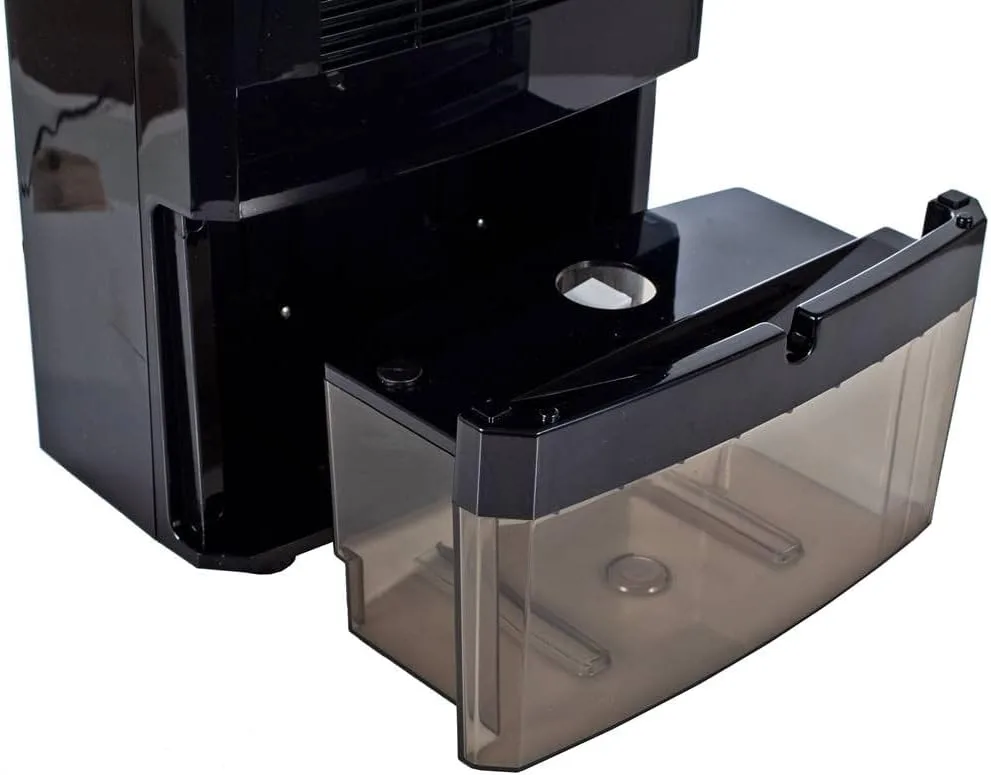
Image source: Bing (Web (fair-use with source credit))
Most people who say a dehumidifier did not work made one of these mistakes. Avoid them and your unit will actually deliver.
Over-Drying the Room
This is the most common mistake. People set the humidity target too low. They think lower is better.
It is not. Below 30 percent, you get dry skin, itchy eyes, static shocks, and cracked wood furniture. Your sinuses dry out.
You wake up with a scratchy throat. Set it to 45 percent and leave it there.
Wrong Size Unit
A too-small unit runs constantly and never catches up. A too-large unit short cycles. Both waste energy and money.
Measure your room square footage and buy accordingly. A 30-pint unit for a standard bedroom is a reliable starting point.
Ignoring the Filter
A dirty filter blocks airflow. The unit has to work harder. It uses more electricity and removes less water.
Clean the filter every two weeks. Most filters just pop out and rinse under the tap. Let it dry completely before putting it back.
Running It in Cold Weather
Compressor dehumidifiers stop working below 60 degrees. The coils frost over. The unit shuts down.
If you are running a dehumidifier in a bedroom that gets cold at night, you need a desiccant model or a unit rated for low-temperature operation.
Placing It Wrong
We already covered this. Six inches of clearance. Do not shove it in a corner.
Do not put it behind the curtains. Give it room to breathe.
Not Emptying the Tank
If you do not use a continuous drain, the tank fills up. The unit shuts off automatically. You wake up in a humid room.
Set a reminder on your phone. Empty the tank before bed and again in the morning if needed.
When a Dehumidifier Is Not the Answer
A dehumidifier is a tool, not a magic wand. Sometimes it is the wrong tool entirely.
The Problem Is Ventilation, Not Humidity
If your bedroom feels stuffy but the hygrometer reads below 55 percent, the issue is stale air. A dehumidifier will not help. You need an exhaust fan, an open window, or an air purifier instead.
A dehumidifier recirculates the same air. It does not bring in fresh air.
The Humidity Is Coming from a Leak
If you have a persistent damp spot on the wall or ceiling, a dehumidifier is just a band-aid. The moisture source is still there. It could be a pipe leak, a roof leak, or groundwater seeping in.
Find and fix the leak first. Then use a dehumidifier to dry out the remaining moisture. We have covered dehumidifiers for water damage scenarios if that is your situation.
The Room Is Too Cold
If your bedroom stays below 60 degrees, a compressor dehumidifier will not work. The coils frost over. The unit cycles on and off without removing much water.
A desiccant unit works in cold rooms, but it costs more to run. In some cases, simply heating the room slightly is a better first step.
You Just Need Quick Drying for One Event
Maybe you spilled water on the carpet or washed your bedding and it is taking forever to dry. A dehumidifier can help, but a fan is faster and cheaper. Run a box fan or a standing fan on high.
It moves air across the wet surface. That speeds up evaporation. A dehumidifier is better for long-term humidity control, not spot drying.
Frequently Asked Questions
Can a dehumidifier dry out clothes in a bedroom?
Yes, it can help. Place a drying rack near the dehumidifier, not directly against it. The drier air speeds up evaporation.
But a fan is faster for wet clothes. A dehumidifier works best as a secondary tool when drying laundry indoors.
Will a dehumidifier ruin my sleep?
It depends on the noise level. Compressor units produce a low hum and occasional fan noise. Many units have a sleep mode that slows the fan.
Desiccant units are quieter but cost more. Place the unit at least six feet from your bed to reduce noise.
How long does it take to dry out a bedroom?
A typical bedroom takes 4 to 12 hours for the initial dry-down. The exact time depends on the starting humidity, room size, and unit capacity. After that, the unit runs intermittently to maintain the target humidity.
Can I run a dehumidifier all night?
Yes, if the unit is the right size and you set the target humidity between 40 and 50 percent. Make sure the tank is empty before bed. Use a continuous drain if possible.
Check that the unit has an auto-shutoff feature that kicks in when the tank is full.
What humidity level should I set in a bedroom?
Set it between 40 and 50 percent. This is the sweet spot for comfort, health, and protection. Below 35 percent causes dry skin, static shocks, and cracked wood.
Above 60 percent encourages mold, mildew, and dust mites.
Does a dehumidifier make the room colder?
It can. A compressor dehumidifier blows warm air at first, then cooler air as it runs. The room can drop by a few degrees.
This is not a problem in summer. In winter, you might notice the room feels cooler. A desiccant unit produces less temperature change.
The Short Answer: Yes, But Only If You Do It Right
Here is the final decision guide. Answer these three questions before you buy.
First, does your bedroom actually need it? Measure the humidity. Look for condensation, musty smells, or damp sheets. If the reading is below 55 percent, you probably do not need one.
Second, what kind of bedroom do you have? Consider the size, the climate, whether it is a basement, and how cold it gets. These factors determine which type and size of unit you need.
Third, are you willing to set it up correctly? Place it with clearance. Set the target between 40 and 50 percent. Clean the filter every two weeks.
Empty the tank regularly or use a continuous drain.
If you answered yes to all three, a dehumidifier is a solid solution. It will dry out your bedroom, stop the musty smell, and help you sleep better. But skip the setup steps, and you will end up with a noisy, useless box that collects dust instead of water.
The best value dehumidifier options on the market right now balance cost and performance well. If you want something that runs year-round, a year-round use model is worth considering. And for tighter budgets, the best affordable dehumidifier picks still deliver solid results.
Choose wisely, set it up right, and your bedroom will feel fresh and dry every single night.