What Size Dehumidifier Do I Need
You're trying to get a straight answer on what size dehumidifier do I need, and honestly, that's the smartest place to start. Buying the wrong size is one of the most common and expensive mistakes homeowners make.
Manufacturer specifications, backed by the Association of Home Appliance Manufacturers (AHAM), show that pint capacity is directly tied to square footage and dampness levels. As of 2026, the most common recommendation for a 2,000-square-foot basement is a 70-pint unit. The trick is knowing how to match those numbers to your space.
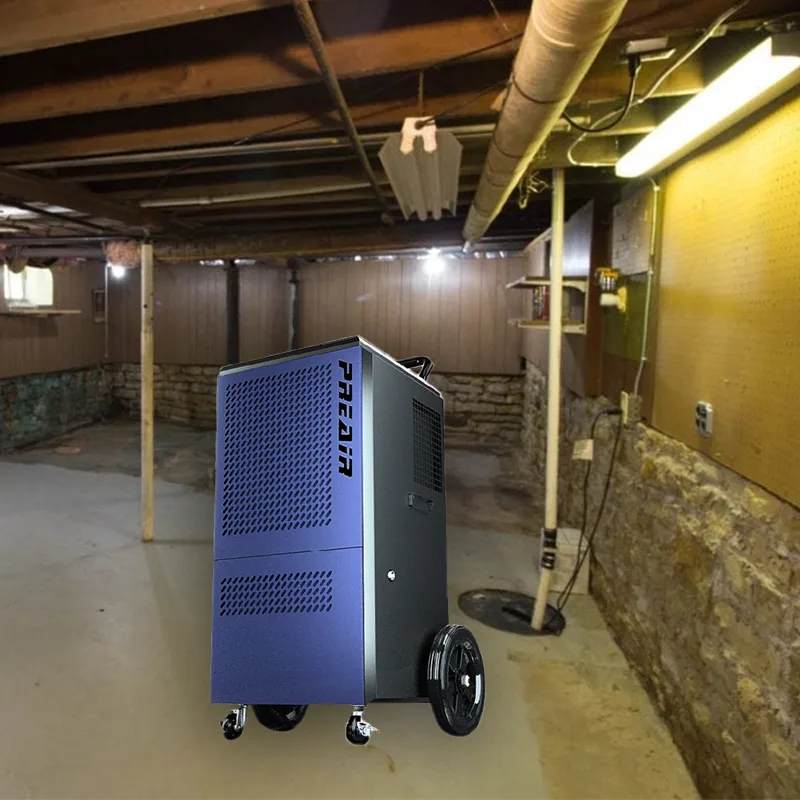
Image source: Bing (Web (fair-use with source credit))
Quick Answer
Measure your room's square footage. Check the dampness level. Match it to the pint capacity.
A 30-pint unit works for moderately damp 500-square-foot rooms. A 70-pint unit handles wet 1,500-square-foot basements. Use the guide below for your exact situation.
Why Getting the Wrong Size Is a Waste of Money
Buying a dehumidifier that's too small means it runs constantly. It never pulls enough moisture from the air. Your electricity bill climbs.
And you still feel damp and sticky.
Buying too large is just as bad. The unit short cycles, turning on and off too fast. It wears out the compressor prematurely.
And it doesn't remove humidity effectively either. You end up with a machine that costs more upfront and fails sooner.
The right size saves you money in two ways. First, it runs efficiently because it works at its designed capacity. Second, it lasts longer because it's not fighting against itself.
If you're curious about specific models, you can check out our broader guide on dehumidifiers for more context. But the real takeaway here is simple: size matters more than brand.
Per Energy Star testing, a properly sized unit uses about 30% less energy than an oversized one. That's real savings over a year.
How Pint Capacity Really Works
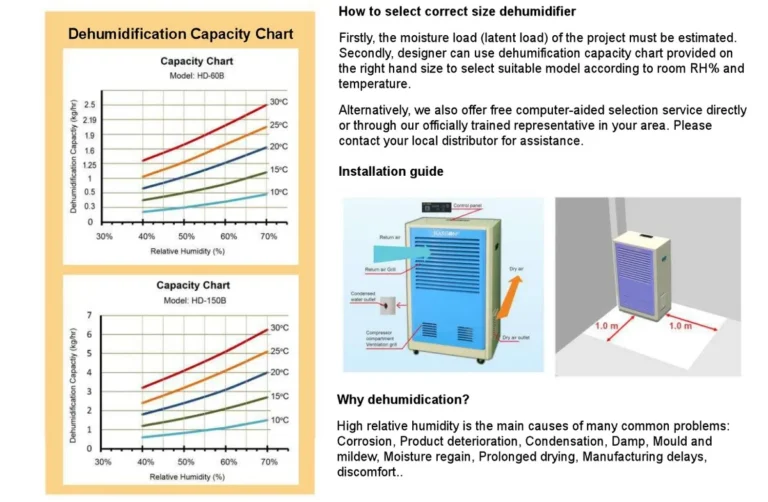
Pint capacity measures how much moisture a dehumidifier can remove in 24 hours. It's the standard rating used across the industry. AHAM tests every unit under controlled conditions to verify this number.
A 30-pint unit removes about 30 pints of water per day. That's roughly 3.75 gallons. A 70-pint unit pulls almost 9 gallons per day.
The number tells you how powerful the machine is.
But here's the catch. The AHAM rating is tested at specific temperature and humidity levels (80°F and 60% relative humidity). Your actual conditions will differ.
A cooler basement running at 65°F will reduce the unit's effective capacity by about 20%.
Image source: Bing (Web (fair-use with source credit))
That's why you need to size up for damp or wet basements. The manufacturer's rating is a best-case scenario. Real-world performance is almost always lower.
The Three Factors That Determine Your Size
Three things determine the right dehumidifier size for your space.
| Factor | How to Measure | Why It Matters |
|---|---|---|
| Room Size | Length x width (square footage) | More space holds more moisture |
| Dampness Level | Visual check or humidity meter | More moisture needs more capacity |
| Ceiling Height | Measure floor to ceiling | Higher ceilings add air volume |
Room size is the starting point. Measure the length and width. Multiply them to get square footage.
A 20×30-foot basement is 600 square feet.
Dampness level is the second factor. Most spaces fall into four categories. Moderately damp means a musty smell with no visible moisture.
Very damp means walls feel damp with condensation on windows. Wet means standing water or active leaks. Extremely wet means flooding or continuous moisture.
Each step up requires about 10 to 20 more pints per day.
Ceiling height is the one most people forget. Standard sizing charts assume 8-foot ceilings. If your basement has 9-foot or 10-foot ceilings, add 10 to 15% more capacity.
For vaulted ceilings, add 20 to 25%.
Your 4-Step Sizing Guide
Follow these four steps to find your perfect size.
| Step | Action | What You Need |
|---|---|---|
| 1 | Measure the room | Tape measure, calculator |
| 2 | Assess dampness level | Visual check or humidity meter |
| 3 | Adjust for ceiling height | Tape measure |
| 4 | Match to pint capacity | The reference table below |
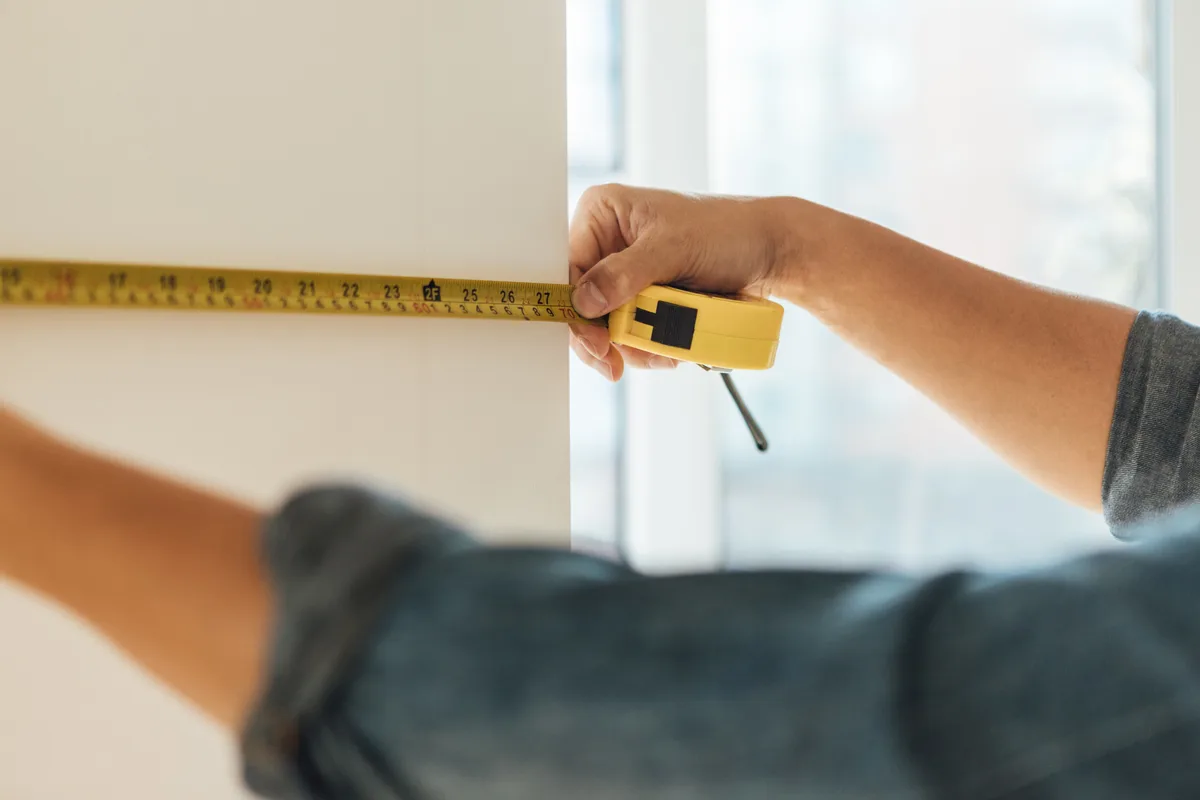
Image source: Bing (Web (fair-use with source credit))
Step 1: Measure the room. Get the length and width. Multiply them. Write down the number.
For irregular rooms, measure the largest rectangle and add 10% for odd shapes.
Step 2: Assess dampness level. Walk through the space. Look for signs of moisture. Use a humidity meter if you have one.
Target humidity is 30 to 50% relative humidity. If your reading is above 60%, you're in the wet category.
Step 3: Adjust for ceiling height. If your ceiling is over 8 feet, add 10% for each extra foot. For a 9-foot ceiling, add 10%. For 10 feet, add 20%.
This adjusts the square footage to match the actual air volume.
Step 4: Match to pint capacity. Use the reference table below. Find your adjusted square footage. Find your dampness level.
The intersection tells you the minimum pint capacity you need.
Quick Reference: Dehumidifier Size by Room and Dampness
Here's a straightforward table based on AHAM standards with real-world adjustments.
| Room Size (sq ft) | Moderately Damp | Very Damp | Wet | Extremely Wet |
|---|---|---|---|---|
| Up to 500 | 30 pint | 30 pint | 40 pint | 50 pint |
| 500 to 1,000 | 30 pint | 40 pint | 50 pint | 60 pint |
| 1,000 to 1,500 | 40 pint | 50 pint | 60 pint | 70 pint |
| 1,500 to 2,000 | 50 pint | 60 pint | 70 pint | 90+ pint |
| Over 2,000 | 60 pint | 70 pint | 90+ pint | 90+ pint |
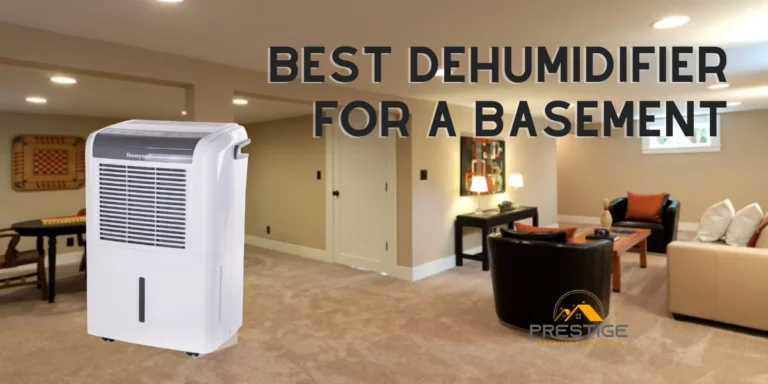
For basements specifically, always lean toward the higher end of the range. Basements are naturally cooler and damper. Our basement dehumidifier guide covers this in more detail.
If you're between two sizes, go with the larger one. A slightly oversized unit will still work efficiently. A slightly undersized one will struggle.
Frequently Asked Questions About Dehumidifier Sizing
What size dehumidifier do I need for a 1,000-square-foot basement?
You need a 50-pint unit for a very damp 1,000-square-foot basement. If the space is only moderately damp, a 40-pint unit works. Basements are naturally cooler, so always size up one level from the standard recommendation.
Can a dehumidifier be too big for a room?
Yes. An oversized unit short cycles. It turns on, runs briefly, and shuts off.
That wastes energy and fails to remove humidity evenly. Stick to the recommended size for your space.
Should I get a 30-pint or 50-pint dehumidifier?
Choose a 30-pint for a moderately damp room under 500 square feet. Choose a 50-pint for a very damp room up to 1,000 square feet. If your space falls between these categories, go with the larger unit.
How do I know if my basement is damp enough for a dehumidifier?
Check for visible signs of moisture. Look for condensation on windows, musty odors, or water stains on walls. Use a humidity meter.
If the reading is above 60% relative humidity, you need a dehumidifier. If it's above 70%, you need a larger unit.
What pint size is best for a whole house?
A whole-house dehumidifier is typically 90+ pints per day. Most homes need a unit integrated into the HVAC system. Portable units can't handle the full load.
Consult a professional for proper sizing and installation.
The Size You Should Actually Buy
Let's bring everything together. You've measured your room. You've assessed the dampness level.
You've adjusted for ceiling height. Now make the final choice.
If your room is under 500 square feet and moderately damp: Get a 30-pint unit. This covers most bedrooms, small basements, and standard living rooms.
If your room is 500 to 1,000 square feet and very damp: Get a 50-pint unit. This is the most common size for medium basements and open-plan areas.
If your room is 1,000 to 1,500 square feet and wet: Get a 70-pint unit. This handles large basements, crawl spaces with moisture issues, and whole main floors.
If your room is over 1,500 square feet or extremely wet: Get a 90+ pint unit. This is for commercial spaces, flood-prone basements, and whole-house applications.
Stick with the table we provided earlier. It's based on real-world performance data. And remember, it's always better to size up slightly than down.
A 70-pint unit in a space that could use a 50-pint will run less often and last longer. A 30-pint unit in a space that needs 50 pints will run constantly and fail early.
One last tip. Buy a unit with a continuous drain option. You'll set it up once and forget about it.
No more emptying buckets every day. That's the difference between a dehumidifier that works for you and one that becomes a chore.