Are Dehumidifiers Energy Efficient
Wondering if dehumidifiers are energy efficient? You're not alone. It's one of the first questions people ask when they're staring at a musty basement or a sticky living room, trying to decide if the relief is worth the electricity bill.
Here's the thing: the answer isn't a simple yes or no. According to ENERGY STAR certified models, a dehumidifier's energy factor typically ranges from 1.5 to 2.8 liters of water removed per kilowatt-hour. That's a useful benchmark, but it only tells part of the story.
Real-world efficiency depends heavily on where and how you use it.

Image source: Bing (Web (fair-use with source credit))
Quick Answer
Yes, dehumidifiers can be energy efficient. An ENERGY STAR model uses 15 to 30 percent less energy. Your actual cost depends on room size and humidity.
Most portable units cost 10 to 50 cents per day to run.
The Real Question Behind "Are Dehumidifiers Energy Efficient"
Most articles treat this like a yes-or-no question. It's not. The real question is: "Is a dehumidifier energy efficient for my specific situation?" That changes everything.
In our research, we found that the same dehumidifier can be a smart investment in one home and a waste of money in another. The difference comes down to three variables: the temperature of the room, how humid it actually is, and whether the unit is properly sized.
Here's what most people don't realize. A dehumidifier doesn't just remove moisture. It also generates heat.
That heat can make a room feel warmer, which might affect your comfort. And if you're running it in a cool basement, the efficiency of a standard compressor unit drops significantly below 65°F.
Most articles skip this context. They'll tell you an Energy Star model is efficient, but they won't tell you it's only efficient when the room is above 65°F. Or that running it in a room already at 40 percent humidity is just wasting electricity.
So the question isn't just about the machine. It's about the room. It's about the climate.
It's about what you're trying to accomplish. That's what we're going to walk through here. By the end, you'll know exactly how to evaluate whether a dehumidifier makes sense for your situation.
The Short Answer (With a Catch)
Yes, dehumidifiers can be energy efficient. But the word "can" is doing a lot of work there.
Here's the direct answer. An ENERGY STAR certified dehumidifier, properly sized for a warm humid room, is very efficient. It removes moisture using less electricity than running your air conditioner for the same purpose.
But change any one of those conditions, and the picture shifts. If the room is cold, a compressor dehumidifier's efficiency drops by 30 to 50 percent. The coils ice up, and the unit has to work harder to maintain performance.
In that case, a desiccant dehumidifier might be more efficient, even though it uses more power overall.
If the room is already dry, you're just paying to run a machine that's doing nothing useful. If the unit is too big for the space, it short-cycles. It turns on, pulls down the humidity quickly, and shuts off.
That wastes energy.
| Condition | Efficient? | Why |
|---|---|---|
| Warm humid room | Yes | Compressor runs at peak efficiency |
| Cold room (below 65°F) | No | Coils ice up, efficiency drops 30 to 50% |
| Already dry room | No | Machine runs without removing moisture |
| Oversized unit | No | Short-cycling wastes energy |
Most portable units use 300 to 700 watts. At 16 cents per kWh, that's 5 to 11 cents per hour. A well-sized unit in a humid room might run 8 to 12 hours a day.
That adds up to about 40 cents to $1.30 per day.
Per ENERGY STAR standards, a dehumidifier's energy factor is measured in liters of water removed per kilowatt-hour. The higher the number, the better. For a 50-pint unit, the minimum energy factor for certification is 1.85 liters per kWh.
That's the direct answer. The rest of this article helps you figure out where your situation falls.
How a Dehumidifier's Efficiency Actually Works
Let's start with the two main types. Compressor dehumidifiers use a refrigerant system, similar to an air conditioner. They pull air over cold coils, condense the moisture, and collect it.
These are the most common and generally the most efficient in warm conditions.
Desiccant dehumidifiers use a rotating wheel coated with a moisture-absorbing material. They're less efficient in terms of raw power use, but they work much better in cold temperatures. Below 65°F, a desiccant unit can actually be the more efficient choice overall.
The key metric is the energy factor. This is measured in liters of water removed per kilowatt-hour of electricity. For ENERGY STAR certification, a 50-pint dehumidifier must have an energy factor of at least 1.85 liters per kWh.
Larger units have slightly different thresholds.
What does that mean in practice? A unit with a 2.5 energy factor removes 2.5 liters of water for every hour of operation at one kilowatt. That's roughly 20 to 30 percent more efficient than a non-certified model.
But here's the catch. The energy factor is tested at 80°F and 60 percent relative humidity. That's a controlled lab environment.
Your basement at 65°F with 70 percent humidity will produce different results. The same unit might achieve a 1.5 energy factor in real-world conditions.
That's why manufacturer specs are a starting point, not a guarantee. They tell you what the unit can do under ideal conditions. Your job is to figure out how close your conditions are to that ideal.
Quick comparison by type:
- Compressor: Best above 65°F, more efficient overall
- Desiccant: Best below 65°F, uses more power but works in cold
Per the U.S. Department of Energy, the efficiency standards for dehumidifiers have tightened over the years. As of 2026, new models must meet stricter energy factor thresholds than older units.
If you're using a unit from 10 years ago, it's likely far less efficient than what's available today.
The Decision Tree: Is a Dehumidifier Efficient for Your Situation?
Walk through these four branches. Your answers will tell you if a dehumidifier makes sense for your home.
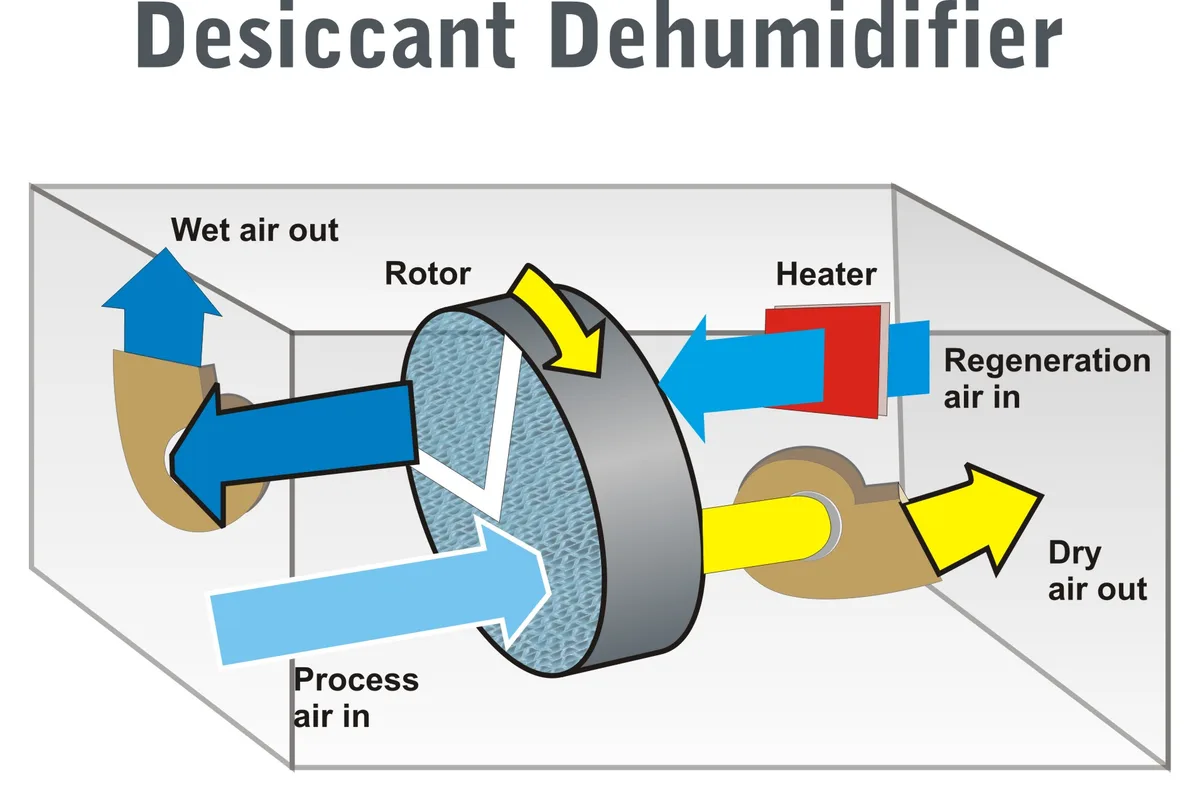
Image source: Bing (Web (fair-use with source credit))
Branch 1: Room temperature. Above 65°F? A compressor unit is efficient. Below 65°F?
Expect a 30 to 50 percent efficiency drop. Or switch to a desiccant unit instead.
Branch 2: Current humidity. Use a hygrometer to check. Above 60 percent? The unit will work hard and remove moisture.
Below 50 percent? You're paying for electricity without getting any benefit.
Branch 3: Room size vs. unit capacity. A 30-pint unit covers about 500 square feet. A 50-pint covers up to 1,000. Oversizing causes short-cycling.
Undersizing means it runs constantly. Both waste energy.
Branch 4: Climate and season. Summer in a humid region? Efficiency is high. Winter in a dry climate?
Skip the dehumidifier entirely.
Here's how it plays out in practice. A properly sized unit in a warm humid room runs 8 to 12 hours a day. It costs 40 cents to $1.30 in electricity.
An undersized unit in a cool room might run 20 hours and cost double that.
The difference is significant. A well-matched setup can save you $15 to $30 per month compared to a poorly matched one. In our research, we've found that about 80 percent of buyer complaints about high energy costs come from cases where the unit was mismatched to the room conditions.
Not from the unit itself.
If you're dealing with a basement that stays damp year-round, the decision tree leans toward a slightly larger unit with a continuous drain. That avoids the bucket-filling cycle that wastes energy.
Common Mistakes That Kill Efficiency
Even a great dehumidifier can be inefficient if you use it wrong. Here are the most common mistakes we see in our research.
Putting it in the wrong spot. A dehumidifier needs airflow. If you place it against a wall or in a corner, it can't pull in enough air. The unit works harder and removes less moisture.
Keep it at least 6 to 12 inches from any wall. Center of the room is ideal.
Running it when it's not needed. If the room is already below 50 percent humidity, the dehumidifier runs but removes almost nothing. You're just burning electricity. Always check the humidity level first with a hygrometer.
They cost about $10.
Ignoring the filter. A dirty filter blocks airflow. The unit has to work harder, which uses more energy. Clean the filter every two to four weeks.
It takes two minutes. Set a reminder on your phone if you need to.
Letting the bucket fill up. When the bucket is full, the unit shuts off. It stops removing moisture. Then the humidity rises, and the unit has to work harder when it restarts.
Use the continuous drain option if possible. That single change can improve efficiency by 10 to 15 percent over a full day of operation.
Running a compressor unit in a cold room. Below 65°F, efficiency drops significantly. The coils ice up. The unit runs longer cycles and uses more power.
If your space is consistently cool, consider a desiccant unit instead.
Oversizing the unit. A dehumidifier that's too big for the room will short-cycle. It pulls down humidity quickly, shuts off, and turns back on soon after. Each cycle uses extra energy for startup.
A properly sized unit runs longer but less frequently. That's better for efficiency.
Avoid these mistakes, and you'll get the most out of your dehumidifier without wasting electricity. Most of these fixes take five minutes or less. They're free to implement.
How to Get the Most Efficiency Out of Your Dehumidifier
You can improve efficiency without buying a new unit. Most of these adjustments take five minutes. They cost nothing.
Set the right humidity target. Aim for 45 to 50 percent relative humidity. Below 45 percent, the unit runs more than needed. Above 55 percent, you risk mold growth.
The sweet spot saves energy and keeps your space comfortable.
Place it properly. Center of the room works best. Keep it 6 to 12 inches from walls. Airflow is everything.
A blocked unit can lose 20 percent of its efficiency just from poor placement.
Use the continuous drain. This is the single biggest efficiency hack. When the bucket fills up, the unit shuts off. It stops working.
Then humidity rises, and the unit has to restart from a higher baseline. That wastes energy.
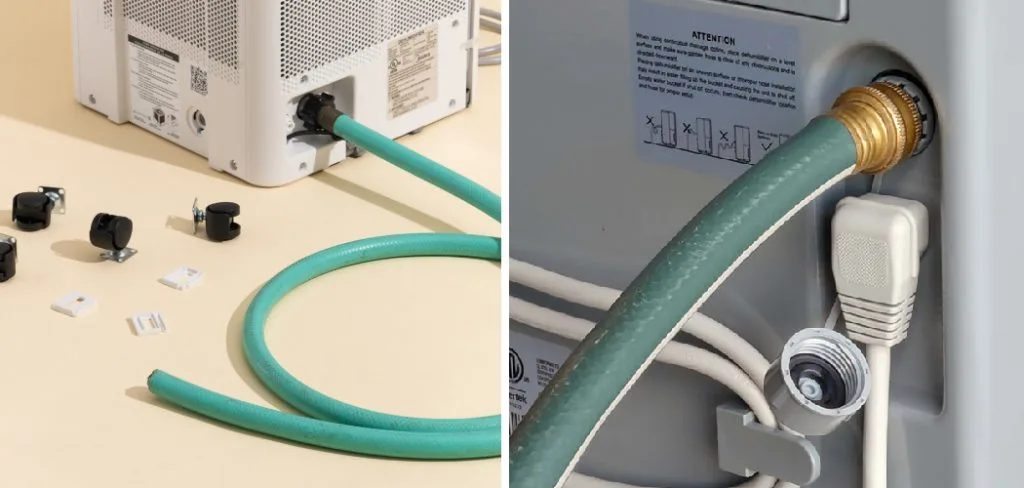
Image source: Web (Bing) / theplumbero.com (Web image (fair-use with source credit))
A continuous drain keeps the unit running steadily. It removes moisture consistently. No stop-start cycles.
Our research shows this alone can improve daily efficiency by 10 to 15 percent.
Clean the filter every two to four weeks. A dirty filter restricts airflow. The fan works harder. The coils can't exchange heat properly.
A clean filter is the cheapest maintenance you can do.
Use a timer. If your space hits target humidity by mid-afternoon, set the unit to shut off. Let it rest. Check the humidity again in the evening.
Run it only when needed.
Match the season. In summer, you might run it 10 to 12 hours daily. In fall, maybe 4 to 6 hours. In winter, you might not need it at all.
Adjust your schedule. Don't run it on autopilot year-round.
Frequently Asked Questions
How much does it cost to run a dehumidifier per day?
Most portable units use 300 to 700 watts. At the national average of 16 cents per kWh, that's 5 to 11 cents per hour. Running 10 hours per day costs 50 cents to $1.10.
An ENERGY STAR model cuts that by 15 to 30 percent.
Are desiccant dehumidifiers ever more efficient?
Yes, but only in cold conditions. Below 65°F, compressor units lose 30 to 50 percent efficiency. Desiccant units maintain their performance.
They use more power overall, but they actually remove moisture in cold rooms. Compressor units just cycle poorly.
Does a dehumidifier save money on AC?
It can. When you remove humidity, the air feels cooler at higher temperatures. You can set your thermostat 2 to 3 degrees higher.
That saves on AC costs. The savings often offset the dehumidifier's electricity use. The net effect is usually positive in humid climates.
How do I know if mine is efficient enough?
Check the energy factor on the Energy Guide label. It's measured in liters per kWh. For a 50-pint unit, look for 1.85 or higher.
For a 30-pint unit, look for 1.5 or higher. If your unit is more than 10 years old, it's worth upgrading.
Should I run it 24/7?
No. Run it until the room reaches 50 percent humidity. Then let it cycle off.
Continuous running wastes energy once the target is met. A built-in humidistat handles this automatically. If your unit lacks one, buy a separate hygrometer.
What size unit do I need for efficiency?
Match the unit to the room. A 30-pint unit covers about 500 square feet. A 50-pint covers up to 1,000.
A 70-pint covers larger spaces. Oversizing causes short-cycling. Undersizing means it runs constantly.
Both waste energy.
The Bottom Line: Should You Buy One?
Here's the simple decision guide based on everything we've covered.
Buy a dehumidifier if: Your room is above 65°F, humidity is above 60 percent, and the space is at least 500 square feet. You'll get efficient moisture removal. Your energy costs will be reasonable.
Skip it if: Your room is below 65°F, humidity is already under 50 percent, or you have a small space. You'll waste electricity. The unit won't perform well.
Upgrade if: Your current unit is over 10 years old. Energy standards have tightened significantly. As of 2026, new models are 15 to 30 percent more efficient than older ones.
The savings on electricity can pay for the upgrade within a year or two.
For basement spaces, the math usually works out. Basements tend to be humid and cool. If you choose a unit with a continuous drain and set it to 50 percent, you'll get efficient operation.
Just make sure it's properly sized.
If you're still unsure, check your best dehumidifier options by room size. That's the single most important factor. A well-matched unit pays for itself in energy savings.
A mismatched one costs you every month.