How to Connect a Hose to a Dehumidifier
If you’ve ever wrestled a full water tank out of a dehumidifier at midnight, you already know the pain. Learning how to connect a hose to a dehumidifier turns that annoying chore into a true set-and-forget setup, and it’s easier than most people think.
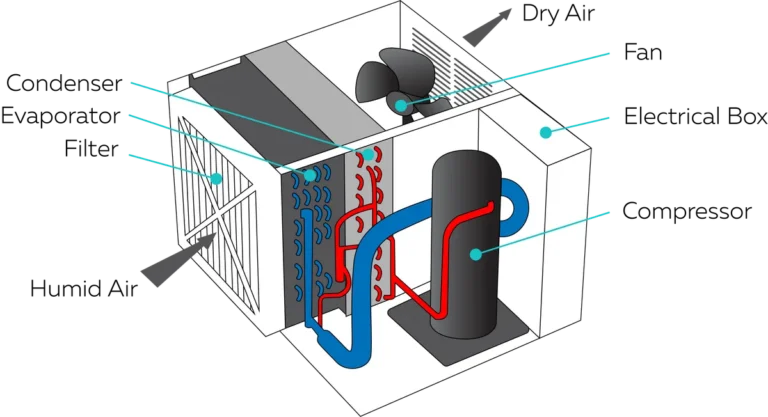
Manufacturer specifications indicate that most portable dehumidifiers use a standard 1/4-inch or 3/8-inch drain port. Larger models with built-in pumps need a reinforced hose that can handle pressure. The branch between gravity drain and pump drain changes everything about your setup.
Let’s walk through it from the top.

Image source: Bing (Web (fair-use with source credit))
Quick Answer
Connect a hose to the drain port at the bottom of your dehumidifier. For gravity drain models, use a 1/4-inch vinyl hose and keep it sloping downward. For pump models, use a reinforced hose and secure it with a clamp.
Route the hose to a floor drain or utility sink. Test the connection before leaving it unattended.
Why Bother Connecting a Hose? (The Real Problem It Solves)
The whole point of a dehumidifier is to run constantly when humidity spikes. The problem is that the little bucket fills up fast. In a humid basement, a typical 50-pint unit can fill its tank in 12 to 18 hours.
That means you’re emptying it daily, sometimes twice a day, and the machine shuts off every time the bucket gets full.
That shutdown is a silent killer. The unit stops pulling moisture. The humidity creeps back up.
Your musty smell returns. You’re essentially running a humidistat that only works while you remember to empty it.
A continuous drain line fixes all of that. Connect a hose to the drain port. Route it to a floor drain.
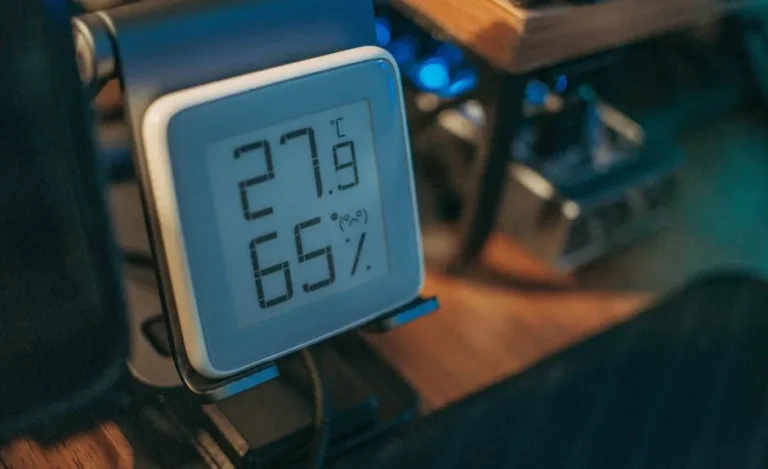
The dehumidifier runs indefinitely without a single interruption. Your relative humidity stays locked where you set it. The machine runs efficiently in Energy Star mode.
And you gain back the ten minutes a day you spent sloshing water around.
If you’re still shopping for a unit, our best dehumidifier guide covers which models have the drain features that actually matter. For everyone else, the key is figuring out which drainage type your current unit uses.
Gravity Drain vs. Pump Drain – Which One Is Yours?
Here’s where most “universal” guides fall apart. There are two completely different drainage systems. The hose connection process is not the same for both.
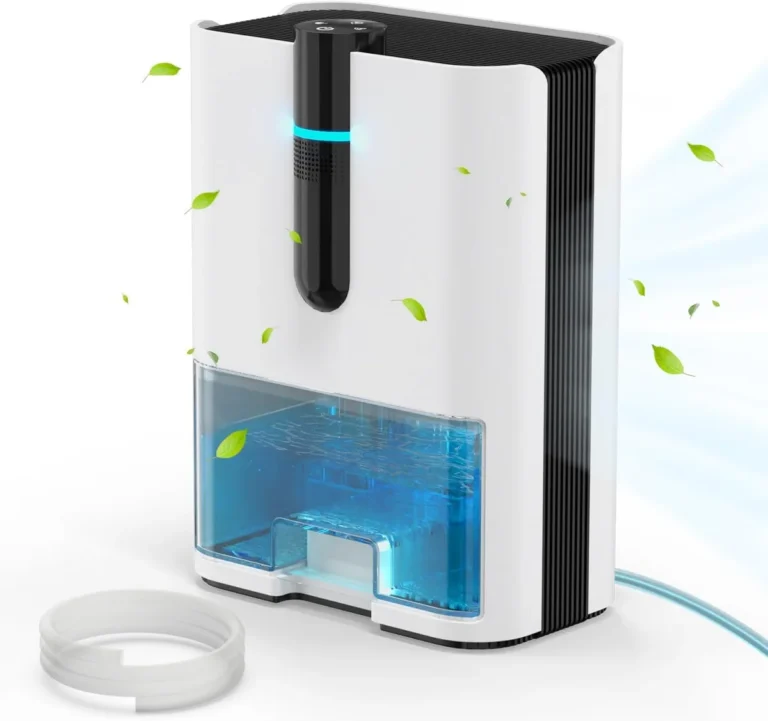
Gravity drain models use a simple threaded port near the bottom of the unit. Water flows out because the port is lower than the water level inside the tank. That’s it.
Just gravity doing the work. These are typically smaller portable dehumidifiers in the 20 to 50 pint range. The key rule is that the hose must slope downward continuously from the unit to the drain.
No uphill sections. No loops. No kinks.
Pump-equipped models have a small internal pump that pushes water upward through the hose. These are usually larger units, 70 pints and above, or commercial-grade models. The pump gives you flexibility to route the hose up and over walls or to a sink that sits higher than the dehumidifier.
They include a float switch that activates the pump when water reaches a certain level.
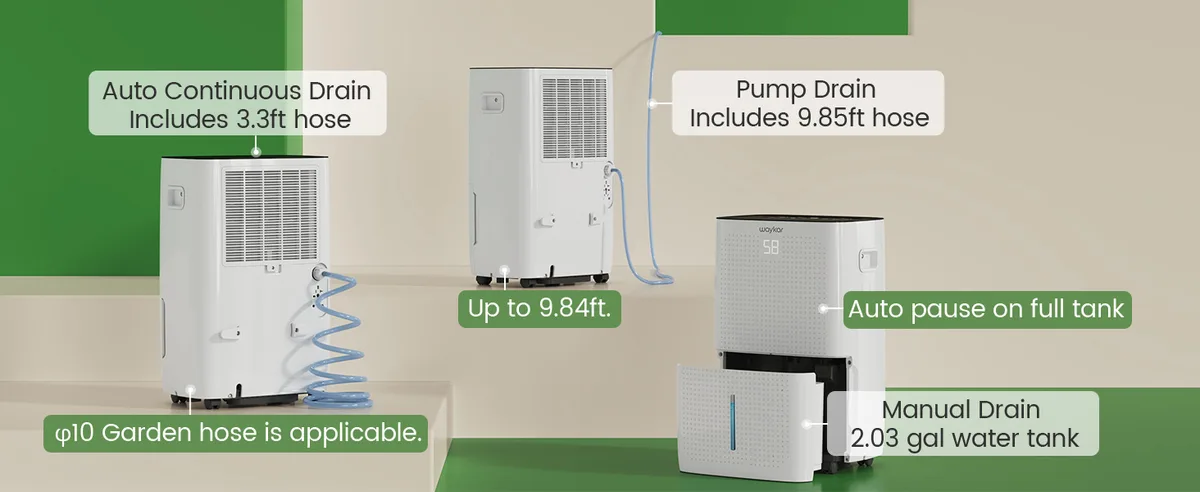
Image source: Bing (Web (fair-use with source credit))
Here’s how to tell which one you own:
- Check the user manual. The spec sheet will mention “gravity drain” or “condensate pump” explicitly.
- Look at the drain port. A simple threaded spigot near the bottom suggests gravity.
- Check for a pump outlet. If there’s a dedicated hose connection with a clamp fitting, you’ve got a pump.
- Search the model number online. Manufacturer sites list the drain type clearly.
The same rule applies to basement dehumidifiers. Basement units are often pump models because you’re dealing with varying floor elevations and sometimes no floor drain nearby.
What You'll Need: Tools, Hoses, and Adapters
Before you touch the machine, gather the right parts. Using the wrong hose is the single most common cause of leaks and failed setups.
| Item | What to Look For | Why It Matters |
|---|---|---|
| Drain hose | 1/4-inch ID vinyl or PVC hose for gravity units | Matches standard drain ports |
| Pump hose | Reinforced vinyl hose, 3/8-inch ID or larger | Handles pump pressure and lift |
| Garden hose | 3/4-inch GHT threads, only with an adapter | Wrong size for most ports, leaks easily |
| Adapter | Threaded nipple converting port to hose barb | Needed for push-fit or odd-size ports |
| Hose clamp | Small gear clamp, 1/2-inch to 3/4-inch range | Secures hose on barb connections |
| Teflon tape | Plumber’s tape for threaded connections | Prevents slow drips at the joint |
Most portable dehumidifiers come with a small drain hose in the box. It’s usually 3 to 5 feet of clear vinyl tubing. That works for short runs.
You can buy longer lengths at any hardware store for about $0.50 to $1.50 per foot.
You might also need a sump pump or external condensate pump if your drain location is uphill from the dehumidifier. That’s a separate setup entirely. For now, stick with the simple stuff.
Step-by-Step: How to Connect Both Types
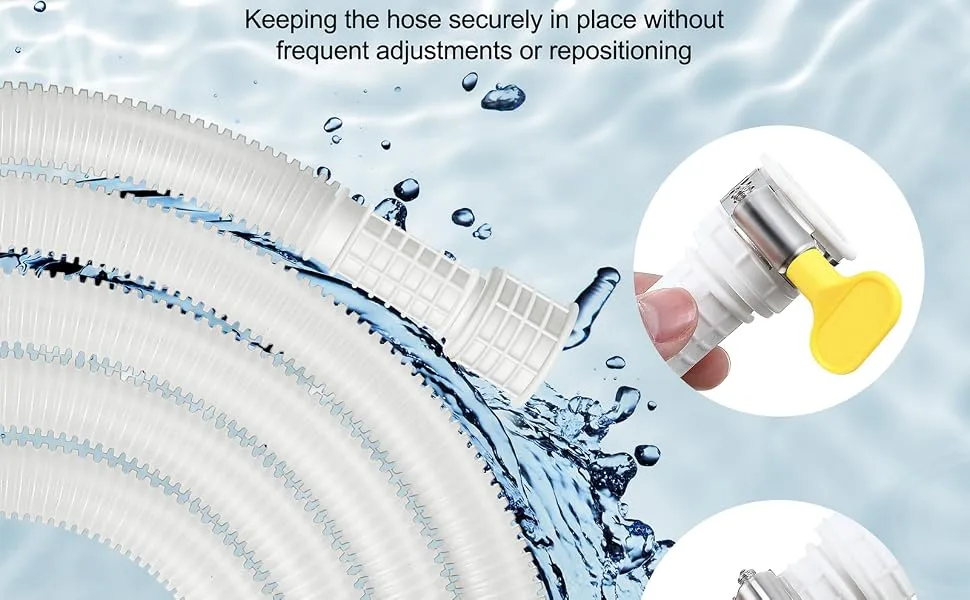
Image source: Bing (Web (fair-use with source credit))
For Gravity Drain Models
Step 1. Locate the drain port. It’s usually behind a small flap or covered by a rubber plug near the bottom of the unit. Some machines have it on either the left or right side.
Step 2. Remove the drain plug. Pull the rubber cap or unscrew the plastic stopper. Keep it somewhere safe.
You’ll need it if you ever switch back to the bucket.
Step 3. Attach the hose. If the port is threaded, screw the hose connector on clockwise. Wrap Teflon tape around the threads first to stop drips.
If the port is a barbed fitting, push the hose over the barb and secure it with a hose clamp.
Step 4. Route the hose downward. This is non-negotiable. The hose must slope at least 1/4 inch per foot toward the drain.
Any low spot creates a water trap that backs up into the unit.
Step 5. Test it. Pour a cup of water into the bucket area or run the dehumidifier for 10 minutes. Watch the hose for leaks.
Verify water reaches the drain.
For Pump Equipped Models
Step 1. Find the pump outlet. You’ll see a metal or plastic fitting. It usually has a hose clamp already attached.
It sits near the bottom corner of the unit.
Step 2. Slide the hose over the pump outlet. Use a reinforced hose rated for pressure. Do not use the thin clear tubing that comes with gravity drain units.
Secure it with the hose clamp. Tighten with a screwdriver.
Step 3. Route the hose to your drain. Pump models allow upward routing. But check the maximum lift height in your manual.
Typical pumps handle 10 to 15 feet of vertical rise.
Step 4. Connect to the drain. Use a hose adapter to connect to a sink drain. Or use a clamp to secure it over a floor drain grate.
Make sure the hose end is lower than the pump outlet to avoid air locks.
Step 5. Run a test cycle. Plug the unit in. Let it run until the pump kicks on.
Check for leaks at both ends.
Common Mistakes That Flood Your Basement
A few of these will cause an annoyance. One or two can flat-out flood your floor. The good news is that all of them are completely avoidable.
Using a garden hose on a gravity drain unit. The port is too small for a 3/4-inch garden hose. Water backs up immediately. You need an adapter.
A vinyl hose works better anyway.
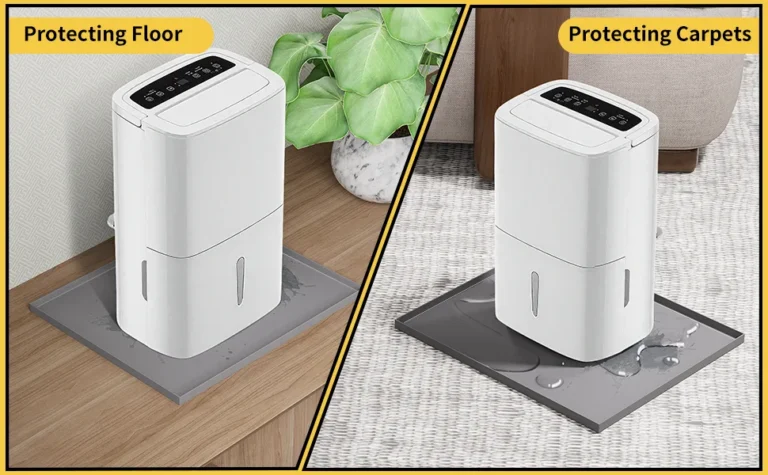
Skipping the downward slope. This is the biggest mistake with gravity models. Water needs gravity to move. If the hose dips even a few inches, the water pools in that low spot.
The dehumidifier stops draining entirely.
Letting the hose kink. A kinked hose acts like a shut-off valve. The machine’s bucket fills up. The unit shuts off, even though the hose looks fine at a glance.
Check the entire run. Pay special attention to corners.
Forgetting the hose clamp. Some people just slip the hose onto the barb and call it done. Water pressure from a pump can blow it off. A $1 hose clamp saves you from a soaked floor.
Ignoring mold and algae buildup. Clear vinyl hoses grow slime over time. Warm, humid conditions make it worse. That slime clogs the hose and reduces drainage flow.
Clean or replace your hose every few months.
Keeping Your Drain Line Working Long-Term
A well-maintained hose setup can run for years without a hiccup. The real enemy is time, not the equipment. Warm, humid condensate slowly forms a biofilm inside clear vinyl hoses.
That film eventually becomes a clog.
Make cleaning part of your monthly routine. Pour a cup of white vinegar through the hose. Flush with warm water.
Let everything drain completely before reconnecting. This simple step prevents algae before it becomes a problem.
Check the connections every month. Tug on the hose where it meets the drain port. Tug on the floor drain fitting too.
A loose clamp can create a slow drip that ruins your flooring while you’re not looking.
Replace the hose when it turns stiff or shows cracks. Clear vinyl gets brittle with age. Heat near the compressor accelerates wear.
A five-dollar hose is cheap insurance against a water-damaged floor.
If your dehumidifier sits in a garage or unheated basement, winterize the line before freezing temperatures hit. Disconnect the hose and let it drain fully. Ice expands inside the hose and can crack the port, the adapter, or the hose itself.
Always unplug the unit before cleaning the hose. Water near electrical components is never worth the risk.
Frequently Asked Questions
Can I use a garden hose on my dehumidifier?
Usually not. Most dehumidifier drain ports use 1/4-inch or 3/8-inch openings. Garden hoses are 3/4-inch.
Even with an adapter, the mismatch causes leaks and poor drainage. A properly sized vinyl hose works better and costs less.
Why is my dehumidifier not draining through the hose?
The most common cause is a kink or a sagging low spot in the line. Gravity units need a continuous downward slope to the drain. Check the entire hose run first.
If the slope is correct, unplug the unit and blow through the hose to clear any blockage.
How often should I clean the drain hose?
Flush it every 6 to 8 weeks if the unit runs daily. Vinegar and warm water work well. Clear hoses let you see the film forming.
If water flows slower than usual, clean it sooner rather than later.
Does a pump dehumidifier need a special hose?
Yes. Pump models push water under pressure. They need reinforced vinyl hose rated for that pressure.
Thin gravity-drain tubing can swell and burst. Check your manual for the recommended inner diameter and maximum lift height.
What if my dehumidifier doesn’t have a drain port?
Some budget models lack a drain port entirely. You can try an external condensate pump kit that sits inside the bucket. Or you can replace the unit with one that has continuous drain capability.
Check the manufacturer’s website for your specific model’s features.