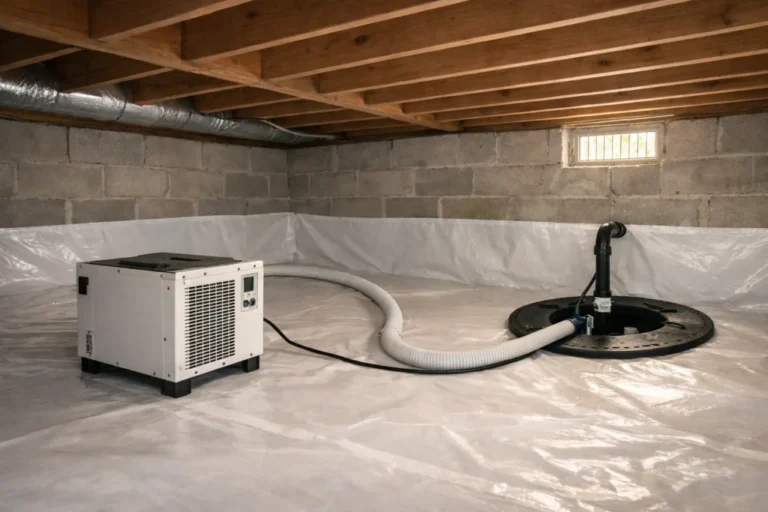
How to Drain a Basement Dehumidifier
If you've ever hauled a sloshing bucket of water up a flight of stairs at midnight, you already know why the real question isn't "how to drain a basement dehumidifier", it's "which drain method works for my basement." That bucket routine gets old fast. And if you skip it, the unit shuts off, humidity creeps back up, and all that effort you put into drying the air gets undone.
The right setup turns a dehumidifier into a set-and-forget appliance. According to the Department of Energy's 2019 updated test procedure, a 50-pint unit can pull nearly 2 gallons of water from the air every day in a damp basement. That's a lot of trips to the sink.
Let's walk through the three ways to make that water disappear without you lifting a finger.
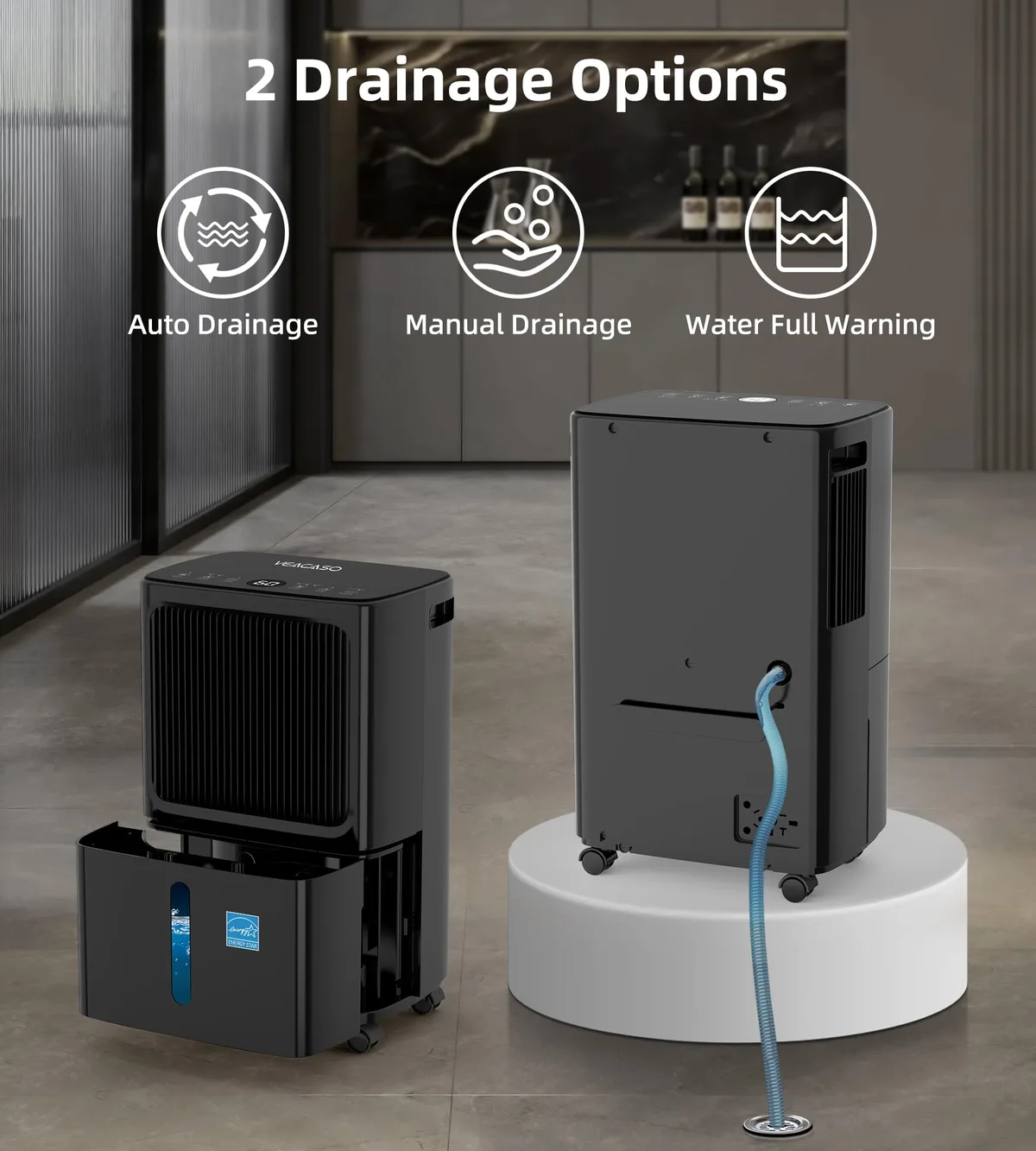
Image source: Bing (Web (fair-use with source credit))
Why Draining Your Basement Dehumidifier Is a Setup Decision, Not a Chore
Most people think draining a dehumidifier means emptying the bucket. That's the fallback, not the solution. The real trick is choosing a continuous drain method that matches your basement's layout.
If you have a floor drain, gravity setup is your best bet. No pump, no electricity, no moving parts. Just a hose and a downhill slope.
If you don't have a floor drain, you need a pump to push water up and out. That could be a built-in pump or an external one you add on.
The decision comes down to one thing: where does the water need to go? If it's downhill, gravity works. If it's uphill, you need a pump.
That's the whole decision tree in one sentence.
A properly set up continuous drain eliminates nearly all maintenance headaches. The catch is that setup matters. A hose routed wrong, a pump that's too weak, or a kinked line can cause just as much trouble as a full bucket.
Quick Answer: Match Your Drain Method to Your Basement in 30 Seconds
The fastest way to drain a basement dehumidifier is a continuous gravity hose to a floor drain. That works if the drain is lower than the dehumidifier's drain port. If not, use a built-in condensate pump or add an external pump.
Here are the three options and when each one works.
Gravity Drain Option
Best for basements with a floor drain, sump pit, or utility sink lower than the unit. You connect a standard garden hose to the drain port and route it downhill. No pump, no electricity, no moving parts.
Just a steady slope.
Built-In Pump Option
Many modern dehumidifiers include a built-in condensate pump. These units can push water up to 15 or 20 feet vertically. That means you can route the hose into a laundry tub or through a window well.
Check the vertical lift rating before you buy. If you're shopping for a model with this feature, our roundup of top-rated machines for basements covers the best options.
External Condensate Pump Option
If your dehumidifier lacks a pump, you can add a separate condensate pump. It sits next to the unit, collects water via a tube, and pumps it wherever you need. This is a good retrofit option for older units that still work well.
Gravity Drain Setup: Step-by-Step for Floor Drains, Laundry Tubs, and Standpipes
Setting up a gravity drain is straightforward. Here's the process.
First, locate the drain port on your dehumidifier. It's usually on the back or side, covered by a rubber plug. Remove the plug and keep it somewhere safe.
You'll need it if you ever switch back to bucket mode.
Next, attach the hose. Most units use a standard 3/4-inch garden hose thread. If your port is a smaller barbed fitting, you'll need an adapter.
Many dehumidifiers include one in the box. Screw the hose on hand-tight, then add a hose clamp to prevent leaks.
Now route the hose. The key rule is constant downhill slope. No dips, no low spots where water can pool.
Every sag in the hose becomes a potential clog. If the hose runs across a floor, tape it down so nobody trips.
Finally, test the setup. Pour a cup of water into the bucket area or wait for the unit to start collecting condensate. Watch the water flow out the end of the hose.
If it trickles steadily, you're good. If it stops or slows, check for kinks or a rise in the hose.
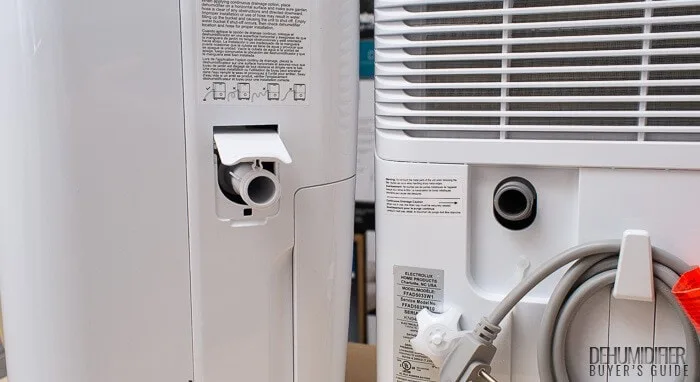
Image source: Bing (Web (fair-use with source credit))
One common concern: "What if my floor drain is higher than the dehumidifier?" Gravity won't work. You need a pump. That's the hard line.
If you try to force gravity, water will just sit in the hose and eventually overflow the bucket.
For a budget-friendly setup, any reliable model with a gravity port works fine. Our guide to affordable options can help you choose one that fits your space.
Condensate Pump Setup: Step-by-Step When Gravity Won't Do the Job
If your basement lacks a floor drain or the drain is higher than the unit, a condensate pump is your answer. Here's how to set it up.
First, check if your dehumidifier has a built-in pump. Look for a dedicated drain line and a pump specification in the manual. If it does, you just need to connect the included hose and route it to your drain location.
If it doesn't, you'll buy an external pump.
For an external pump, place it next to the dehumidifier. Most pumps come with a collection tank and a float switch. The unit sends water into the pump's tank via a short tube.
When the tank fills, the pump kicks on and pushes water up the discharge tube.
Connect the drain tube from the dehumidifier to the pump's inlet. The pump's outlet hose goes to your drain point. This could be a laundry tub, a standpipe, or even an exterior wall.
Make sure the pump's vertical lift rating matches your setup. A typical lift is 15 to 20 feet.
Test the pump by running water through the system. Let the pump cycle on and off a few times. Check that the float switch activates and the pump drains completely.
If the pump runs continuously or doesn't shut off, something is wrong.

Image source: Bing (Web (fair-use with source credit))
One important detail: external pumps usually have a check valve to prevent backflow. Make sure it's installed correctly. If it's missing or backwards, the pump will drain and then refill from the hose.
If you're looking for a model with a strong built-in pump, our list of premium units includes several with excellent lift ratings.
Common Mistakes That Cause Leaks, Overflows, and Frozen Drain Lines
Even smart people mess up continuous drain setups. Here are the most common mistakes and how to avoid them.
| Mistake | Why It Happens | How to Fix It |
|---|---|---|
| Kinked hose | The hose bends too sharply at a corner | Use a wider radius or a rigid elbow fitting |
| Hose sag or low spot | Water pools in the dip, breeds algae | Route the hose with a steady downhill slope; tape or clip it flat |
| Wrong hose size | Drain port uses a barb instead of garden thread | Use the adapter that came with the unit; buy a 3/4-inch to barb adapter if needed |
| Pump not primed | Air in the line prevents the pump from moving water | Pour a small amount of water into the pump inlet to prime it |
| Frozen drain line | Hose runs through an unheated window or crawl space in winter | Insulate the line or route it through a heated area |
| Overflow because pump failed | The check valve stuck or the float jammed | Test the pump monthly; clean the float and valve |
The most dangerous mistake is assuming the setup works without testing. Always run a test cycle before you leave the unit unattended. A failed pump can dump gallons of water onto your basement floor.
Another common error: using a hose that's too long. A 50-foot hose on a gravity drain might look convenient, but the friction slows the water flow. Algae grows faster in slow-moving water.
Keep the hose as short as possible.
If you route the hose through a window or wall, seal the gap. Otherwise, warm humid air from the basement leaks out, and cold air can freeze the line. A simple foam seal works fine.
The EPA's mold and moisture guidance emphasizes that standing water in basements leads to mold growth within 24 to 48 hours. A dehumidifier that overflows is worse than no dehumidifier at all.
Maintenance and Long-Term Care for Continuous Drainage
A continuous drain needs attention about once a month. Skip it and you'll eventually find water on the floor.
Start with the drain hose. Algae and slime grow inside clear vinyl hoses, especially in warm basements. Disconnect the hose every four weeks and flush it with a mixture of white vinegar and water.
One part vinegar to three parts water works well. Let it sit for ten minutes, then rinse thoroughly.
The condensate pump needs its own check. Open the pump housing and inspect the float switch. Dirt or mineral deposits can jam the float, causing the pump to run continuously or not at all.
Wipe it clean with a damp cloth. If you see hard water scale, use a descaling solution made for coffee machines or humidifiers.
Replace the dehumidifier's air filter every three months. A clogged filter reduces airflow, which makes the coil colder and increases frost buildup. Frost on the coil blocks drainage.
The unit then cycles off and on without effectively removing moisture.
Check the hose connection at the drain port. Vibrations from the compressor can loosen the fitting over time. Tighten it by hand.
If you used a hose clamp, make sure it's still snug. A loose connection here drips water down the back of the unit.
For gravity setups, watch for slow flow. If the water trickles instead of streams, there's likely a partial clog. Flush the hose as described above.
If that doesn't fix it, disconnect and blow through the hose with compressed air.
For a machine that handles year-round use with minimal upkeep, our roundup of durable models covers units built for continuous operation.
Safety Checks and When to Rethink Your Setup
A dehumidifier is an electrical appliance running in a damp space. Take basic precautions.
Plug the unit into a GFCI outlet. The National Electrical Code requires GFCI protection in basements. If your outlet isn't GFCI, have an electrician swap it.
It's a simple upgrade that prevents serious shock hazards.
Never use an extension cord with a dehumidifier. The unit draws significant current, especially when the compressor kicks on. A long cord can overheat.
If the outlet is too far, rearrange the setup or use a heavy-duty cord rated for the unit's amperage.
If you routed the drain hose through a window, check the seal each season. Gaps let warm humid air escape and cold air creep in. In winter, that cold air can freeze the water inside the hose.
A frozen drain line blocks flow and backs water up into the bucket.
Rethink your setup if you notice any of these signs:
- Water pooling around the unit despite a working drain
- The pump runs continuously without stopping
- The dehumidifier cycles on and off too frequently
- Mold or mildew smell coming from the unit
- Rust or corrosion on the drain port or hose fittings
These symptoms usually mean the continuous drain has failed. Switch back to bucket mode temporarily while you diagnose the issue. A temporary bucket is better than a flooded basement.
Frequently Asked Questions
Can I use a garden hose for gravity drain?
Yes, most dehumidifiers use a standard 3/4-inch garden hose thread. Just make sure the hose is clean and free of debris. A new hose is cheap and worth buying for this purpose.
How do I know if my dehumidifier has a built-in pump?
Check the manual or look for a dedicated drain line with a pump rating. Pump models usually list the vertical lift in feet. If you see a spec like "16-foot lift," you have a pump.
No mention of lift means gravity only.
What happens if the drain hose freezes?
Water backs up into the bucket. If the bucket is removed for continuous drain, the water overflows. Insulate the hose or reroute it through a heated area.
Disconnect the hose in winter if you can't keep it warm.
How often should I clean the drain hose?
Clean it every four to six weeks during heavy use. More often if you notice slow flow or algae. A quick vinegar flush takes five minutes and prevents clogs.
Can I drain into a sump pump pit?
Yes, as long as the drain hose outlet is below the dehumidifier's drain port. The sump pit is usually lower, so gravity works. If the pit is higher, use a pump.
Keep the hose secured so it doesn't fall into the water.
What size dehumidifier do I need for a basement?
Basement size and moisture level determine the capacity. A damp 1,000-square-foot basement typically needs a 50-pint unit. For very wet conditions or larger spaces, consider a 70-pint model.
If you're shopping, our guide to high-capacity units for large rooms can help you find the right fit.