Can a Dehumidifier Be Too Close to a Bed
The answer is a clear yes, and it happens more often than you think. Place a unit next to your nightstand and you'll deal with direct airflow, humming noise, and possibly vibration through the floor. What you really need is a setup that removes moisture without ruining your sleep.
Manufacturer specifications typically call for at least 12 inches of clearance around the unit. That minimum is about airflow, not comfort. As of 2026, most mid-size dehumidifiers push air three to five feet in front of them.
That puts your face right in the stream if the unit sits near your pillow. We'll break down every variable and give you a simple decision plan.
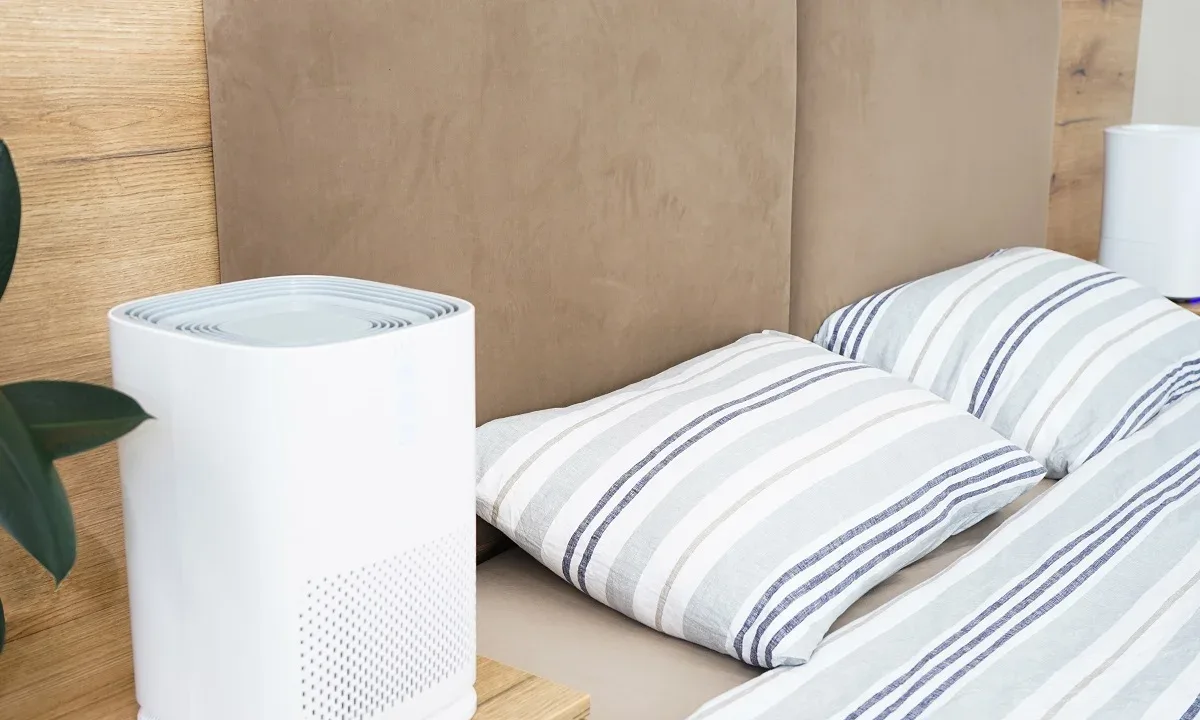
Image source: Bing (Web (fair-use with source credit))
Quick Answer: How Close Is Actually Too Close?

Image source: Bing (Web (fair-use with source credit)
Keep your dehumidifier at least three feet from your bed. If it blows air directly at you, move it farther. Most units need six to twelve inches of wall clearance.
Distance alone is not enough. Noise, vibration, and airflow direction matter too.
Our research across current user manuals shows that three feet is a practical starting point. The right distance depends on the unit's fan speed, exhaust location, and your own sensitivity. Desiccant models hum quietly and can sit closer.
Powerful compressor units are better at the far end of the room. If you're working with a tight floor plan, compact bedroom models are worth a look.
The Problem: Why It Matters Where You Put Your Dehumidifier
Your bed is the one place you spend eight hours trying to breathe easily. If a dehumidifier sends cold, dry air right at your face, you will wake up with a scratchy throat, dry eyes, or a sore nose. That kills the entire purpose of buying the unit.
Some machines vibrate loudly enough to transfer that hum through the floor, turning your mattress into a speaker.
There is also a safety angle. A lightweight dehumidifier placed too close to a low bed can be knocked over by a leg or a stray foot. With water in the tank, that is an electrical hazard near where you sleep.
Manufacturer instructions generally ask for 12 inches of clearance around the intake, but they do not account for airflow hitting your pillow.
The U.S. Environmental Protection Agency recommends holding indoor humidity between 30 and 60 percent. That range is achievable no matter where you place the unit, as long as the machine is not blocked or fighting a draft.
Distance becomes a matter of comfort, not just moisture control.
Core Factors That Change the Safe Distance

Image source: Bing (Web (fair-use with source credit))
Not every bedroom situation is the same. Four variables decide how close is too close: floor area, the type of dehumidifier, where the air exhausts, and how easily you sleep through mechanical noise.
Bedroom Size and Layout
In a tiny bedroom, you may have no choice but to keep the unit near the bed. In a 120-square-foot room with a queen bed, there is often only one corner that works. Measure the distance from the exhaust vent to your pillow.
If it is under three feet, choose a unit with an adjustable louver or rotate it to face the wall.
Dehumidifier Type (Compressor vs. Desiccant)
Compressor models are the most common. They cool a coil to condense moisture out of the air and push cooler air out the top or front. Desiccant models use a moisture-absorbing wheel and run at a lower temperature.
The output feels closer to room temperature, which makes them easier to place near a bed.
| Type | Air Temperature | Noise | Safe Distance Trend |
|---|---|---|---|
| Compressor | Cool | Moderate to loud | Farther, 3+ ft |
| Desiccant | Warm/room | Quieter | Can be 2 ft |
Airflow Direction and CFM
Check where the exhaust sits. Front-blowing units are the worst for beds. Top-exhaust models are usually fine because the air goes upward, not at you.
CFM, or cubic feet per minute, tells you how far the stream travels. Higher CFM means you need more distance.
Noise Tolerance and Sleep Sensitivity
Some people sleep through anything. Others wake at a quiet refrigerator hum. If you are in the second group, even a unit three feet away might feel too loud.
Put it on low fan speed at night. Run it during the day instead. That is why comparing capacity before you buy matters.
Decision Branches: What to Do Based on Your Situation
Now let's match your setup to a practical rule. Follow the branch that fits your room and your needs.
Branch 1: Small Bedroom (Under 150 sq ft)
If your room is tiny, place the dehumidifier at least three feet from your pillow. Point the exhaust toward the wall. Buy a compact unit with a small tank so weight stays low.
In our research, the best 20-pint dehumidifiers for bedroom use are often the right size for this layout.
Branch 2: Compressor Unit with Loud Fan
If you have a compressor unit and the fan noise bugs you, run it during the day. At night, switch to low mode or move it to the hallway and crack the door. You will not get the same moisture removal, but you will sleep better.
Consistency beats perfection.
Branch 3: Desiccant Unit (Quieter, Warmer Air)
If you own a desiccant unit, you have more placement freedom. Maintain two feet of clearance and you are generally fine. The air output is warmer, so it will not hit you like a cold draft.
That alone makes it a better pick for close quarters.
Branch 4: Allergies or Asthma
If you bought the dehumidifier for dust mites or mold, keep the whole room at 45 to 50 percent humidity. Not just the area near the unit. That means leaving the door shut and letting the machine run consistently.
Placement matters less than total coverage. Running it overnight on a timer works well.
Branch 5: Baby or Child in the Room
Never put a dehumidifier directly next to a crib or toddler bed. Kids can knock it over or pull the cord. Place it out of reach, at least four feet away, and secure any cord against the baseboard.
A top-exhaust unit is safer here because it does not blow air into the crib.
Recommended Actions for Each Setup
Here is the step-by-step part. Use these numbers as a baseline, then adjust based on what your machine does.
Minimum Distance Guidelines
- 3 feet minimum from your head
- 12 inches from walls and furniture
- 2 feet from curtains and bedding
- 4 feet from cribs and low toddler beds
If you cannot hit those numbers in your current layout, change the exhaust direction before moving the unit. That solves most airflow problems on its own.
Positioning Tips for Better Airflow
Rotate the exhaust louvers upward if your unit has them. That directs air toward the ceiling instead of your breathing zone. Keep the intake grille free of bed skirts and blankets.
Otherwise airflow drops and the compressor works harder. This is also a good time to check the filter.
Setting the Timer and Fan Speed
Use the timer to shut the unit off an hour before you wake. That gives you the driest air while you sleep and a quiet morning. Set the humidity target between 40 and 50 percent, which is the sweet spot for sleeping.
Keep it on low fan mode overnight if noise bothers you.
Mistakes to Avoid (So You Don't Waste Your Money or Ruin Your Sleep)
Blindly following the three-foot rule without checking airflow direction. The distance guideline is useless if your unit blows air straight at your face. Measure from the exhaust vent to your pillow, not from the machine's center. That changes the number.
Placing the unit against a bed skirt or low-hanging comforter. Bedding blocks the intake grille. When airflow drops, the compressor runs longer and works harder. That means higher electricity bills and faster wear on the unit.
Per manufacturer specs, keep fabric at least 12 inches clear.
Running the unit on high fan speed all night. High speed pulls more moisture but also pushes air farther. That cold stream hits your breathing zone. Use low fan speed overnight.
Let the machine run longer instead of harder.
Setting the humidity target below 35 percent. Overly dry air irritates nasal passages and skin. The EPA recommends keeping indoor humidity between 30 and 60 percent. For sleeping, stay between 40 and 50 percent for the best balance.
Ignoring the water tank location. If the tank faces the bed, sloshing water can wake you. Rotate the unit so the tank faces away from your head. Better yet, use a continuous drain hose if your layout allows it.
Forgetting to check the filter before first use. A dirty filter reduces airflow and increases noise. Clean it every two weeks during heavy use. That keeps the unit quieter and more efficient.
If you are shopping for a new machine, budget-friendly options often include washable filters that simplify maintenance.
Frequently Asked Questions
Can a dehumidifier make your throat sore if it is too close?
Yes. Direct airflow from a dehumidifier can dry out your throat and nasal passages overnight. That leads to a scratchy feeling in the morning.
Keep the unit at least three feet away and angle the exhaust upward to avoid the problem.
Is it safe to put a dehumidifier under a bed?
No. Most dehumidifiers need at least 12 inches of clearance on all sides. Under a bed, the intake gets blocked, airflow drops, and the unit can overheat.
Place it on a flat, open floor surface instead.
Does a dehumidifier use a lot of electricity near the bed?
The distance from your bed does not change the power draw. A typical 50-pint dehumidifier uses about 500 to 700 watts per hour. What matters is runtime.
A unit placed too close to furniture may run longer because airflow is restricted.
Can a dehumidifier cause mold near the bed if placed incorrectly?
Yes, but indirectly. If you place the unit against a wall or bed frame, moisture can collect behind the machine. That creates a damp spot where mold grows.
Rotate the unit periodically and check the floor for condensation.
What is the best humidity setting for sleeping with a dehumidifier nearby?
Set the target between 40 and 50 percent relative humidity. That range reduces dust mites and mold without drying out your skin or throat. It also balances comfort and energy use.
Should I run the dehumidifier all night or just during the day?
It depends on your noise tolerance. If the unit is quiet enough, run it all night on low fan speed. If it keeps you awake, run it during the day and use a timer to turn it off an hour before bed.
Consistency matters more than timing.
Final Decision Guide: Where to Put It in Your Bedroom
Here is a simple checklist to land the right placement on your first try.
| Condition | Recommended Action |
|---|---|
| Room under 150 sq ft | Place 3+ feet from pillow, exhaust toward wall |
| Compressor unit, loud fan | Run during the day, low fan at night |
| Desiccant unit | 2+ feet clearance, warm air is less bothersome |
| Allergies or asthma | Keep room at 45% humidity, timer on overnight |
| Baby or child in room | 4+ feet from crib, secure cord, top exhaust |
| Limited floor space | Buy a compact unit, use continuous drain |
Start with these numbers. Then adjust based on your own comfort. If you wake up with a dry throat, move the unit six inches farther.
If the room still feels damp, reduce the distance slightly. Small changes make a big difference.
Our research shows that most people find the sweet spot between three and five feet from the bed. That distance keeps humidity low without blowing air in your face. If your current layout will not allow that, consider a smaller machine designed for tight spaces.
They move less air and sit closer without the same disruption.
The bottom line is simple. Place the dehumidifier where it works best for the machine, not just for the room. Give it breathing room, clear the exhaust, and protect your own breathing zone.
That setup keeps your bedroom dry, your sleep undisturbed, and your machine running efficiently for years.