Does a Dehumidifier Improve Air Quality
The short answer is yes, but only in one specific way. It removes excess moisture from the air. That reduces the conditions that let mold, dust mites, and mildew thrive.
If those are the things making your indoor air feel heavy or trigger your allergies, a dehumidifier can make a real difference.
The Environmental Protection Agency recommends keeping indoor relative humidity between 30% and 50% for comfort and health. A dehumidifier is the most direct way to hit that range when your home runs over 60%. But here is the catch.
It does not filter out dust, pollen, smoke, or chemical fumes. Understanding that boundary is the key to knowing whether a dehumidifier will actually solve your air quality problem or just waste your money.
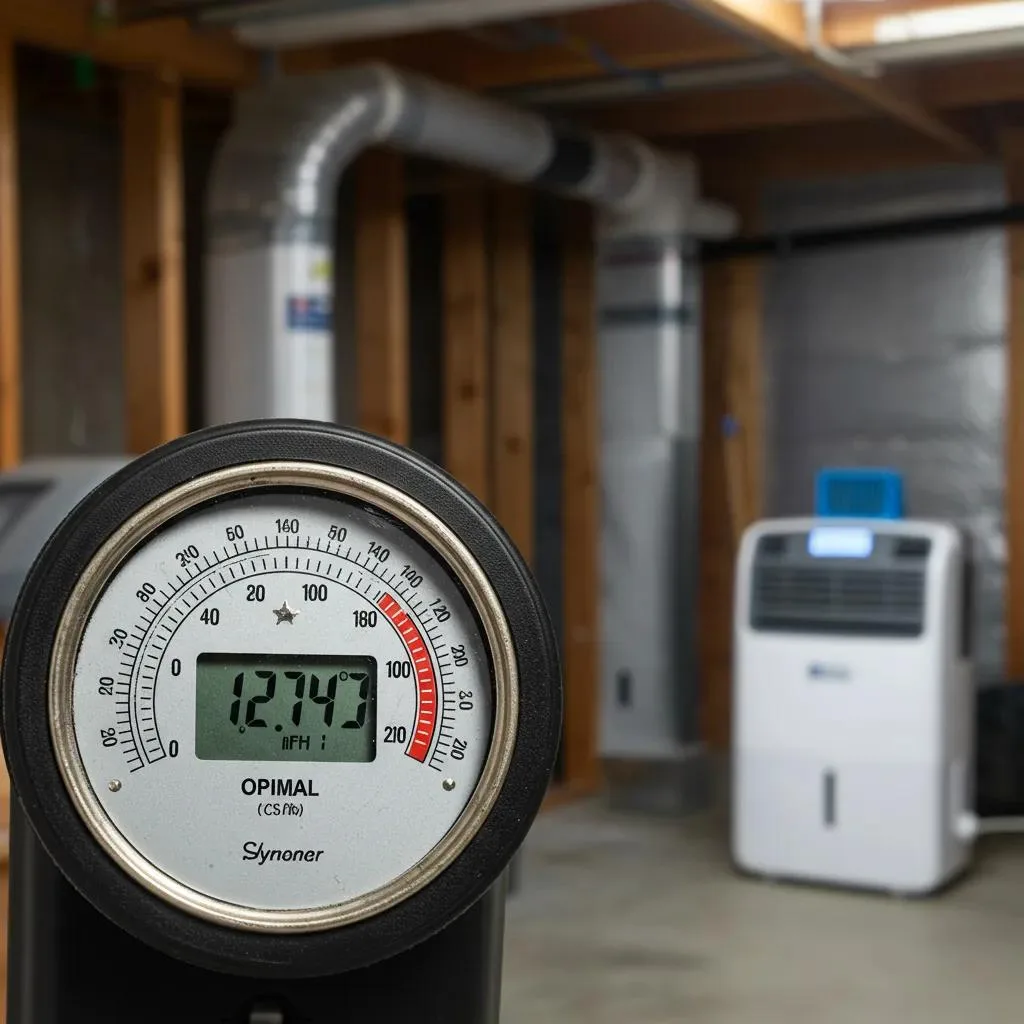
Image source: Bing (Web (fair-use with source credit))
Quick Answer
A dehumidifier improves air quality by lowering humidity. It stops mold and dust mites from growing. It does not remove dust, smoke, or odors.
It only helps when high humidity is your problem. If your air quality issues come from moisture, a dehumidifier works. If they come from particles or gases, it does not.
What a Dehumidifier Can and Can't Do for Indoor Air Quality
Think of a dehumidifier as a moisture management tool, not an air cleaner. It pulls water vapor out of the air and drains it into a tank or a hose. That single action has a cascade of effects on your indoor environment, but it is limited to moisture-related problems.
Here is a straight comparison of what a dehumidifier actually handles and what it leaves alone.
| What a dehumidifier does | What a dehumidifier does not do |
|---|---|
| Lowers relative humidity | Removes dust, pollen, or pet dander |
| Slows mold and mildew growth | Filters smoke or smoke odor |
| Reduces dust mite populations | Captures bacteria or viruses |
| Helps with musty smells caused by dampness | Eliminates VOCs from paint or furniture |
| Reduces condensation on windows | Removes cooking odors or chemical fumes |
| Makes the air feel cooler and less sticky | Changes the air exchange rate |
The confusion happens because people feel better when humidity drops. They breathe easier. Their sinuses clear up.
They assume the air quality improved across the board. In reality, the dehumidifier only addressed the moisture component. The dust, the allergens, the chemical off-gassing, all of that is still there.
If you want to handle both moisture and particles, you need a dehumidifier and an air purifier working together. Many people run them side by side, especially in basements where humidity and dust are both problems. For a deeper look at units that handle both summer and winter conditions, check out our roundup of top-rated models.
The 4-Step Decision Check: Is a Dehumidifier the Right Fix for Your Air?
This is the decision tree. Your answer depends on your specific situation. Follow these four steps in order, and you will know exactly whether a dehumidifier belongs in your home.
Step 1: Measure Your Relative Humidity
You cannot guess this. You need a hygrometer. It is a cheap device, usually under $15, that tells you the exact relative humidity in a room.
You can buy a standalone unit or use a digital one that also shows temperature.
Take readings in the morning and evening for three days. Check the room that feels the worst. If your average reading is above 60%, you have a humidity problem.
The EPA and ASHRAE both agree that levels above 60% create conditions ideal for mold and dust mites.
If your reading is consistently below 50%, a dehumidifier will not improve your air quality. It will dry the air out further, which can cause dry skin, cracked wood, and static electricity. You do not need a dehumidifier in that case.
Step 2: Look for Humidity-Specific Symptoms
High humidity does not always show up on a surface level. But it leaves clues. Check for these signs in your home.
- Condensation on windows, especially in the morning
- Musty or damp smells in basements or closets
- Visible mold spots on walls, ceilings, or grout
- Peeling wallpaper or paint
- Warped wood floors or furniture
- A feeling of sticky or heavy air that does not clear with ventilation
If you have three or more of these symptoms and your humidity reading is above 60%, a dehumidifier is almost certainly the right tool. If you have none of these symptoms but your humidity is high, you might still benefit from a dehumidifier for prevention. The improvement in air quality will be less noticeable.
Step 3: Find the Moisture Source
A dehumidifier treats the symptom, not the cause. If the moisture comes from a leaky pipe, a cracked foundation, or poor drainage around your home, the dehumidifier will run constantly without ever fixing the underlying problem.
Look for obvious sources first. Check under sinks, around the water heater, and in the crawl space for leaks. Make sure gutters and downspouts direct water away from the foundation.
If you find a leak, fix it before you buy a dehumidifier. The unit will work more efficiently and last longer.
If the moisture source is seasonal humidity from the air outside, a dehumidifier is the right solution. This is common in coastal areas, the Southeast, and the Gulf Coast. Summer humidity pushes indoor levels above 70% even with the windows closed.
Step 4: Decide Between a Dehumidifier, Air Purifier, or Ventilation
This is the critical fork in the decision tree. Your next move depends on what your humidity readings and symptoms tell you.
| If you measure | And you see | Then |
|---|---|---|
| Above 60% humidity | Mold, musty smell, or condensation | Get a dehumidifier |
| Below 50% humidity | Dust, pet dander, or allergy symptoms | Get an air purifier |
| Above 60% humidity | Both moisture and dust or smoke | Get both |
| Any humidity level | Stale air, odors, or high CO2 | Improve ventilation |
If you are unsure after these steps, start with a dehumidifier if your humidity is high. Run it for two weeks and see if your symptoms improve. You can always add an air purifier later.
If your humidity is normal, skip the dehumidifier entirely and look at the other options.
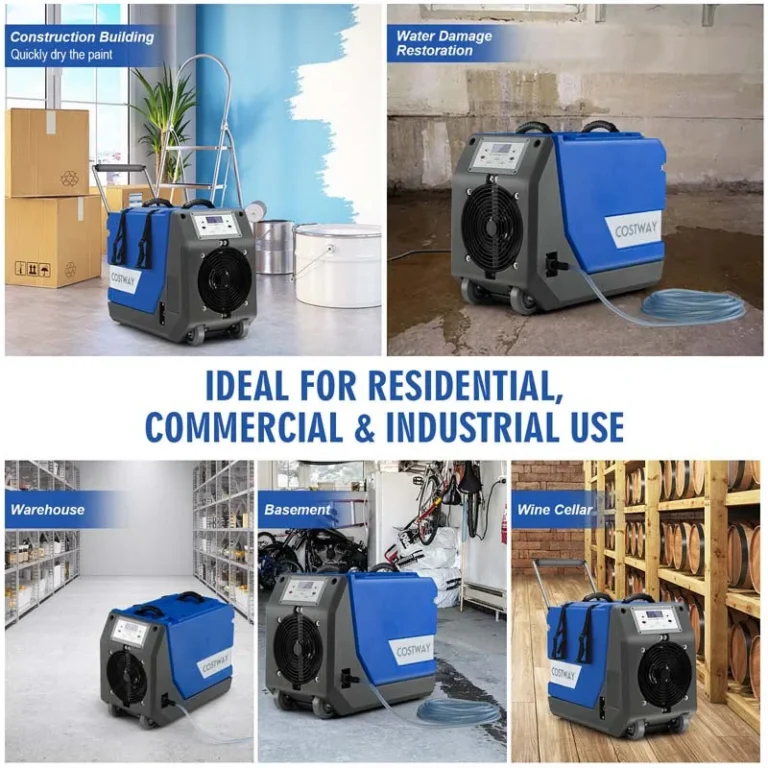
Dehumidifier vs. Air Purifier vs. Ventilation: Choosing the Right Air Quality Tool
A lot of people assume these three tools do the same thing. They do not. Each one solves a different problem.
Understanding the difference saves you money and frustration.
| Tool | What it fixes | What it ignores | Best for |
|---|---|---|---|
| Dehumidifier | High humidity, mold, dust mites | Particles, smoke, VOCs, odors | Basements, humid climates, wet rooms |
| Air purifier | Dust, pollen, pet dander, smoke | Humidity, odors, chemical fumes | Bedrooms, living rooms, allergy season |
| Ventilation | Stale air, CO2, odors, moisture | Fine particles, smoke | Kitchens, bathrooms, whole-home fresh air |
The dehumidifier is the only tool that directly addresses moisture. The air purifier is the only tool that removes particles from the air. Ventilation is the only tool that brings in fresh outdoor air and pushes out stale indoor air.
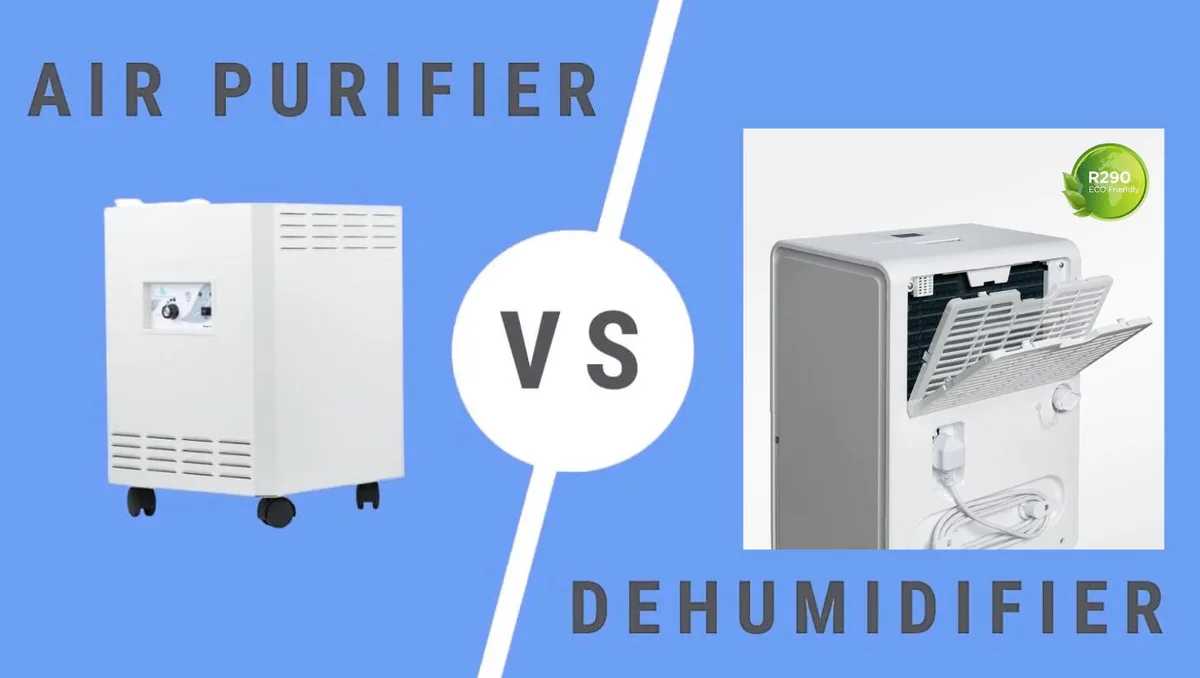
Image source: Bing (Web (fair-use with source credit))
If you have high humidity and you buy an air purifier, your mold problem will not improve. The air will feel cleaner because the purifier catches dust, but the mold will keep growing. If you have a dust allergy and you buy a dehumidifier, the dust will still float around.
You will breathe easier because the humidity is lower, but the allergen load remains the same.
The most common setup in homes with genuine air quality issues is a dehumidifier in the basement and an air purifier in the bedroom. That covers the two biggest sources of indoor air problems. Moisture from below and particles from daily living.
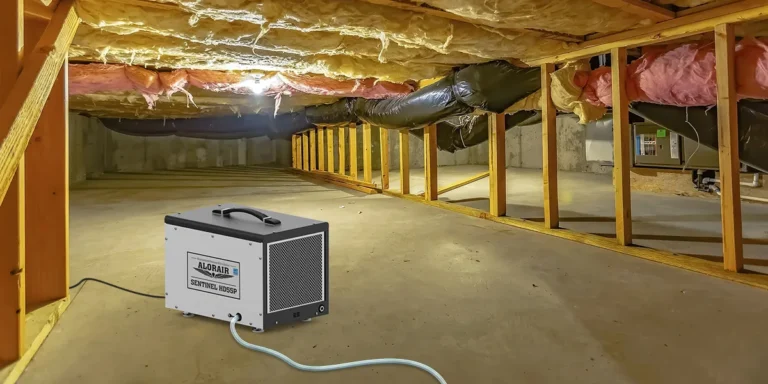
For large basements, a 70-pint unit is usually the right capacity to handle the extra moisture load. Our research shows that oversizing a dehumidifier for a damp basement is better than undersizing it. The unit cycles less often and removes water more consistently.
How to Choose, Place, and Set a Dehumidifier for Best Results
Getting the right dehumidifier is only half the battle. Where you put it and how you set it determines whether it actually improves your air quality or just sits there humming.
Choosing the Right Capacity
Dehumidifiers are rated by pints per day. The number tells you how much water it can remove in 24 hours under standard test conditions at 80°F and 60% humidity. A larger space needs a higher capacity.
Here is a rough guide.
| Room size | Recommended capacity | Example use |
|---|---|---|
| Under 500 sq ft | 20 to 30 pints | Bedroom, small office, closet |
| 500 to 1000 sq ft | 30 to 40 pints | Living room, large bedroom |
| 1000 to 1500 sq ft | 40 to 50 pints | Open floor plan, medium basement |
| 1500 to 2000 sq ft | 50 to 70 pints | Large basement, split-level home |
| Over 2000 sq ft | 70+ pints | Full basement, whole floor |
If you have a very damp basement, go up one size from the chart. A unit that is too small will run constantly and never reach the target humidity. A unit that is too large will cycle on and off more often, which can reduce its efficiency.
Placement Matters
Put the dehumidifier in the center of the room. Do not push it against a wall or into a corner. The airflow needs to circulate around the unit.
Leave at least six inches of clearance on all sides.
Place it away from furniture and curtains. If the intake is blocked, the unit will struggle to pull in moist air. If the exhaust is blocked, the dry air will not circulate properly.
Put it on a flat, level surface. Many units have a built-in humidistat that reads the air around the unit. If the unit is tilted, the sensor may give a false reading.
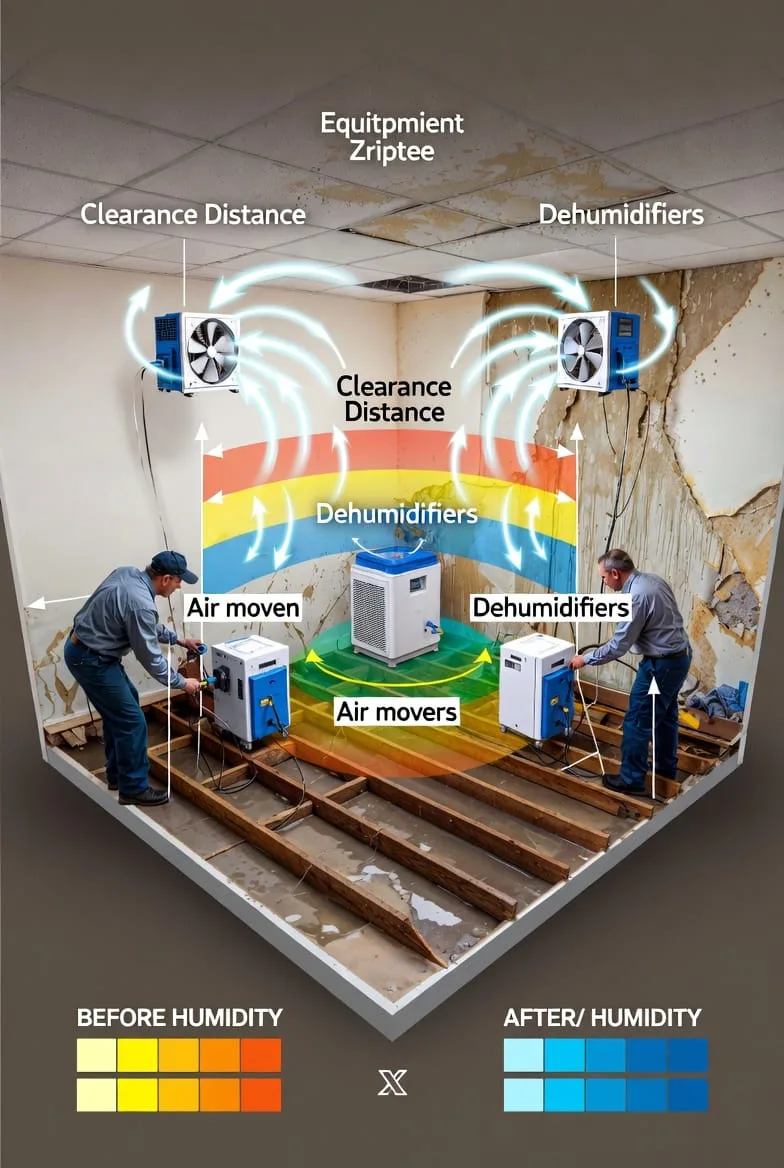
Image source: Bing (Web (fair-use with source credit))
Setting the Target Humidity
Set the humidistat to 50%. This is the sweet spot recommended by the EPA. It is low enough to prevent mold and dust mites, but high enough to avoid over-drying the air.
Do not set it below 30%. That can cause dry skin, irritation, and static electricity. It also wastes energy because the unit runs more often than necessary.
If you notice condensation on windows after a few days, lower the setting by 5%. If the air feels dry or your skin gets irritated, raise it by 5%. The goal is comfort without moisture problems.
Continuous Drainage vs. Bucket
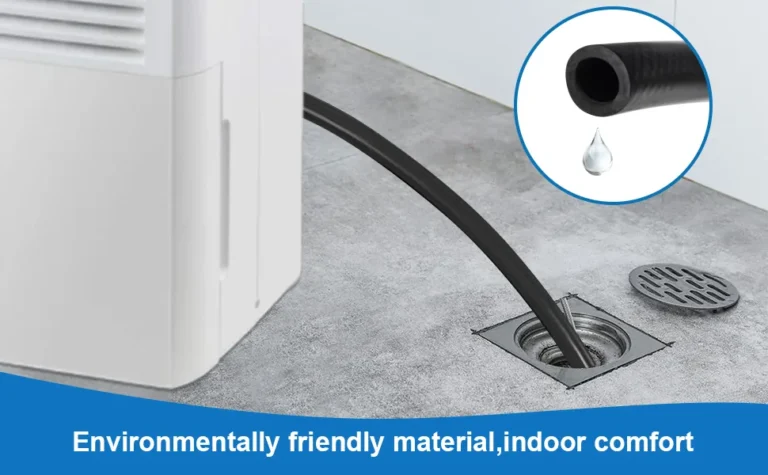
If you are running the dehumidifier in a basement or a room you do not use daily, use the continuous drainage option. Most units have a hose fitting that lets you connect a garden hose to a floor drain or a sump pump. This saves you from emptying the bucket every day.
If you do not have a floor drain, use the bucket. Check it every 24 hours in the first week to see how fast it fills. A 50-pint unit in a damp basement can fill a full bucket in 12 to 18 hours.
If you forget to empty it, the unit shuts off automatically, but your humidity will climb back up.
For a more convenient setup, our recommended models for year-round use include continuous drainage as a standard feature. They are designed to handle the high humidity of summer without tripping off.
Common Mistakes That Undermine Dehumidifier Performance (and How to Avoid Them)
Most dehumidifier problems come down to one thing: the unit being used incorrectly. Here are the five mistakes we see most often, and how to fix them.
Undersizing the unit. If you buy a 20-pint unit for a 1500-square-foot basement, it will run forever without hitting your target. That wastes energy and shortens the compressor's life. Use the pint-per-square-foot guidance from the last section, and size up rather than down.
For a large basement, you need a larger-capacity unit to get the job done.
Placing it in a corner. The intake needs airflow to draw moist air in. Push it against a wall and it will only condition the air right around it. Keep six inches of clearance on every side.
Make sure the exhaust points outward, not into a curtain or piece of furniture.
Forgetting to clean the filter. A clogged filter reduces airflow and makes the unit work harder. Rinse the washable filter every two weeks under warm water. Let it dry completely before you put it back.
If your unit has no washable filter, check the manual for the recommended replacement schedule.
Setting the humidity too low. People assume lower is better. It is not. Below 30% causes dry skin, cracked wood, and static shocks.
Set it to 50% and adjust slowly from there. The goal is comfort without moisture problems, not a desert-like atmosphere.
Emptying the bucket too late. In a damp basement, a 50-pint unit can fill its tank in 12 hours. When the tank fills, the unit shuts off, and the humidity climbs right back. If you have a floor drain nearby, connect the continuous drainage hose.
That small step saves you from daily monitoring.
One more rule. Never run a dehumidifier with windows open. You will pull humid air from outside all day long.
Close the room, run the unit, and let it do its job.
Frequently Asked Questions
Does a dehumidifier help with allergies?
Yes, but only for allergies triggered by dust mites and mold. Both thrive in high humidity. By keeping relative humidity between 40% and 50%, a dehumidifier creates conditions these allergens cannot survive.
It does nothing for pollen or pet dander allergies. Those need an air purifier instead.
Can a dehumidifier remove mold?
No. A dehumidifier cannot kill or remove mold that is already growing. It only prevents new growth by keeping moisture levels low.
Existing mold needs to be cleaned directly. If the mold is extensive or covering porous materials like drywall, professional remediation is the safer route.
What humidity level should a dehumidifier be set to?
Set yours to 50%. The EPA recommends keeping indoor relative humidity between 30% and 50% to prevent mold growth. If you are away from home for long hours, set it to 55% to save energy.
Drop it back to 50% when you are home.
How long does it take to see a difference?
Most units lower humidity noticeably within 24 to 72 hours. The exact time depends on room size, starting humidity, and unit capacity. A 50-pint unit in a standard basement can pull several pints of water in the first day.
Dust mite populations will shrink over a few weeks.