Where Should a Hygrometer Be Placed in a Terrarium
Figuring out where should a hygrometer be placed in a terrarium is one of those small decisions that can make or break the whole setup. You can buy the most expensive sensor on the market, but stick it in the wrong spot and it will lie to you every single day. That false reading leads to moldy plants, stressed reptiles, or a dry mess that nothing can survive.
Manufacturer specifications for most digital hygrometers indicate an accuracy range of ±2% to ±5% relative humidity. But that spec only holds if the sensor is sitting in the right air pocket. In a small enclosed space, temperature, condensation, and airflow create microclimates that can throw a reading off by 20% or more.
So instead of guessing a single "perfect spot," we need to walk through the conditions that decide where the sensor belongs.
Quick Answer
Place the hygrometer at mid-height, away from glass and water sources. Keep it 4 inches from misting nozzles and 6 inches from heat lamps. For closed terrariums, mount it on the back wall.
For open terrariums, keep it high but away from direct vent airflow. Test the reading for 24 hours before trusting it.
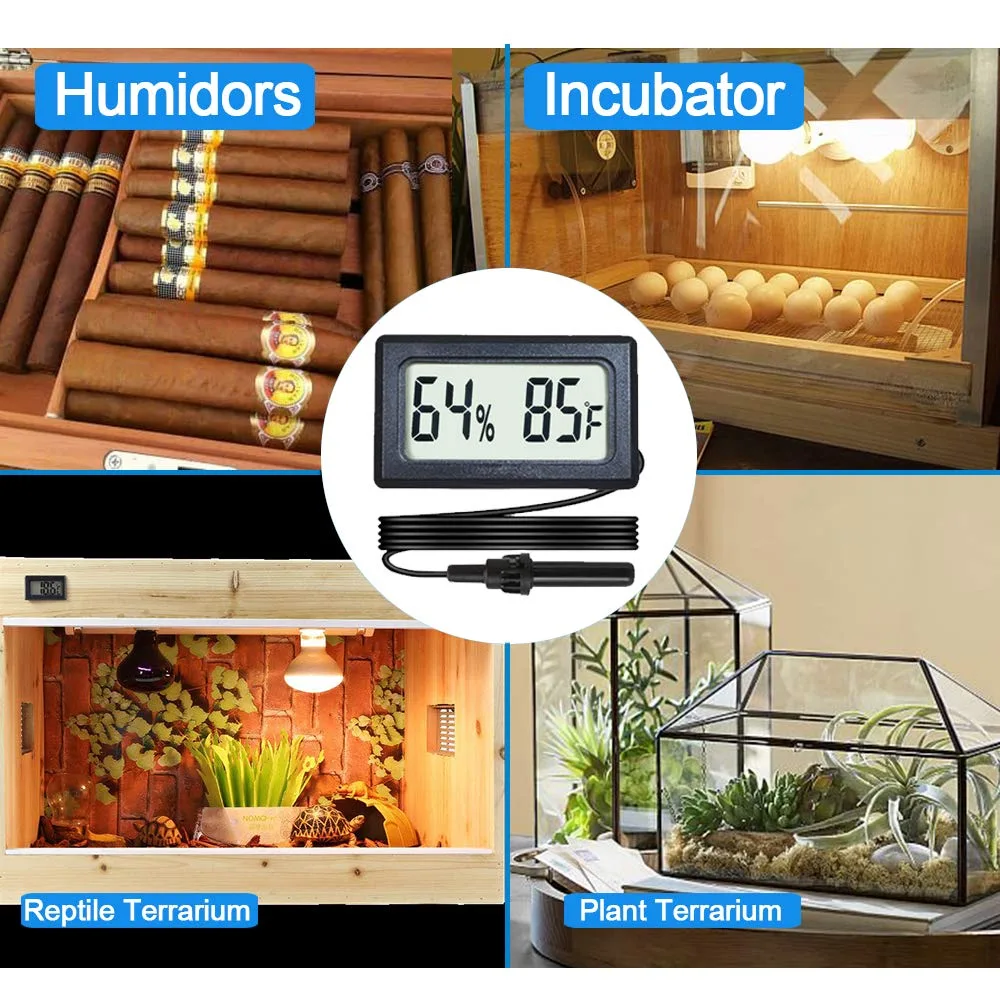
Image source: Bing (Web (fair-use with source credit))
Why Hygrometer Placement Is a Decision, Not a Rule
The idea that "the middle is always right" sounds reasonable. But it ignores how humidity actually behaves inside a glass box. Warm air rises, cool air sinks, and moisture collects wherever the temperature drops.
That means the top of a closed terrarium can be bone dry while the bottom reads 99% because condensation is pooling on the glass.
Here is the real problem. A single hygrometer gives you one data point. If that point is in a bad spot, you are making decisions based on a lie.
You might add more misting because the sensor says 40%, while the leaves at the bottom are already soaking wet. Or you might reduce ventilation because the sensor says 90%, while the air near the lid is actually fine.
The decision tree works like this. You start with the terrarium type. Then you check the heat source and water source.
Then you pick the mounting method. Each branch changes the answer. A rule that works for a closed tropical tank will fail for an open desert setup.
As of 2026, the most common mistake reported in aggregate user reviews is placing the sensor directly against the glass wall. Glass temperatures fluctuate faster than air temperatures, especially near heat mats or lamps. The sensor reads the glass temp, not the air temp, and the humidity calculation goes wrong.
What You're Actually Measuring: Air Humidity vs Substrate vs Condensation
Most people think a hygrometer measures "how wet it is inside." But there are three different kinds of wet in a terrarium, and the sensor only picks up one of them.
Air humidity is the amount of water vapor floating in the air. That is what a hygrometer measures. Substrate moisture is the water held in the soil, moss, or drainage layer.
A sensor buried in the soil will read artificially high because it is sitting in wet material, not in the air. Condensation is liquid water on surfaces. If a sensor is touching a wet glass wall or sitting under a dripping leaf, it will read 99% until it dries out.
Here is the key insight. The air pocket around the sensor must be representative of the air your plants or animals are actually breathing. That means the sensor needs to be in the same vertical zone as the living things.
For a dart frog setup, that is a few inches above the substrate. For a tall plant terrarium, that is closer to the canopy.
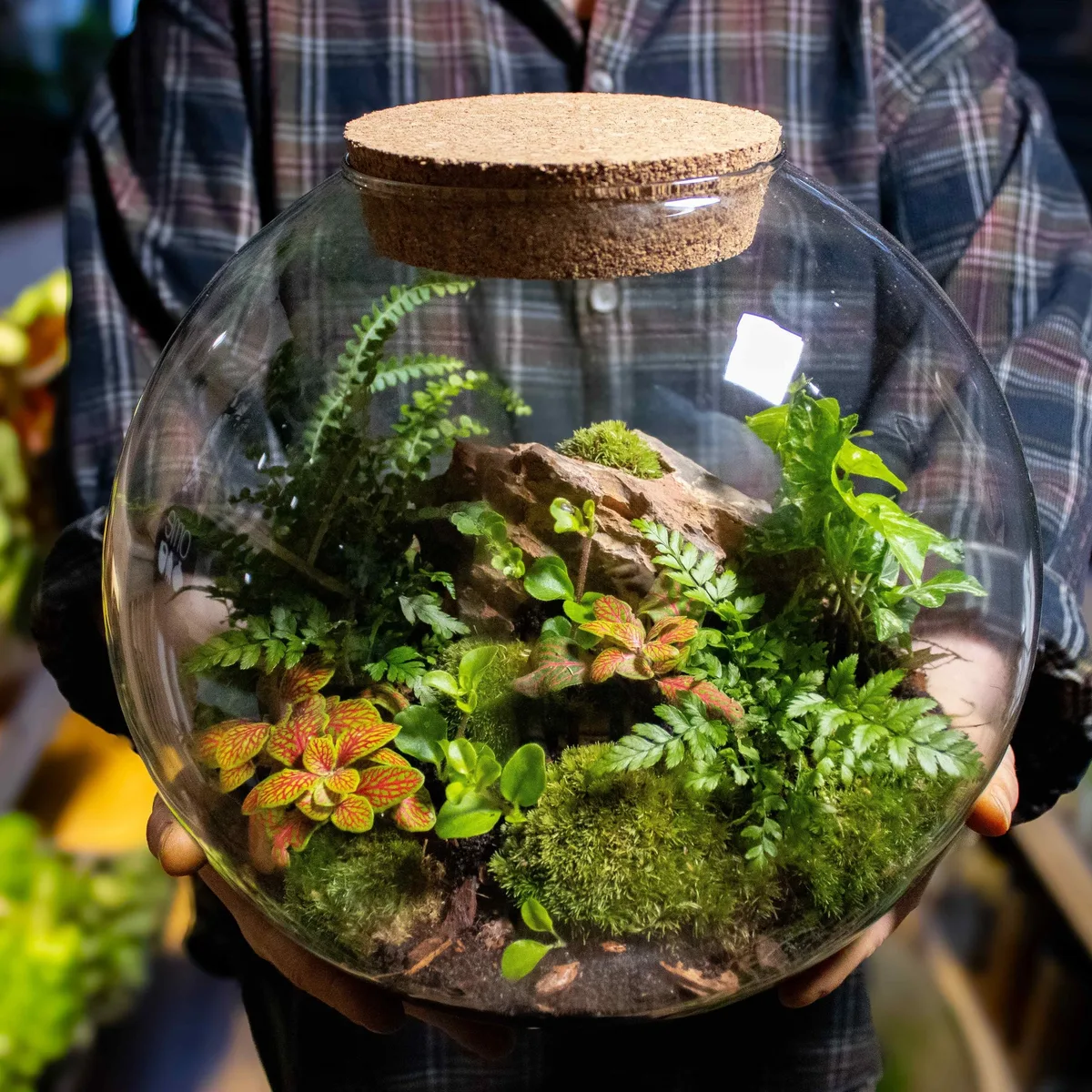
Image source: Web (Bing) / ome.design (Web image (fair-use with source credit))
Temperature and humidity are linked. The warmer the air, the more water vapor it can hold. So a sensor placed near a heat lamp will read lower humidity than the same sensor placed in a cooler corner.
That is not a broken sensor. That is physics. A 10°F difference can swing the relative humidity reading by 15 to 20 points.
Manufacturer testing performed under NIST standards confirms that most digital hygrometers need a stable temperature to give stable readings. If the sensor is in a draft or near a heat source, expect the number to jump around.
Branch 1: Closed, Open, or Bioactive — Where the Sensor Belongs
Closed terrariums are the easiest to get wrong. The humidity inside stays high because the lid traps moisture. But the reading depends heavily on where the condensation line sits.
The condensation line is the visible band of fog or water droplets on the glass. Above that line, the air is cooler and drier. Below it, the air is warmer and wetter.
If you place the sensor above the condensation line, it will read low. If you place it below, it will read high.
The best spot for a closed terrarium is at mid-height, centered between the front and back glass. Keep it at least two inches away from any wall. Use a suction cup or a zip tie on a decorative branch.
Avoid the lid area entirely. The lid is the coldest part of the enclosure and will give you a false low reading.
Open terrariums are more forgiving. The air exchanges with the room, so the humidity is closer to whatever your house is. The main risk here is placing the sensor too close to the opening.
The evaporative cooling from the opening can pull the reading down. Keep the sensor about halfway down the terrarium, away from the lip.
Bioactive setups with reptiles or amphibians add another layer. The heat lamp and the misting system create two competing microclimates. The sensor needs to be in the zone where the animal spends most of its time.
For a crested gecko that sleeps in the upper foliage, mount the sensor near the top. For a turtle that sits in the water, the sensor should be above the water line but not in the splash zone.
Experienced keepers usually recommend two sensors in bioactive tanks over 18 inches tall. One sits near the top, one near the substrate. Together, they show the real humidity gradient instead of a single average number.
Step-by-Step: Finding the Best Spot and Testing It Over 24 Hours
Start with the equipment. You need a digital hygrometer with a probe or a remote sensor. Analog hygrometers are slow to respond and can be off by 10% or more.
They are fine for a rough ballpark, but not for a decision tree. If you are using an analog unit, calibrate it first with the salt test. A simple method is to place the sensor in a sealed bag with a cup of salt paste.
The air inside should stabilize at 75% RH. If the sensor reads something else, note the offset.
Next, choose the mounting method. Suction cups work well on clean glass but fail over time. Adhesive strips are permanent.
Zip ties on a branch or a piece of hardscape are the most flexible option. For probe sensors, you can run the wire through a cable gland in the lid. That keeps the display unit outside the terrarium where it stays dry.
Now place the sensor. For a closed terrarium, start at mid-height, centered, and two inches from the glass. For an open terrarium, start a few inches above the substrate.
For a bioactive setup, place it in the main activity zone.
Let the sensor sit for 24 hours. Do not touch it. Do not mist during that time unless you normally mist at set intervals.
Log the reading at morning, midday, and night. The goal is to see if the reading stays within a reasonable range. A 10% swing over the day is normal.
A 30% swing means the sensor is in a bad spot.
If the reading seems off, move the sensor by one inch and repeat the test. Move it up, down, or sideways. The difference can be dramatic.
Some users report that moving the sensor just two inches away from the glass changed the reading by 15%.
The Biggest Placement Mistakes (and How to Spot Them Fast)
The most common mistake is sensor touching glass. The glass temperature is different from the air temperature, especially near a heat mat or a window. If the sensor is touching the glass, it will read the glass temperature, not the air temperature.
The humidity calculation uses the temperature, so the reading will be wrong.
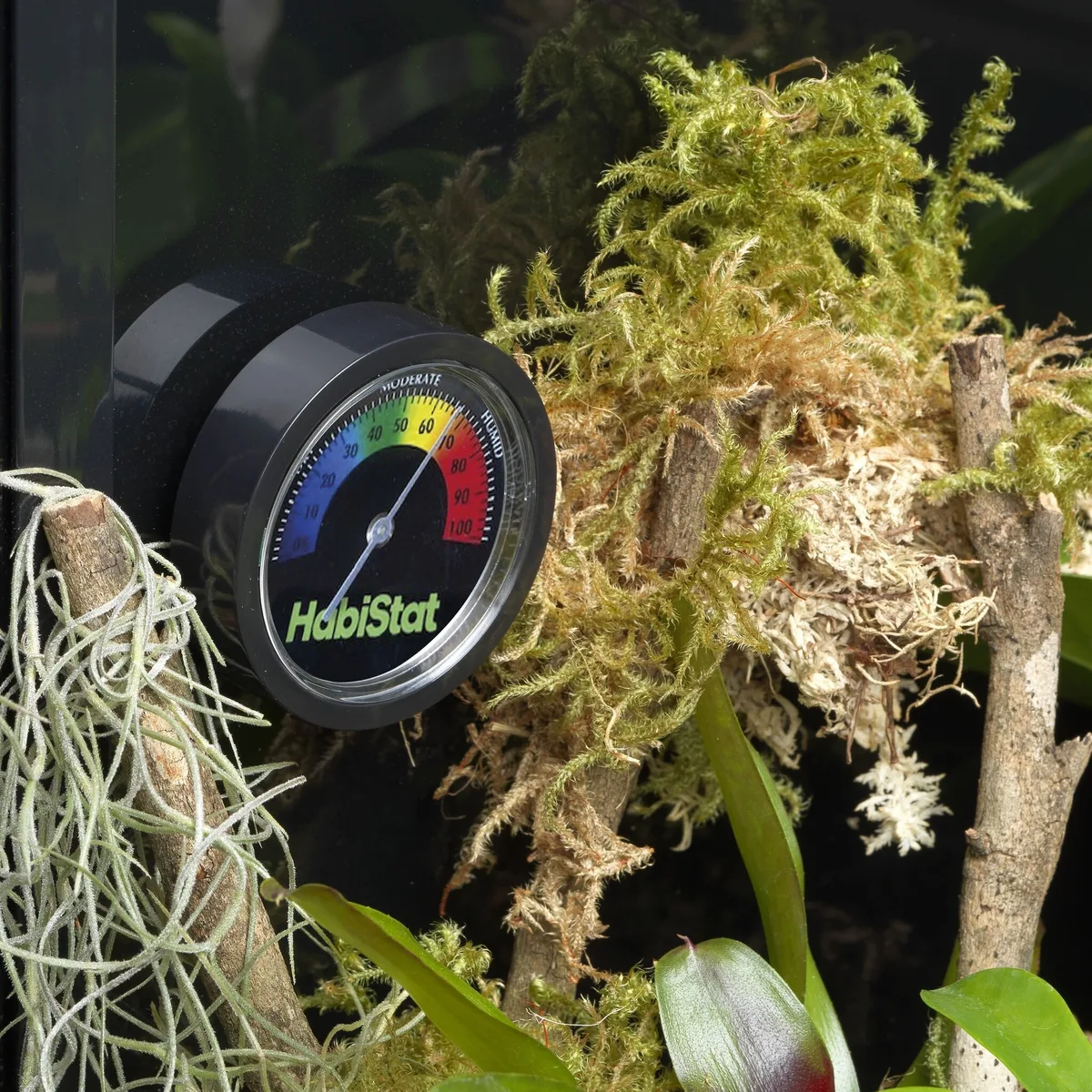
Image source: Bing (Web (fair-use with source credit))
The second mistake is placing the sensor under a misting nozzle. The sensor will read 99% for hours after a misting cycle. That reading is useless.
You cannot tell if the air is humid or if the sensor is just wet. Keep the sensor at least four inches away from any direct spray.
The third mistake is burying the sensor in the substrate. Substrate moisture is not the same as air humidity. A sensor buried in damp soil will read high, even if the air above is dry.
The sensor needs to be in the air, not in the ground.
The fourth mistake is using an analog hygrometer without calibration. Many analog units are off by 10% or more right out of the box. The needle can also stick if the humidity changes too fast.
If the needle does not move after a misting cycle, the sensor is jammed or dead.
The fifth mistake is trusting a single sensor too quickly. Most digital hygrometers drift over time. The sensor inside can degrade from constant high humidity.
A sensor that was accurate last month might be off by 5% this month. That is why calibration every two to three months is important.
If you notice any of these signs, move the sensor immediately. Do not wait. The longer you trust a bad reading, the more likely you are to overwater or underwater your terrarium.
Keeping It Accurate: Calibration, Cleaning, and Repositioning
Calibration is not a one-time event. Sensors drift, especially after months in constant high humidity. Recalibrate every two to three months using the salt-test method we covered earlier.
Per NIST, saturated salt solutions are a recognized reference for humidity fixed points.
Cleaning the sensor element matters more than most people think. Dust and mineral residue from misting coat the element and slow its response. Wipe digital sensors with a dry microfiber cloth.
Skip alcohol, vinegar, and spray cleaners.
Water inside the sensor is serious. Remove the battery and leave the unit open in a warm, low-humidity spot for 48 hours. If condensation stays trapped inside, replace the unit.
Sealed sensors are not worth rescuing.
Repositioning is part of the workflow. Seasonal shifts in room humidity change the gradient inside your terrarium. Move the sensor, rerun the 24-hour test, and you will catch drift early.
Do this every time you add plants, change misting frequency, or swap out the lid.
FAQ: Placement Questions That Come Up Again and Again
Should I stick the hygrometer to the glass or let it hang?
Glass surfaces run cooler or warmer than the air inside. That difference skews the reading. Hang the sensor an inch or two off the glass using a zip tie on hardscape.
If you must use a suction cup, pad it with a cork or foam spacer.
Why does my hygrometer read 99% all the time?
The sensor is either wet or touching a wet surface. Water droplets on the sensor element trap humidity at the maximum reading. Move it away from misting nozzles and condensation drips.
Dry the sensor with a cloth. If it still reads 99%, the sensor is likely ruined.
Does digital vs analog change where it should go?
No. The physics are identical. But analog hygrometers respond slowly and often stick.
If you use one, allow 30 to 60 minutes after misting before trusting it. Digital sensors react within seconds, making the 24-hour placement test much easier to log.
Can a thermostat/hygrometer combo sensor sit anywhere?
It needs the same conditions as a standalone hygrometer. The sensor works the same way. The difference is the probe is usually wired to a controller.
Leave slack in the cable inside the terrarium so condensation does not travel along the wire into the device.
Is one hygrometer enough for a large terrarium?
Not for terrariums over 18 inches tall. The temperature gradient creates two different humidity zones. A single reading in the middle can miss a dry top or a wet bottom.
Two sensors, one high and one low, give you the actual range your plants or animals experience.
Final Verdict: The 30-Second Placement Decision Guide
The quick version works for nearly every setup. Closed terrariums get the sensor at mid-height, off the glass. Open terrariums get it a few inches above the substrate.
Bioactive vivariums get it in the animal's active zone.
| Terrarium type | Best spot | Watch out for |
|---|---|---|
| Closed | Mid-height, centered, 2 inches off the glass | Condensation line and lid drips |
| Open | A few inches above the substrate | Vent airflow pulling the reading down |
| Bioactive | Inside the animal's main activity zone | Misting nozzles and heat lamp hotspots |
Trust the reading only after the 24-hour test. If the numbers look odd, check the symptoms.
| Reading | Likely cause | Fix |
|---|---|---|
| 99% for hours | Wet sensor or touching glass | Dry it, move it, retest |
| 30% swing in a day | Too close to heat or airflow | Shift 2 inches and test again |
| Slow to move | Dirty sensor or analog unit | Clean it or calibrate it |
| Disagrees with second sensor | Microclimate difference | Trust the one in the activity zone |
A cheap hygrometer in a smart spot beats an expensive one in the wrong spot. Move it, test it, and recalibrate it now and then. That routine will keep your terrarium thriving and your plants or pets much happier.