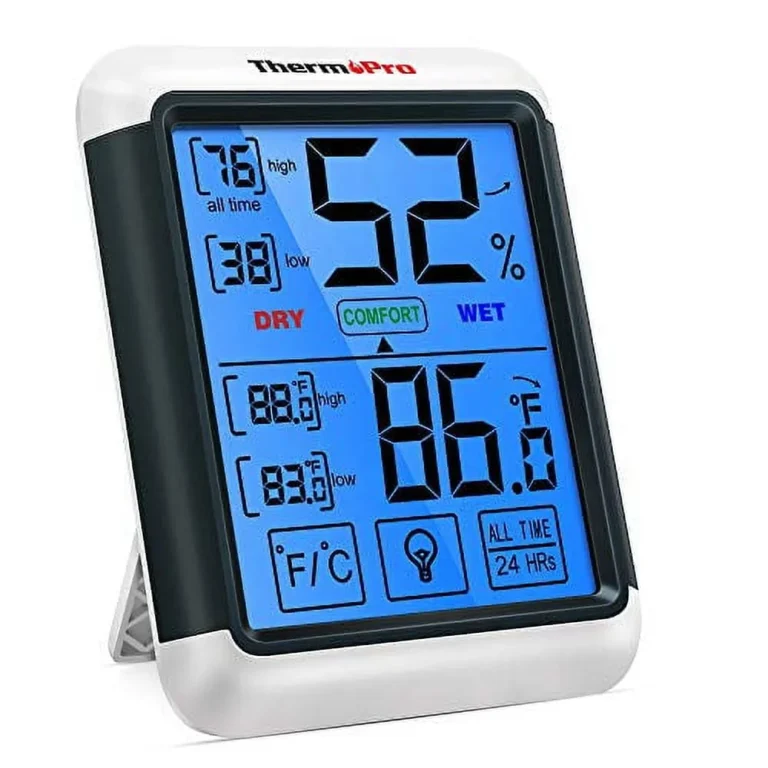
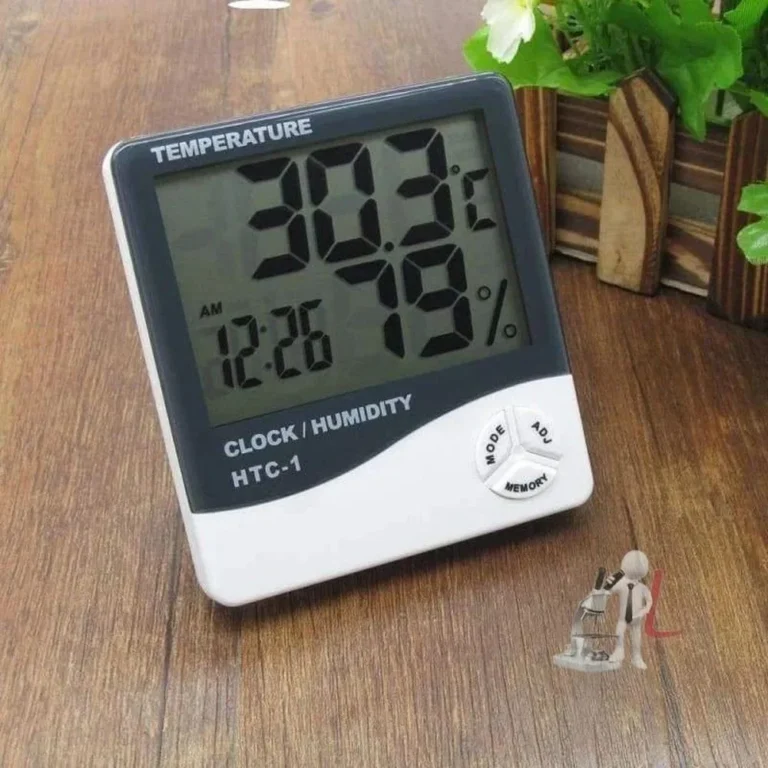
Where Should You Place a Hygrometer in a Room
Where should you place a hygrometer in a room? It's a simple question, but the answer changes how useful your readings will be. Put it in the wrong spot, and you might think your home is too dry or too humid when it's actually fine.
That leads to wasted money on humidifiers or dehumidifiers you don't need.
The EPA recommends keeping indoor relative humidity between 30% and 50% to prevent mold growth and maintain comfort. But a hygrometer only measures the air right around it. Position it poorly, and you'll get a number that doesn't reflect your actual room conditions.
As of 2026, most digital hygrometers claim accuracy within ±2-3% relative humidity, but placement matters just as much as the sensor itself.
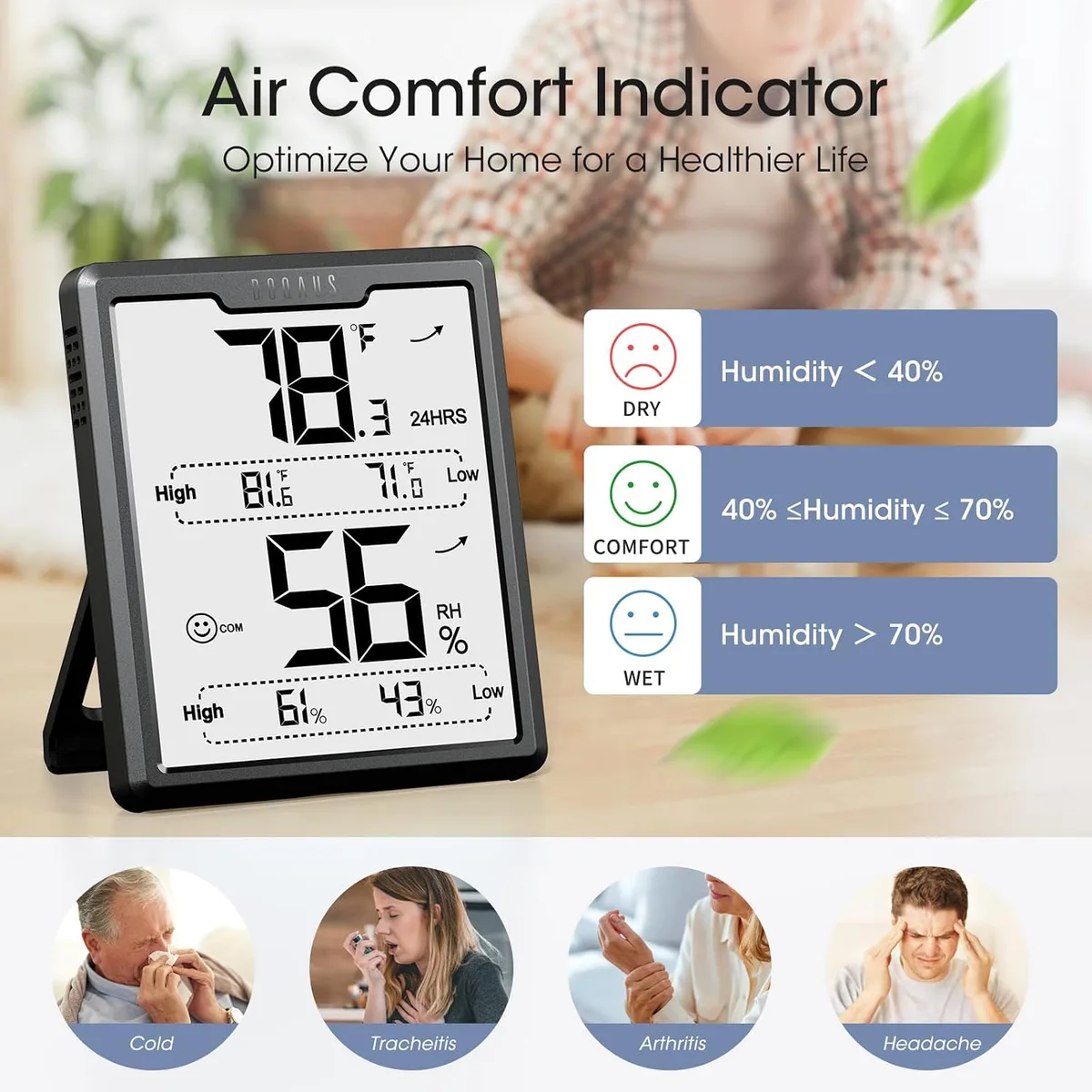
Image source: Bing (Web (fair-use with source credit))
Quick Answer: Where to Put It in a Normal Room
Place your hygrometer on an interior wall, about 4 to 5 feet off the floor. Keep it away from windows, vents, and direct sunlight. Avoid corners with poor air circulation.
This gives you the most accurate room average.
Why Hygrometer Placement Actually Matters
A hygrometer measures the air right around it, not the whole room. Humidity can vary by 10% or more from one side of a room to the other. So if you place it near a bathroom after a shower, it will read high.
If you put it next to a cold window in winter, it will read low. You end up trusting a number that doesn't reflect real conditions.
This matters for your comfort and your home. The EPA's indoor air quality guidelines confirm that humidity between 30% and 50% keeps mold, dust mites, and respiratory issues in check. A wrong reading could make you think you're safe when you're not.
Or it could cause you to run a dehumidifier that's not needed.
Placement also affects how you manage your HVAC system. If the sensor sits too close to a supply vent, it picks up cool, dry air from the AC. That makes you think the room is drier than it is.
You might set the humidifier to run longer, wasting energy and over-humidifying the space.
The bottom line: a few feet in the wrong direction can throw off your whole humidity strategy. Getting the spot right from the start saves you time, money, and frustration.
The Decision Tree: Finding Your Best Spot Based on Room Type
There is no single perfect spot for every room. Your goal changes based on what you're monitoring. Here's how to decide.
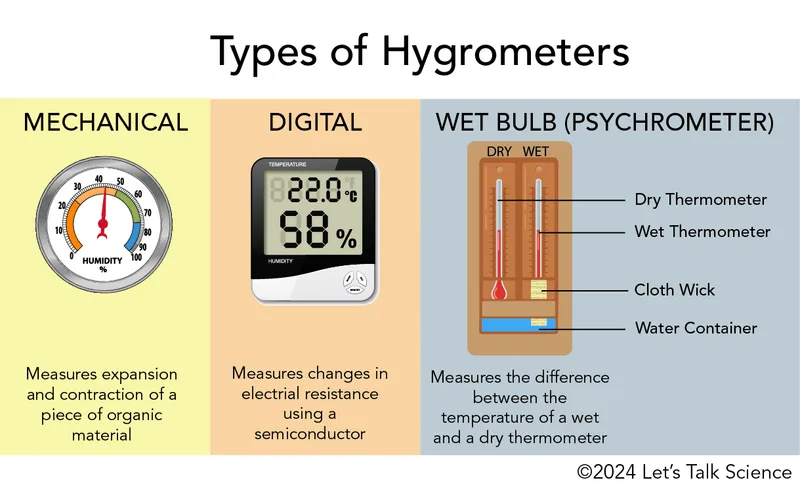
Image source: Bing (Web (fair-use with source credit))
Bedrooms and living rooms (comfort-focused)
Place the hygrometer on an interior wall, away from windows, doors, and vents. Keep it at breathing height, about 4 to 5 feet off the floor. This gives you a reading that matches what you actually feel.
Bathrooms and kitchens (moisture source nearby)
Do not put the hygrometer inside the bathroom or kitchen. Instead, place it just outside the door, in the adjacent hallway or room. This catches the humidity drift without exposing the sensor to steam or splash.
You want to know if moisture is migrating into the rest of the house.
Basements and crawl spaces (mold and damp monitoring)
Mount the hygrometer on a wall at least 3 feet off the floor. Basement floors are often cooler and wetter, which can make the sensor read higher than the actual air. Keep it away from sump pumps, drains, or any obvious water source.
Grow tents, music rooms, and workshops (equipment or material protection)
Place the sensor at canopy level for plants, or at the same height as the instruments or materials you're protecting. Avoid putting it directly above lights or heat sources. In a grow tent, position it in the shade of the plants, not under the lamps.
How to adjust for forced-air heating, radiators, or window AC units
If a room has a forced-air vent, keep the hygrometer at least 6 feet away from it. Radiators produce heat that can dry out the immediate area, so place the sensor on the opposite side of the room. For window AC units, move the sensor away from the cold draft.
The rule is the same: avoid direct airflow.
How to Test a Spot Before You Commit
You don't have to guess. You can test a spot in a day.
The 24-hour test method
Place the hygrometer in your chosen spot. Leave it there for 24 hours. Check the min and max readings if your unit has memory.
If the numbers bounce around wildly, a swing of more than 10% RH means the spot is too drafty or too close to a heat source. Move it and try again.
Moving the hygrometer around to find the room average
Pick three or four spots in the room. Test each one for a few hours. The spot that gives you the middle reading, not the highest or lowest, is the best.
That's the room average.
Using a second hygrometer to confirm your baseline
If you have two hygrometers, place them side by side for an hour. They should read within 3% of each other. Then put one in the target spot and the other in a different area.
Compare the readings. If they agree, you're good.
When to trust the reading and when to move it
Trust the reading when it stays stable for several hours. If the number keeps changing with every activity, like cooking, showering, or opening a window, the sensor is too close to that activity. Move it further away.
You want a reading that changes slowly as the room's overall humidity changes, not one that jumps with every breath.
Common Placement Mistakes That Skew Your Readings
These mistakes are easy to make, but they ruin your data.

Image source: Bing (Web (fair-use with source credit))
Sticking it right next to a humidifier or dehumidifier
This is the most common error. The sensor picks up the stream of moist or dry air directly from the machine. Move it at least 5 feet away from any humidifier or dehumidifier.
You want to measure the room, not the machine's output.
Mounting it on an exterior wall in winter
Exterior walls are colder in winter, so the air near them is drier. The hygrometer will read lower than the actual room average. Always use an interior wall if possible.
Leaving it in a dead corner with no air circulation
Corners trap stale air. Humidity can build up there without reflecting the rest of the room. Pull the sensor at least 2 feet away from any corner.
Putting it too close to electronics or heat sources
TVs, computers, lamps, and ovens all give off heat. That heat lowers the relative humidity reading locally. Keep the hygrometer at least 3 feet away from any heat source.
Forgetting to let the sensor stabilize
A hygrometer needs time to adjust. If you move it from a cold room to a warm room, wait 15 to 30 minutes before reading it. The numbers will drift as the sensor warms up.
Don't trust the first reading.
Pro Tips for Better Accuracy Over Time
Even with perfect placement, hygrometers drift. Digital models lose calibration after months of use. Analog models collect dust and their internal mechanisms stick.
Here's how to keep yours honest.
Calibrating your hygrometer (the salt test method)
You can calibrate any hygrometer at home. The salt test is simple and reliable. Place a few tablespoons of salt in a shallow cup, add a little water to make a slurry, and put both the cup and the hygrometer inside a sealed plastic bag.
Leave it for 8 to 12 hours. The humidity inside the bag stabilizes at about 75%. Your hygrometer should read 75% within a small margin.
If it doesn't, note the difference and adjust accordingly. Many digital models let you calibrate in settings, while analog units may need a small screwdriver to adjust the needle.
Cleaning analog sensors and checking digital batteries
Analog hygrometers have a synthetic hair or metal coil sensor. Dust and grease slow their response. Clean the sensor gently with a soft, dry brush every few months.
Digital units are easier, but they still need attention. Low batteries cause erratic readings, so swap them out yearly. Check the sensor vents for dust buildup too.
A clogged vent traps stale air and makes the response time longer.
How often to re-check placement when seasons change
Your room's airflow changes with the season. In winter, windows get cold and drafts appear. In summer, AC vents blow dry air.
Re-evaluate your hygrometer's position every seasonal change. Move it if you notice a persistent bias. For example, if winter readings suddenly drop, the spot may now be too close to a drafty window.
Using placement to diagnose drafts or insulation problems
A hygrometer can double as a diagnostic tool. If the reading near an exterior wall is consistently 5% lower than the center of the room, you likely have a draft or weak insulation. If a corner behind furniture reads 10% higher, air isn't circulating there.
These patterns are useful. They tell you where your home needs attention before moisture becomes a mold problem.
Frequently Asked Questions
Can I put a hygrometer in direct sunlight?
No. Sunlight heats the sensor and creates false low humidity readings. Keep it out of direct sun, especially near windows.
A shaded spot on an interior wall is the safest choice for consistent numbers.
Should I place it near a window or away from it?
Away from it. Windows are drafty in winter and produce condensation in summer. The air near them doesn't represent the whole room's conditions.
Keep your hygrometer at least 3 feet away from any window.
How high off the floor should it be?
Place it 4 to 5 feet off the floor. That height matches your breathing zone. Humidity near the floor is often higher, especially in basements.
Ceiling areas are warmer and drier. The middle ground gives you the most useful average.
Is it better to wall-mount or set it on a table?
It depends on the spot, not the method. Wall-mounting on an interior wall keeps the sensor away from tabletop heat sources. Table placement works fine if it's away from lamps, electronics, and direct airflow.
Pick whichever keeps the sensor stable in the room average.
Does the size of the room change the best spot?
Not really. The same placement principles apply to any room size. Measure away from airflow, moisture sources, and heat.
In larger rooms, test a few spots to find the most consistent reading. In smaller rooms, just avoid the obvious problem zones.