Where Should a Dehumidifier Be Placed in a Basement
You bought a dehumidifier, dragged it down the basement stairs, and now you're wondering where to put the thing. The answer isn't obvious. Where should a dehumidifier be placed in a basement matters just as much as the machine's pint capacity.
Place it wrong, and you'll get musty smells, a bucket that fills in four hours, and a high electric bill. Place it right, and the unit drains itself and holds steady humidity without babysitting. Most people drop it in the center of the room because someone online said so.
That's a mistake. As of 2026, EPA guidance still recommends keeping indoor humidity between 30% and 50%. Your placement has to help the machine reach that target efficiently.
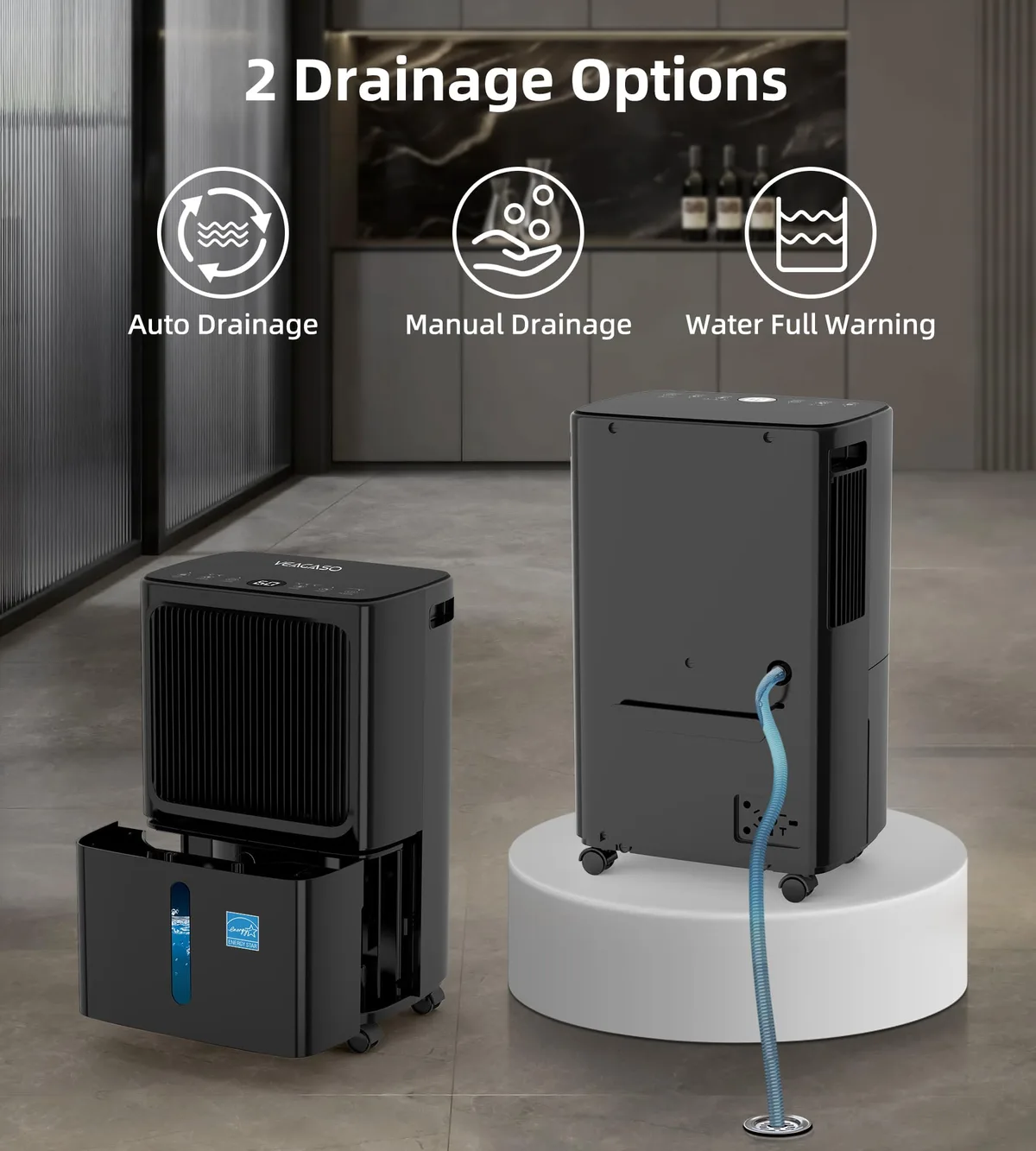
Image source: Bing (Web (fair-use with source credit))
Quick Answer
Place the dehumidifier near the moisture source, not in the center of the room. Keep it six to twelve inches from any wall. Set it close to a floor drain, sump pump pit, or utility sink so the hose can drain continuously.
Avoid concrete walls, corners, and extension cords. Aim for 45, 50% relative humidity.
Why Basement Placement Matters More Than the Machine Itself
The center-of-the-room advice isn't just lazy. It's wrong for most basements. A dehumidifier pulls air in from one side, runs it over cold coils, and pushes dry air out the top or front.
That airflow has to reach damp walls and corners to do real work. Placed in the middle of a wide-open space, the unit dehumidifies the air right around itself while the walls stay damp.
Drainage matters even more. A typical 50-pint unit pulls about two gallons of water per day from a damp basement. If it sits far from a drain, you'll be lugging a heavy bucket up the stairs every morning.
That's not a routine you'll stick with.
Manufacturer specs also confirm that most units need at least six to twelve inches of clearance on all sides for proper airflow. Tuck the machine into a tight corner, and the air intake suffocates. The compressor runs harder, the room stays humid, and you burn more electricity for worse results.
In our research, homeowners who complain about dehumidifiers "not working" are almost always the ones who placed the unit against a concrete wall or behind storage boxes. The machine is fine. The placement is the problem.
First, Diagnose Your Basement Type
You can't choose a good spot until you know what kind of basement you're dealing with.
Finished basements are living spaces. They have drywall, carpet, furniture, maybe a home gym. Here, the priority is protecting your stuff while keeping the space comfortable.
Place the unit for even air movement, usually near a central wall, and route the drain line to the nearest available drain.
Unfinished basements are utility spaces. Concrete floors, exposed pipes, water heater, furnace. The priority is stopping moisture at the source.
That changes placement entirely.
Before moving the dehumidifier, grab a digital hygrometer. It reads temperature and relative humidity. If the reading is above 60%, you have a moisture problem that placement needs to solve.
Below 50% means the machine is supporting an already-dry space.
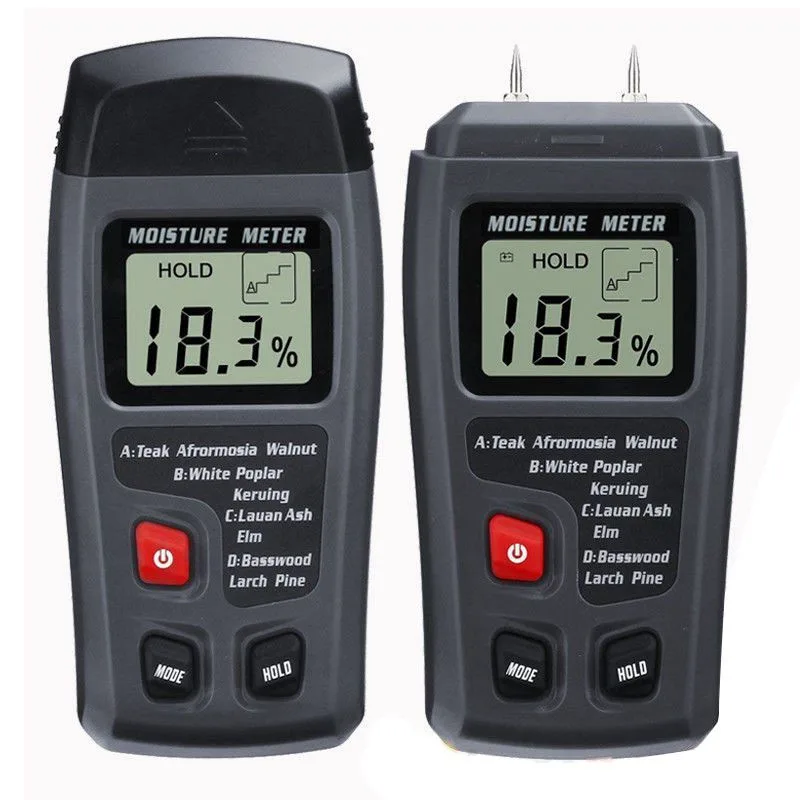
Image source: Bing (Web (fair-use with source credit))
Now locate the moisture source. Walk the perimeter and look for:
- Efflorescence, that white chalky powder on concrete walls
- Dark stains on drywall at floor level
- Condensation on cold water pipes
- Damp spots on the floor near foundation edges
- A musty smell concentrated in one corner
The dominant moisture source determines placement. If water seeps through the floor, the unit goes near the floor drain. If condensation runs down exposed pipes, the unit sits near that wall.
If the whole space just feels damp with no obvious culprit, place the unit where it serves the largest open area.
The Four Core Placement Rules (No Matter What Basement You Have)
These four rules apply to every basement. Follow them before you worry about anything else.
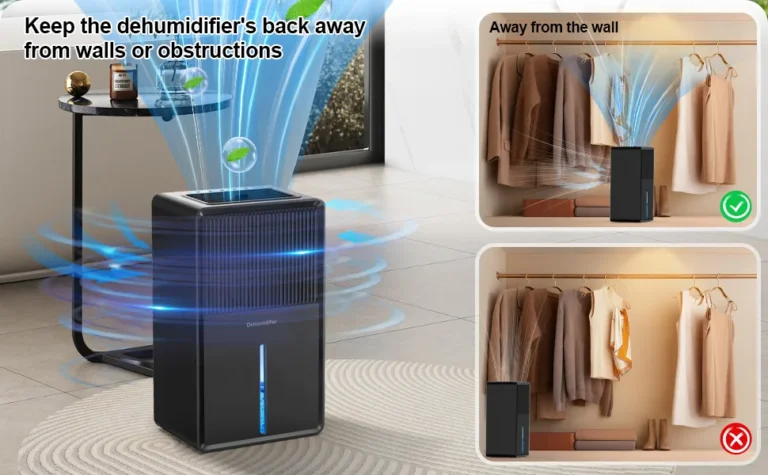
Rule 1: Keep it six to twelve inches off the walls. Every manufacturer spec we've reviewed calls for clearance around the air intake and exhaust. Concrete walls also radiate cold, which tricks the humidistat into thinking the room is cooler than it is. That causes short-cycling and wasted energy.
Rule 2: Level the unit on a solid surface. Carpet acts like a sponge, and a tilted unit can malfunction or freeze up. Use a solid plastic stand or a piece of plywood if the floor is uneven. Avoid lifting it so high that the drain hose climbs upward.
Gravity drains need a downhill slope.
Rule 3: Set it near the moisture source, not near the people. Pumping out humidity where it enters the basement is more efficient than filtering air across the whole room. If the worst corner smells musty, that's where the machine belongs.
Rule 4: Keep the intake and exhaust clear. Don't stack boxes, clothes, or furniture within three feet of the airflow path. A blocked exhaust recirculates damp air right back into the intake. The unit looks like it's running, but the room never dries out.
These rules sound simple, but they rule out most common placements immediately.
Where Exactly to Put It Based on Your Drainage Setup
Drainage is the real decision branch. Most portable dehumidifiers have a gravity drain port, usually a 3/8-inch or 5/8-inch barbed fitting. A standard garden hose threads right onto it.
The hose needs a constant downward slope to keep water flowing. That one requirement dictates placement.
Option A: If you have a floor drain
Best spot: place the unit within six feet of the floor drain so the hose runs short and straight. A floor drain is usually in the center of the basement or near one wall. Run the hose along the floor to the grate.
Keep the hose stretched, not coiled. Coils trap water and clog with algae over time.
Option B: Using a sump pump pit
Best spot: within eight feet of the pump pit, with the hose dangling into the pit below the pump's float switch. The float switch sits high, and the hose should hang well below it. Water feeds directly into the pit, and the pump pushes it out to the yard or sewer.
This is the top choice for most basements because the pit is already a collection point for groundwater.
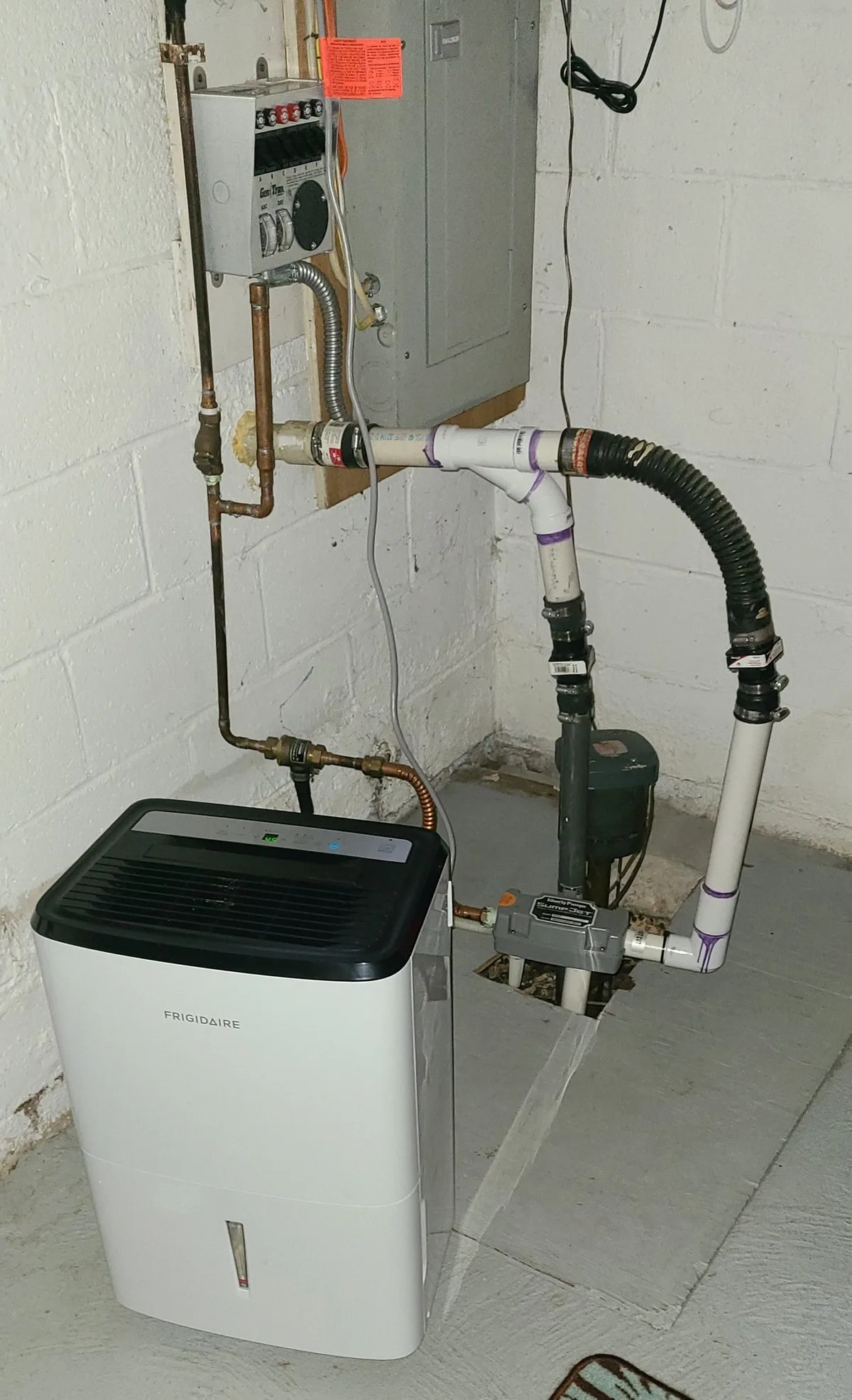
Image source: Bing (Web (fair-use with source credit))
If you have a sump pit but no hose access, a dehumidifier with a built-in condensate pump can lift water vertically up to 15 or 20 feet. That lets you place the machine on a shelf near the pit while the pump pushes water up and over the edge.
Option C: No drain nearby
If you're more than 10 feet from any drain, you have two choices. One, buy a unit with an integrated condensate pump that pushes water upward and over to the drain. Two, use a 15-foot hose across the floor, but make sure the slope stays consistent.
A gentle incline works. A kink stops the flow and trips the overflow sensor.
Option D: Utility sink or laundry tub
This works if the sink sits at floor level or lower. Hook the hose to a quick-connect fitting and let gravity do the work. If the sink is raised off the floor, a built-in pump is the only way to climb that vertical distance.
For the machine itself, a 50-pint unit works for most basements up to 2,000 square feet. A 70-pint unit handles larger or wetter spaces. If you're unsure, our guide to a 50-pint basement unit covers sizes and real-world expectations.
Where to Avoid At All Costs
Knowing the right placement is valuable. Knowing the wrong placement saves you years of frustration.
Directly against concrete walls. Tempting because that's where moisture lingers, but the concrete blocks airflow and conducts cold. The machine works harder and less effectively. Keep that six-to-twelve-inch gap.
Near gas appliances or water heaters. There's a real safety concern here. A dehumidifier can disrupt a furnace's exhaust system when operated in a tight mechanical closet, and an electric spark near a gas line is never a good idea. Give combustion appliances a ten-foot radius.
In the corner behind a door. The airflow path gets blocked, and an inward-swinging door will knock the unit over. Corners also trap dead air. You want circulation, not a stagnant pocket.
Next to an open window or exterior door. Outdoor humid air floods straight into the intake the moment you crack the window. The unit runs constantly. This placement also wastes electricity.
Seal the basement, then dehumidify it.
On carpet or wood flooring. The unit vibrates. Over time, vibration on wet carpet can promote mold growth underneath, and a spill from a full bucket will soak straight into the subfloor. Use a plastic catch pan or drip tray under the unit as a safety net.
Where an extension cord becomes necessary. Dehumidifiers draw a lot of amps, especially during compressor startup. Extension cords overheat. The combination of electricity and water in a basement is a worst-case scenario.
Plug the unit directly into a grounded outlet, ideally a GFCI-protected one.
If you're stuck between a bad spot and a worse one, prioritize drainage. A unit that drains itself beats one that sits in the perfect location but fills its bucket in six hours. The moment you forget to empty it, the machine shuts off and your basement humidity climbs right back up.
A Simple Step-by-Step Placement Workflow
Follow these steps in order. They take about twenty minutes and save you months of frustration.
Step 1: Find your drainage point first. Look for a floor drain, sump pump pit, or utility sink. This decides everything else. If all you have is a floor drain, the unit must sit within hose reach of it.
Step 2: Locate the moisture source. Check the walls, floor, and corners with your hygrometer. The most humid spot is where the water is coming from. If you can't tell, place the unit near the exterior wall where condensation typically forms.
Step 3: Position the unit between the moisture source and the drain. That distance should be six feet or less if possible. Set the dehumidifier on a level surface, six to twelve inches clear of the wall.
Step 4: Route the drain hose properly. Screw a standard garden hose onto the drain outlet. Let it slope downward continuously. No dips, no kinks, no uphill sections.
Use a zip tie to keep it attached to the pit grate or sink.
Step 5: Set your target humidity. Start at 50%. If the room still feels damp after 48 hours, drop it to 45%. Don't go below 40% unless you have serious water damage.
Lower settings waste energy and can over-dry wood framing.
Step 6: Let it run for 48 hours. Don't judge the placement after a few hours. Basements take time to dry. After two days, check the hygrometer again.
If humidity hasn't dropped or the bucket is empty while the room is still wet, something is wrong with the setup.
Step 7: Adjust seasonally. In summer, the unit works harder. In winter, a basement can dry out quickly, and the machine may not turn on as often. Move it closer to the moisture source during wet months, and pull it back during dry ones.
Regular maintenance also matters, so cleaning the filter monthly keeps airflow strong. For year-round performance, you might want to check a unit designed for continuous use across all seasons.
Quick Answers to Common Placement Questions
Should I put it in the middle of the room or against a wall?
Neither. Put it near the moisture source, six to twelve inches from the wall. The center of the room leaves walls and corners untreated, while placing it flush against a wall blocks airflow.
The sweet spot is a few feet from the dampest wall, with the exhaust pointed toward the open area.
Can I run the hose to a sump pump, and how?
Yes. Attach a standard garden hose to the drain port and let the hose hang into the sump pit, below the float switch. The pump will push the water out.
Make sure the hose doesn't block the float's movement. Otherwise, the pump can cycle incorrectly and flood the pit.
Do I need a dehumidifier with a pump?
Only if your drain is uphill from where the unit needs to sit. A built-in condensate pump lifts water 15 to 20 feet vertically, which makes placement flexible. If you have a floor drain or sink at a lower level, a gravity hose setup works fine.
A pump also helps if you want to hide the unit behind a wall or cabinet.
How close is too close to the wall?
Anything under six inches is too close. The intake draws air from the side or back, and exhaust pushes it out the top or front. Tight clearance starves the unit of airflow.
It will run longer, work harder, and remove less water. Keep that gap consistent on all sides.
Should I elevate it off the floor?
Yes, in flood-prone basements. A simple plastic stand or concrete paver keeps the unit above small amounts of standing water. It also protects the machine from dust and mild flooding.
Just make sure the drain hose still slopes downward from the higher position.
Will one dehumidifier handle the whole basement, or do I need two?
One unit handles up to about 2,000 square feet in normal conditions. If your basement has separate rooms, a finished area, and a damp storage zone, a single unit won't cover it evenly. Two smaller units often work better in split basements.
In our research, people with large split-level basements get better results running a second compact unit in the wettest room.